
 TRIAL LESSON
Piano Lessons
Self-Taught Piano vs a Teacher: What Adult Learners Cannot Easily Hear Alone
Oct
WKMT London adult learner guide
Self-Taught Piano vs a Teacher: What Adult Learners Cannot Easily Hear Alone
Adults can learn a remarkable amount alone. Scores, recordings and digital tools make information abundant. The harder question is whether the learner can diagnose the sound, movement and sequence of study accurately enough to choose the next useful task.
In brief
In the self taught piano vs teacher comparison, self-study offers flexibility, low cost and strong learner ownership, while a teacher provides external listening, technical diagnosis, repertoire sequencing and accountable feedback. Adults can combine both: practise independently, record themselves and use lessons to correct blind spots before they become habits. The best choice depends on goals, access, experience and risk of strain.
Self taught piano vs teacher: the real difference is feedback
A self-taught adult controls pace, repertoire and schedule. That autonomy can produce commitment, especially when the learner has clear musical taste and enjoys solving problems. Yet the pianist hears from inside the action. Attention is divided between reading, moving, counting and judging, so tone imbalance or tension may become obvious only on a recording. A teacher listens from outside and can compare intention with result in real time. Good feedback does more than label an error. It identifies whether the problem lies in rhythm, fingering, movement, hearing or practice design, then proposes an experiment. Research on music-performance teaching distinguishes feedback about the task, the process and self-regulation; mature learners need all three at different moments.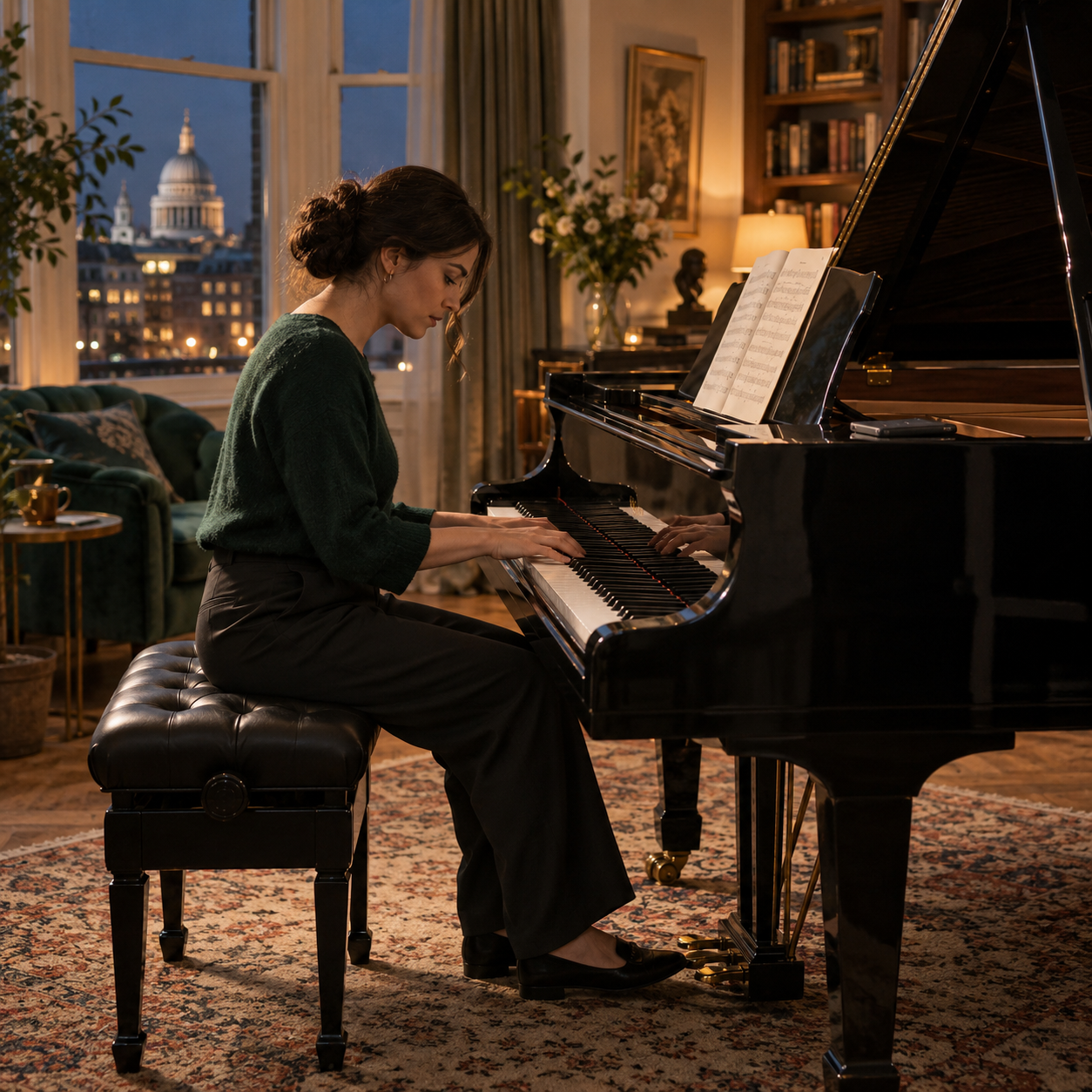
What adult learners can build independently
Reading basics, rhythm drills, theory, listening, slow coordination and a regular practice habit can all begin through self-study. A learner can annotate the score, clap difficult rhythms, compare editions, use a metronome briefly and record complete takes. These are serious skills, not second-class preparation before ‘real’ lessons. The danger is breadth without sequence. Online material can offer twenty solutions before the learner has defined one problem. In adult piano lessons in London, a teacher can reduce that noise by choosing the smallest next step. The self taught piano vs teacher decision is therefore not information versus ignorance; it is unguided selection versus responsive selection.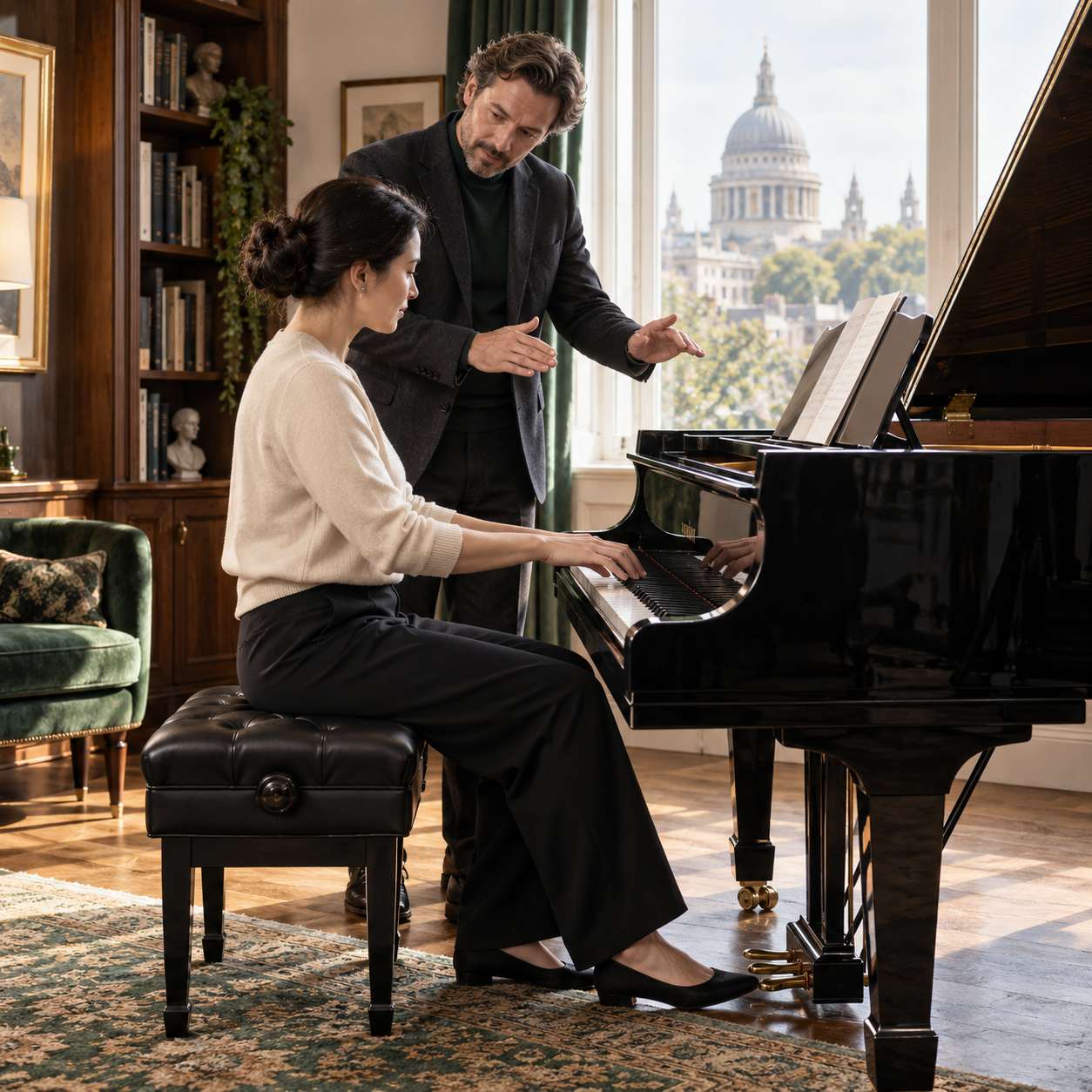
What a teacher may hear before the learner does
A teacher may notice that the melody is buried, the pulse changes at every difficult bar, the thumb braces before a leap or the pedal conceals releases. None of these is always audible to the busy player. Video can reveal posture and recording can reveal balance, but interpretation still requires a framework: which detail matters now, and which can wait? WKMT’s article on building an adult practice schedule turns goals into repeatable work, while Can adults learn piano? explains the strengths mature beginners bring. A teacher’s role is to organise those strengths around sound, not to create dependence.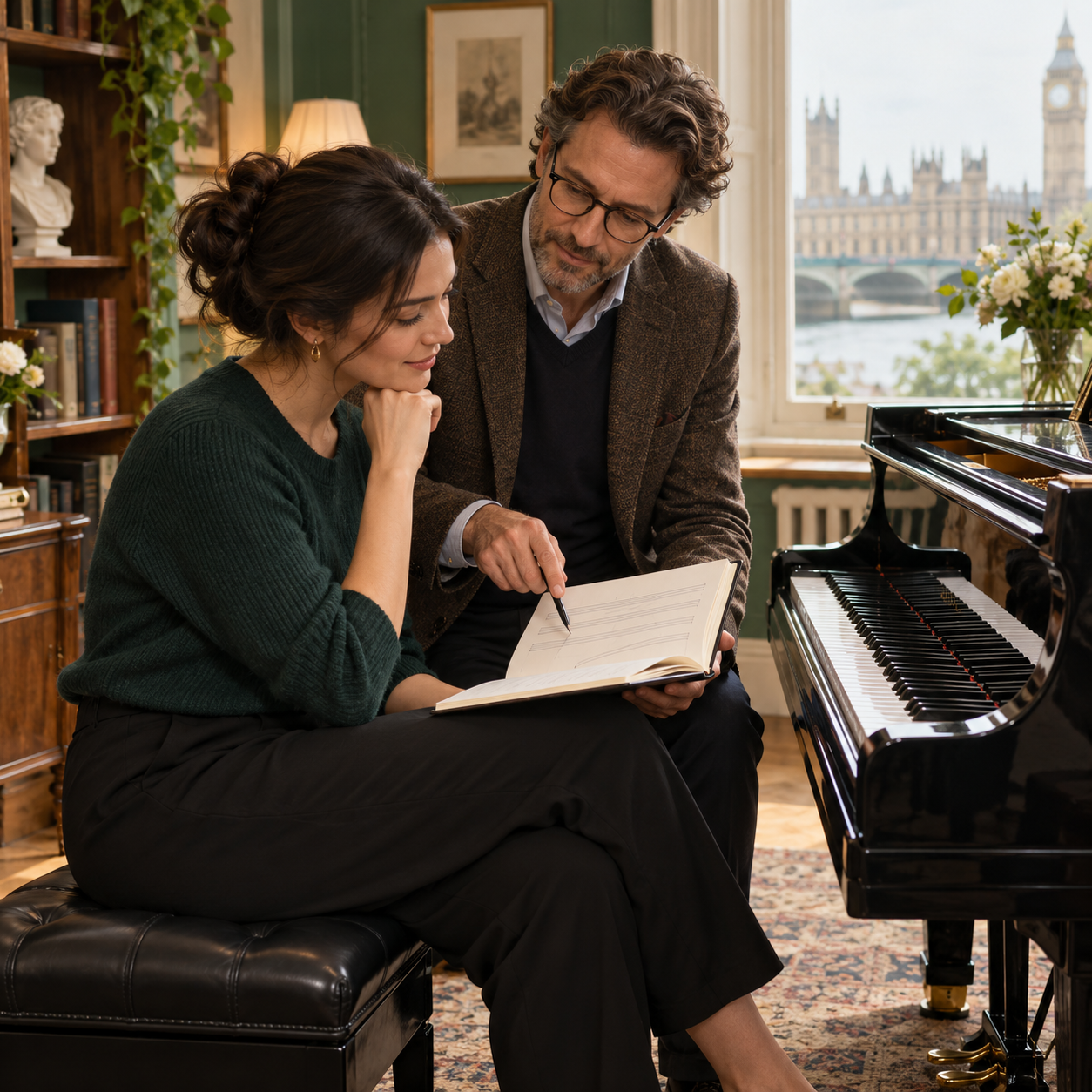
The best teacher does not replace independent practice; the teacher helps the adult practise with increasingly independent ears.
Cost, flexibility and the value of occasional lessons
In the self taught piano vs teacher comparison, weekly lessons are not the only serious model. Some adults benefit from fortnightly or periodic consultations combined with disciplined independent practice. The lesson can establish technique, review recordings, choose repertoire and define checkpoints. A learner with previous training may need less frequent contact than a complete beginner or someone experiencing discomfort. Self-teaching remains valuable between lessons because all practice is ultimately self-directed. The adult must learn to plan, monitor and evaluate without constant supervision. Studies of self-regulated musical learning emphasise goals, strategies, observation and reflection. A strong teacher gradually improves those capacities rather than making every decision forever.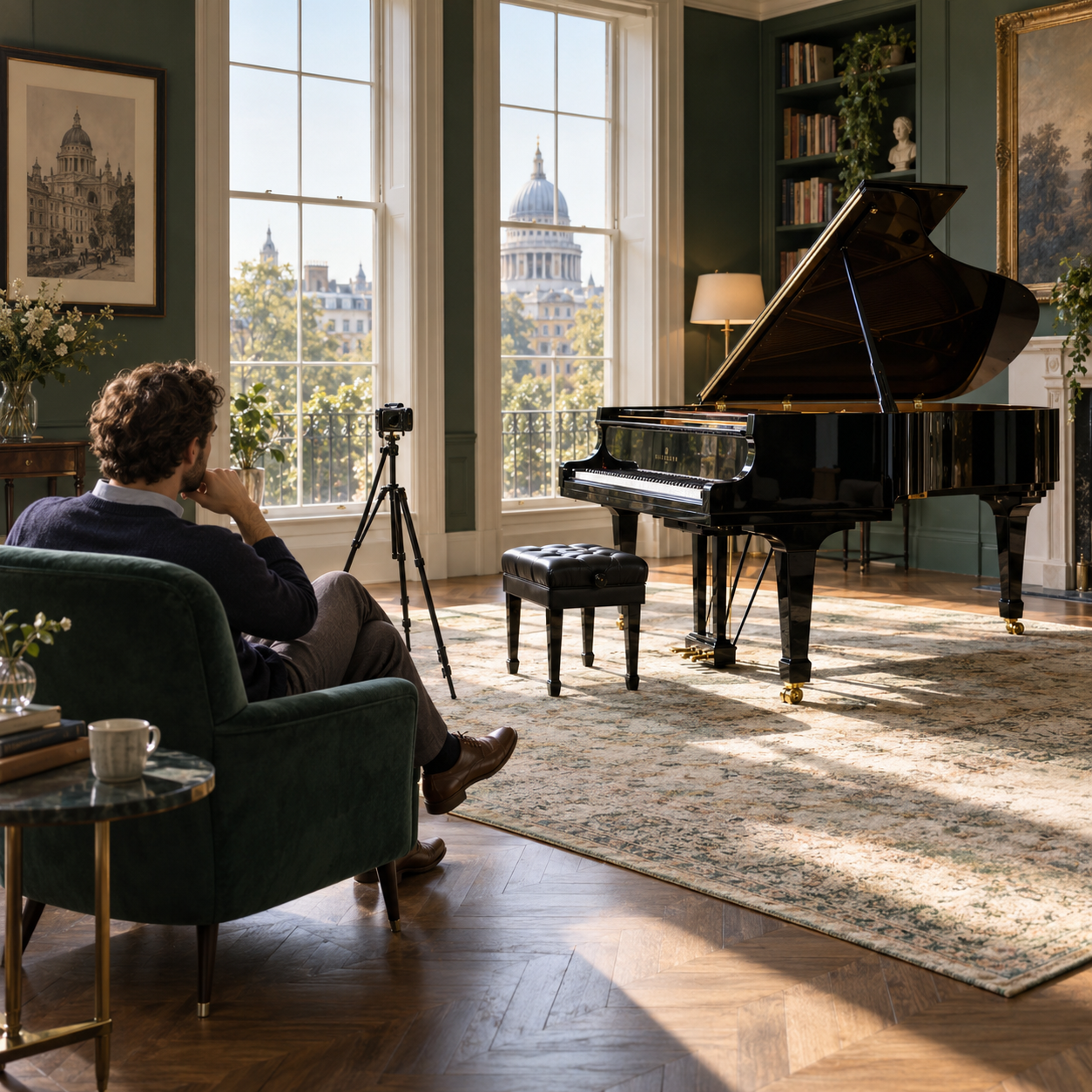
A practical decision test
Choose a short passage and record it. Write the intended pulse, balance, articulation and character before listening back. Can you identify a specific difference between intention and result, choose one cause, test a correction and confirm improvement? If this loop works, self-study is productive. If the same uncertainty returns for several weeks, informed external feedback may save considerable time. Seek help promptly for pain, persistent tension, repeated confusion about notation or technique, or repertoire that has stalled despite careful work. In the self taught piano vs teacher choice, the aim is not to prove independence. It is to build it. A useful lesson leaves the adult with clearer ears, a better experiment and more agency for the days between meetings.WKMT London
Build an adult piano programme around responsive feedback, intelligent repertoire and a timetable that respects real life.
Explore adult piano lessonsSources on self taught piano vs teacher
- Frontiers in Psychology: feedback in music performance teaching
- PMC: audio feedback interventions with piano students
- PubMed: interpretive autonomy and self-regulated learning
- West Virginia University: self-directed learning in adult piano instruction
- Griffith University: engaging adult piano students
- BAPAM: healthy practice guidance
Sources checked 4 October 2026. Educational guidance; individual circumstances and progress vary.