
 TRIAL LESSON
Piano Lessons
Crossing the Midline: What Two-Handed Piano Playing Asks a Child’s Body to Organise
Oct
WKMT London parent guide
Crossing the Midline: What Two-Handed Piano Playing Asks a Child’s Body to Organise
Two hands at the piano do more than press different notes. They share space, cross territories, alternate leadership and coordinate around the body’s centre. For a child, that organisation develops gradually and deserves musical tasks that are clear, playful and physically comfortable.
In brief
Crossing the midline means moving a hand, arm, foot or eye across the imaginary vertical line dividing the body into left and right sides. At the piano, children may cross the midline when one hand travels into the other hand’s usual register, when hands cross over, or when both hands coordinate patterns around middle C. This is a normal motor demand, not a diagnostic test, and difficulty should be met with simpler musical tasks rather than pressure.
Crossing the midline children: what the phrase really means
In developmental language, crossing the midline children tasks require movement to pass through the body’s central vertical axis. Reaching across a page, catching a ball across the body and playing keys on the opposite side all involve spatial organisation. The skill is related to bilateral coordination and laterality, but development varies and performance in one piano task cannot establish a developmental condition.
The keyboard makes the idea visible. Middle C gives a useful reference, yet the child’s body does not divide neatly at one key. Bench position, arm length, repertoire and confidence all change the movement. A teacher therefore observes the whole action: whether the trunk remains balanced, whether the arm can travel freely and whether the musical pulse survives the crossing.
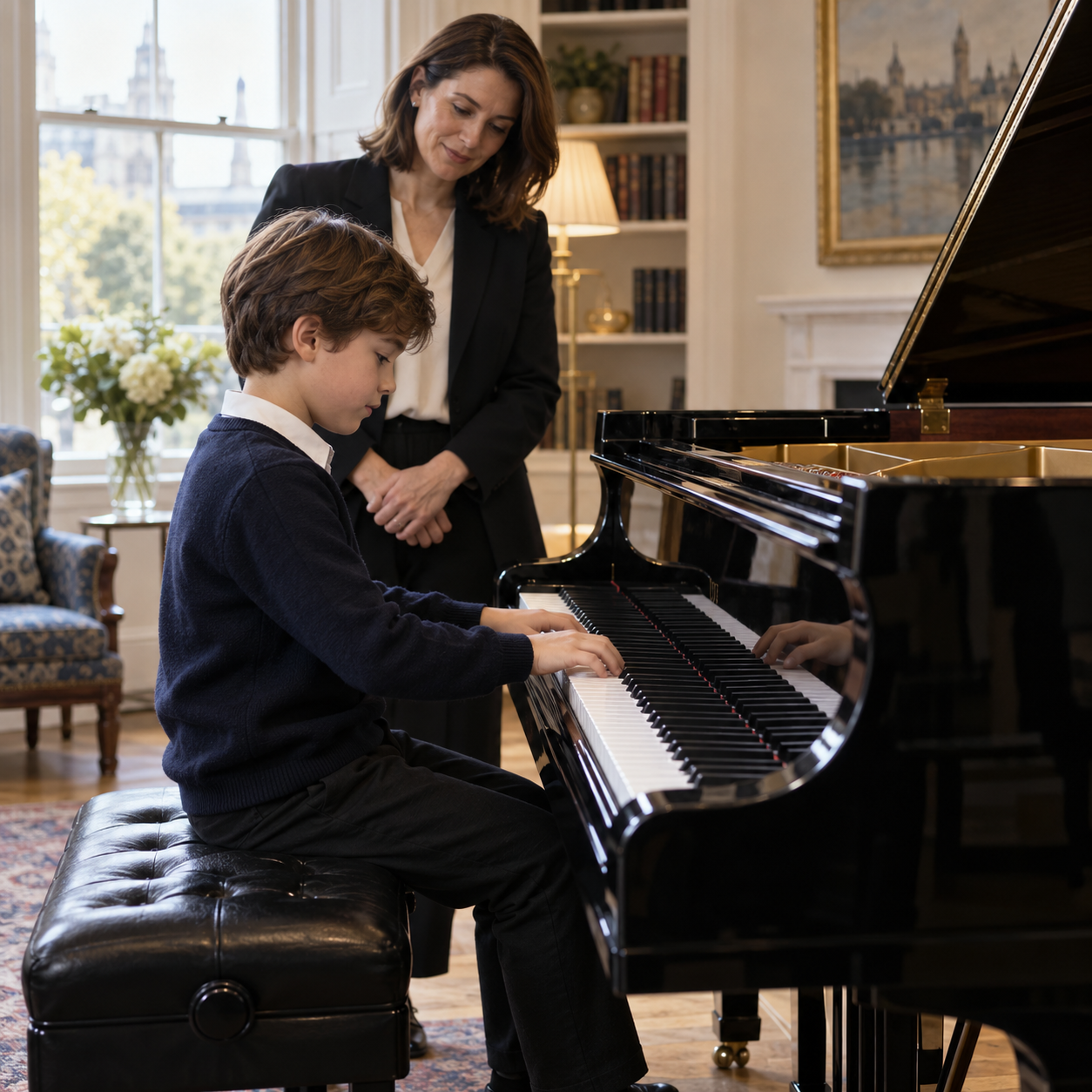
What two-handed piano playing asks the body to organise
Ordinary two-handed playing already demands bilateral coordination. The hands may move together, mirror one another, alternate or perform different rhythms. Crossing the midline children exercises add another demand: a limb works in the opposite side of space while the eyes, ears and posture maintain orientation. That can be easy in one direction and unfamiliar in the other.
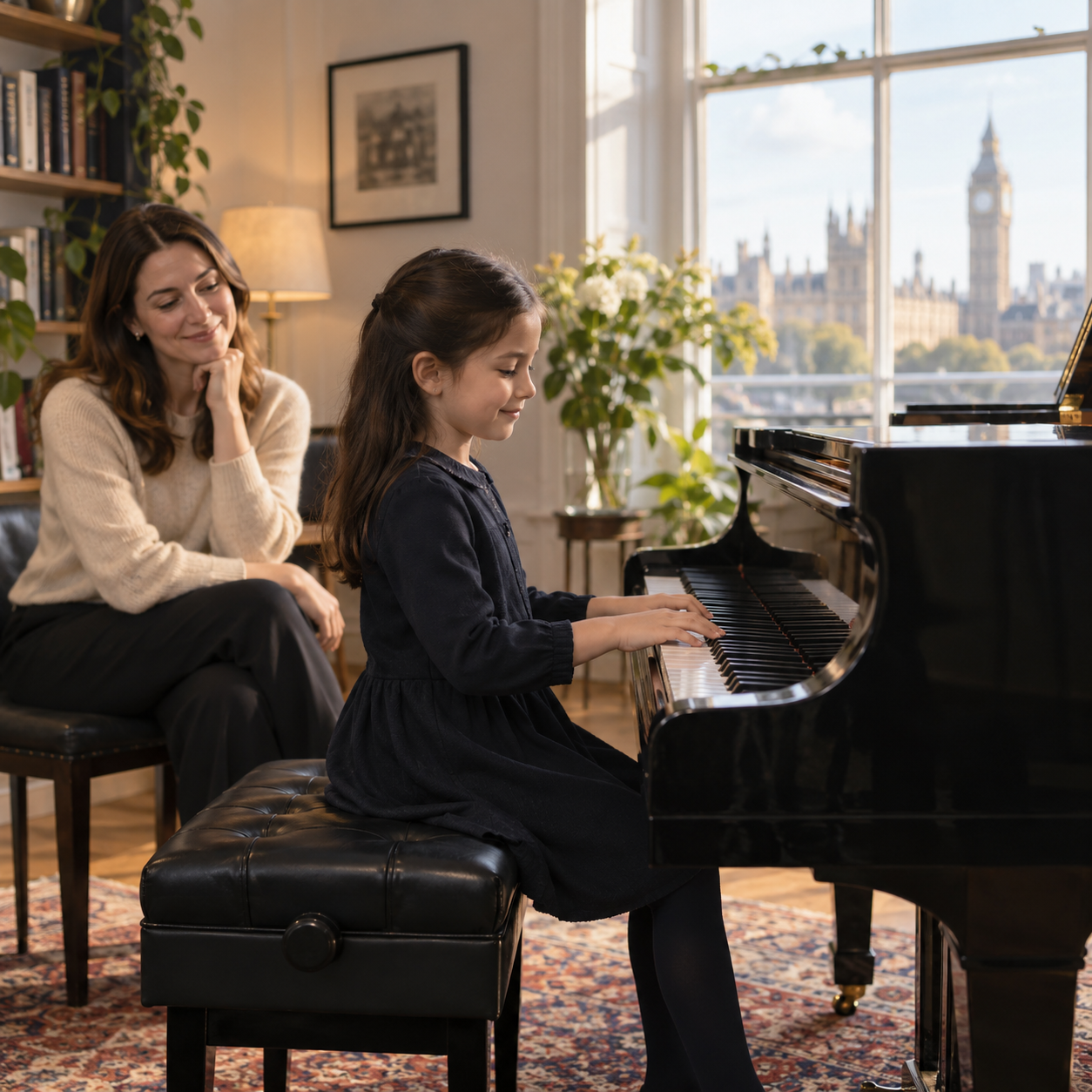
In children’s piano lessons in London, the task should be musical before it becomes athletic. A short echo around middle C, a melody shared between hands or a gentle hand-over-hand arpeggio gives the movement a sound-based purpose. Speed is added only after the route is secure.
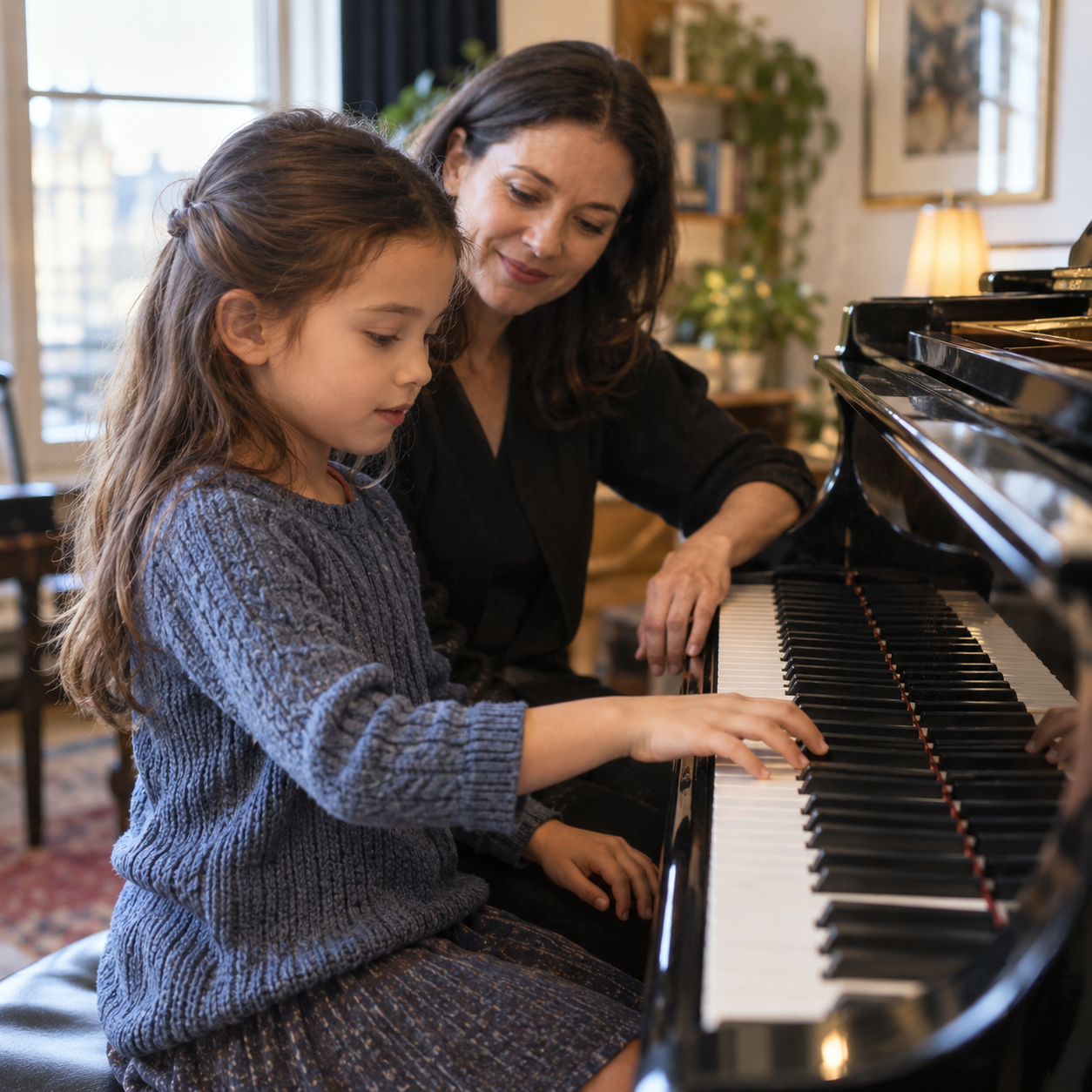
A graded route from shared space to hand crossing
Begin with both hands resting near the centre and alternate single notes. Next, let one hand play a three-note pattern that reaches slightly across centre while the other waits. Then share a melody, passing it from one hand to the other without a gap. Only later introduce an actual hand-over-hand crossing, with ample time and a stable bench position.
WKMT’s guide to coordination skills at the piano explains how ears and attention organise movement. A second useful companion is the article on motor planning for children. Both reinforce the central principle: the child needs a clear sequence, not a larger number of hurried repetitions.
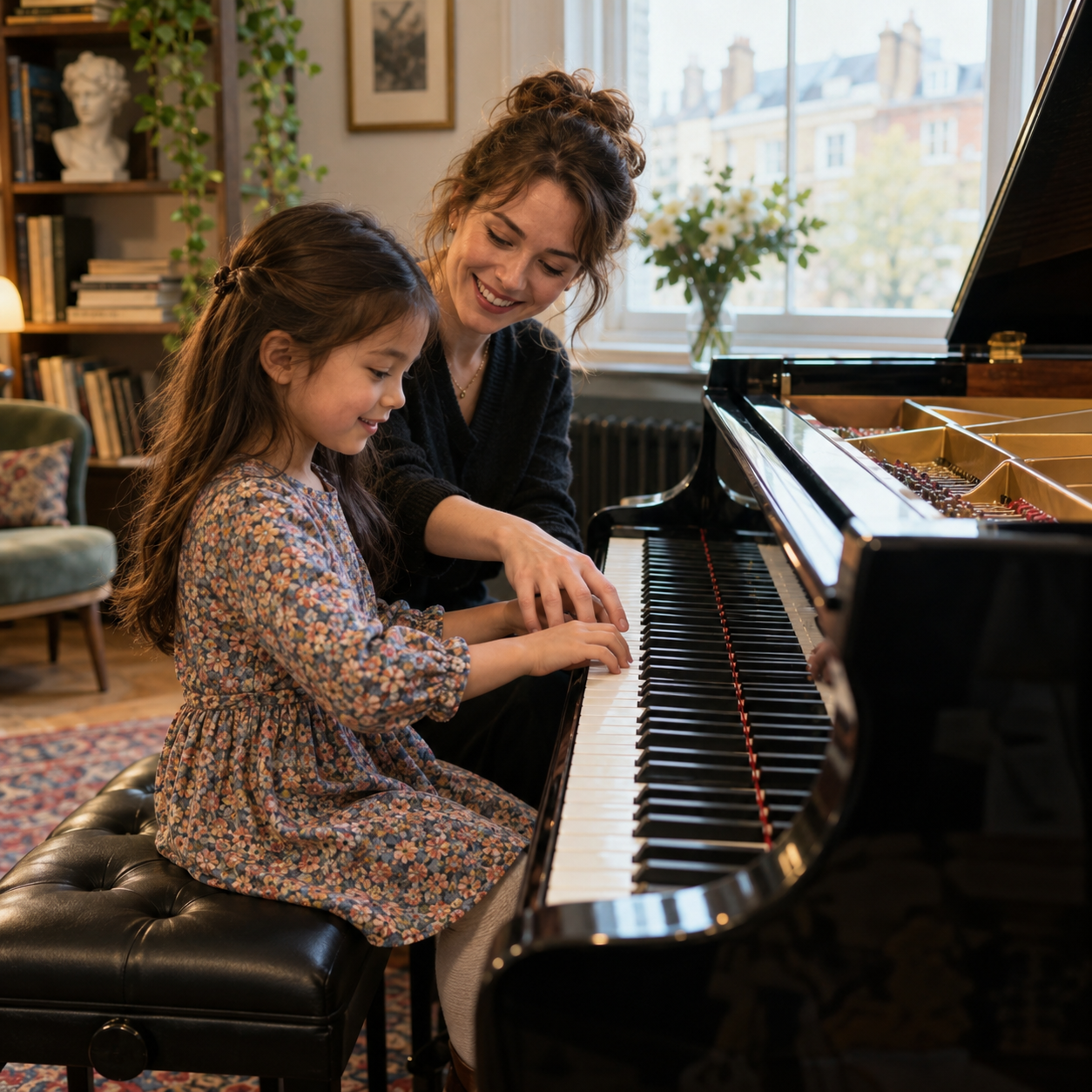
At the piano, the body crosses the centre most usefully when the ear knows why the movement is happening.
What research supports, and what it does not prove
Research describes manual midline crossing as a developing behaviour and studies bilateral-integration programmes in children with coordination difficulties. Recent controlled work reports gains in particular praxis and coordination measures when midline-crossing movements formed part of a broader programme. These findings concern specific populations and structured interventions; they do not prove that a piano exercise treats a developmental disorder.
For crossing the midline children activities, educational language should remain proportionate. Piano can offer rich practice in bilateral, sequential and spatial coordination. It cannot replace assessment by an occupational therapist, physiotherapist, paediatrician or other qualified professional when a parent has persistent concerns across everyday activities.
A five-minute musical routine for home
Place two groups of three keys on either side of middle C. Ask the child to play a slow question with the right hand on the left group, then answer with the left hand on the right group. Keep the pattern short, release the arms between turns and finish with both hands returning to a comfortable home position.
Praise the musical result: a smooth handover, a steady pulse or a clear ending. If the child twists, holds the breath, loses balance or reports discomfort, reduce the reach immediately. Crossing the midline children practice works best when curiosity and coordination grow together, without turning the piano into a test of the body.
WKMT London
Give your child structured piano teaching where musical imagination, listening and comfortable coordination develop together.
Explore children’s piano lessonsSources on crossing the midline children
- American Journal of Occupational Therapy: manual midline crossing development
- Perceptual and Motor Skills: crossing the midline in four-year-olds
- PMC: bilateral integration and midline-crossing trial
- MDPI: motor skills training and body midline
- NHS: developmental coordination disorder overview
- Royal College of Occupational Therapists: children and young people
Sources checked 3 October 2026. Educational guidance; individual circumstances and progress vary.