
 TRIAL LESSON
Piano Lessons
Hobbies for Relaxation: Why Piano Works Best When Attention Replaces Escape
Sep
WKMT London adult learner guide
Hobbies for Relaxation: Why Piano Works Best When Attention Replaces Escape
The piano is not relaxing because it asks nothing of us. It can be relaxing because it asks for one coherent kind of attention: listen, move, adjust and continue. When the task is well chosen, the day’s scattered concerns give way to a musical problem that can be heard and shaped.
In brief
Piano can be one of the most absorbing hobbies for relaxation when challenge matches current skill and practice is free from pain or perfectionism. Active music-making may support wellbeing and short-term stress reduction for some adults, although it is not a substitute for healthcare. The most reliable approach is a brief routine, comfortable repertoire, attentive listening and permission to stop before fatigue turns focus into strain.
Hobbies for relaxation can still require concentration
Relaxation is not always the absence of effort. A bounded musical task can organise attention so that rumination has less room, especially when sound gives immediate feedback.
Piano therefore works differently from passive escape. The adult returns from the session with an experience of agency: something was noticed, shaped and completed.
Match challenge to the day
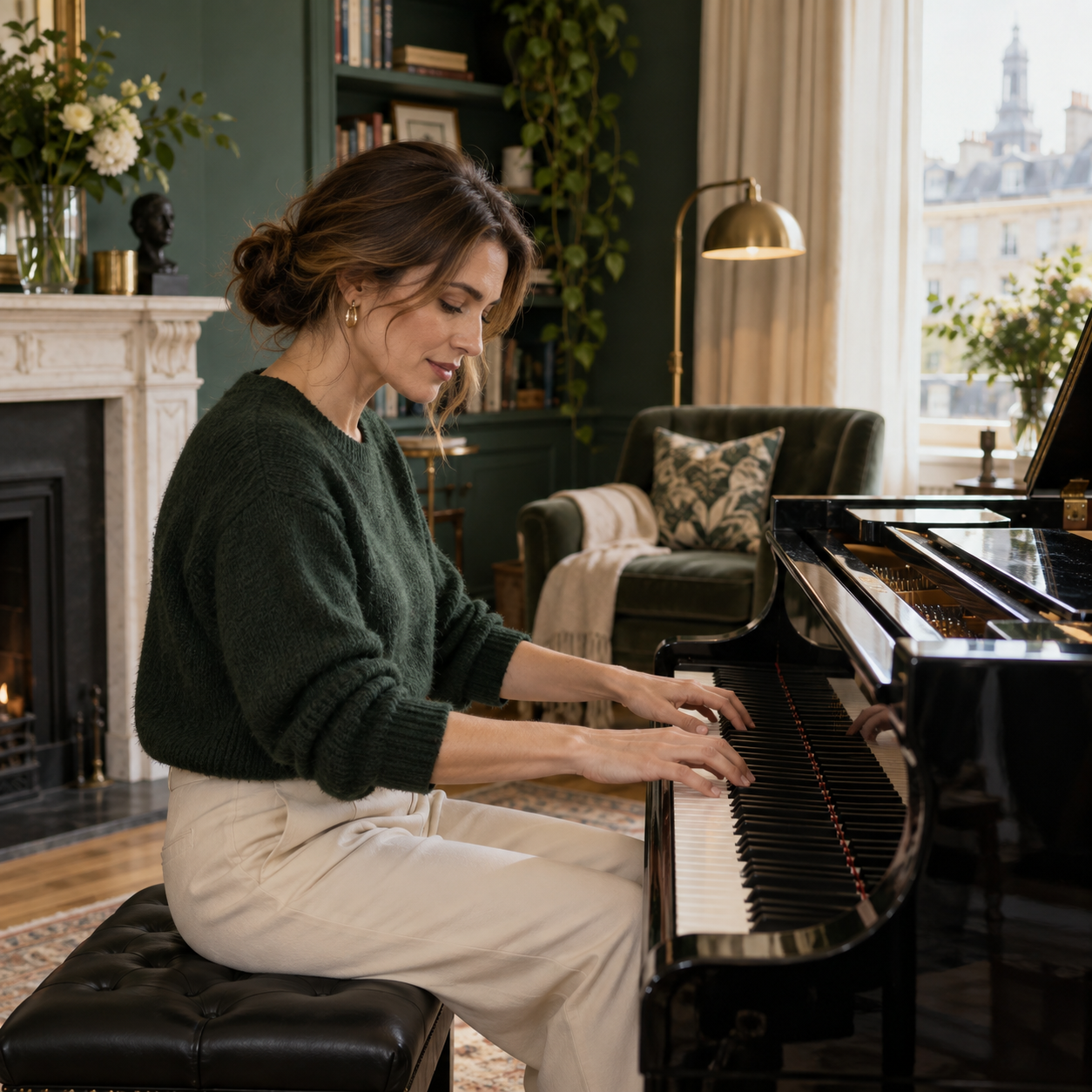
In adult piano lessons in London, repertoire can be layered by energy. Keep one piece that feels comfortable, one that stretches technique and a short improvisation or listening task.
On a demanding day, choose the accessible layer without guilt. Consistency grows when practice can contract as well as expand.
Attentive calm at the keyboard
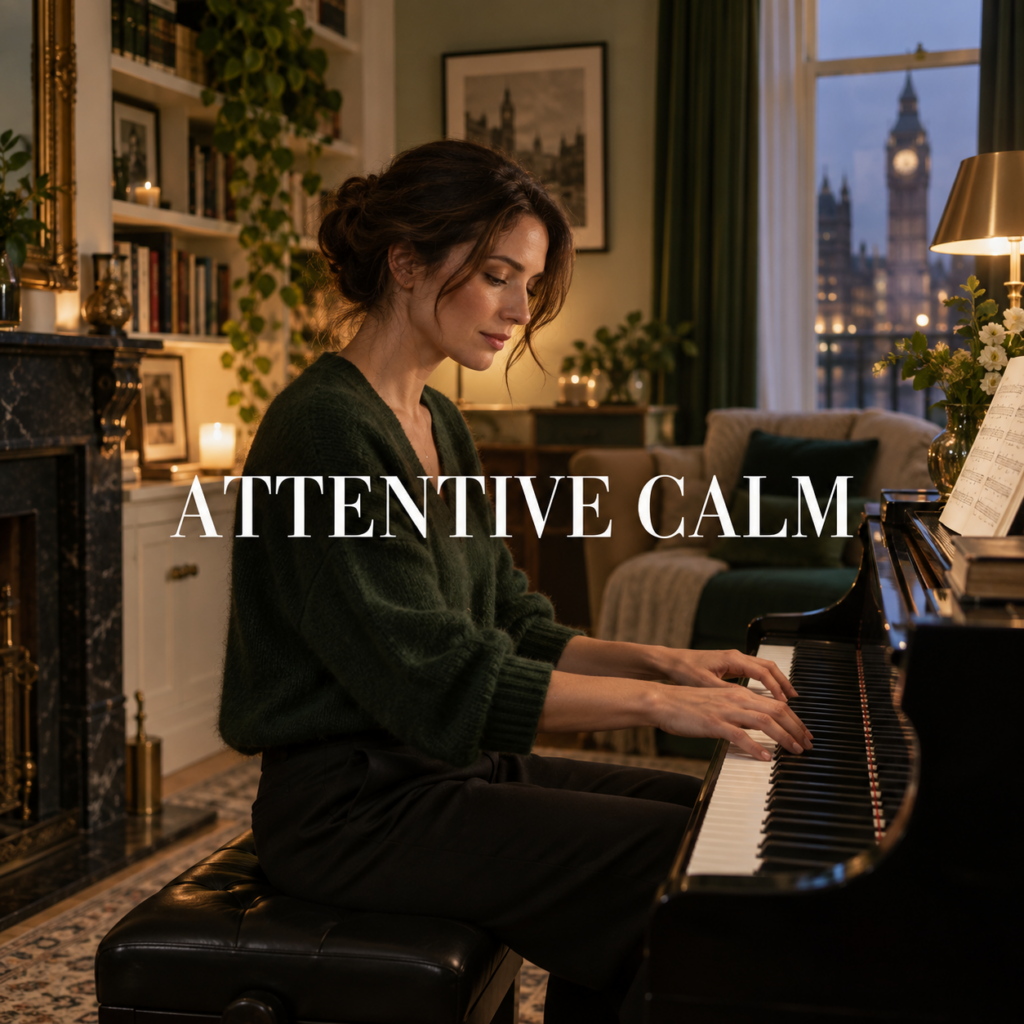
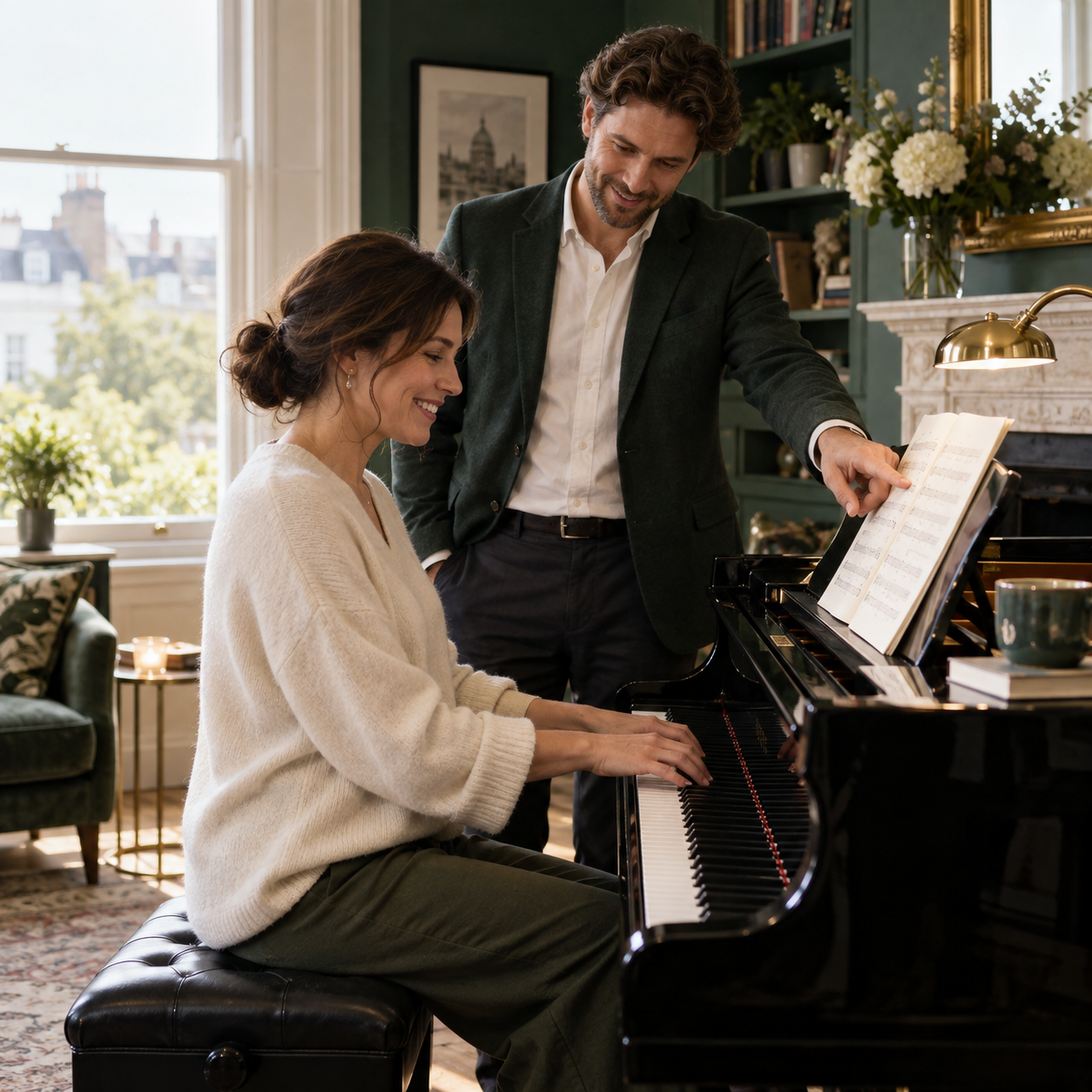
Begin with a slow pattern and listen until tone and release feel settled. Let breathing remain natural, keep shoulders free and stop immediately if discomfort appears.
WKMT’s guide to meaningful hobbies explains why depth and enjoyment can coexist. Calm often follows from clarity, not from making the activity trivial.
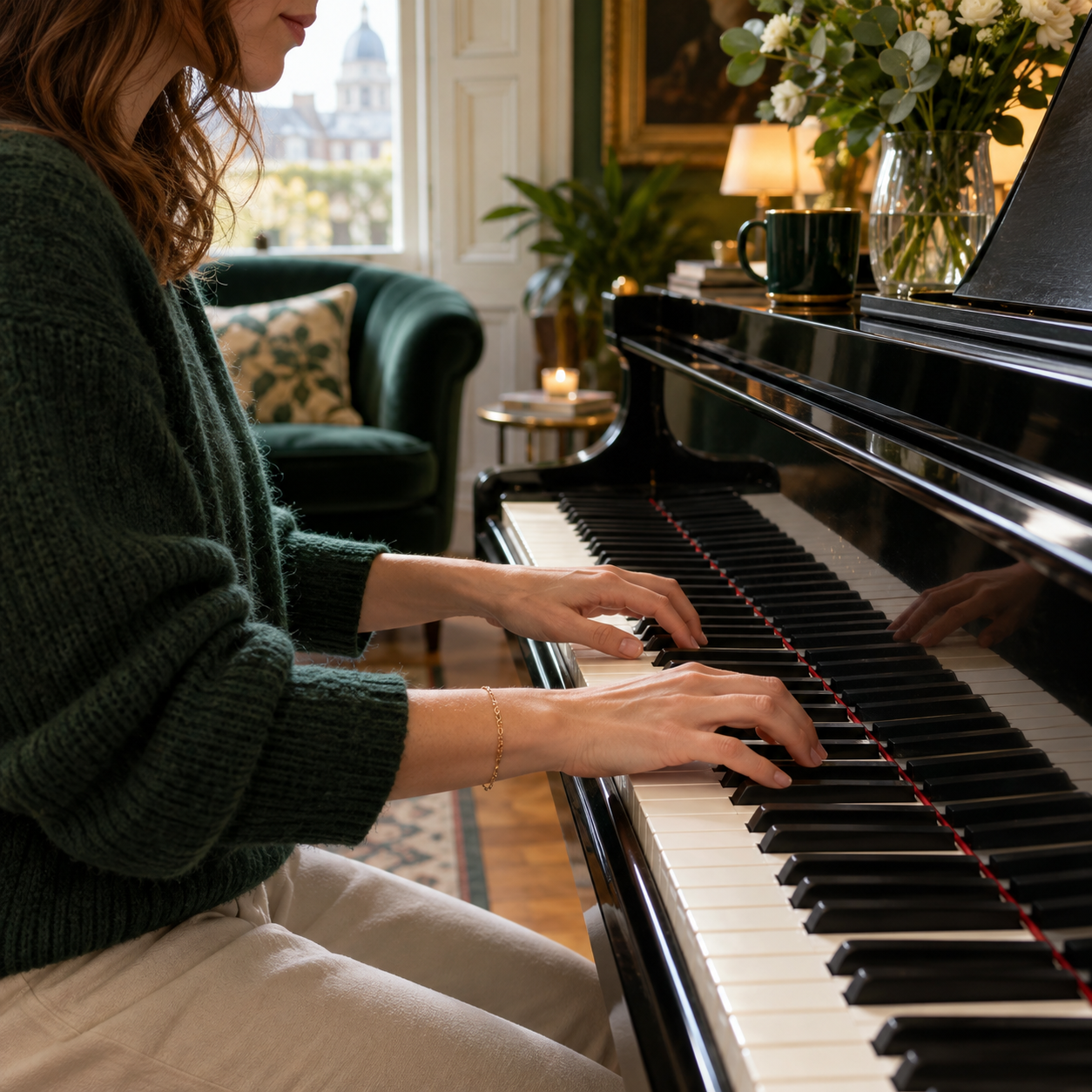
The piano can quiet a busy mind by giving attention a beautiful, exact place to rest.
What research suggests
Reviews of active music-making report promising wellbeing outcomes, while individual studies have observed reduced stress markers after piano playing. Samples, methods and activities vary, so claims should remain proportionate.
The practical evidence is personal but testable. Notice mood, tension and concentration before and after a well-designed session over several weeks rather than expecting every day to feel identical.
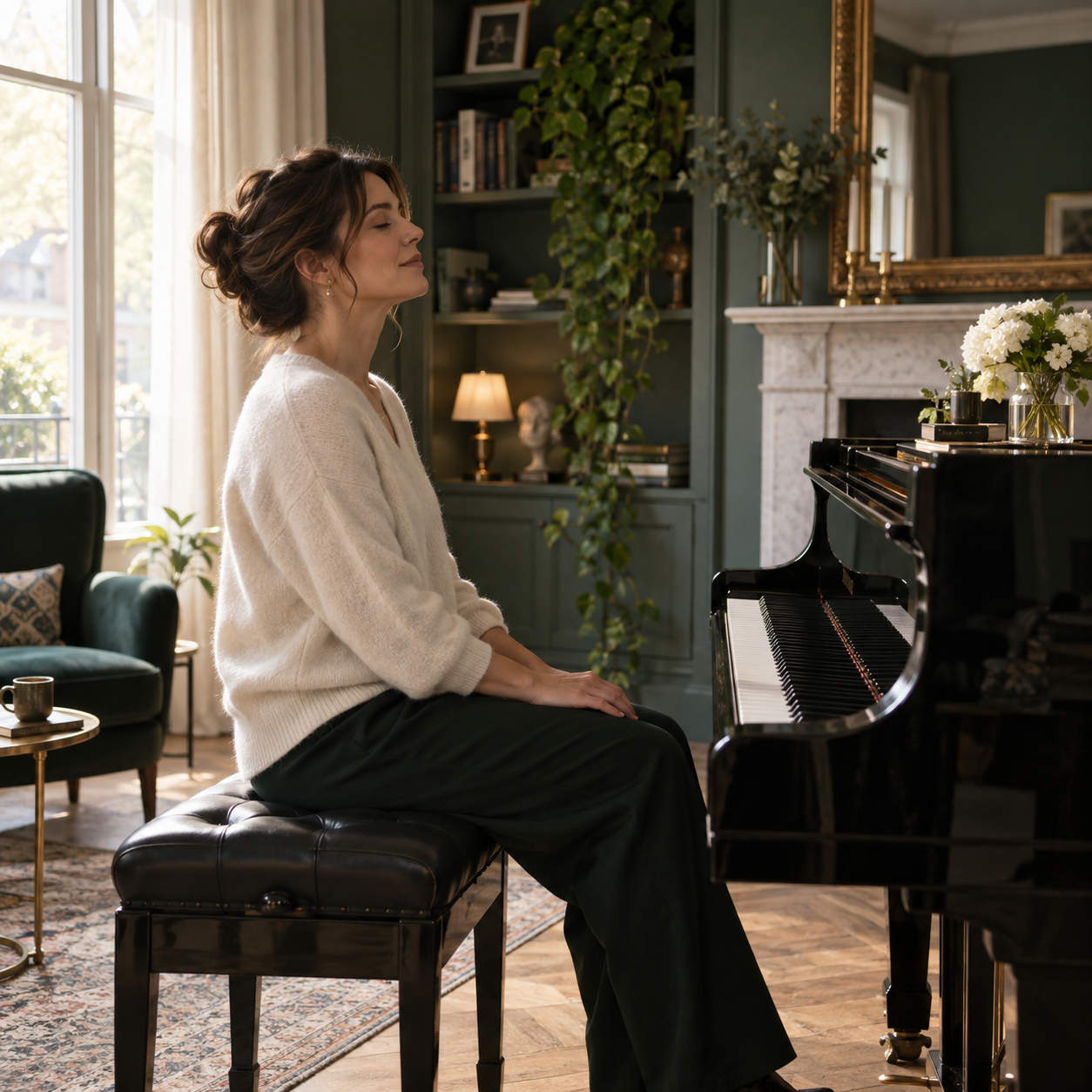
A twenty-minute evening ritual
Spend three minutes arriving through comfortable patterns, twelve minutes on one expressive piece and five minutes playing something already known. End by closing the score and allowing the last sound to decay.
Among hobbies for relaxation, piano is distinctive because attention becomes audible. The goal is not escape from the self, but a quieter and more coherent way of being present.
WKMT London
Create an adult piano routine that balances meaningful challenge, physical ease and expressive repertoire.
Explore adult piano lessonsSources on hobbies for relaxation on piano
- PMC: music making and wellbeing systematic review
- PMC: active music and dance participation review
- PMC: music and health systematic review
- SAGE: piano playing and stress
- RCM Centre for Performance Science
- BAPAM healthy practice guidance
Sources checked 28 September 2026. Educational guidance; individual circumstances and progress vary.