
 TRIAL LESSON
Piano Lessons
Motor Sequencing: What Children Learn When Piano Movements Form a Pattern
Sep
WKMT London parent guide
Motor Sequencing: What Children Learn When Piano Movements Form a Pattern
Motor sequencing is what allows separate piano actions to become a phrase: one finger prepares while another releases, the hand travels to a new position and both movements arrive within a shared pulse. Children build this fluency gradually through clear patterns, listening and well-shaped repetition.
In brief
Motor sequencing is the ability to organise individual movements in the correct order and timing so they become one purposeful action. At the piano, children use motor sequencing to play finger patterns, coordinate hands, prepare position changes and connect rhythm with expected sound. Teaching works best when a sequence is short, meaningful and repeated with small variations.
Motor sequencing turns separate notes into musical action
A beginner can recognise five notes and still struggle to play them as a phrase. The difficulty may lie between the notes: each finger must release, the next must prepare, and the hand must preserve a shared direction. Motor sequencing joins those events so that the child no longer solves every movement from the beginning.
This is why fluency should not be confused with speed. A slow sequence can be beautifully organised, while a rushed one may contain pauses, collisions and unnecessary tension. At the piano, sound offers immediate information. The child hears whether an action arrived too early, too late or with the wrong weight, then adjusts the next attempt.
How rhythm supports motor sequencing
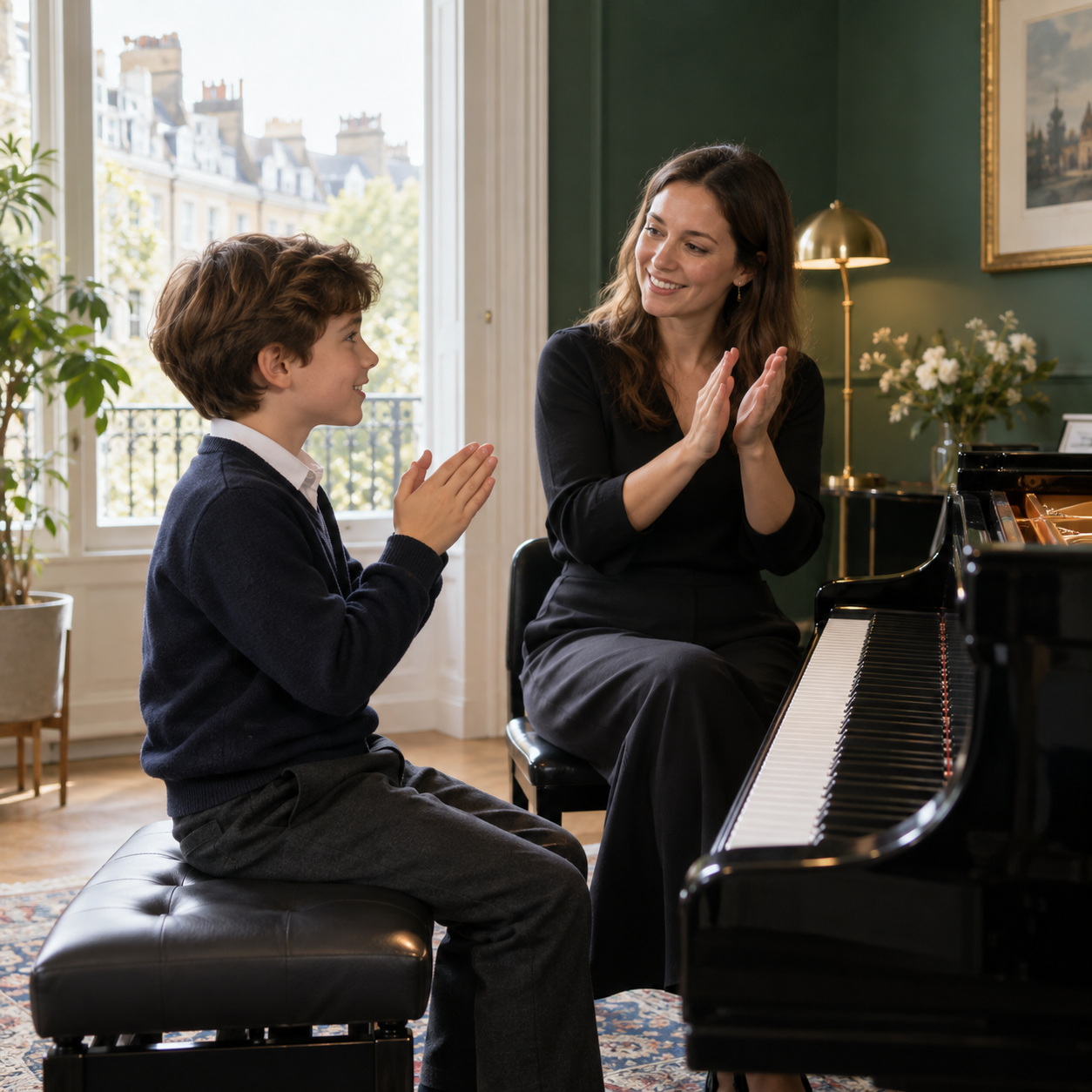
Rhythm gives movement an order in time. Before playing, a child can clap a pattern, speak its rhythm or tap alternating hands on the closed fallboard. The sequence becomes easier to anticipate because the body already knows when each event belongs. When notes are added, the teacher protects the same rhythmic shape rather than allowing hesitation to replace it.
In piano lessons for children in London, teachers can reduce a passage to two or three actions, then reconnect the groups. Research on novice piano learning suggests that auditory feedback contributes to newly acquired sequencing, while work with children links rhythm perception to aspects of music-related motor learning. These findings support careful teaching, not exaggerated claims of general transformation.
Chunking, landmarks and looking ahead
Motor sequencing improves when a child can recognise a small unit as one thing. A five-finger pattern, broken chord or repeated rhythmic cell becomes a chunk rather than a list of isolated instructions. Visual landmarks help too: groups of black keys, a familiar interval and a clearly named destination reduce searching and free attention for timing.
Looking ahead is the next step. While one note sounds, the child begins to prepare the following movement. Teachers can ask a simple question: what must be ready before this note ends? WKMT’s guide to motor planning at the piano explains how an action is prepared; sequencing describes how several prepared actions are ordered into a reliable musical chain.
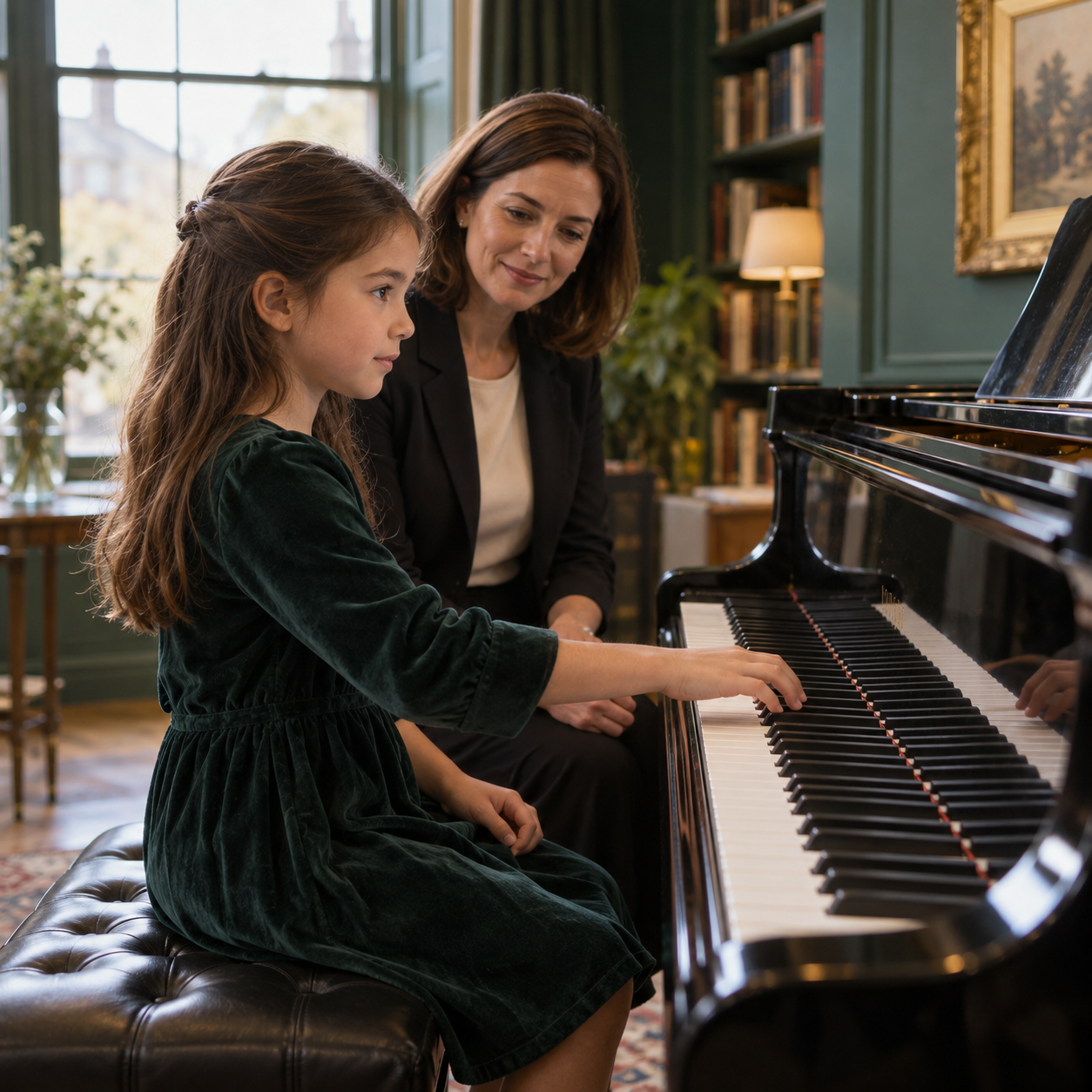
Fluency grows when the child can hear the whole pattern while the body organises each step.
Four games for building a movement pattern
Try a three-note echo: the teacher plays a short pattern and the child copies its notes and timing. Use a silent sequence next, touching three keys without depressing them before playing the phrase aloud. Practise a hand-change relay in which one hand finishes and the other begins without a gap. Finally, transpose a familiar pattern so its order survives in a new place.
Each game should remain short enough for success to be heard. If motor sequencing breaks down, reduce the number of actions, slow the pulse without stopping between notes, or return to tapping. Once secure, change one feature such as starting pitch, dynamic or articulation. Variation reveals whether the child understands the pattern or has memorised one narrow sensation.
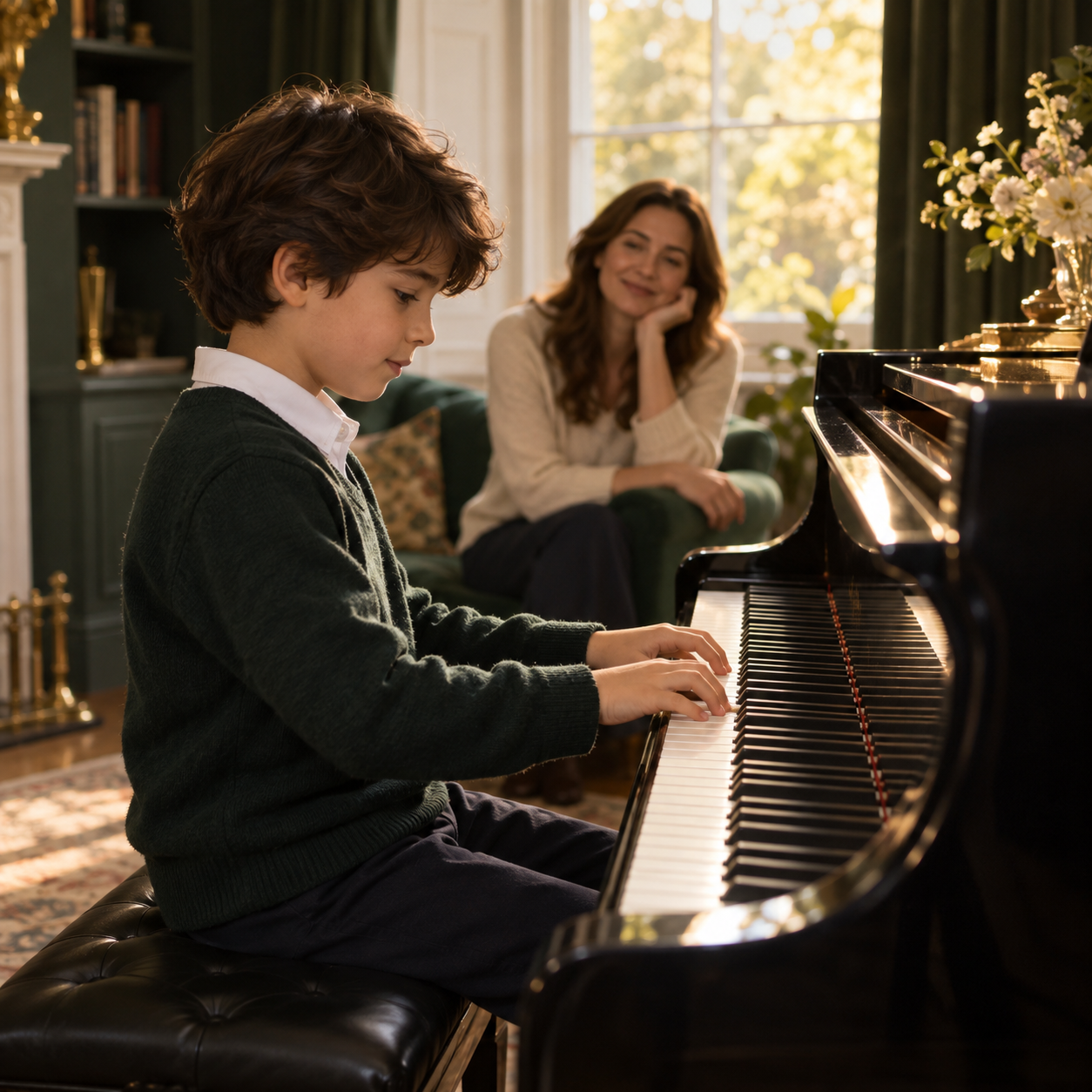
What parents can notice at home
Progress appears when a child starts with less searching, groups notes naturally, prepares a thumb crossing earlier or recovers without returning to the beginning. Ask the child to show the pattern slowly, then describe where it changes. A brief, accurate sequence repeated three times is more useful than a long passage repeated while attention fades.
Motor sequencing is a musical learning process, not a diagnosis. Children develop at different rates, and piano lessons should remain proportionate and encouraging. If movement difficulties are persistent across everyday activities, families should seek advice from an appropriately qualified professional while the teacher continues to adapt tasks and protect the child’s musical confidence.
WKMT London
Give your child a lesson environment where rhythm, movement and listening are developed as one musical skill.
Explore children’s piano lessonsSources on motor sequencing
- PLOS ONE: pitch feedback, motor timing and sequencing in novice piano learning
- Scientific Reports: rhythm perception and music-related motor learning in children
- Frontiers in Neuroscience: melodic priming of motor sequence performance
- PLOS ONE: music training and timed movements across development
- Frontiers in Psychology: auditory-motor interactions in music
- NHS: developmental co-ordination disorder overview
Sources checked 19 September 2026. Educational guidance; individual circumstances and progress vary.