
 TRIAL LESSON
Piano Lessons
Auditory Sequencing: Why Piano Teaches Children to Hear What Comes Next
Sep
WKMT London parent guide
Auditory Sequencing: Why Piano Teaches Children to Hear What Comes Next
A melody is not a bag of correct notes. It is an order: this sound leads to that one, a rhythm creates expectation, and a phrase makes sense because the child remembers what has just happened. Piano lessons turn that invisible order into something a young musician can hear and shape.
In brief
Auditory sequencing is the ability to perceive, remember and reproduce sounds in the correct order. At the piano, children practise it when they echo rhythms, sing note patterns, follow phrase direction and coordinate a sequence of movements with expected sounds. These activities can strengthen musical listening, but they are not a diagnostic test or a substitute for specialist assessment.
What auditory sequencing means in music
Auditory sequencing begins when a child distinguishes not merely which sounds occurred, but the order in which they occurred. Three notes played C-D-E are not equivalent to E-D-C. A rhythm with a long final sound does not communicate the same gesture when that duration is moved to the beginning. Piano study gives the child immediate, repeatable examples of ordered sound.
The keyboard adds a useful visual and physical map, yet the ear should lead. A teacher might play a short pattern while the pupil looks away, ask for it to be sung, and only then find it on the keys. This separates hearing from guessing by position. Over time, auditory sequencing links sound, memory and purposeful movement.
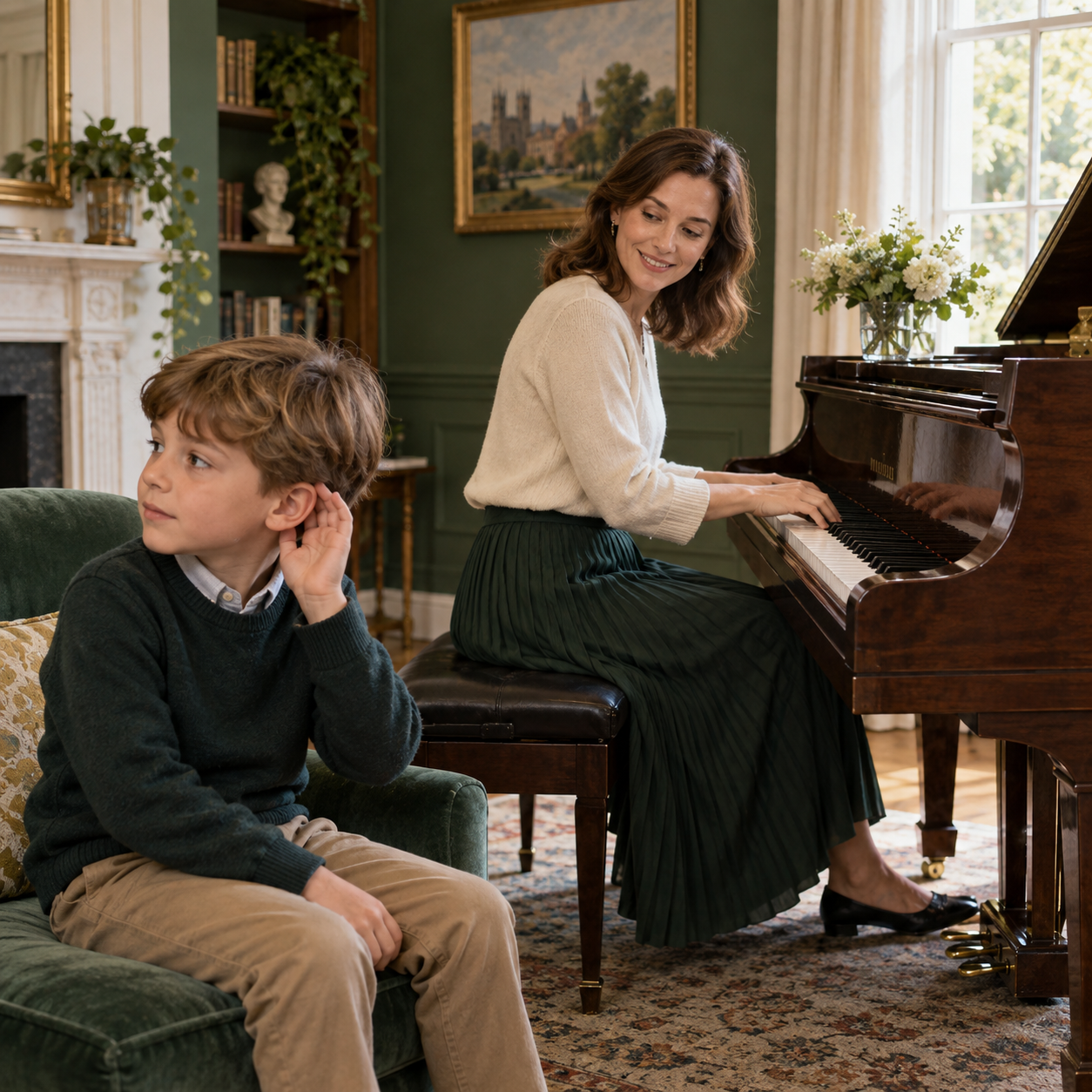
Auditory sequencing through echo, pulse and phrase
Echo games should begin below the child’s memory limit. Two or three sounds, a clear pulse and a distinctive contour are enough. The teacher can then change one feature at a time: add a note, alter the final rhythm or reverse the direction. Because the task stays musical, success sounds like a phrase rather than a laboratory exercise.
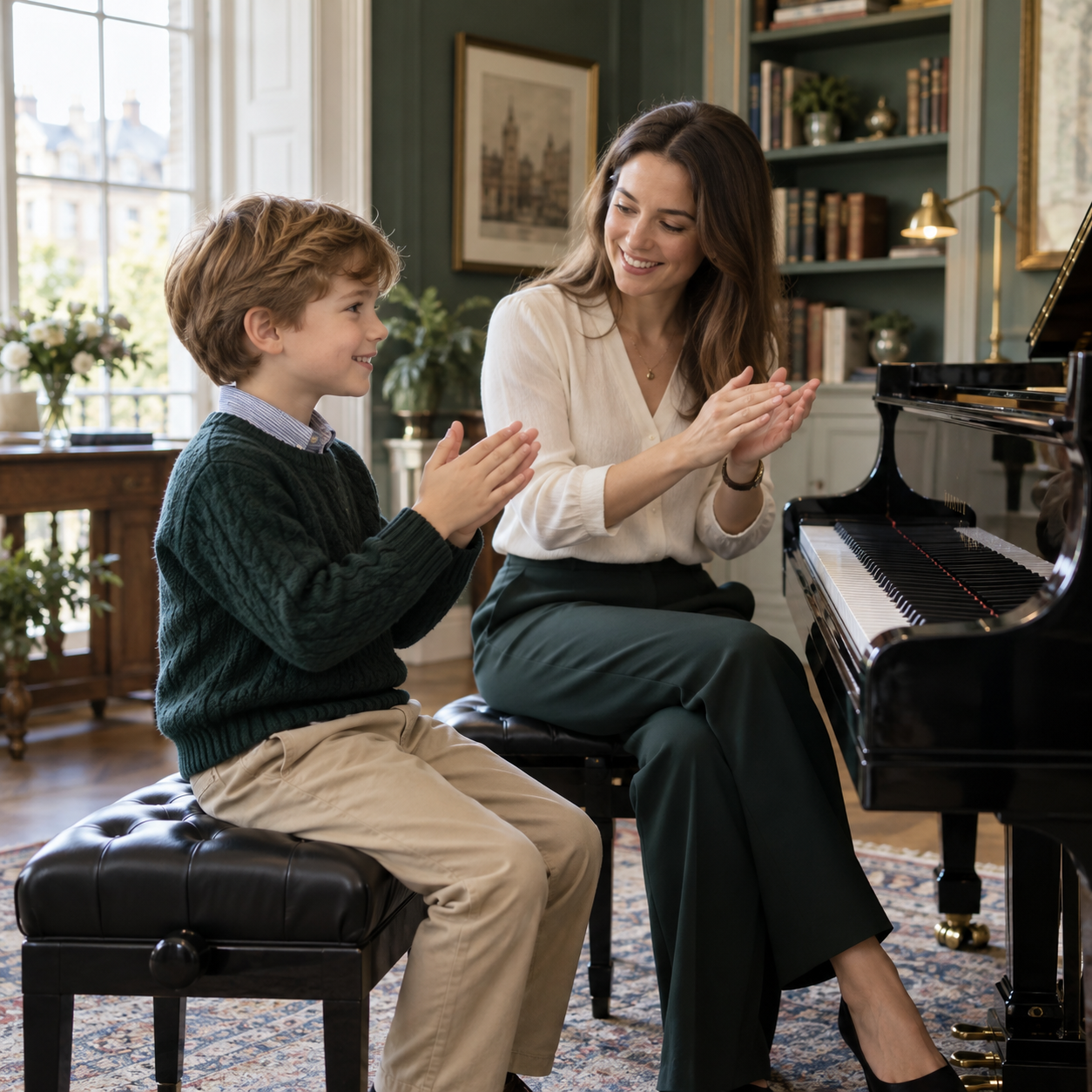
Pulse offers another route. Clapping a pattern and transferring it to one piano key removes pitch difficulty while preserving order. Later, pitch and rhythm can be recombined. This graduated approach helps children’s piano lessons in London remain responsive: the sequence grows only when the pupil can hold the present one with confidence.
What research suggests, and where caution belongs
Research on music learning frequently identifies close links between auditory prediction, motor timing and sequence learning. A piano study with novices found that altered pitch feedback affected sequencing differently from timing, suggesting that learners build expectations about what each movement should sound like. Studies of children also distinguish memory span from sequencing span across auditory and visual tasks.
These findings do not justify promising broad cognitive transformation from a weekly lesson. Development, language experience, attention and prior musical exposure all matter. Auditory sequencing at the piano is valuable first because it helps a child play and understand music. Any wider transfer should be described as a possibility supported by some studies, not a guaranteed outcome.
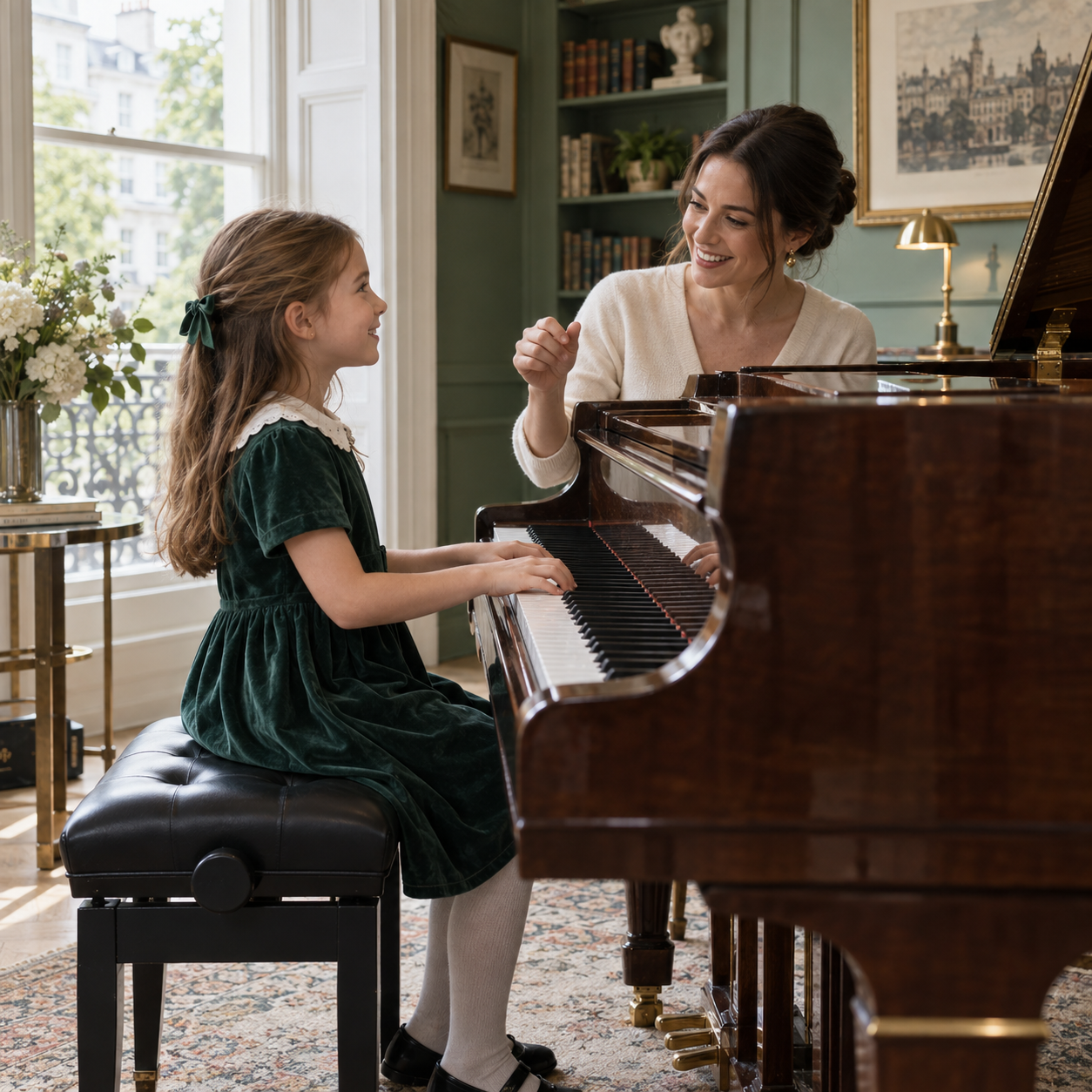
Ordered listening turns separate sounds into a phrase with direction.
Four musical games for ordered listening
Try a two-bar echo in which the final note changes. Ask the child to tap a rhythm, then place its beats on adjacent keys. Sing a five-note tune and leave the last note unfinished so the pupil predicts it. Finally, play a familiar phrase with two notes exchanged and invite the child to repair the order. Each game asks for attention, memory and a musical decision.
Keep language simple: first, next, last, same, changed. If the pupil loses the sequence, shorten it rather than repeating at greater volume. WKMT’s article on music and memory explains why recall improves when material is organised into meaningful groups rather than treated as an undivided chain.
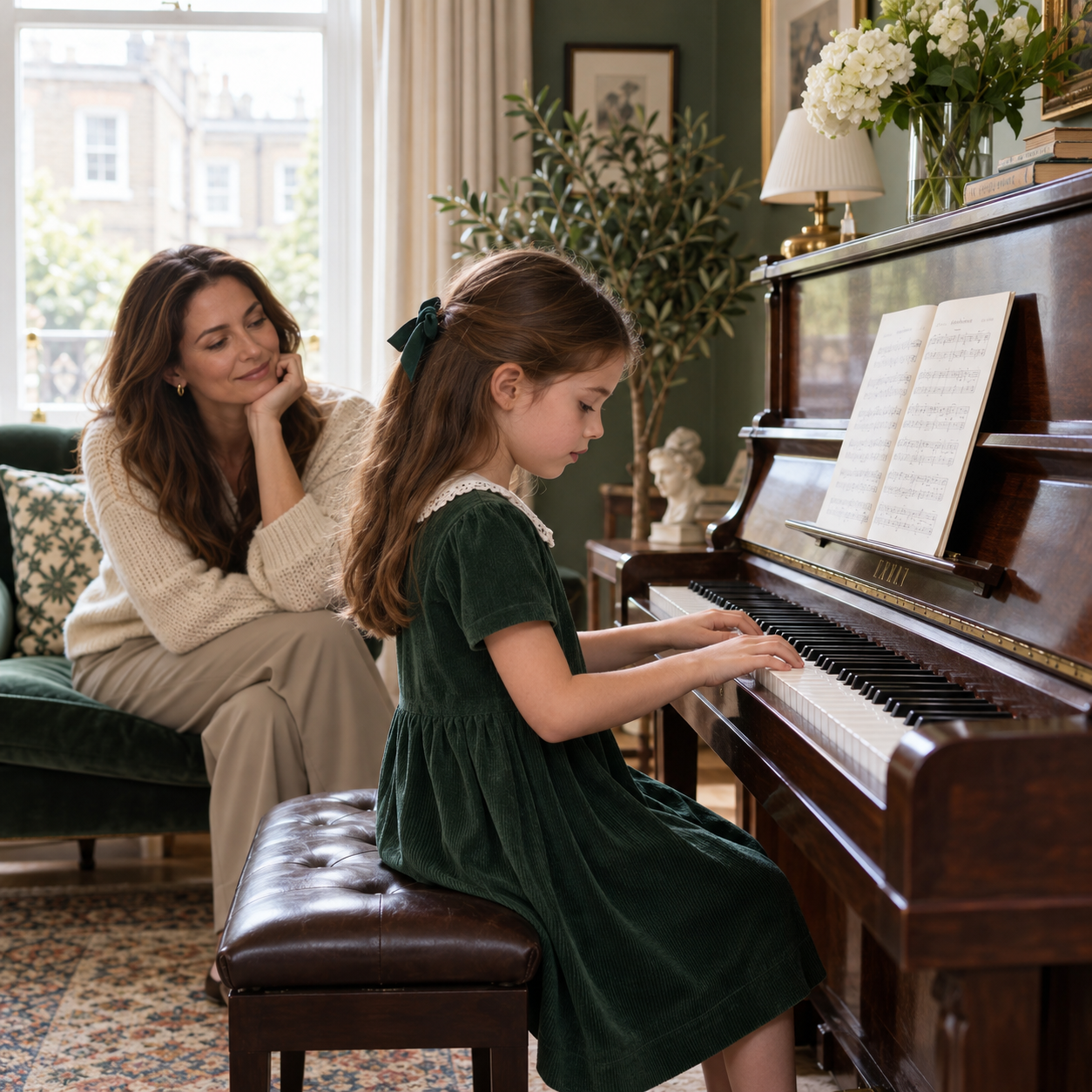
How parents can support auditory sequencing at home
Use tiny routines. Tap a three-beat pattern on the table and let your child answer. Sing the first half of a known tune and pause. During practice, ask where a phrase begins again rather than correcting every note. Two attentive minutes are enough when the activity is precise and enjoyable.
Watch for musical signs of progress: the child begins in the right place after a pause, catches a reversed interval, or remembers which hand enters next. Those behaviours show auditory sequencing becoming usable. If a parent has wider concerns about hearing, speech or development, a qualified professional should guide assessment; the piano lesson should remain a creative educational space.
WKMT London
Give your child a lesson environment where listening, movement and musical imagination grow together.
Explore children’s piano lessonsSources
- PLOS ONE: pitch feedback, timing and sequencing
- PubMed: auditory, visual and combined sequencing in children
- Behavioural Neurology: musical sequence learning
- Psychology of Music: piano lessons and verbal sequencing
- PubMed: music training and statistical auditory learning
- Harvard DASH: music, language and reading review
Sources checked 16 September 2026. Educational guidance; individual circumstances and progress vary.