
 TRIAL LESSON
Piano Lessons
Mind-Body Connection: Why Piano Lessons Help Adults Coordinate Attention
Sep
WKMT London adult learner guide
Mind-Body Connection: Why Piano Lessons Help Adults Coordinate Attention
A musical idea becomes sound through weight, timing, touch and release. Adults often understand the phrase before their hands can produce it; piano study closes that gap by training attention to move between intention, sensation and result.
How the mind body connection works at the piano
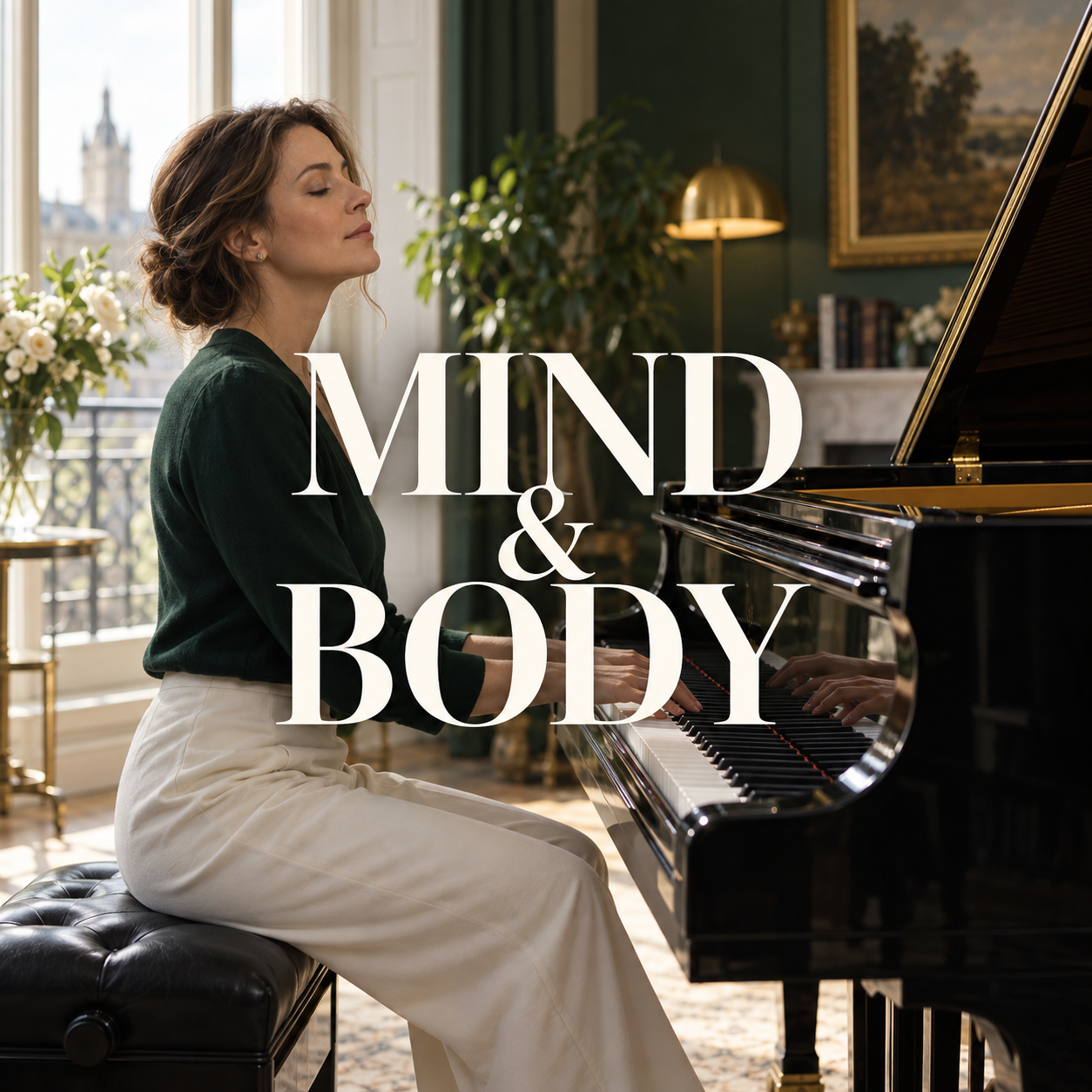
Playing a note is never merely a finger event. Vision may locate the keyboard, hearing predicts pitch and tone, touch registers the key, proprioception reports where the arm is, and movement produces the result. The brain compares expectation with what actually happened. This perception-action loop repeats at musical speed and becomes more economical through well-directed practice.
Research on the adult musician’s brain describes instrument learning as multisensory and sensorimotor training. Auditory, visual, tactile and proprioceptive information interact with movement, memory, attention and emotion. The phrase mind body connection is therefore useful when it names coordination. It becomes less useful when it implies a mysterious state that can replace specific musical work.
Intend
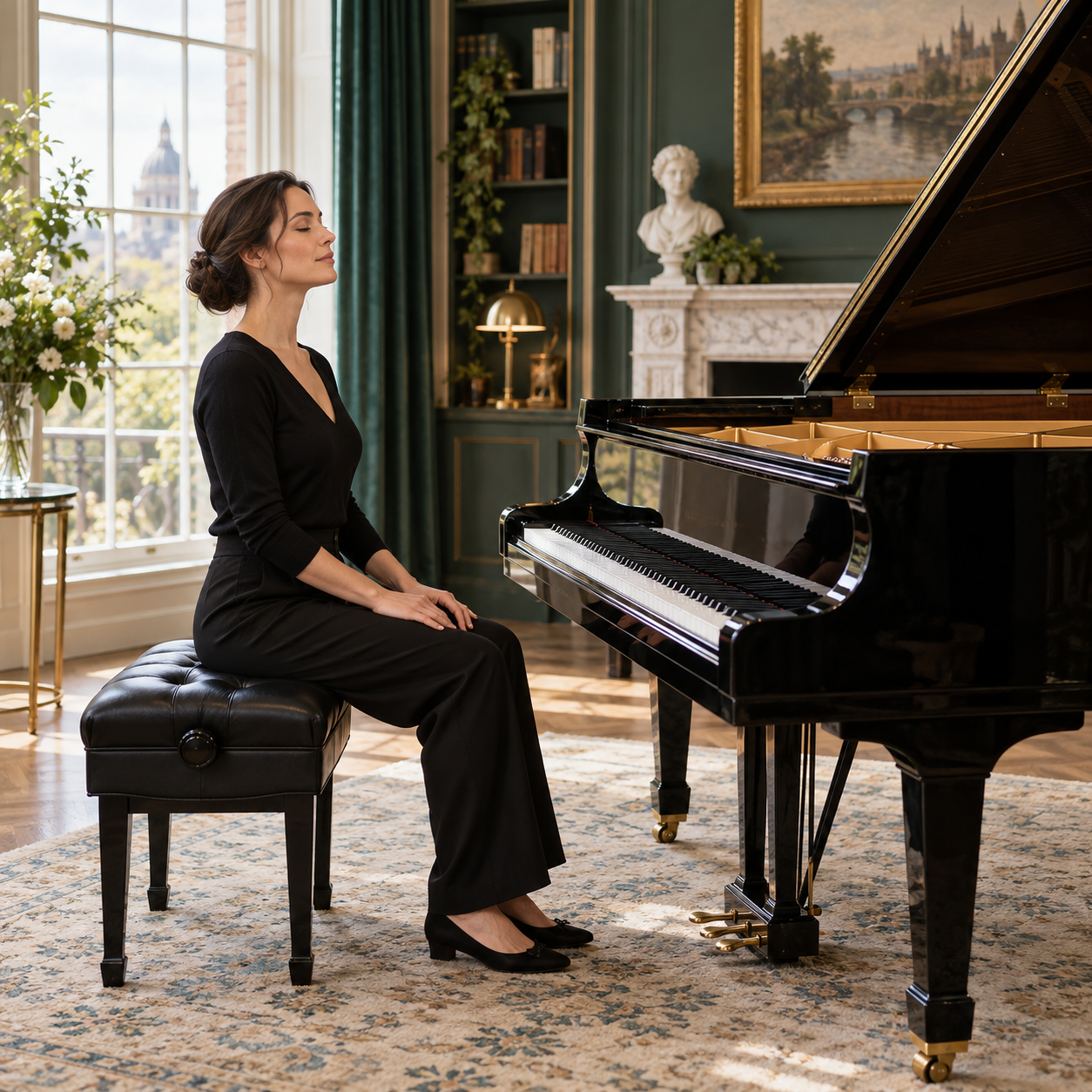
Hear the phrase and name one musical outcome before touching the keys.
Act
Use the smallest free movement that can produce that result.
Check
Listen and feel, then adjust one variable before repeating.
Why adult pianists often feel a gap between idea and action
Adults can hear more than they can immediately play. They may know that a melody should sing, yet tighten the shoulder while trying to control it. They may understand the rhythm, then lose it while watching every finger. This mismatch is not a lack of musicality. It is the normal stage at which a clear intention has not yet found an efficient movement pattern.
Excess internal monitoring can make the problem worse. A systematic review of attentional focus in music found a small and varied evidence base, but it highlights an important teaching question: where should attention go at each stage? Sometimes the body needs direct correction. At other moments, focusing on sound, direction or the felt destination of a gesture allows coordination to organise more naturally.
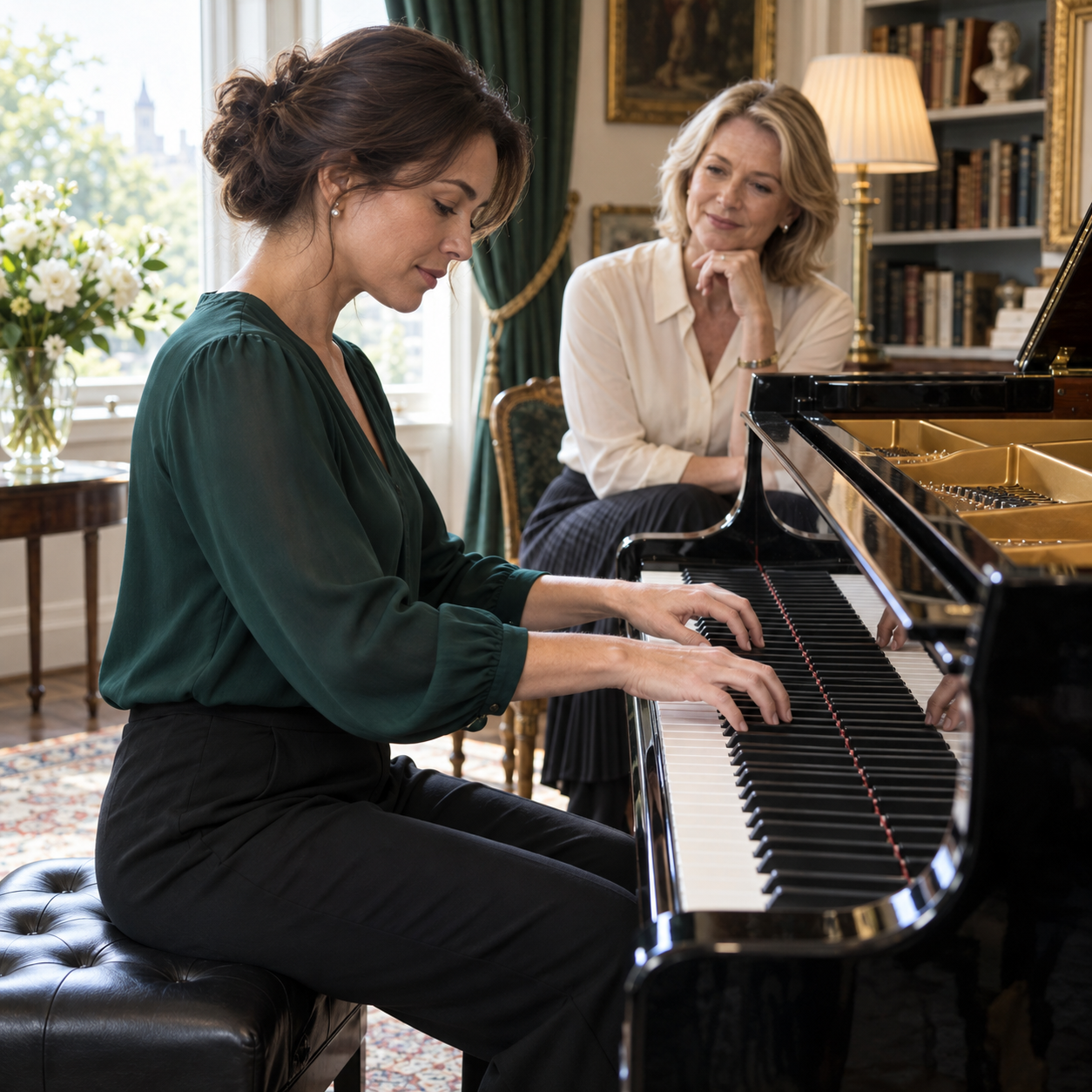
Reliable technique is a conversation between intention, movement and sound, repeated until the three begin to agree.
A practical mind body connection routine
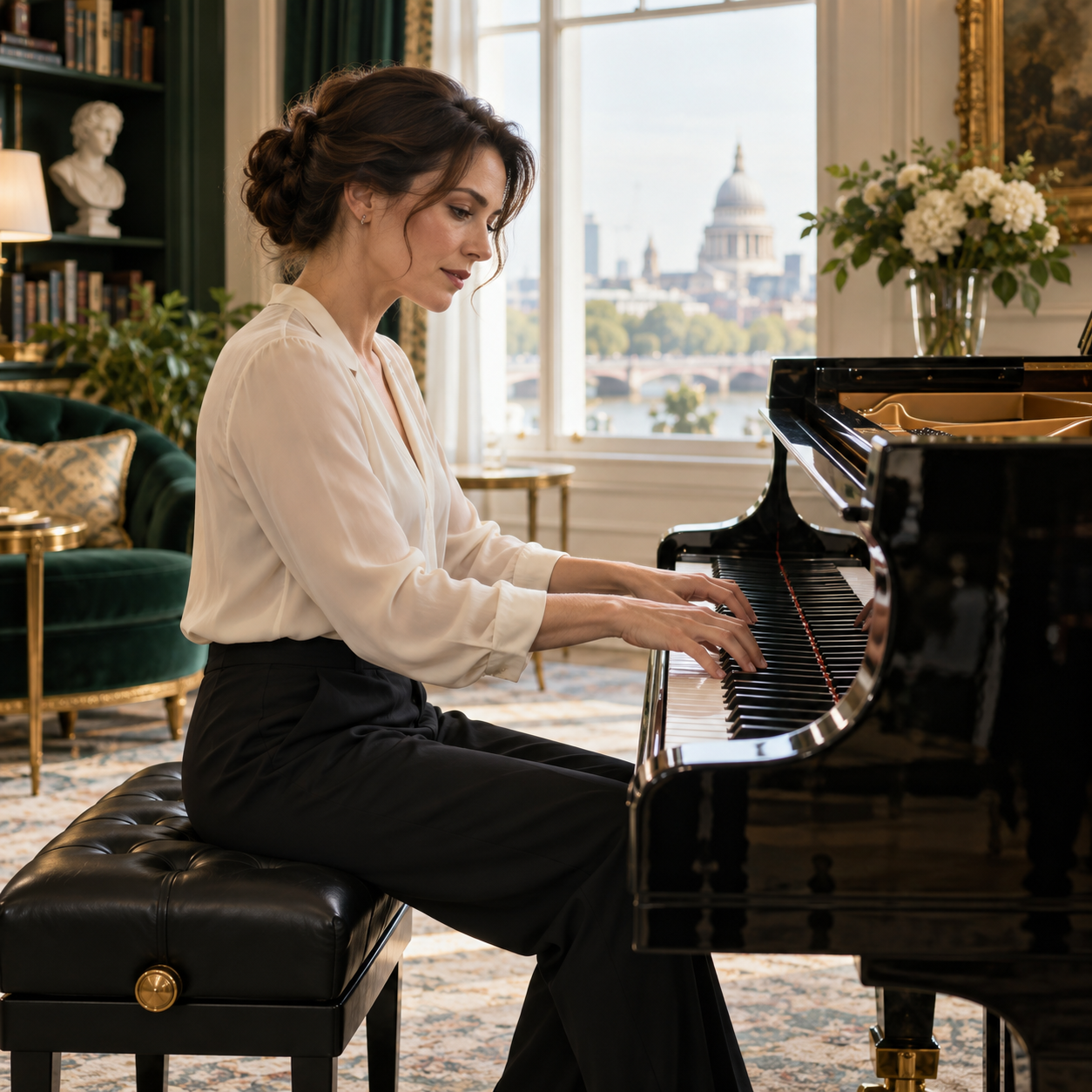
Begin away from the keys. Hear the first phrase inwardly and breathe without lifting the shoulders. At the piano, play only the melodic line with an easy arm path. Add the bass and notice whether balance changes. Restore the inner voices last. Between attempts, name one audible outcome rather than compiling a list of body parts to control.
Next, alternate slow correction with a complete phrase. Slow work gives the nervous system time to map detail; continuity tests whether those details belong together. Record a short passage and compare sound with sensation. What felt effortful may not sound more expressive, while a quieter movement may project better. The mind body connection strengthens when feedback is honest and the task stays small enough to adjust.
How a teacher helps adults coordinate attention
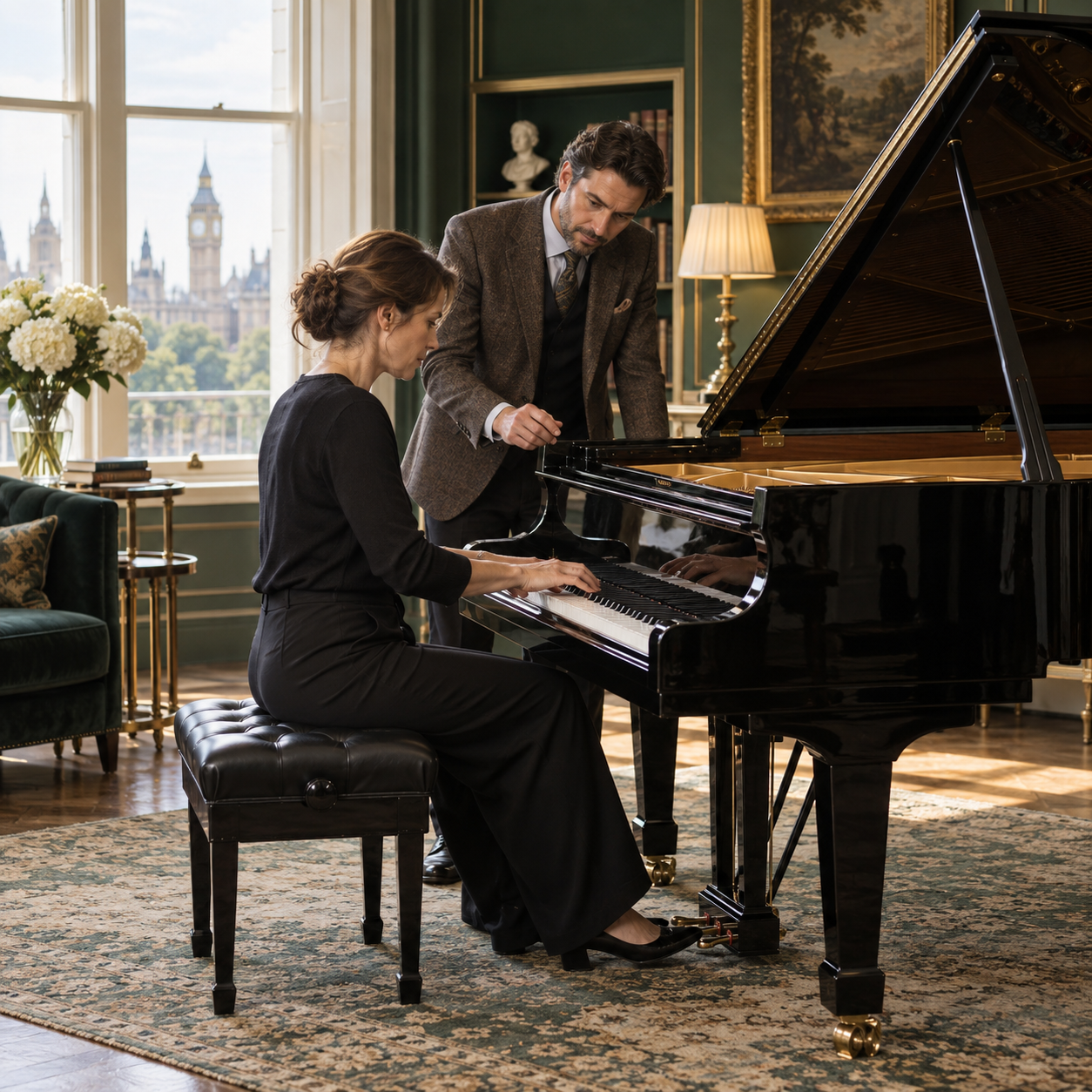
A teacher can see compensations the player cannot feel: a collapsing wrist, a held breath, a bench position that blocks lateral movement or pedalling that masks an insecure release. The correction should connect immediately to sound. Move the bench, free the arm, replay the phrase and listen for the musical consequence. Physical advice without an audible purpose soon becomes another burden.
WKMT London adult piano lessons bring technique, repertoire and reflective listening into one process. The teacher helps the student decide when to analyse movement, when to trust a prepared gesture and when to listen from the audience’s perspective. The aim is not perfect bodily awareness at every second. It is dependable coordination in service of phrasing, colour and musical confidence.
For a related WKMT perspective, read how piano coordinates hands, ears and attention.
WKMT London
Build an adult piano practice in which technique is explained clearly, musical goals stay central and physical choices are refined through attentive feedback.
Sources on mind body connection
- PMC: how musical training shapes the adult brain
- PMC: action-perception coupling in musicians
- PMC: focus of attention in musical learning
- PMC: instrument playing as cognitive intervention
- PMC: musical practice and healthy ageing
- Cardiff University: instrument training and executive functions
Sources checked 11 September 2026. Educational guidance; individual learning and development vary.