
 TRIAL LESSON
Piano Lessons
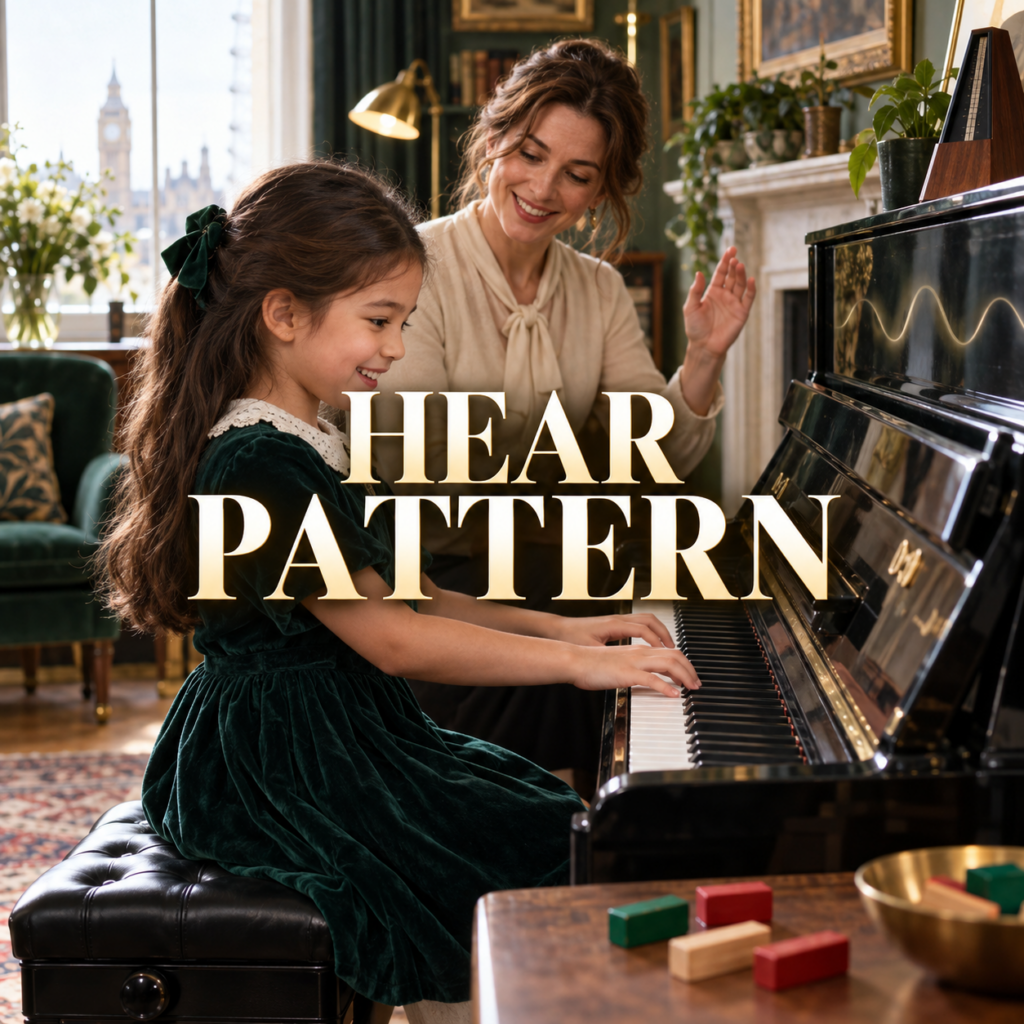
Phonological Awareness: Why Piano Lessons Can Help Children Hear Pattern
Sep
Phonological awareness – Complete Guide
WKMT London parent guide
Phonological Awareness: Why Piano Lessons Can Help Children Hear Pattern
Before children connect sounds to letters, they learn to notice how spoken language is built. Music does not replace literacy teaching, but rhythm, echo and pattern can give the listening mind another disciplined place to practise.
What phonological awareness means
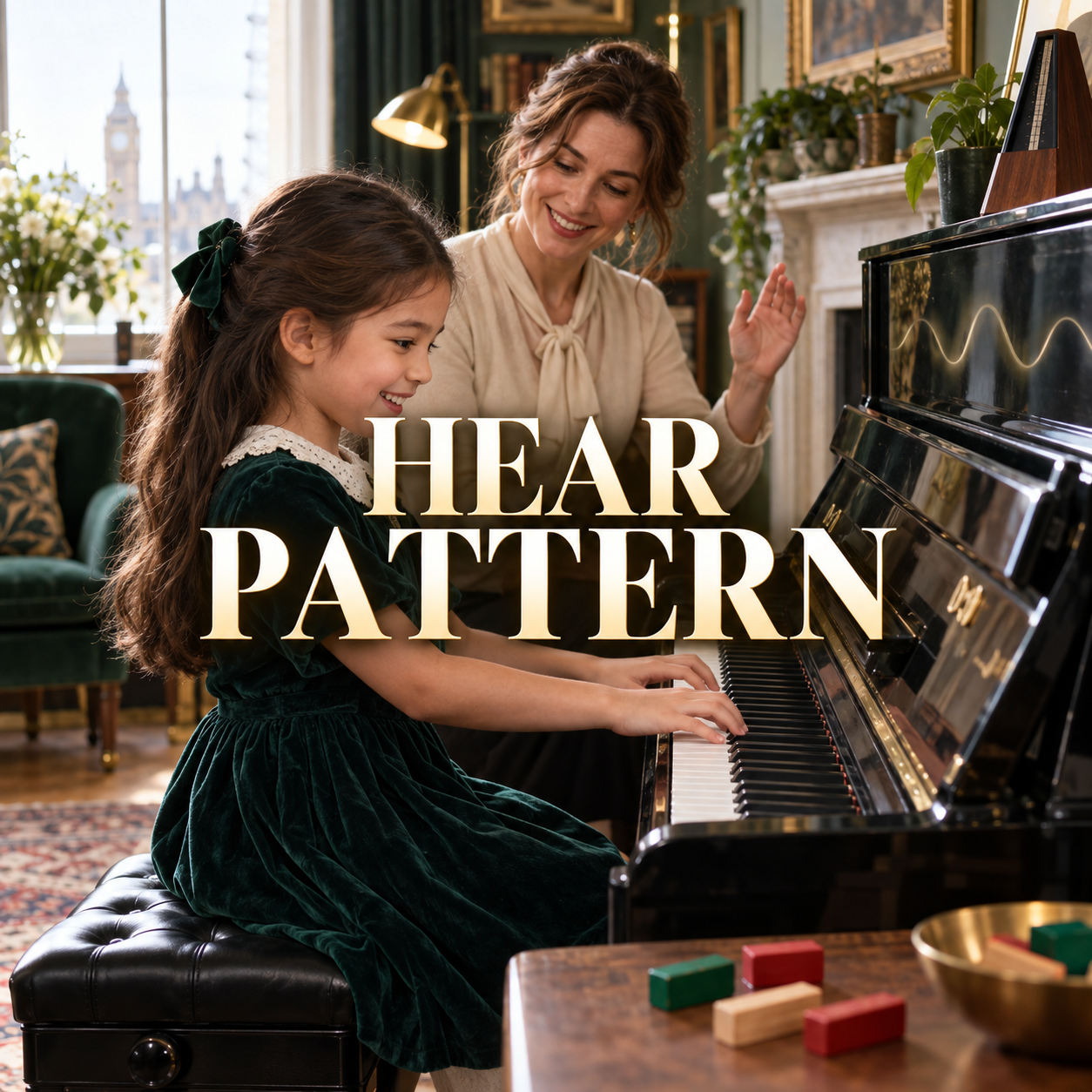
Phonological awareness concerns sound rather than print. A child may notice that two words rhyme, clap the syllables in a name, identify an opening sound or blend small sound units into a word. Phonemic awareness is the narrower ability to attend to individual speech sounds. Phonics is different again: it connects sounds with written letters and letter patterns.
That distinction protects expectations. A piano teacher does not diagnose language needs and a music lesson is not a reading intervention. Yet both speech and music unfold through time. They ask the listener to detect beginnings, endings, repetition, accent and grouping. Those shared demands help explain why researchers examine musical rhythm alongside phonological awareness.
Hear
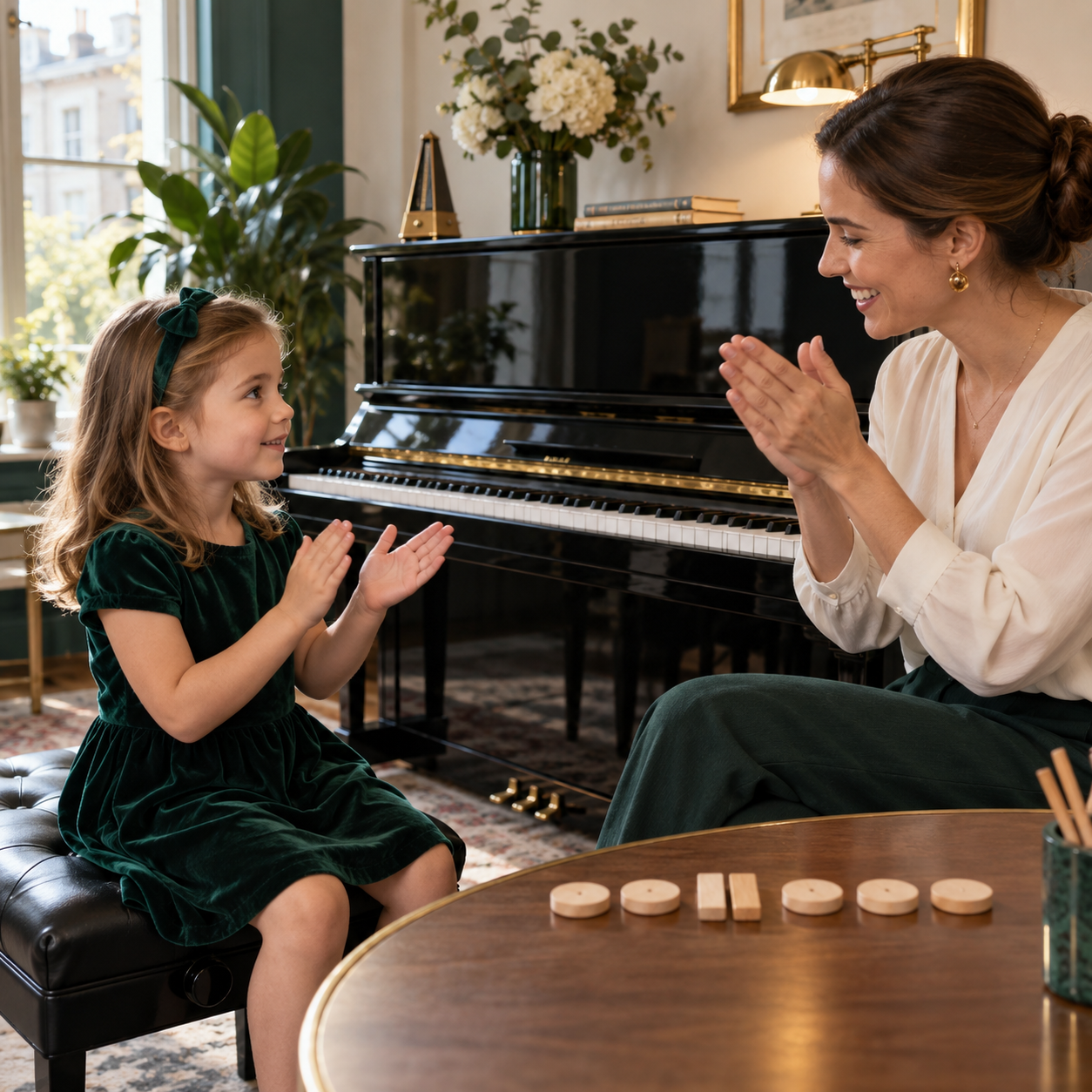
Listen to the whole pattern before moving toward the keys.
Group
Notice beats, pauses and repeated shapes rather than isolated notes.
Answer
Echo the pattern, compare it with the model and try one precise change.
What the research says about music and phonological awareness
A 2015 meta-analysis found a small but statistically significant advantage for music training on phonological awareness when reading instruction was controlled. The effect size was modest, and outcomes differed across studies. Reviews of music and language development likewise describe promising relationships between rhythm, melody, prosody and early language while warning against simple claims of automatic transfer.
Beat processing may be particularly relevant because music and speech both organise complex sound sequences through timing, accent and grouping. Studies have linked rhythm perception with rhyme awareness and reading-related skills. Association is not the same as cause, however. A child who thrives musically may also receive other forms of support, and teaching quality, duration and starting ability all matter.
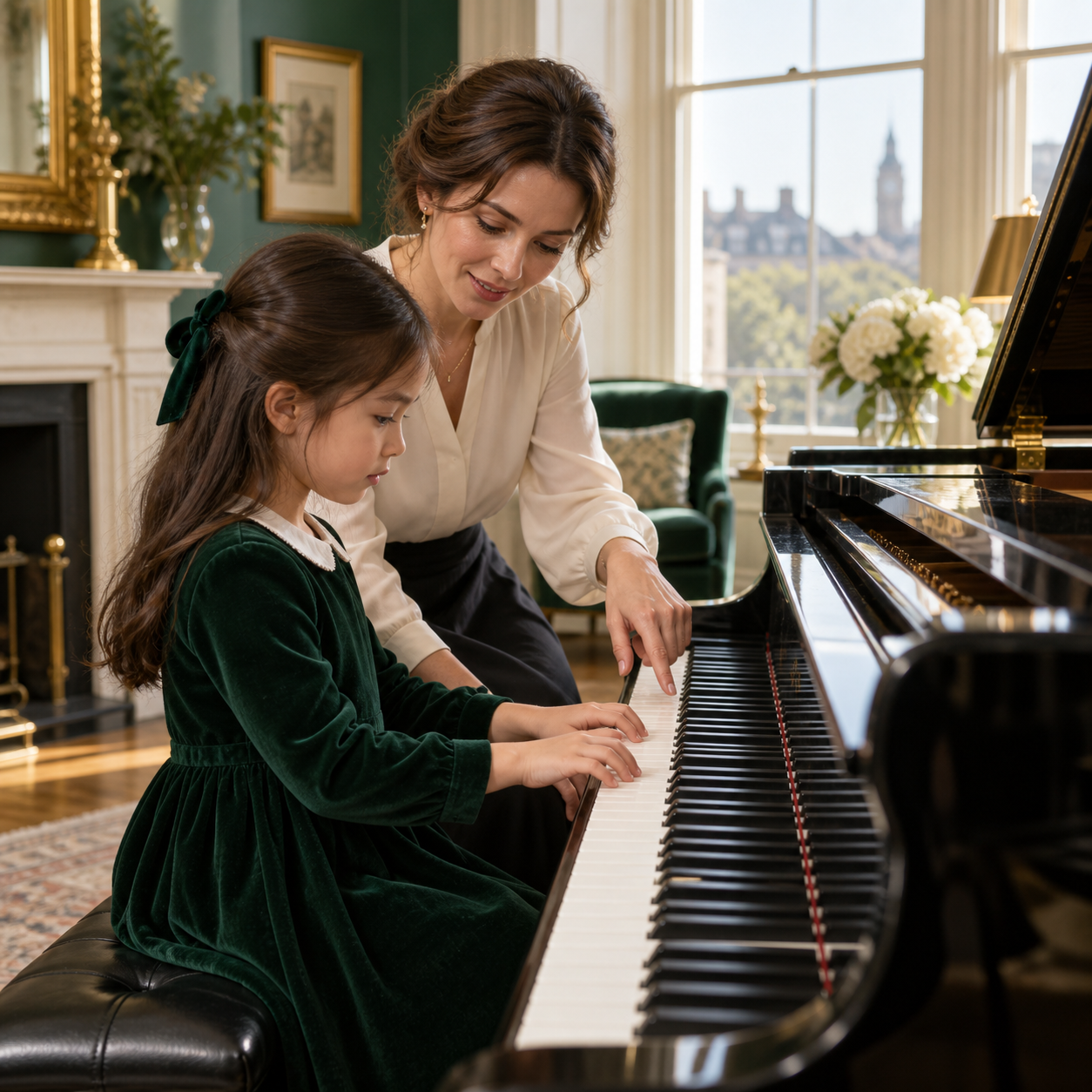
Music helps most when listening is treated as an active skill, not as a vague benefit that happens in the background.
How piano lessons can make sound patterns audible
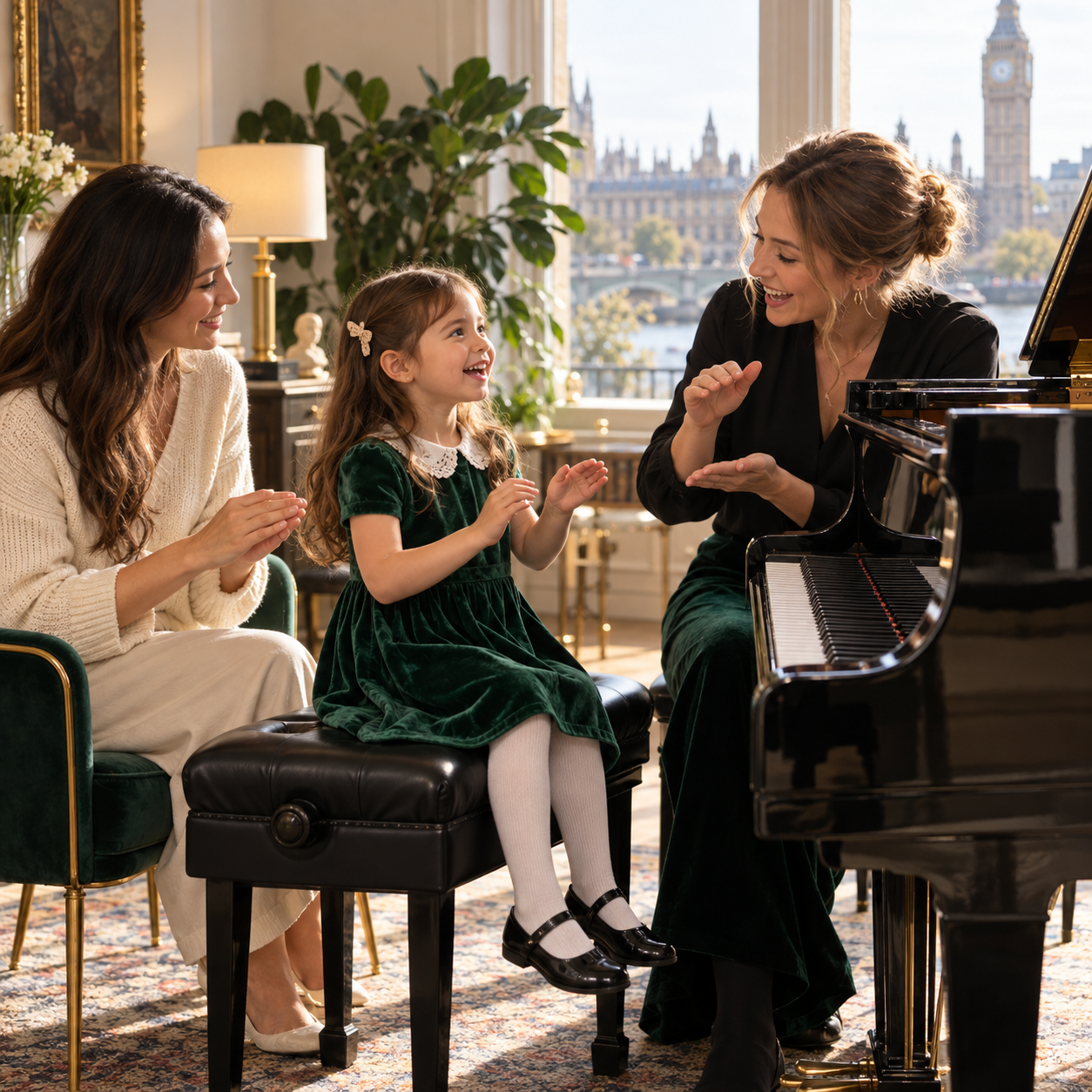
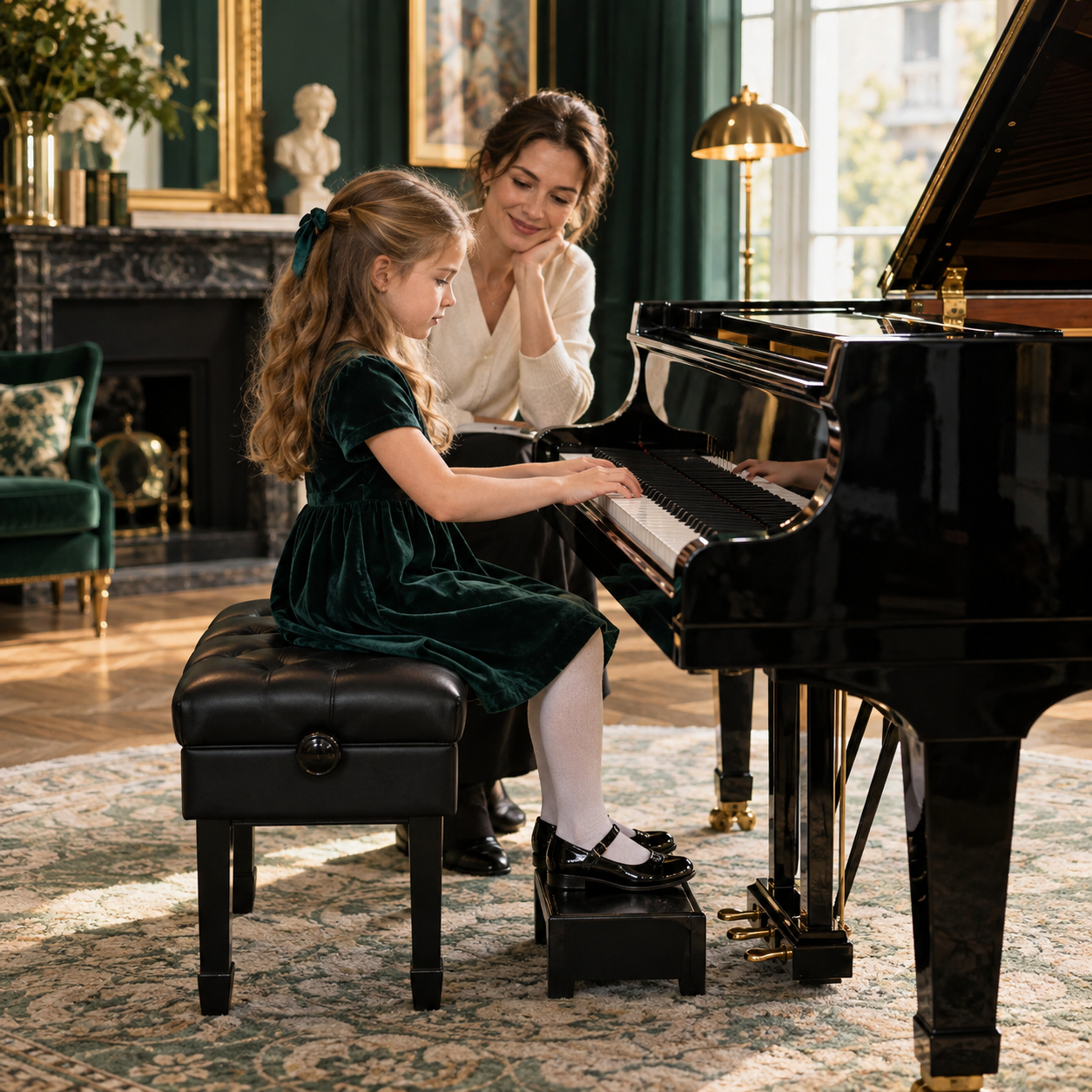
At the piano, a teacher can offer a short two- or three-note pattern and ask the child to echo it. The pattern can then change by one sound, one accent or one pause. The child is not naming letters; they are holding an auditory sequence, comparing it with a model and producing an organised response. Clapping or stepping the same rhythm adds a bodily route into the pattern.
Singing a phrase before playing can also make grouping clearer. A teacher might match a four-syllable spoken name to four sounds, then contrast it with a shorter or differently stressed pattern. These activities support phonological awareness indirectly through playful, attentive listening. Their musical purpose remains genuine: pulse, phrasing, memory and ensemble response all improve when a child hears structure.
A proportionate guide for parents
Look for musical signs of growth: the child echoes a pattern more accurately, notices when the teacher changes an ending, keeps a steady beat for longer or sings and plays with clearer grouping. These are worthwhile achievements in their own right. They may sit alongside developing phonological awareness, but parents should not treat a piano lesson as proof that reading difficulties will disappear.
WKMT’s piano lessons for children in London use face-to-face teaching so sound, movement and attention can be adjusted in the moment. If a child has persistent speech, language or literacy concerns, the appropriate school and clinical professionals should remain central. Piano can contribute a rich listening environment while keeping its honest promise: learning to hear and shape music.
For a related WKMT perspective, read listening skills children develop beyond reading notes.
WKMT London
Give your child structured musical study in which rhythm, listening, memory and confident response are taught together.
Sources on phonological awareness
- PMC: music training and literacy meta-analysis
- PubMed: musical rhythm and reading development
- PMC: music and language in children review
- PMC: music-based interventions for reading difficulties
- PubMed: rhythm processing, phonological awareness and reading
- PMC: auditory temporal training systematic review
Sources checked 11 September 2026. Educational guidance; individual learning and development vary.