
 TRIAL LESSON
Piano Lessons
Creative Ageing: Why Piano Learning Stays Possible and Serious
Sep
WKMT London adult learner guide
Creative Ageing: Why Piano Learning Stays Possible and Serious
Creative ageing at the piano is not a softened version of musicianship. It is serious learning shaped around an adult body, an adult ear and a lifetime of musical memory.
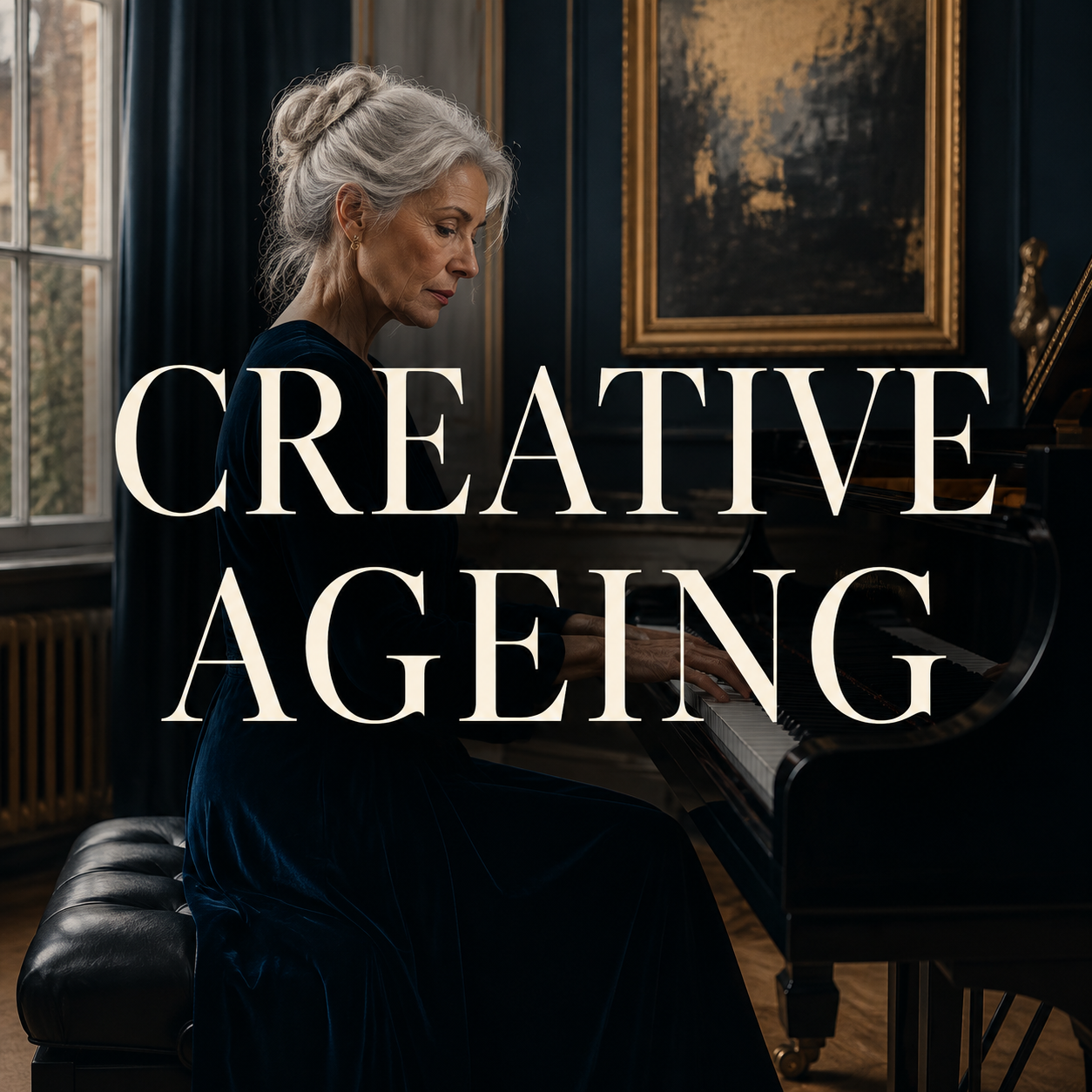
Adults sometimes approach a first lesson with an apology: they are too old, too slow, or should have started decades earlier. None of those statements describes what a teacher actually sees. The adult learner may read cautiously but hear harmony keenly, struggle with a fingering but understand the emotional architecture of a phrase. Creative ageing begins when those uneven strengths are treated as material, not embarrassment.
Learning will not feel identical at sixty-five and sixteen. Processing speed, hearing, vision, joint comfort and available time may differ. So do patience, self-knowledge and the ability to connect music with literature, memory and lived experience. Serious pedagogy works with the whole profile.
What creative ageing looks like at the piano
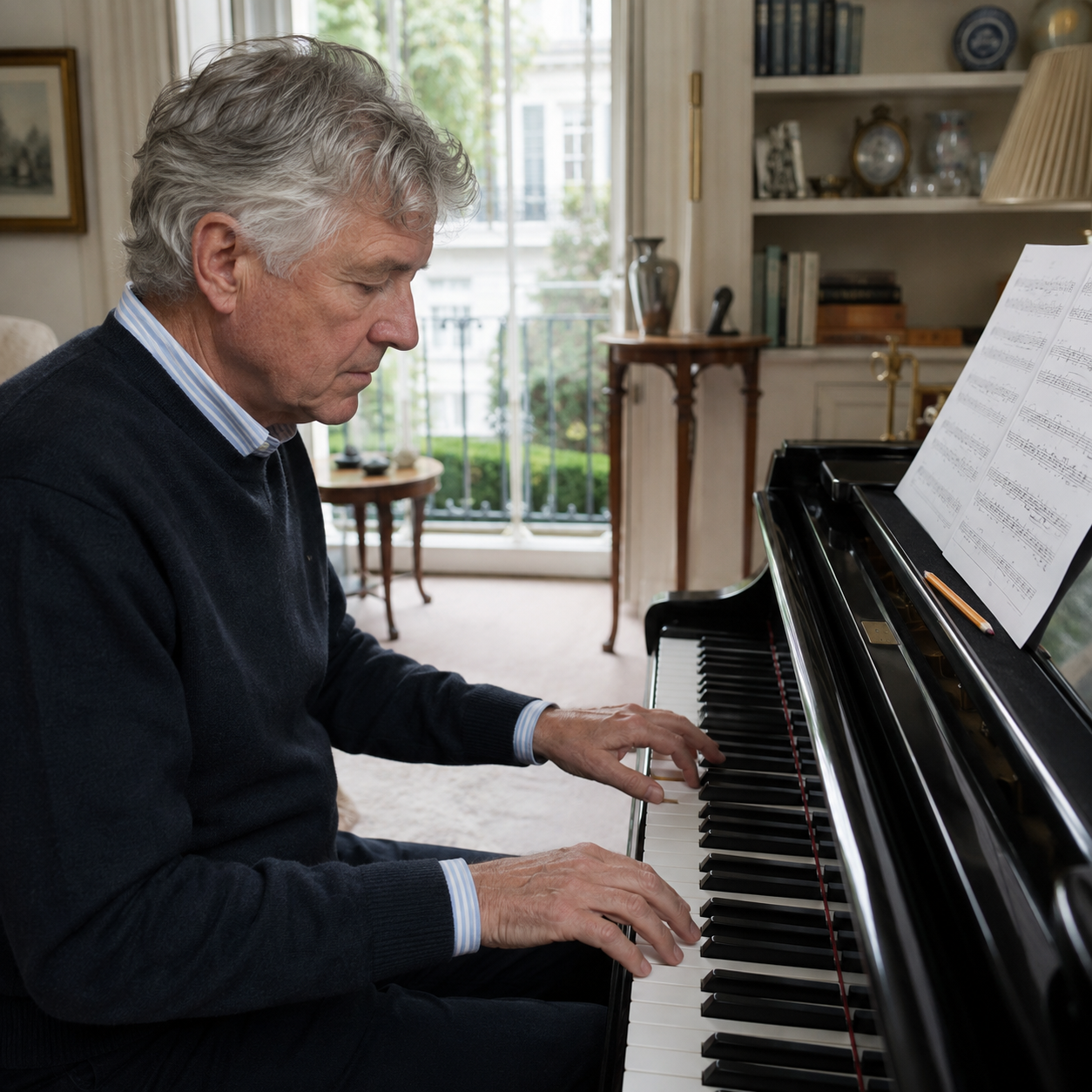
It may begin with one melody played comfortably, then grow into reading two staves, balancing a chord or shaping a cadence. Progress is multidimensional. A learner can deepen tone and phrasing even while tempo develops slowly. This is why adult assessment should not reduce music to speed or grade.
A 12-month study of older adults without prior musical training found that participants acquired a range of musical skills through weekly piano practice. A related randomised trial reported quality-of-life gains associated with piano practice compared with a music-listening group. These results support possibility, not promises about any one person.
Technique
Choose fingering, hand span and tempo that preserve ease and sound.
Understanding
Use harmony and form to reduce memory load and make interpretation clearer.
Expression
Treat voicing, timing and character as central from the first lesson, not rewards saved for later.
Research without the miracle language
Studies of older-adult music making discuss cognition, motor skill, mood, social connection and quality of life. The field is promising, but sample sizes, programme design and outcome measures vary. Creative ageing should never be sold as a guarantee against dementia or as a substitute for medical care.
The more defensible claim is also musically richer. Piano provides a complex, meaningful activity in which improvement can be heard. It asks the learner to coordinate perception and movement while pursuing beauty. That combination can sustain motivation better than an abstract exercise because the outcome is a phrase one wants to hear again.
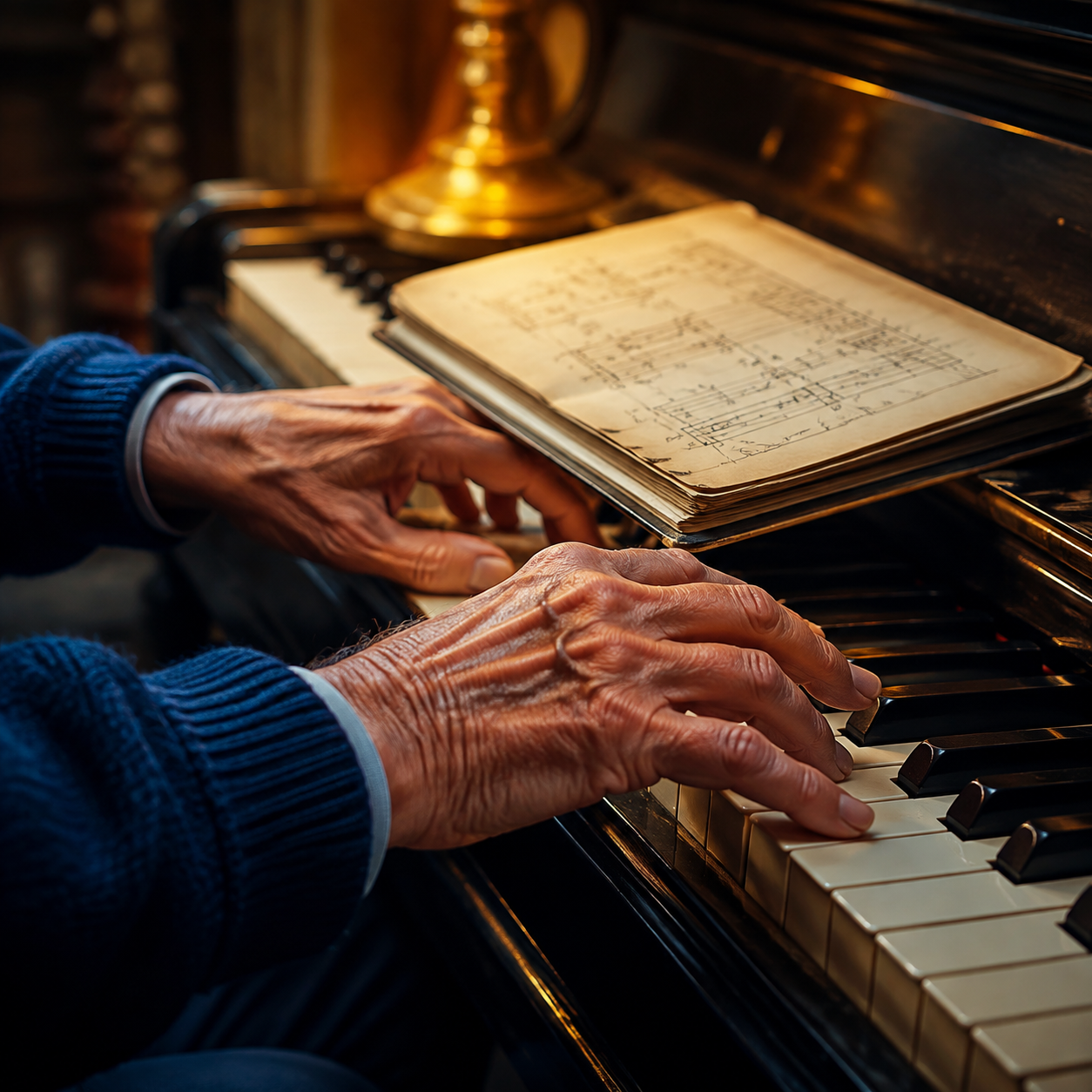
Later-life learning deserves repertoire, standards and interpretation—not merely occupation.
A practice design for creative ageing
Work in short cycles. Begin with two minutes of comfortable movement and sound. Take one phrase, decide on fingering, then practise rhythm and voicing separately. Pause before fatigue blurs the result. End with music already known well enough to be enjoyed.
Use external supports intelligently: pencil markings, enlarged scores, slow recordings and a written plan. These are not concessions. Professional musicians also organise complexity. The adult learner’s aim is to spend attention on music rather than repeatedly solving the same practical uncertainty.
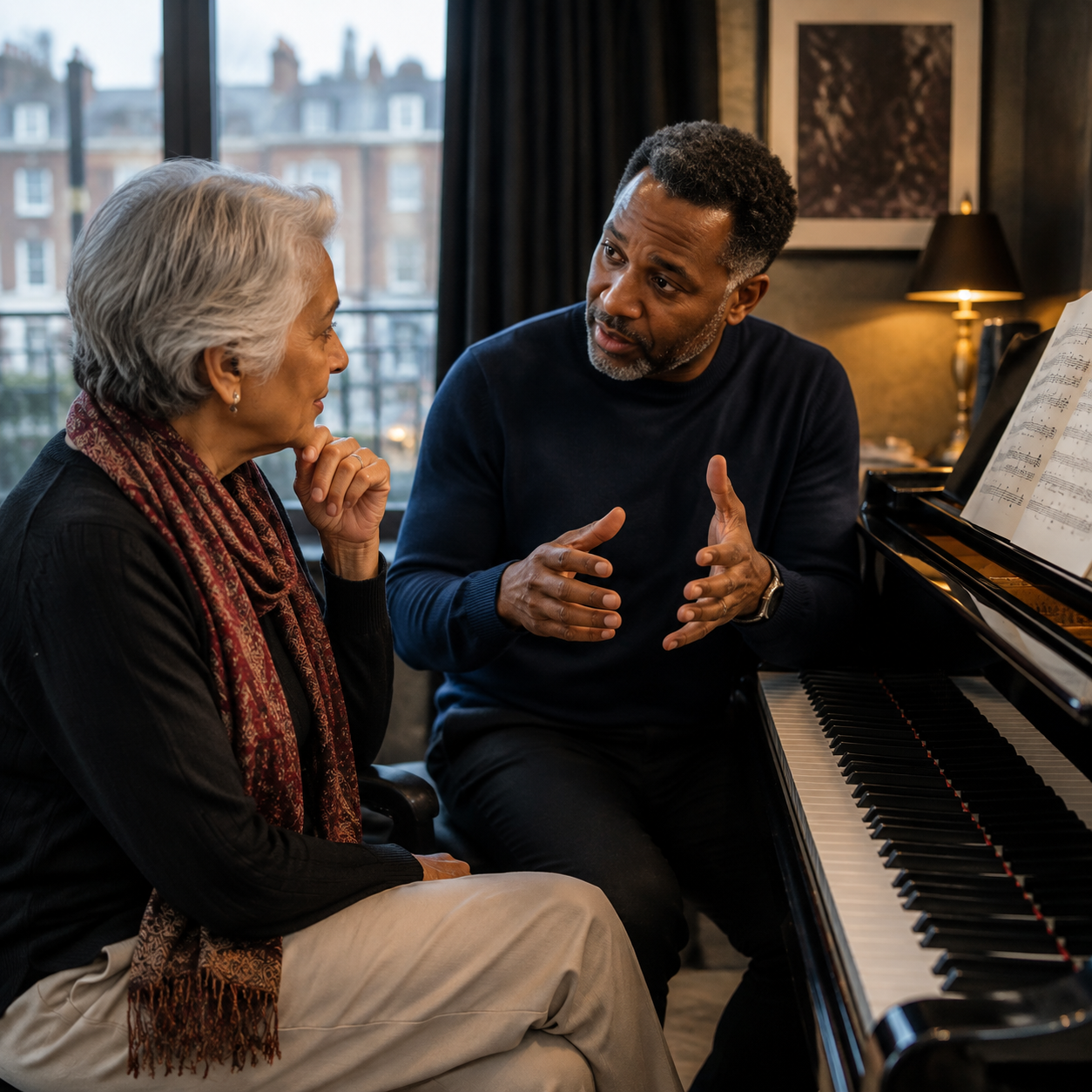
Why face-to-face teaching protects ambition
An attentive teacher can adjust a wrist, hear when pedalling muddies the harmony and choose repertoire that stretches one skill without overwhelming five others. In adult piano lessons at WKMT London, creative ageing can therefore be personal and exact: not a generic older-beginner syllabus, but a developing musical relationship.
For learners wondering whether the starting point has passed, WKMT’s existing guide asks plainly whether you are too old to start piano lessons. The useful answer is not simply no. It is that the method, repertoire and pace must respect the learner now.
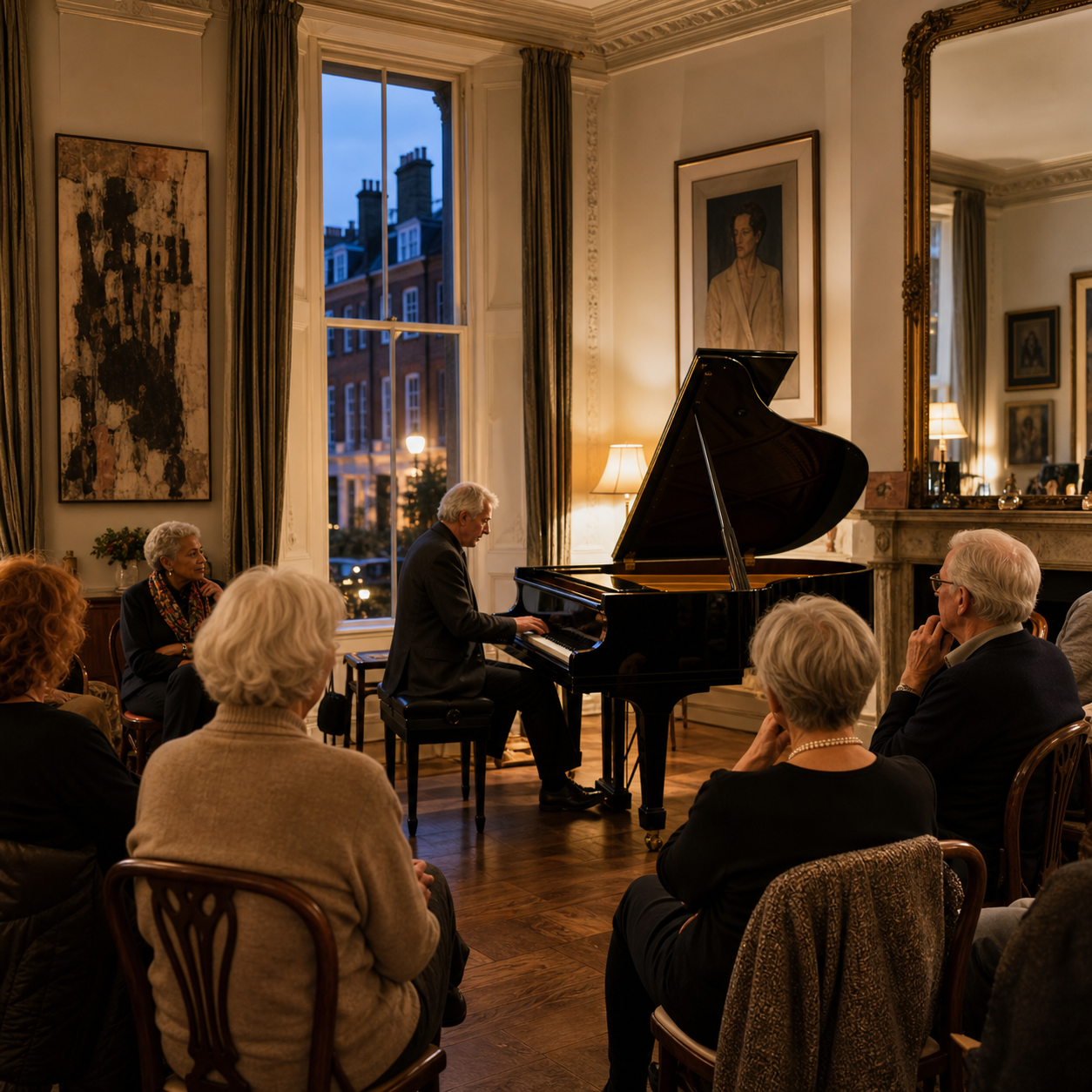
WKMT London
If you want later-life piano study to be serious, flexible and musically rewarding, explore WKMT’s face-to-face lessons for adults in London.
Sources on creative ageing
- PMC: musical skill acquisition after 12 months of older-adult training
- PMC: randomised trial of piano practice and quality of life
- PMC: cognitive, motor and social factors in older-adult instrument training
- PMC: piano learning, mood and cognition in older adults
- World Health Organization: Decade of Healthy Ageing
Sources checked 4 September 2026. Educational discussion only; no health outcome is guaranteed.