
 TRIAL LESSON
Piano Lessons
Piano Practice Schedule: How Adults Build a Real Week

Aug
WKMT London adult practice guide
Piano Practice Schedule: How Adults Build a Real Week
A piano practice schedule should survive a real working week. The aim is not to fill every day with identical minutes, but to give technique, repertoire, listening and reflection a dependable place while leaving room for tired evenings and unexpected demands.

The adult problem is rarely a complete absence of motivation. It is competition between music and everything else. A vague promise to practise more loses to a precise meeting, commute or family obligation. A piano practice schedule works when it converts intention into small appointments and makes the first action obvious.
WKMT London offers individual adult piano lessons in London in Kensington, Camberwell, Bermondsey, Highbury and online. A teacher can set priorities, but the learner’s week determines how those priorities are distributed. The plan must reflect available energy as well as available time.
Build a piano practice schedule from outcomes
Begin with the lesson-to-lesson outcome. Perhaps it is a secure left-hand pattern, a memorised exposition, a steadier scale or two phrases with clearer voicing. Break that outcome into actions that fit one sitting. “Practise the sonata” is too large; “play the bass alone in bars 17-24, then rebuild at half speed” gives the hands and ear a place to begin.
Research on deliberate practice shows that structured effort matters, but it does not reduce achievement to raw hours. A widely cited meta-analysis of deliberate practice found meaningful relationships while also showing that practice explains only part of performance differences. For an adult pianist, the practical lesson is to improve the quality of decisions rather than chase a heroic total.
Outcome
Name one change that should be audible by the end.
Task
Choose a passage and an exact way to work on it.
Evidence
Record, count or compare so progress can be checked.
Next step
Leave a note that makes tomorrow easy to start.
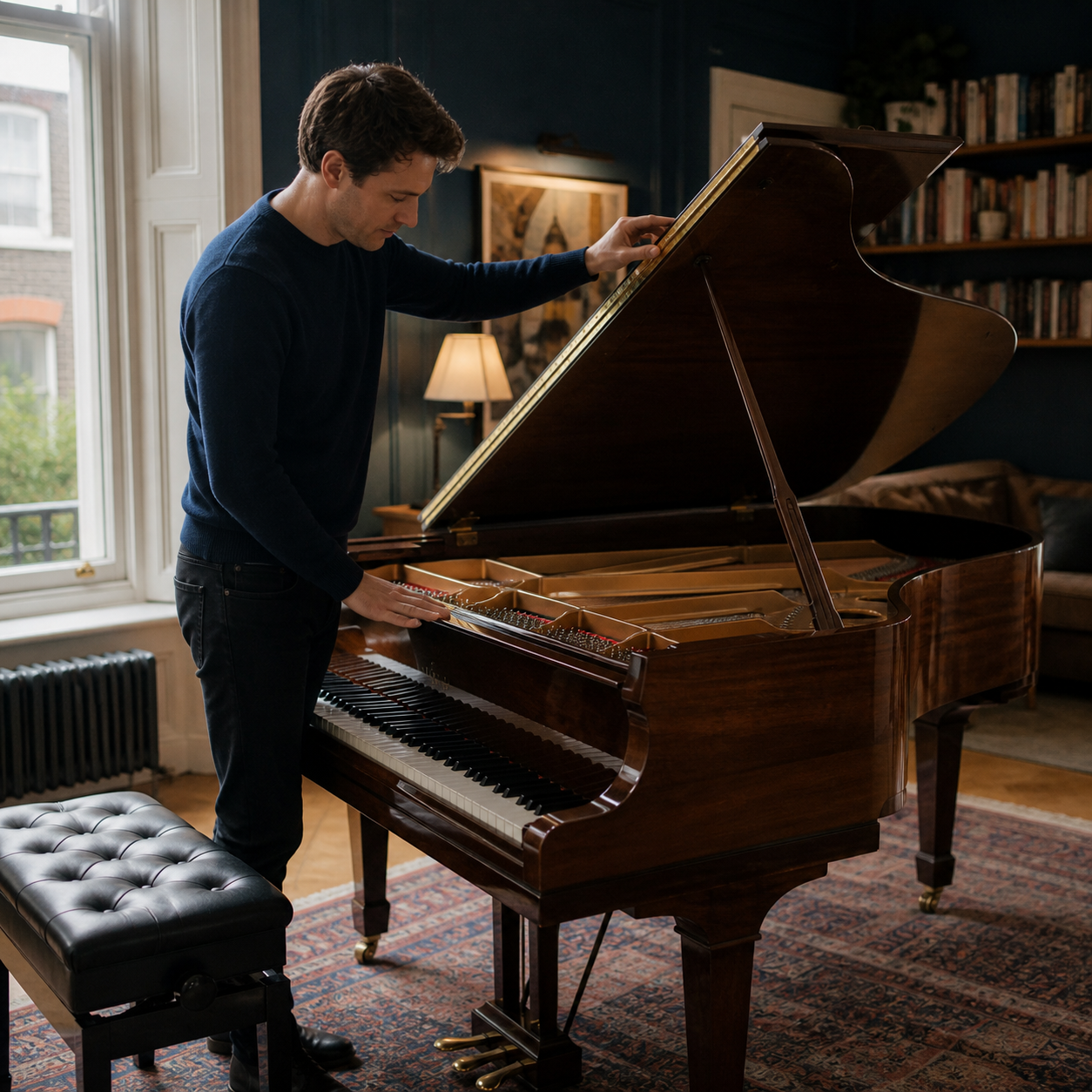
A realistic weekly piano practice schedule
Use a varied week rather than forcing every day to look the same. A longer session can hold detailed problem-solving; a short session can maintain one skill; a listening session can deepen interpretation without loading the hands. The following model is a starting point, not a rule.
Monday · 25 min
Technique, sight-reading and one difficult phrase.
Tuesday · 40 min
Deep work on the main piece, with a short break.
Thursday · 20 min
Recall Tuesday’s changes and record one take.
Saturday · 45 min
Repertoire, performance run and written review.
Sunday · 15 min
Listen with the score and plan the next week.
If work peaks on Tuesday and Wednesday, move the longer session. If mornings are reliable, reserve ten focused minutes before email. A piano practice schedule should organise reality, not punish it. Missing one appointment is information: shorten, move or simplify the next session instead of declaring the week lost.
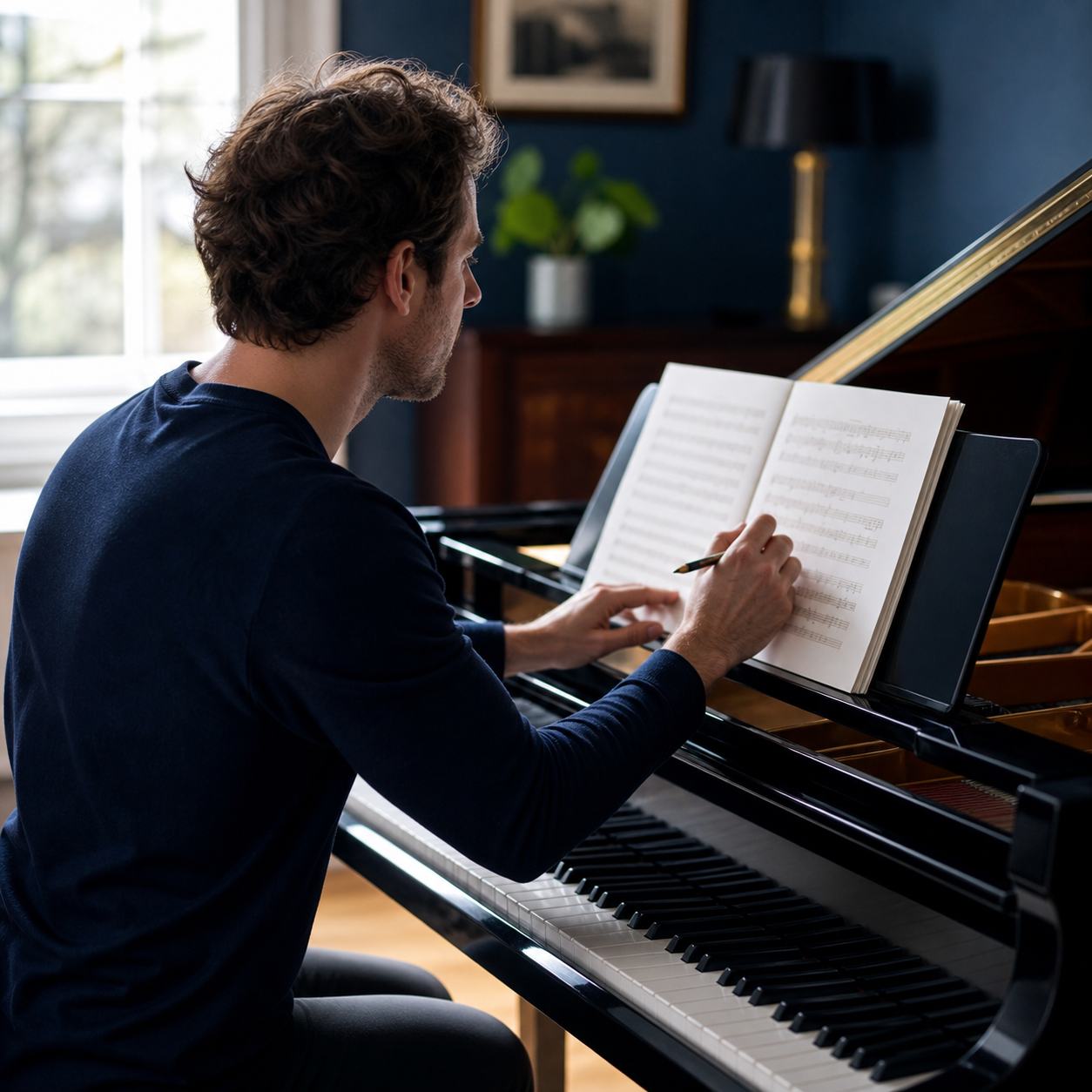
Consistency is not doing the same amount every day. It is protecting the next meaningful return to the instrument.
Use planning, monitoring and reflection
Strong independent practice has three movements. Plan what you will do, monitor what is actually happening, then reflect on the evidence. A recent review of self-regulated learning and metacognition describes this cycle across learning research. Music-specific work on metacognitive skills in instrumental practice likewise supports making thought and evaluation visible.
Monitoring does not require elaborate software. Use a phone recording, three clean repetitions, a metronome range or a one-sentence note. Ask: what changed, what remained unstable, and what caused the difference? The piano practice schedule then becomes a feedback system rather than a calendar of good intentions.
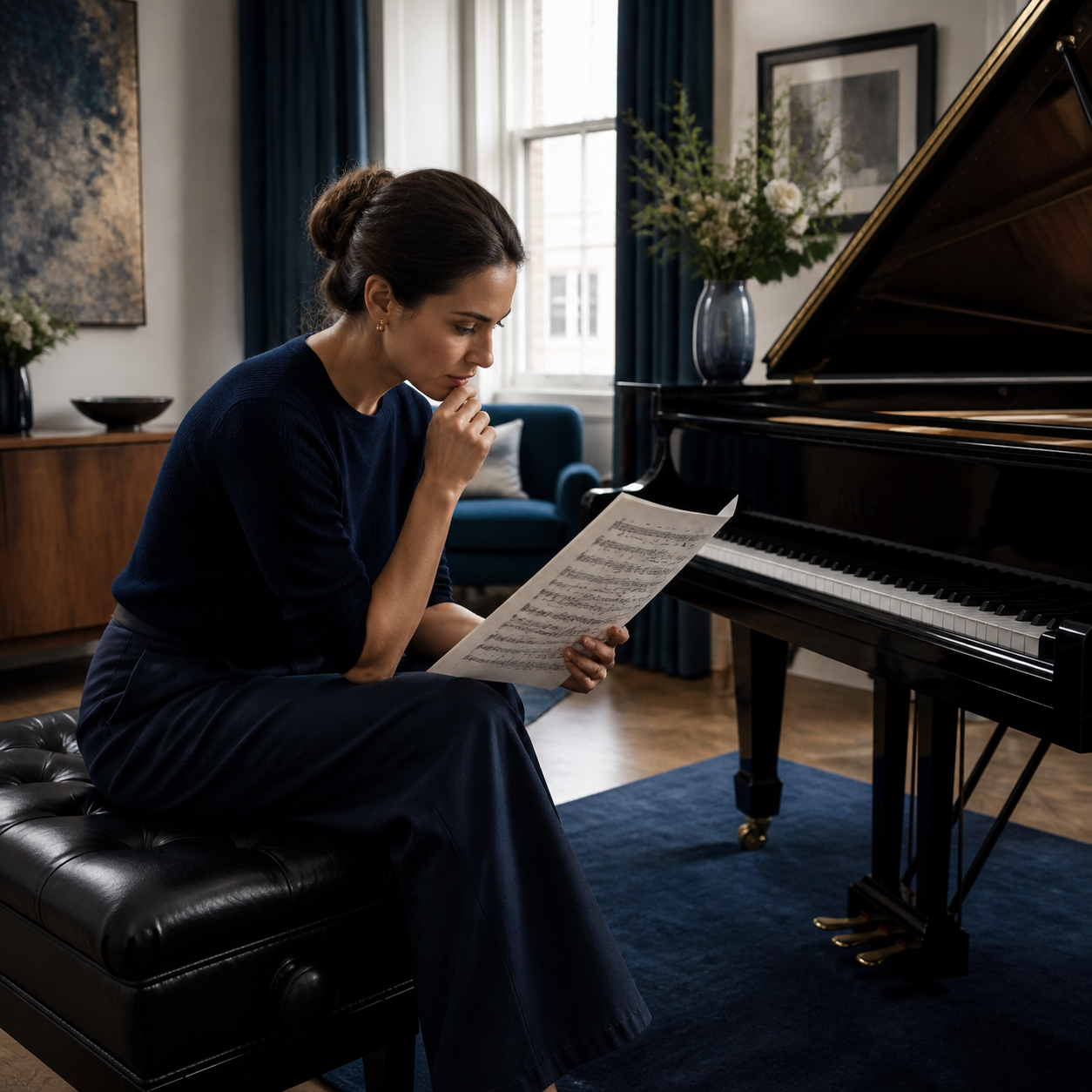
Protect health inside the piano practice schedule
Longer is not automatically better. Alternate demanding and easier tasks, use brief pauses before attention collapses, and stop if pain or neurological symptoms appear. The Royal College of Music’s healthy musician guidance recommends warm-up, breaks and warm-down as parts of professional practice habits.
A systematic review of music practice research in Music & Science shows the range of strategies and evidence used to study practice. That breadth is a useful warning against one-size-fits-all claims. Your piano practice schedule should be evaluated by musical progress, physical comfort and the ability to sustain it over months.
Review the week without judging yourself
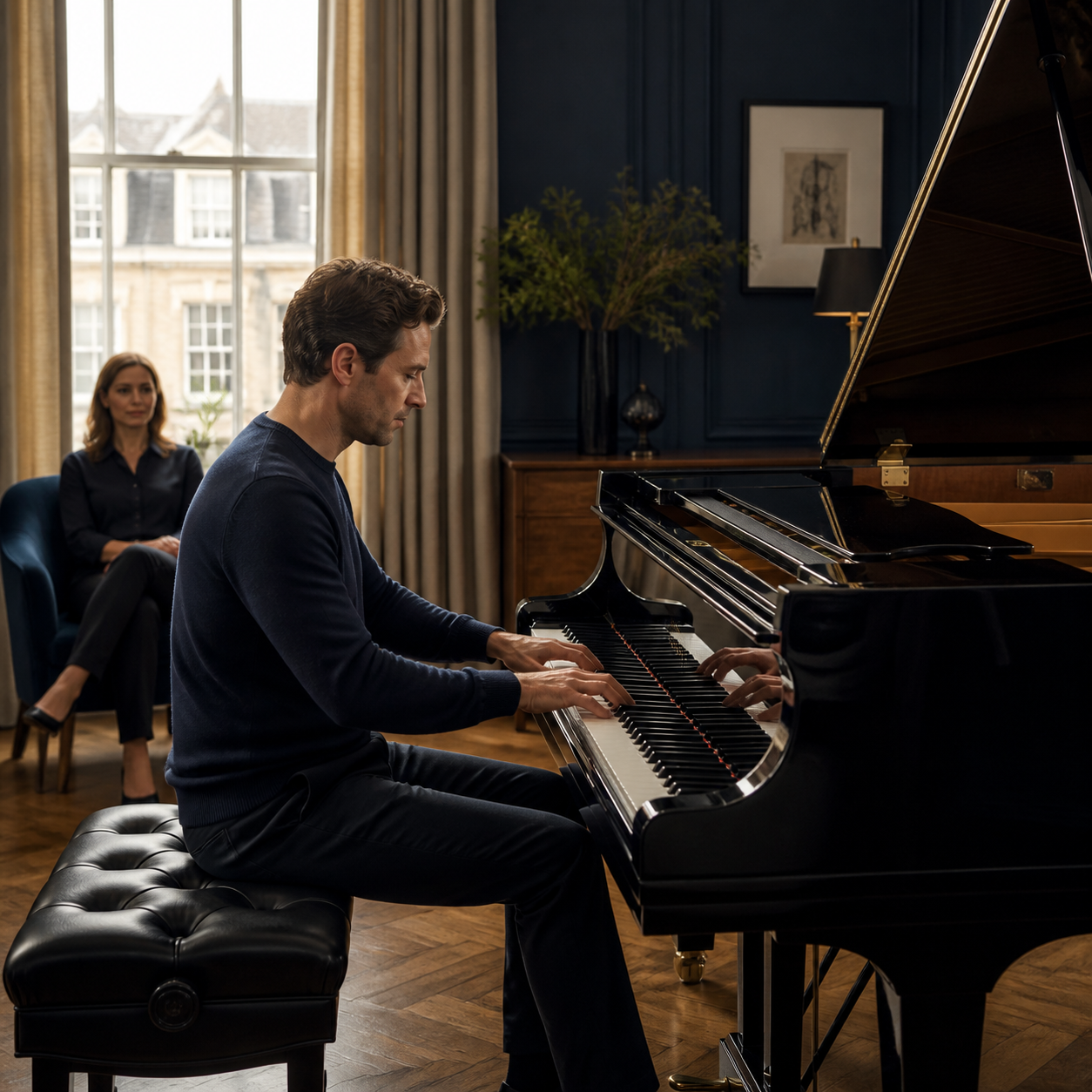
At the end of the week, keep three notes: one musical gain, one obstacle and one change for next week. If the same task repeatedly fails, make it smaller or ask for a different strategy. If a short session reliably succeeds, protect it. A piano practice schedule becomes mature when it can change without disappearing.
WKMT London
Turn limited practice time into clear musical progress with individual adult piano tuition at WKMT London.
Sources
- National Library of Medicine: deliberate practice meta-analysis
- National Library of Medicine: self-regulated learning and metacognition review
- National Library of Medicine: metacognitive skills in instrumental practice
- Music & Science: systematic review of music practice
- Royal College of Music: The Healthy Musician
- PubMed: self-regulated learning microanalysis in music
Sources last checked 29 August 2026.