
 TRIAL LESSON
Piano Lessons
Mindfulness Exercises: How Piano Practice Trains Calm Attention
Aug
Mindfulness Exercises for piano
WKMT London adult practice guide
Mindfulness Exercises: How Piano Practice Trains Calm Attention
The piano can become an unusually precise anchor for attention. Sound begins, changes and fades; the hands reveal tension; the breath reveals haste. Simple mindfulness exercises help adult learners notice these events without turning practice into another performance test.
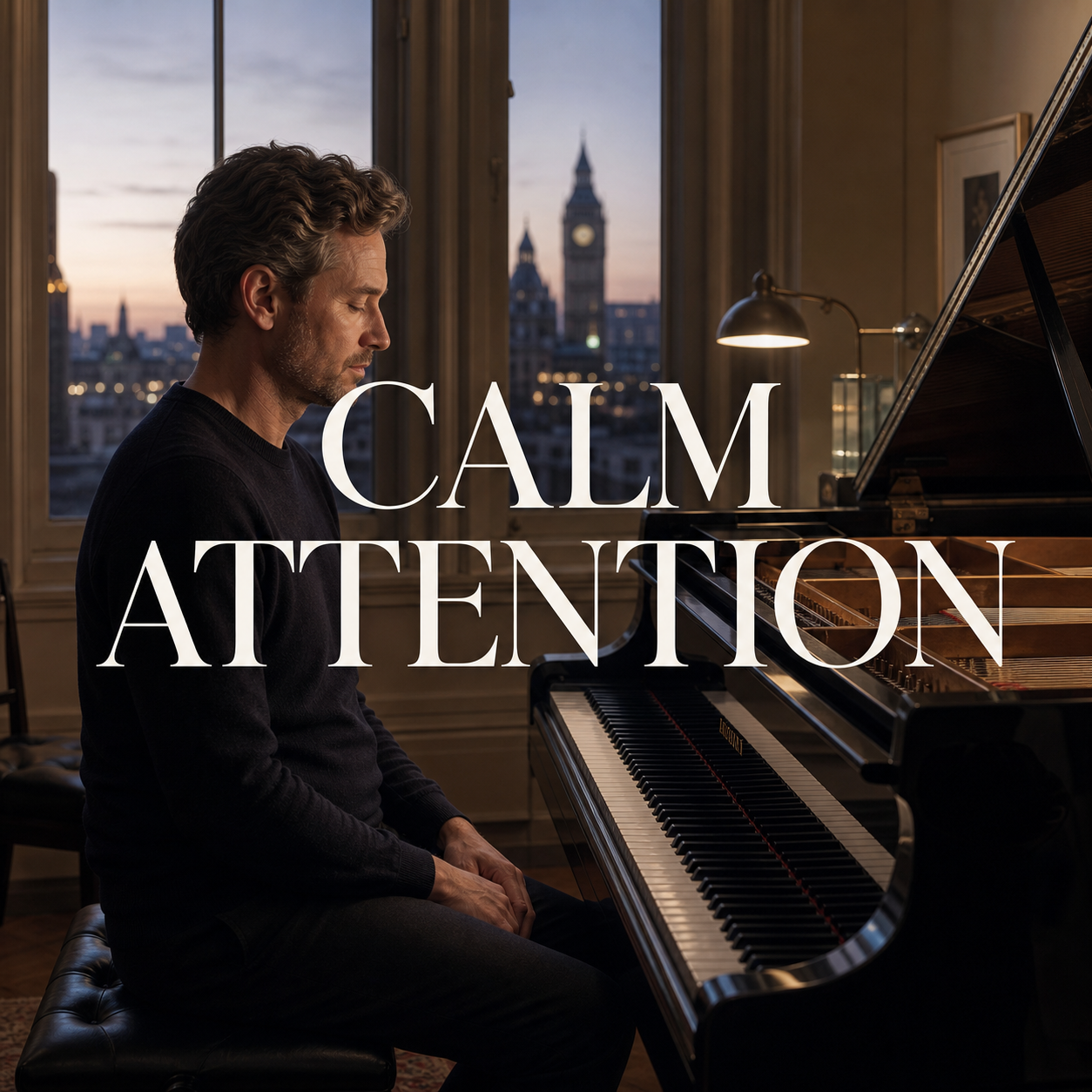
Adult learners often arrive at the instrument carrying the speed of the day. The mind plans the next task while the hands repeat the previous mistake. Mindfulness exercises interrupt that loop gently. They do not require emptying the mind. The task is to notice where attention went and return it to a chosen musical event.
In adult piano lessons in London, WKMT teachers can connect attention to practical musicianship: listening to the end of a note, sensing excess pressure, or hearing whether the bass supports the phrase. The exercise remains musical rather than becoming a separate wellness ritual.
Mindfulness exercises before the first note
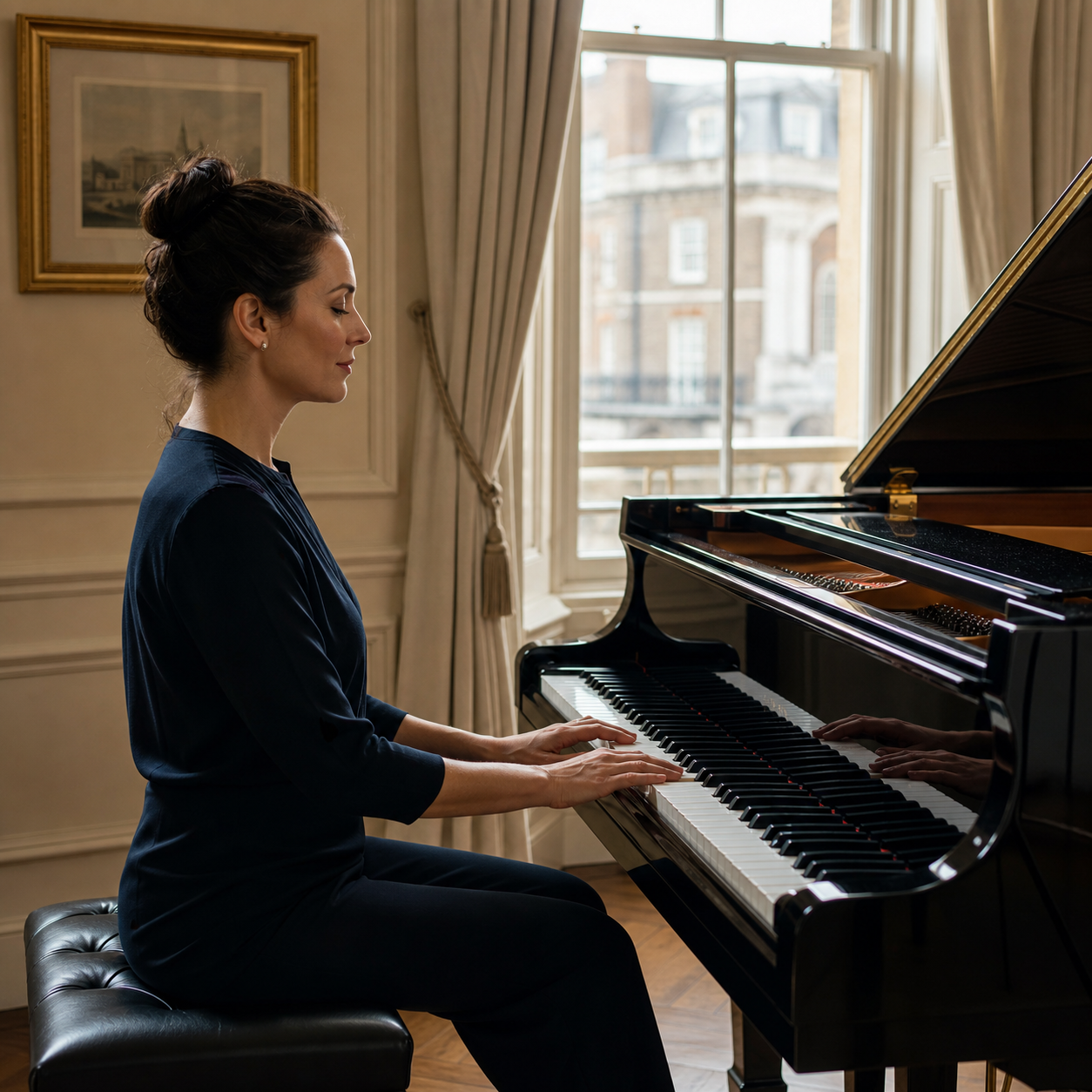
Sit with both feet supported and allow the hands to rest. Take one natural breath rather than an exaggerated deep breath. Notice three points of contact: feet with floor, body with bench, fingers with keys. Then hear the first phrase internally. This twenty-second pause gives attention a destination.
Arrive
Notice contact with floor, bench and keyboard.
Breathe
Allow one unforced breath and release the jaw.
Imagine
Hear the opening tempo and character internally.
Begin
Play only when the first gesture feels chosen rather than automatic.
If thoughts continue, nothing has gone wrong. Mindfulness research generally defines the skill through returning, not permanent concentration. Each return is the exercise. At the piano, the key is choosing a narrow anchor so attention is not asked to monitor everything at once.
Use sound as the anchor
Play one chord and listen until it disappears. Do not judge the chord immediately. Follow the attack, bloom and decay. Then repeat with one change in balance. This is one of the simplest mindfulness exercises because the sound itself determines the duration of attention.
A 2013 controlled study of older adults reported improvements in measures of attention and executive function after four months of piano classes, alongside mood and quality-of-life findings. The study was small, so it cannot prove that piano is a universal attentional intervention. It does, however, support the plausibility of sustained keyboard learning as a cognitively engaging activity.
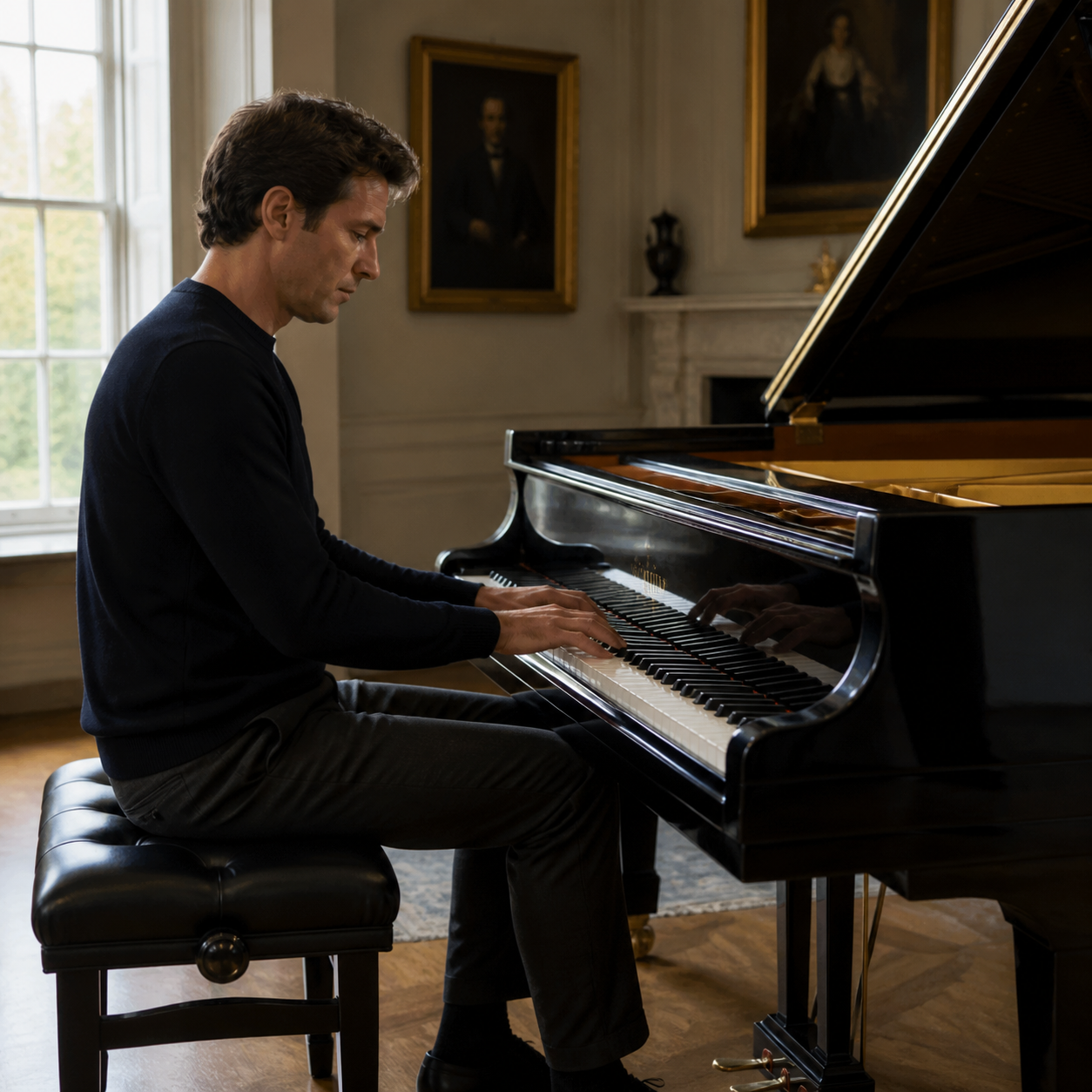
Calm attention is not passive: it notices clearly enough to make the next musical choice smaller and more accurate.
Mindfulness exercises for tension and difficult passages
Before repeating a difficult bar, scan from shoulders to fingertips. Notice pressure without forcing relaxation. Play the smallest complete gesture and stop. Ask where effort remained after the sound ended. Many adults discover that tension is not only used to depress a key; it is held through the release and carried into the next phrase.
Scan
Notice shoulders, jaw, wrist and fingertips without correcting everything.
Isolate
Choose the smallest gesture that still has musical direction.
Release
Attend to what happens after the key reaches the bed.
Rejoin
Return the gesture to its phrase and check whether the sound remains free.
Research with conservatoire students has explored mindfulness courses as support for practice habits and performance anxiety. The results are encouraging but context-dependent. An adult amateur does not need a formal programme to borrow the central skill: notice an experience, allow it to be present, and return attention to a chosen task.
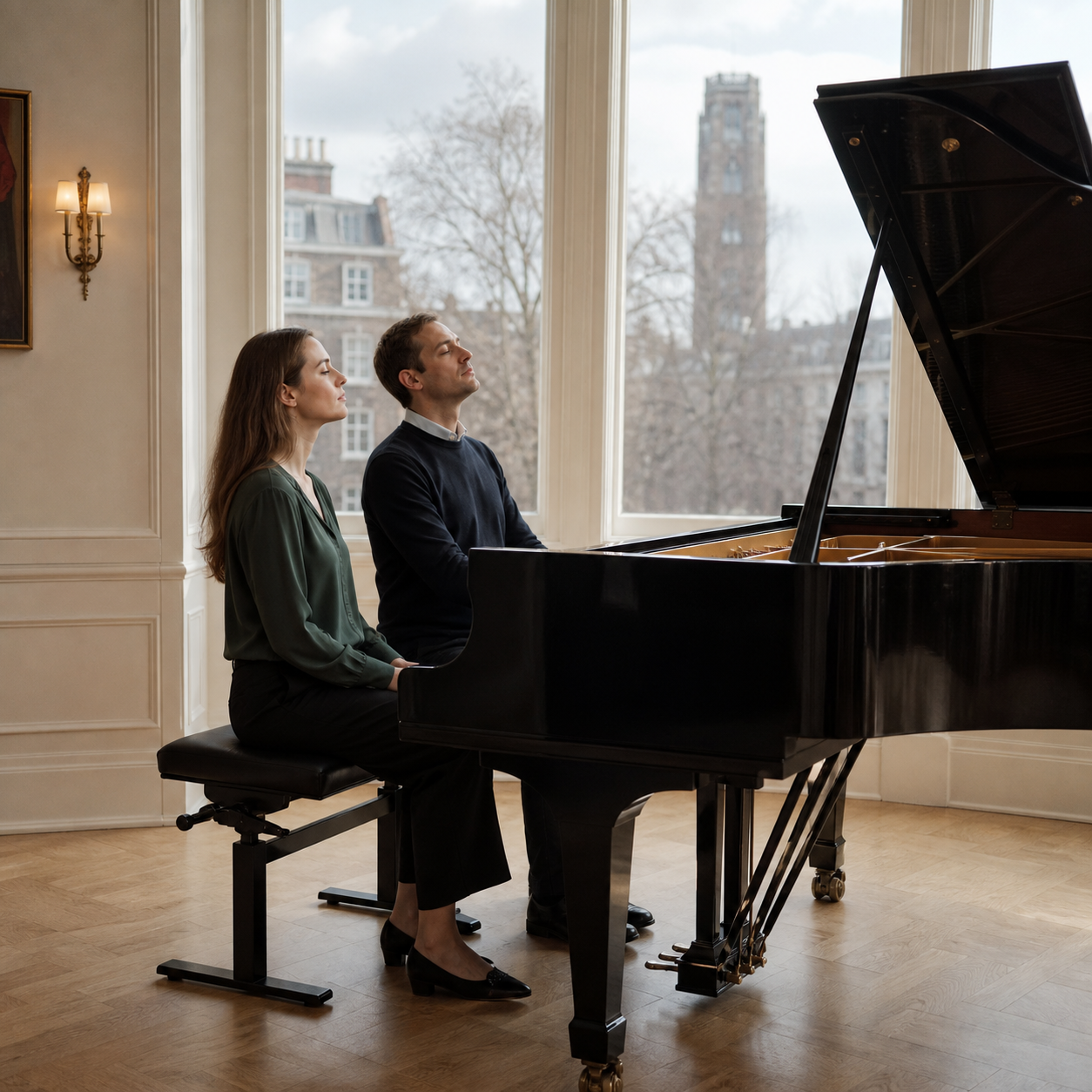
A five-minute mindful practice sequence
Spend one minute arriving and hearing the phrase internally. Use two minutes on a short passage, listening for one feature. Spend one minute away from the keys, recalling the sound rather than rehearsing finger movements. In the final minute, play the phrase once in context. This sequence prevents mindfulness exercises from consuming the whole session while still changing its quality.
The NHS guide to mindfulness notes that the practice is not right for everyone and may not help every person. That caution belongs here too. If closing the eyes or focusing inward feels uncomfortable, keep the eyes open and use an external anchor such as the piano’s resonance, the metronome click or a visible point on the keyboard.
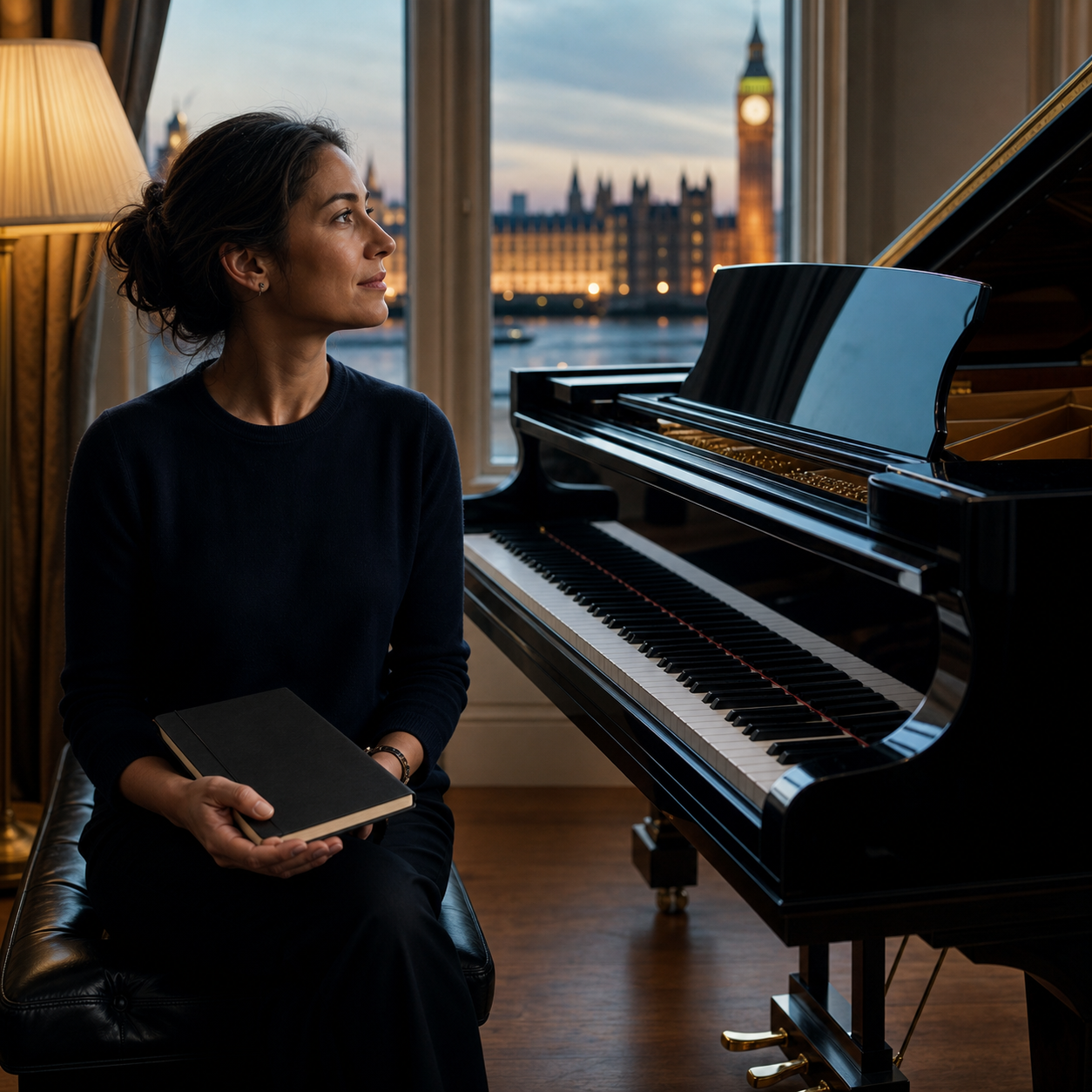
What mindful piano practice changes
The immediate gain is often diagnostic. The learner notices that rushing begins before a leap, that pedal covers an uncertain release, or that irritation shortens the breath. Once visible, the pattern can be addressed musically. Mindfulness exercises create the small pause in which a different choice becomes possible.
Over time, this changes the emotional climate of practice. Attention still wanders and difficult passages remain difficult, but the learner becomes quicker at returning. The piano is no longer a machine that grades every attempt. It becomes a place to hear, adjust and continue.
WKMT London
Discover individual adult piano study at WKMT London, with teaching shaped around your repertoire, experience and musical goals.
Sources for mindfulness exercises
- NHS: mindfulness
- Piano learning, attention and quality of life in older adults
- Meditation training and sustained attention in older adults
- Mindfulness for musicians: conservatoire study
- Mindful breathing, listening and attentional skills
Sources last checked 24 August 2026.