
 TRIAL LESSON
Piano Lessons
Relaxation Techniques: What Piano Practice Adds for Adults
Aug
Relaxation techniques with WKMT London
WKMT London adult piano guide
Relaxation Techniques: What Piano Practice Adds for Adults
Piano practice can become a deliberate transition out of the working day: attentive enough to interrupt rumination, structured enough to absorb the mind, and expressive enough to feel personally meaningful.
The concise answer
Useful relaxation techniques at the piano combine a brief physical reset, an attainable musical task and non-judgemental attention to sound. Slow breathing, released posture and familiar repertoire may help an adult settle, but the piano adds something distinctive: active coordination and immediate auditory feedback. It is education and recreation, not a substitute for healthcare, yet it can form a reliable restorative ritual.
Why active music-making feels different from switching off
Many evening habits numb attention without truly settling it. Piano asks for enough concentration to displace the day’s unfinished conversations, while keeping the task within human scale: one phrase, one balance, one cadence. This is not empty-mindedness. It is a change in the quality of attention.
Research should be interpreted carefully. A study indexed by ERIC compared piano playing with other creative activities in 57 university students and reported stronger stress reduction in the piano condition. The sample was small and does not prove a universal effect, but it supports a plausible distinction between active, structured music-making and passive distraction.
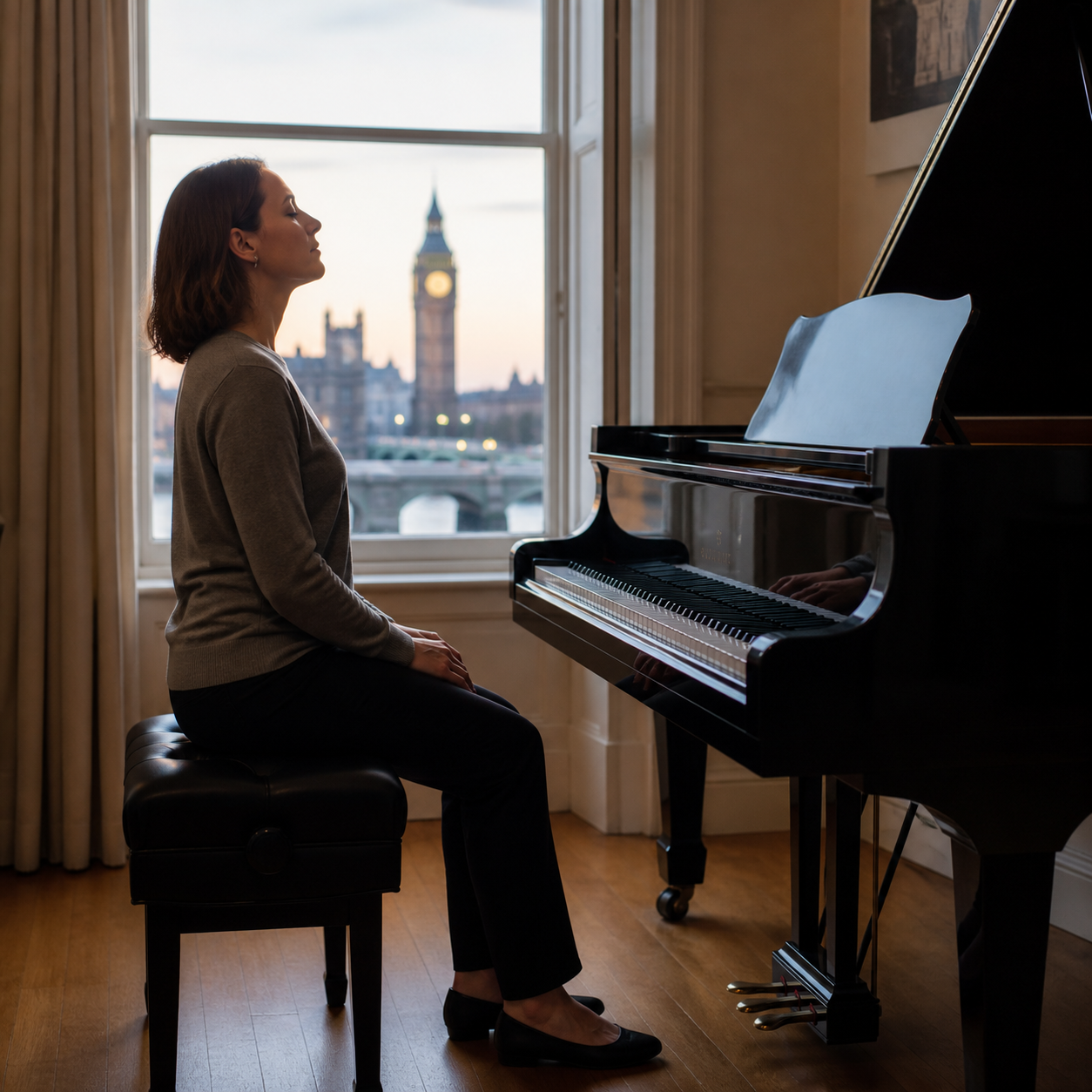
“Relaxation at the piano is not collapse; it is readiness without unnecessary effort.”
A four-part sequence of relaxation techniques
These relaxation techniques are deliberately modest. They do not require an elaborate wellness routine. The sequence works because it reduces choice, clarifies the first action and gives the session an ending. For a busy adult, reliability matters more than ceremony.
Breathing without turning practice into a breathing exercise
The NHS includes slow breathing among practical approaches for stress, with the emphasis on gentle regularity rather than force. Its stress guidance also encourages manageable actions and routine. At the piano, one easy exhalation can soften the transition into playing. There is no need to monitor every breath thereafter; musical phrasing will supply its own rhythm.
Physical release and musical intention belong together
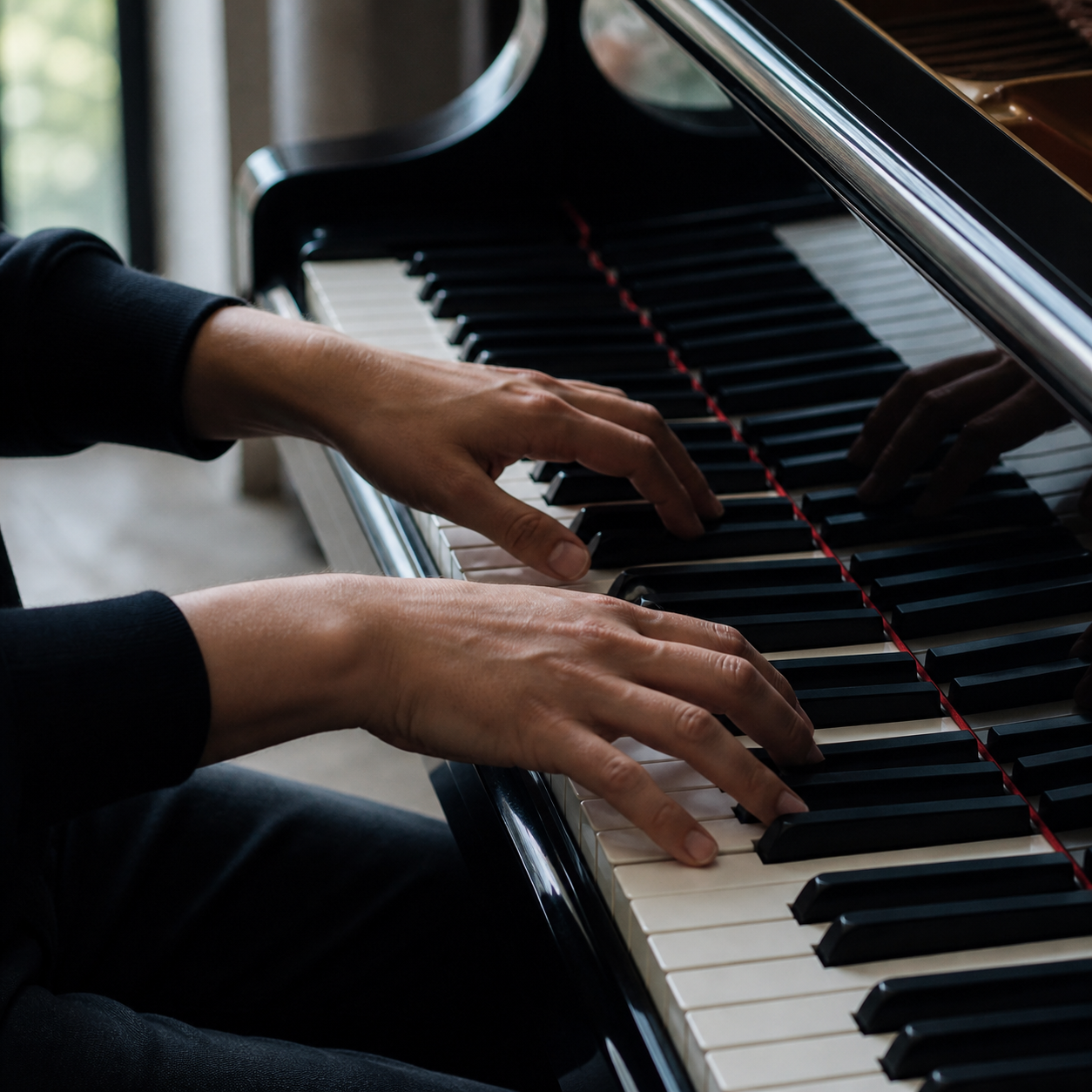
“Relax” is incomplete advice. A hand can feel loose and still produce an unfocused sound; a player can also mistake effort for tension. The useful question is whether the body is doing more than the phrase requires. A teacher can help distinguish necessary support from gripping, raised shoulders or a fixed wrist.
Feet supported, seat stable, shoulders free, intention clear.
Use only the movement needed for the sound and release after it has served.
Stop, reset and seek informed guidance rather than pushing through pain.
The British Association for Performing Arts Medicine offers specialist information for performers and a clinical support pathway. Persistent pain, numbness or weakness is not a practice challenge to conquer. It warrants appropriate medical or physiotherapy advice.
Repertoire as an active relaxation tool
Not every piece serves the same purpose. Keep a small group of works that feel secure enough for expressive attention. Slow does not automatically mean calming, and simple does not mean trivial. The ideal piece lets you hear balance, breathe with phrases and complete something within the time available.
A PubMed-indexed study on music and stress found differences among listening conditions in perceived anxiety and heart rate, while concluding cautiously that music may affect the cognitive component of stress response. The study abstract is a useful reminder that personal response, context and musical character matter. Active piano practice adds agency: you shape timing, colour and repetition yourself.
When calm practice becomes serious progress
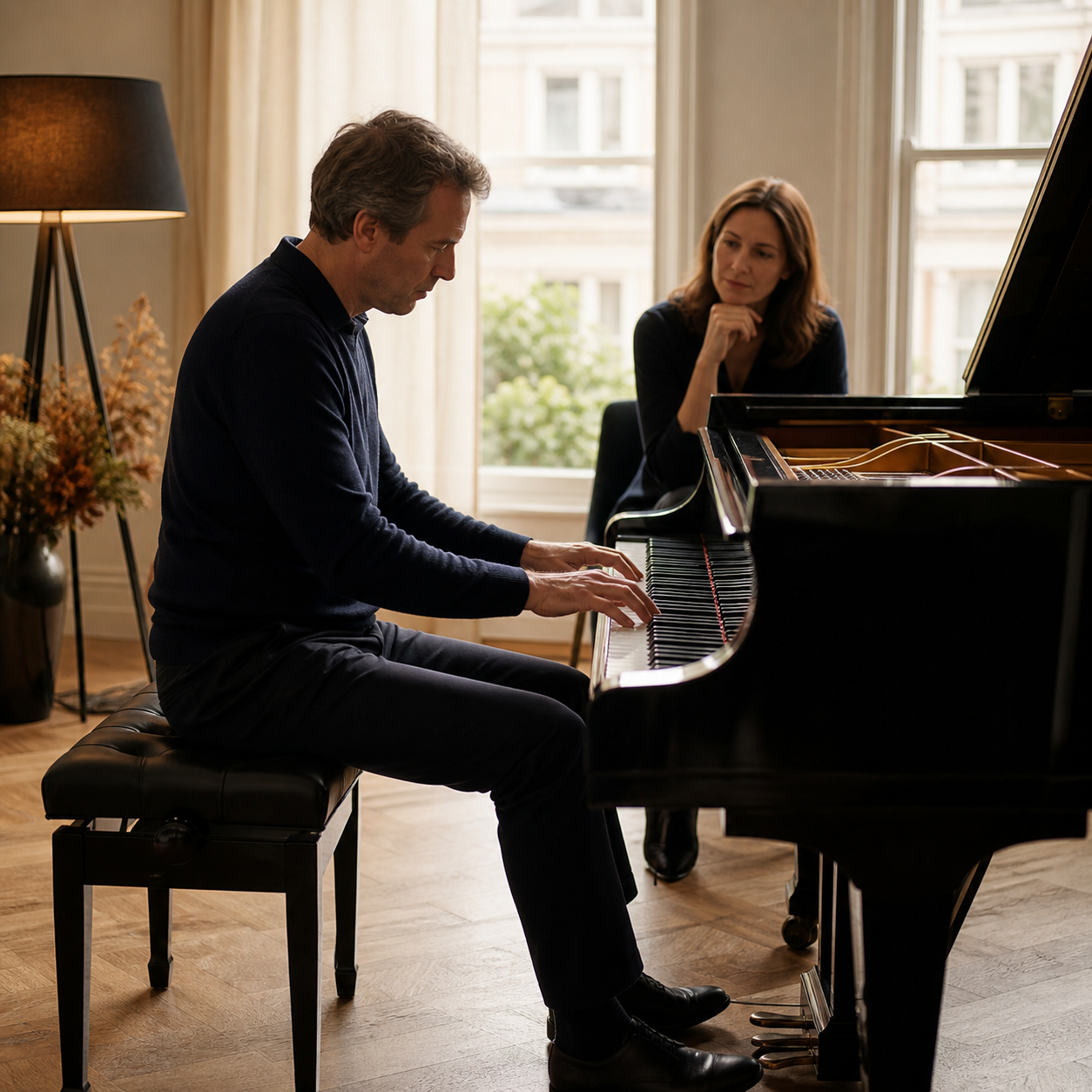
Calm is not the opposite of ambition. A settled learner hears more accurately, notices fatigue earlier and can repeat with purpose. Relaxation techniques support progress when they improve attention rather than becoming another standard to satisfy. Some sessions will feel absorbing; others will simply establish continuity.
WKMT London offers individual piano lessons for adults across different starting points, from first notes to advanced repertoire. Our guide to returning to piano after years away addresses the emotional reset many players need, while piano learning and stress management offers further context.
Build a piano routine that restores attention
Individual teaching can help you remove avoidable strain, choose realistic repertoire and make limited practice time musically rewarding.