
 TRIAL LESSON
Pianists, Piano Lessons
Bertrand Chamayou in London: French Clarity and the Art of Serious Listening
Aug
Bertrand Chamayou in London: French Clarity and the Art of Serious Listening
A good listener hears more than brilliance. In Bertrand Chamayou, London piano learners can hear the art of colour, balance and timing becoming a disciplined form of thought.
Bertrand Chamayou is valuable for a London learner because his playing asks the ear to become more exact. The surface is often luminous, but the real lesson sits underneath: how a phrase changes colour without losing line, how a left hand can support rather than cover, and how the pedal can make harmony breathe instead of blur.
For anyone comparing serious classical piano study in London, Bertrand Chamayou offers a practical listening route. His recorded Ravel, Messiaen and Saint-Saens performances show that virtuosity becomes musical only when sound, structure and imagination remain under control.
Listening answer
Bertrand Chamayou helps London piano learners understand tone colour, French clarity, pedalling, voicing and the difference between speed and musical speech.
Why Bertrand Chamayou matters to London learners
Bertrand Chamayou was born in Toulouse in 1981 and studied with Jean-Francois Heisser, Maria Curcio and others before building an international career in solo, concerto and chamber music. His public record is not only impressive in scale; it is useful because the awards point towards repertoire identity. He has been recognised repeatedly at the Victoires de la Musique Classique, including revelation and soloist honours, and his Liszt and Saint-Saens recordings have helped define his profile.
London listeners recently heard Bertrand Chamayou at Wigmore Hall with Leif Ove Andsnes in a two-piano recital on 21 May 2025. The Guardian’s review the following day drew attention to the partnership’s refinement and the particular demands of listening to colour, balance and ensemble timing in a room where nothing hides. That London presence matters: it turns the article from a distant profile into a real point of contact for students in the city.
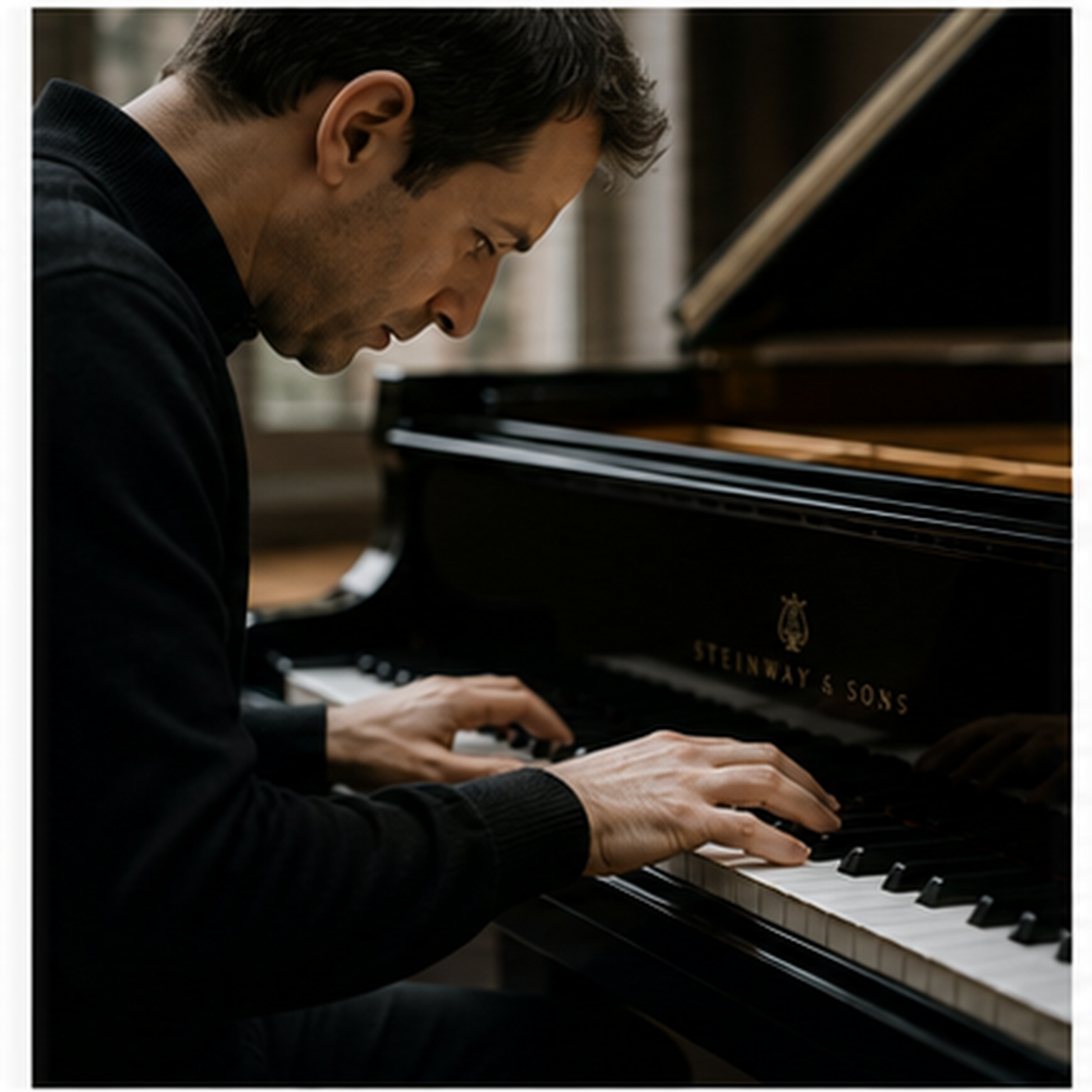
The artist behind the colour: Ravel, Liszt and Messiaen
Chamayou’s distinction is not a single speciality, but a rare triangle of identities. The first is Ravel: an ear for perfume, exactness and the afterglow of harmony. The second is Liszt: large-scale architecture, stamina and a refusal to reduce difficulty to circus display. The third is Messiaen: colour as theology, rhythm as design, and resonance as a serious form of thought.
That is why his discography is more useful to students than a list of celebrated albums. Hong Kong Sinfonietta’s artist biography notes the Ravel complete piano works, the Liszt Annees de pelerinage, the Saint-Saens recording recognised by Gramophone in 2019, and his five Victoires de la Musique Classique. Those facts tell a story: Chamayou has built authority by returning to music where colour and structure cannot be separated.
For a learner, the curious detail is how different these worlds are under the fingers. Ravel punishes heaviness, Liszt exposes weak architecture, and Messiaen asks for enormous sonority without roughness. A pianist who can move convincingly between those languages gives students something more precise than inspiration: a map of what touch, pedalling and listening have to become at a serious level.
Memorable performances that explain Chamayou’s range
Two London moments help place Bertrand Chamayou in a real listening history. At the Royal Albert Hall on 20 July 2018, he made his BBC Proms appearance with Mendelssohn’s First Piano Concerto. Pianist magazine’s Proms round-up recorded the programme, while Bachtrack’s review noticed the elegance and restraint of his virtuosity in a hall where quick passagework can easily turn metallic. For a London student, that is a lesson in scale: brilliance has to travel to the back of the room without losing manners.
His Wigmore Hall history points in another direction. In 2018, The Guardian reviewed Chamayou in Liszt’s Transcendental Studies at Wigmore Hall, a programme that tests the pianist’s endurance, imagination and command of sonority. In May 2025, the same hall heard him with Leif Ove Andsnes in Schubert and Kurtag, where the musical problem was no longer heroic projection but shared timing, intimacy and conversational balance.
Listen for translucent voicing, quick changes of colour and pedal that clarifies rather than clouds.
Listen for whether virtuosity serves direction, climax and memory across a long span.
Listen for bells, birdsong, stillness and power held inside exact rhythmic control.
There is also a beautiful historical symmetry in Chamayou’s Ravel work. Medici.tv lists his complete Ravel solo recital at the Philharmonie de Paris on 7 March 2025, exactly 150 years after Ravel’s birth, with a programme that runs from Miroirs and Gaspard de la nuit to Le Tombeau de Couperin. That kind of occasion matters because it turns repertoire into responsibility. The pianist is not merely playing pieces; he is carrying a national musical language in public.
The deeper Chamayou lesson is that colour is never vague. At its best, colour comes from knowledge: of harmony, of touch, of voicing, of style, and of how a room changes what the piano says.
How to listen to Bertrand Chamayou at the piano
The first thing to hear in Bertrand Chamayou is not volume. It is distance. In Ravel, a melody may appear near the surface, then withdraw into resonance; in Messiaen, rhythm and sonority can feel suspended, but the pulse is still organised; in Saint-Saens, brilliance is clean because the texture is proportioned. A lesson can make those decisions visible by asking the student to name the sound before trying to reproduce it.
That is why Bertrand Chamayou is a useful listening model for piano lessons London families, adults and advanced amateurs. The ear begins to notice whether a note is struck, released, floated, weighted or connected. Once those categories become audible, practice becomes more intelligent.
The London lesson route from sound to technique
A student often arrives wanting faster fingers. A good teacher hears a deeper need: clearer rhythm, more stable hand balance, a better hierarchy between melody and accompaniment, and a more patient way of listening. Bertrand Chamayou gives a refined example of that hierarchy. His playing suggests that technique is not a display cabinet; it is the mechanism that allows musical thought to stay precise under pressure.
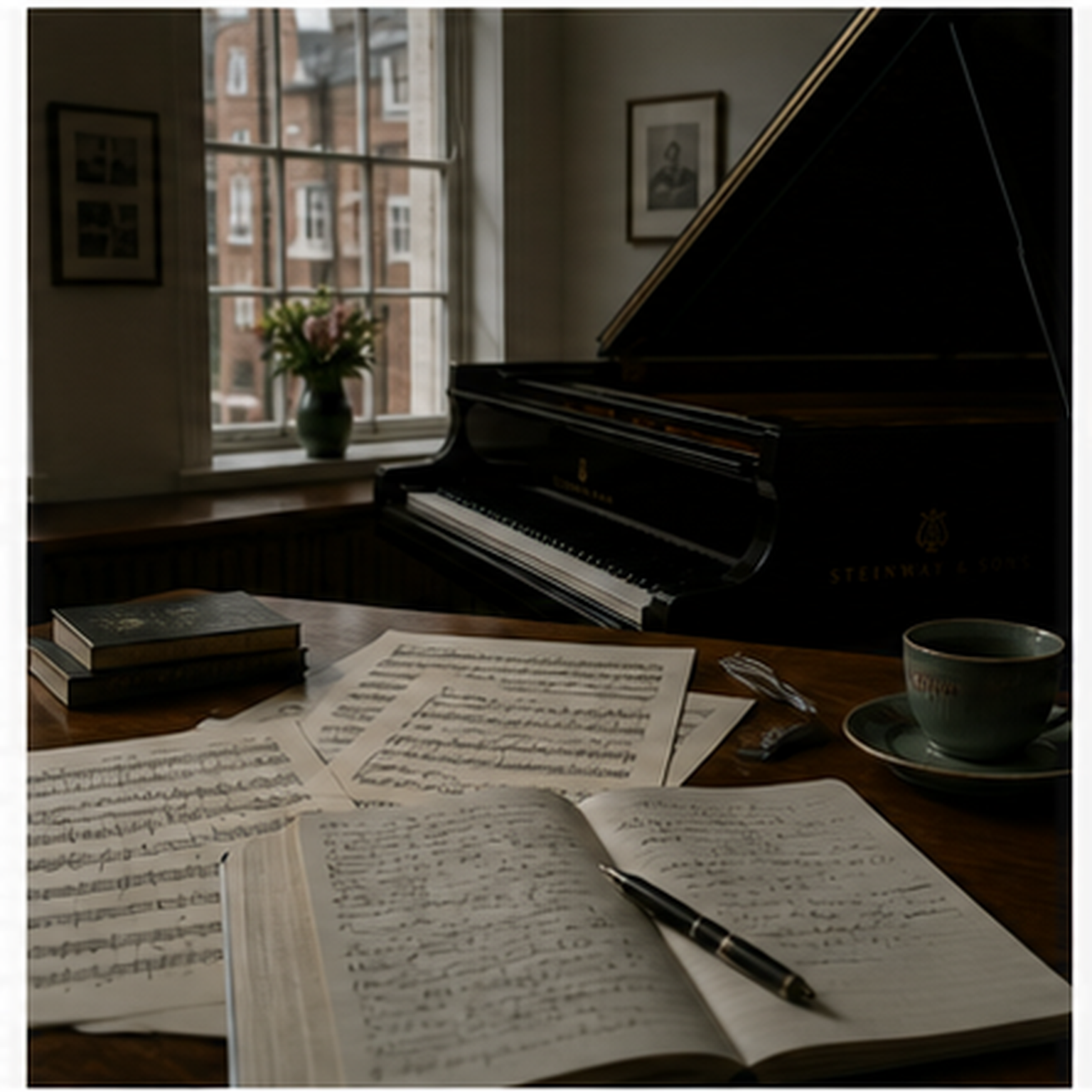
Listen for the colour of repeated notes, not just the notes themselves.
Ask which line carries the argument and which line supplies atmosphere.
Notice small freedoms that still preserve pulse and proportion.
WKMT perspective
The point is not to imitate Bertrand Chamayou. The point is to let his artistry train the student’s ear towards decisions a teacher can then refine in person.
Study at WKMT London
WKMT teaches classical piano in London with close attention to tone, reading, phrasing and the disciplined listening that turns repertoire into musicianship.
Explore piano lessons in LondonA practical listening path before your next lesson
Choose one Bertrand Chamayou recording and listen twice. The first pass is for atmosphere: what kind of space does the sound create? The second pass is technical: where does he make the melody lean, where does the bass become lighter, and where does resonance replace force? Bring those observations to the piano. Even a beginner can ask better questions after listening carefully.
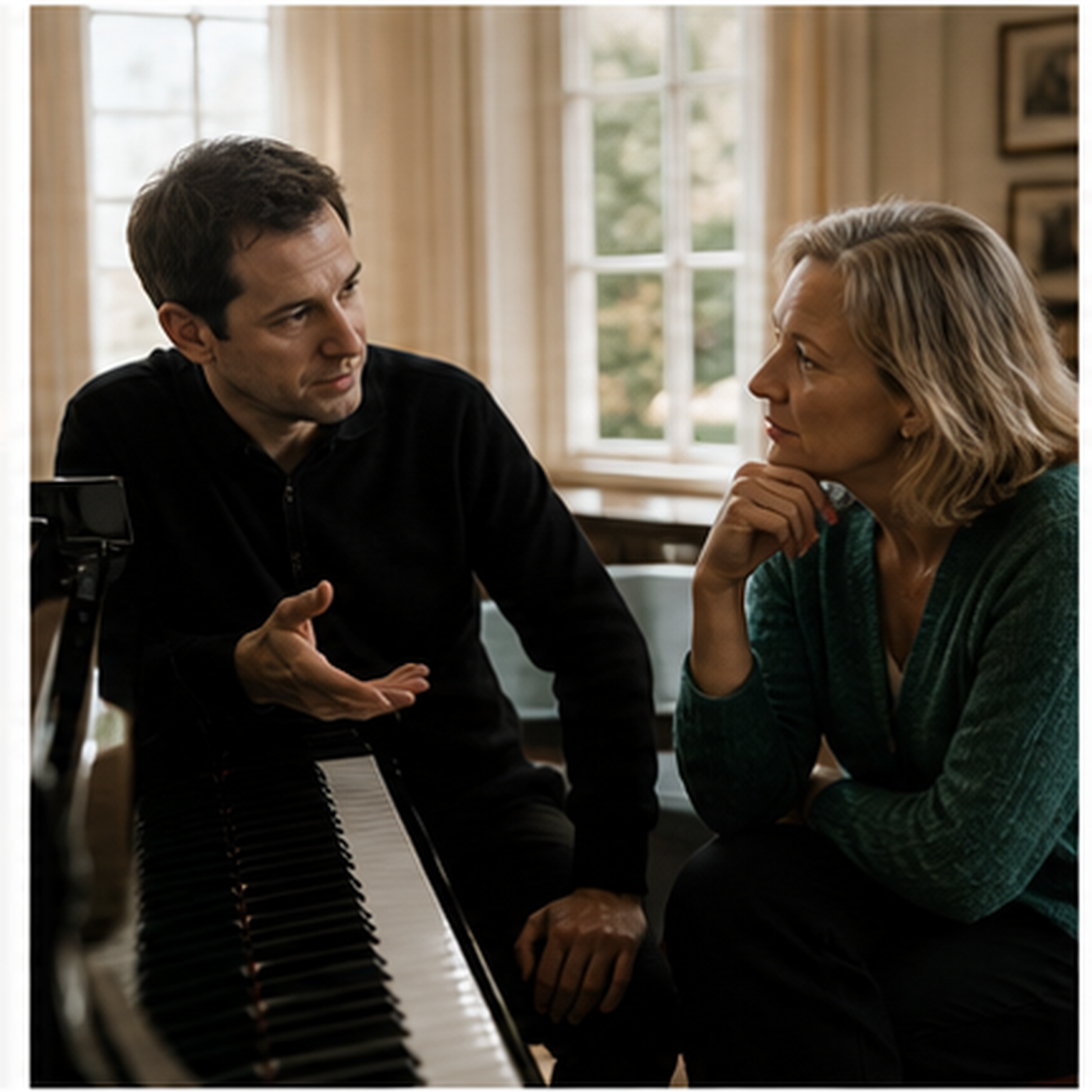
For London students, Bertrand Chamayou is therefore more than a famous pianist. He is a way into the discipline of serious listening: an invitation to hear French colour, rhythmic control and pianistic imagination as teachable musical habits.
Sources on Bertrand Chamayou in London
- Wigmore Hall, Leif Ove Andsnes and Bertrand Chamayou event archive, 21 May 2025.
- The Guardian, Andsnes and Chamayou Wigmore Hall review, 22 May 2025.
- HarrisonParrott, Bertrand Chamayou artist biography, checked August 2026.
- HarrisonParrott, Gramophone Recording of the Year announcement, 17 October 2019.
- The Guardian, Messiaen review, 23 June 2022.
- Hong Kong Sinfonietta, Bertrand Chamayou artist biography and awards summary, checked August 2026.
- Pianist magazine, BBC Proms round-up noting Bertrand Chamayou’s 20 July 2018 Proms appearance.
- Bachtrack, Royal Albert Hall Proms review with Bertrand Chamayou, 20 July 2018.
- The Guardian, Bertrand Chamayou Liszt review at Wigmore Hall, 5 April 2018.
- Medici.tv, Bertrand Chamayou complete Ravel solo recital at Philharmonie de Paris, recorded 7 March 2025.
Related video
Bertrand Chamayou performs Messiaen is embedded below from YouTube for educational listening and context. Rights remain with Warner Classics / YouTube.