
 TRIAL LESSON
Piano Lessons
Returning to Piano After Years: How Adults Restart Musically
Aug
WKMT guide for adult returners
Returning to Piano After Years: How Adults Restart Musically
Returning to piano after years away is rarely a journey back to the player you once were. It is the beginning of a more perceptive relationship with music: one that respects old knowledge, present-day hands and the life you have now.
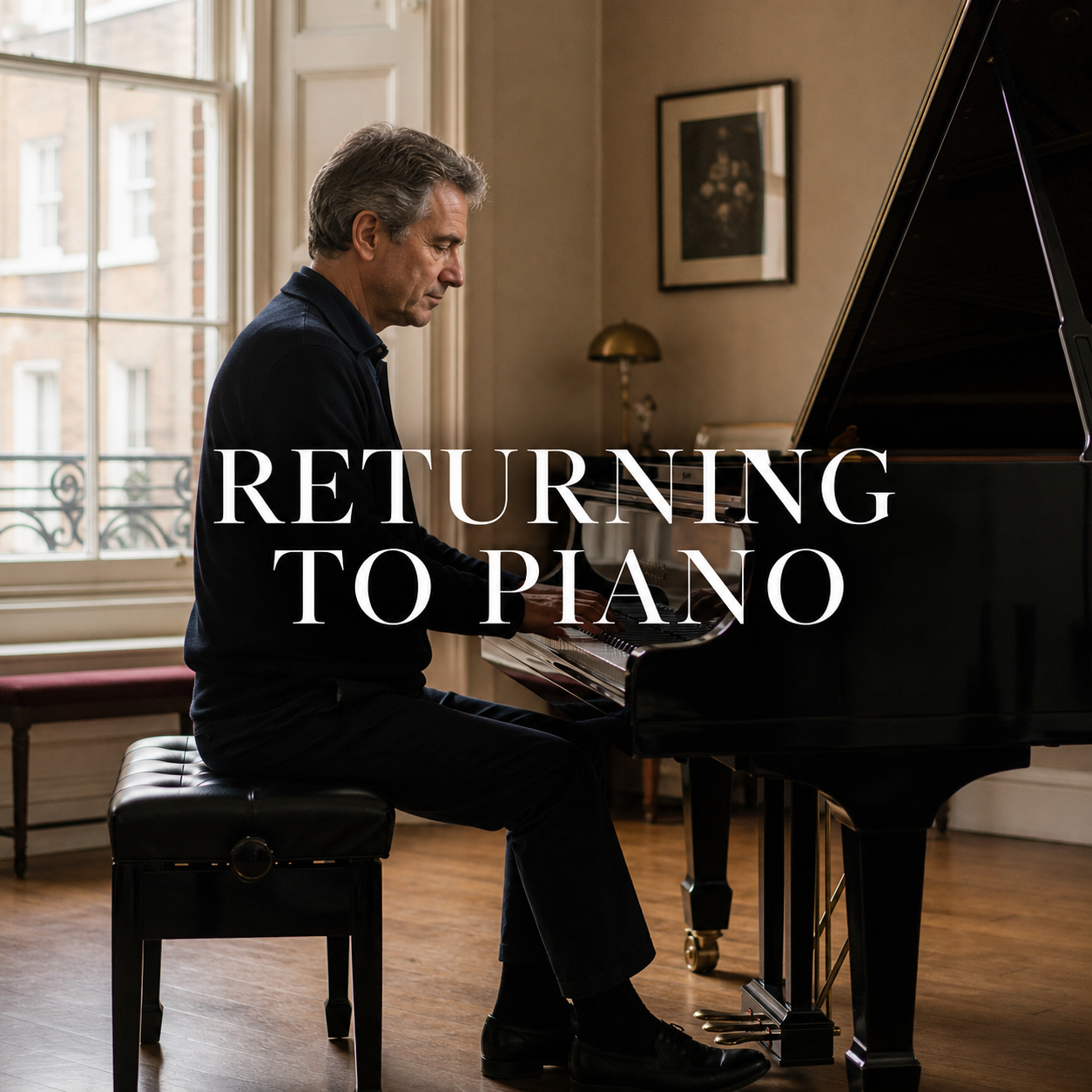
“Your musical memory may recognise the destination before your hands can travel there. That gap is normal, temporary and useful.â€
What actually comes back after a long break?
Many returning pianists meet an odd mixture of familiarity and resistance. The score looks known, a phrase sounds right in the mind, and the fingers still search for an old pattern. Yet coordination, stamina and reading speed may lag behind musical expectation. This is not evidence that the earlier work was wasted. Research has found that adults who had childhood music lessons can retain enhanced neural responses to sound years after training stops, although retention differs between people and does not guarantee preserved keyboard fluency.
The distinction matters. Musical understanding, aural memory and physical execution do not return at identical speeds. If you judge everything by the most awkward finger passage, you overlook the listening intelligence already present. If you rely only on memory, old tension and uncertain rhythm can return too. The productive approach to returning to piano after years is to treat each layer separately.
Teacher’s note
Do not begin by proving that you can still play your hardest former piece. Begin by observing what remains: pulse, reading, harmony, tone, memory and physical ease. That diagnosis gives the next month a shape.
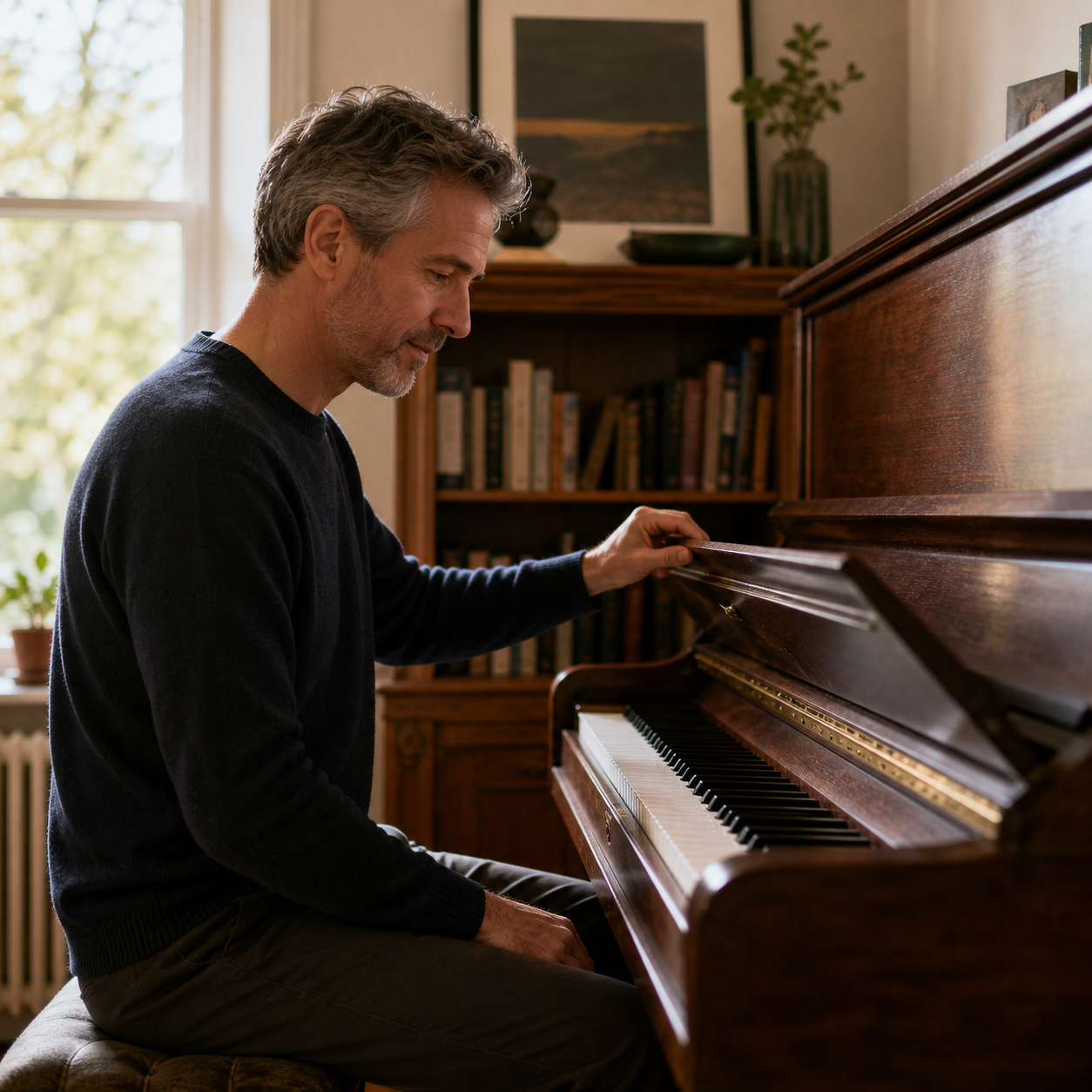
Returning to piano after years: the first four weeks
A sensible plan for returning to piano after years should feel almost too easy during its opening days. Performing-arts health guidance warns that sudden increases in playing load can trigger problems after time away. Duration, intensity and technical difficulty should rise gradually. That principle applies even when the break was caused by work or family life rather than injury.
A four-week restart map
A daily marathon is unnecessary. Four focused sessions of 20–30 minutes can be more useful than a single heroic weekend. Place the easiest material first, then one specific challenge, and finish with music you enjoy. If pain, weakness, pins and needles, swelling or loss of dexterity appears, stop and seek qualified advice rather than treating discomfort as a technical obstacle to push through.
Rebuild technique without turning practice into punishment
Technique after a break is not recovered by force. The first task is to restore economy: a balanced seat, free shoulders, mobile arms, quiet wrists and fingers that meet the keys without gripping. Slow five-note patterns, scales in comfortable keys and small chord changes reveal more than rapid exercises because they let you hear unevenness and notice unnecessary effort.
Choose one physical question per session. Can the thumb pass without the wrist locking? Can a chord sound together at a soft dynamic? Can the left hand keep pulse while the right shapes a phrase? WKMT’s work with the Scaramuzza approach to piano technique is useful here because coordinated movement and sound are treated as one problem, not as separate exercises.
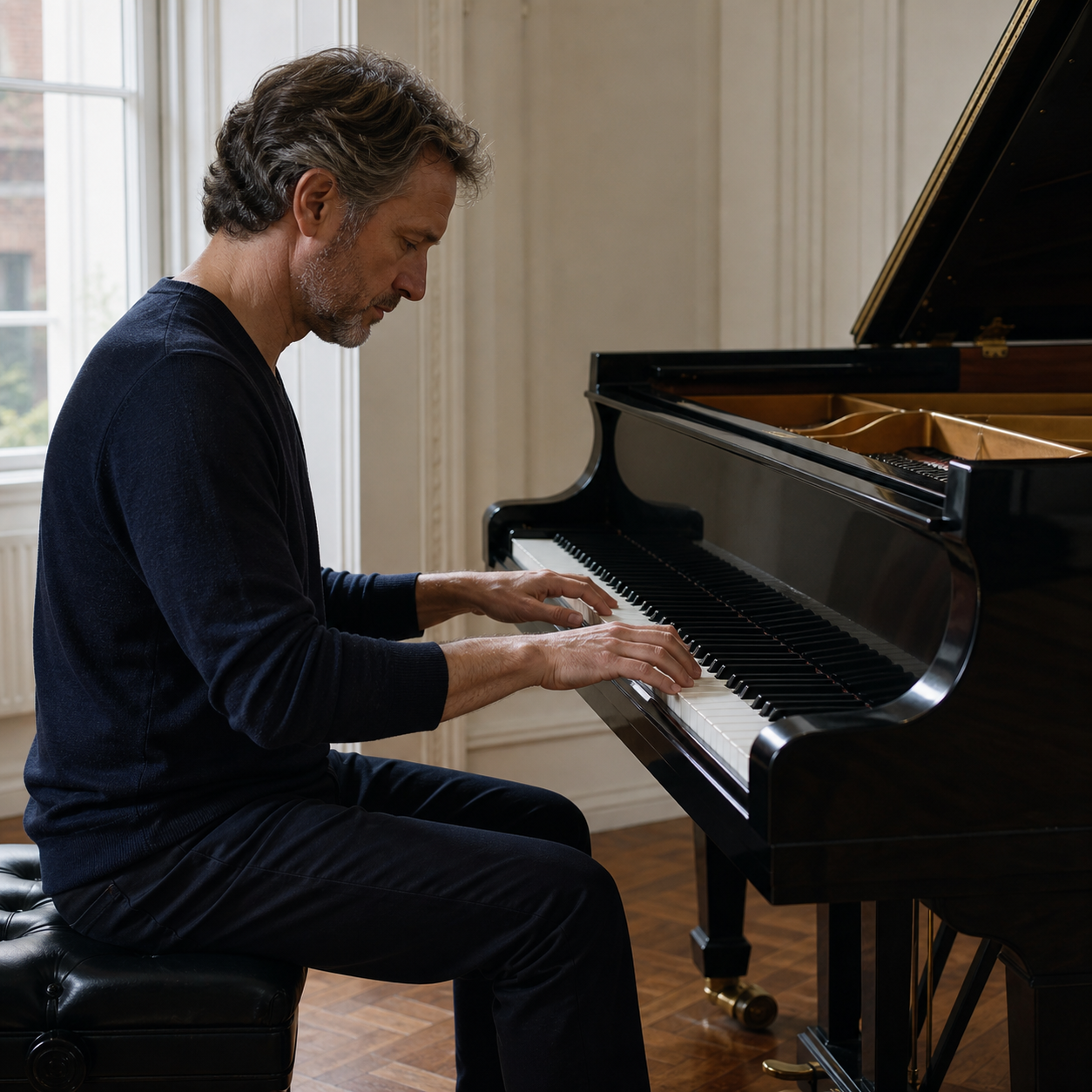
Practice insight
Use a three-pass rule: first find comfortable movement, then secure rhythm, then shape sound. Tempo comes after all three. A rushed fourth pass usually teaches less than a calm first one.
Choose repertoire for the pianist you are now
Former repertoire can be emotionally powerful and technically deceptive. A sonata once performed may return in fragments, tempting you to skip fingering, rhythm and voicing decisions. Keep one familiar piece for pleasure, but pair it with music you have never studied. New repertoire prevents memory from disguising uncertainty and gives you an honest measure of current reading and learning.
| Repertoire role | Best choice | What it rebuilds | Warning sign |
|---|---|---|---|
| Familiar anchor | One piece comfortably below your former peak | Confidence, sound memory, phrasing | Repeatedly forcing the difficult page |
| Fresh study | A short new work with moderate texture | Reading, fingering, independent learning | Choosing by prestige rather than fit |
| Fluency piece | Easy music playable without stopping | Pulse, continuity, sight-reading | Correcting every note mid-flow |
| Exploration | Improvisation, harmony or a new style | Curiosity and ownership | Turning it into another examination |
For reading, select music easy enough to continue through small errors. WKMT’s guide to improving sight-reading complements this fluency-first approach. For detailed work, the principles in how to practise effectively help divide a piece into decisions rather than repetitions.
When a teacher changes the restart
Self-directed return can work, especially for exploring repertoire and restoring a habit. When returning to piano after years, a teacher becomes particularly valuable if old ability creates high expectations, tension has crept into movement, or you cannot tell whether the problem is reading, coordination, fingering or practice design. One precise observation can replace weeks of uncertain repetition.
Adult returners also need a different conversation from children preparing sequential grades. They may bring strong artistic opinions, limited practice time, uneven technical memory and a wish to play serious repertoire without making examinations the centre of study. A good lesson turns those realities into a programme. It does not erase them.
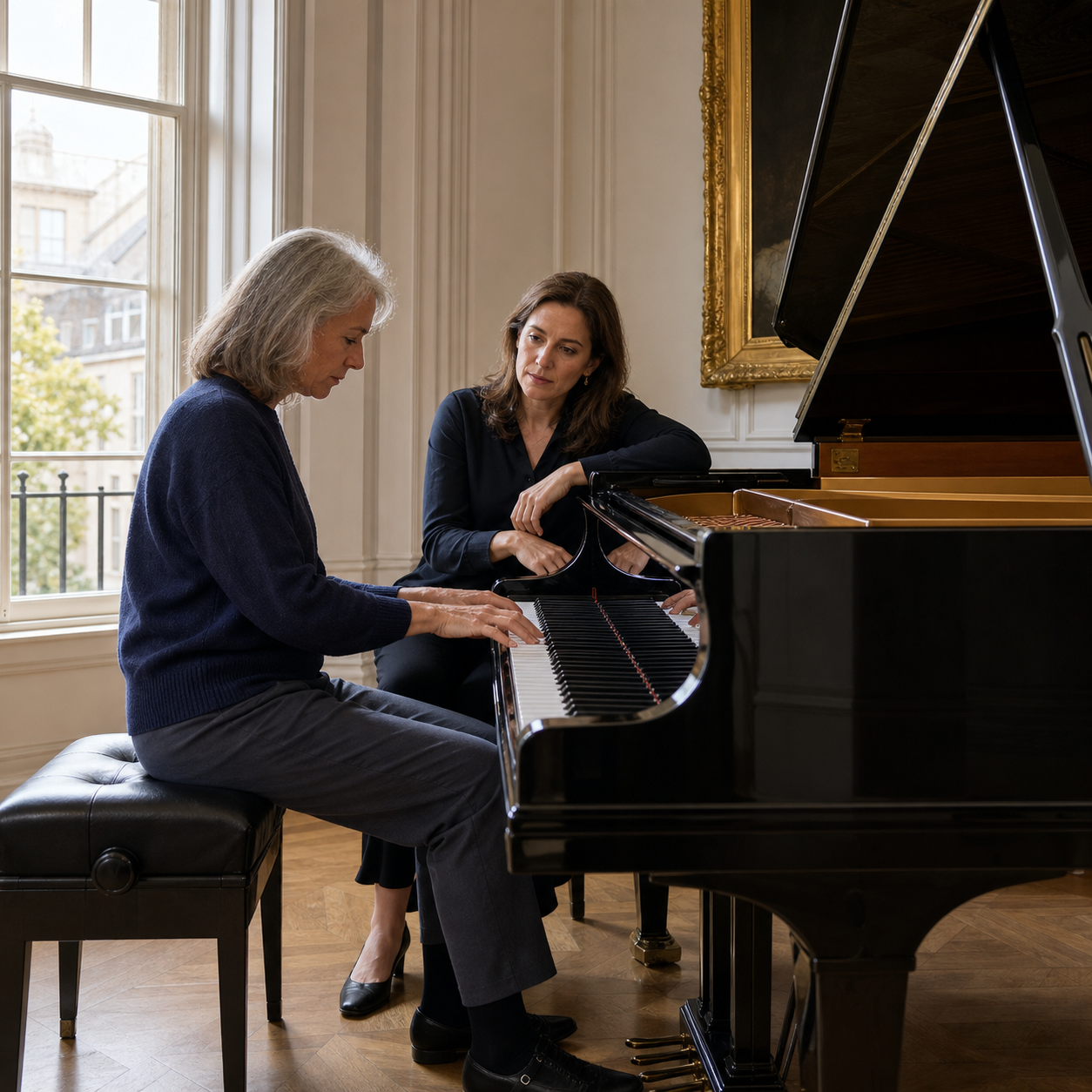
For adult learners
A first lesson need not end with a grade plan. It can produce a physical baseline, a realistic repertoire list and a weekly practice design. ABRSM’s Open Music Assessment is one optional goal for adult learners who want independent feedback without a pass-or-fail result.
Restart with a plan that fits adult life
WKMT offers structured, musically serious study for adults returning after a short pause or several decades, with repertoire and practice shaped around present goals.
Explore adult piano lessons in LondonBuild a musical life, not a recovery project
The most durable return is one that stops feeling like rehabilitation. Give the piano a regular place in the week, but allow the work to change with energy and time. On a busy evening, ten minutes of slow practice, harmonic analysis or attentive listening keeps the relationship alive. On a spacious weekend, a longer session can connect technique, repertoire and performance.
Short-term adult piano training has been associated with changes in motor-cortex activity, and longer programmes with older adults have reported fine-motor and auditory-network changes. These findings support the capacity for adult learning; they do not promise identical outcomes or make the piano a medical treatment. The practical conclusion is simpler: mature nervous systems remain capable of learning, especially when training is consistent and well paced.
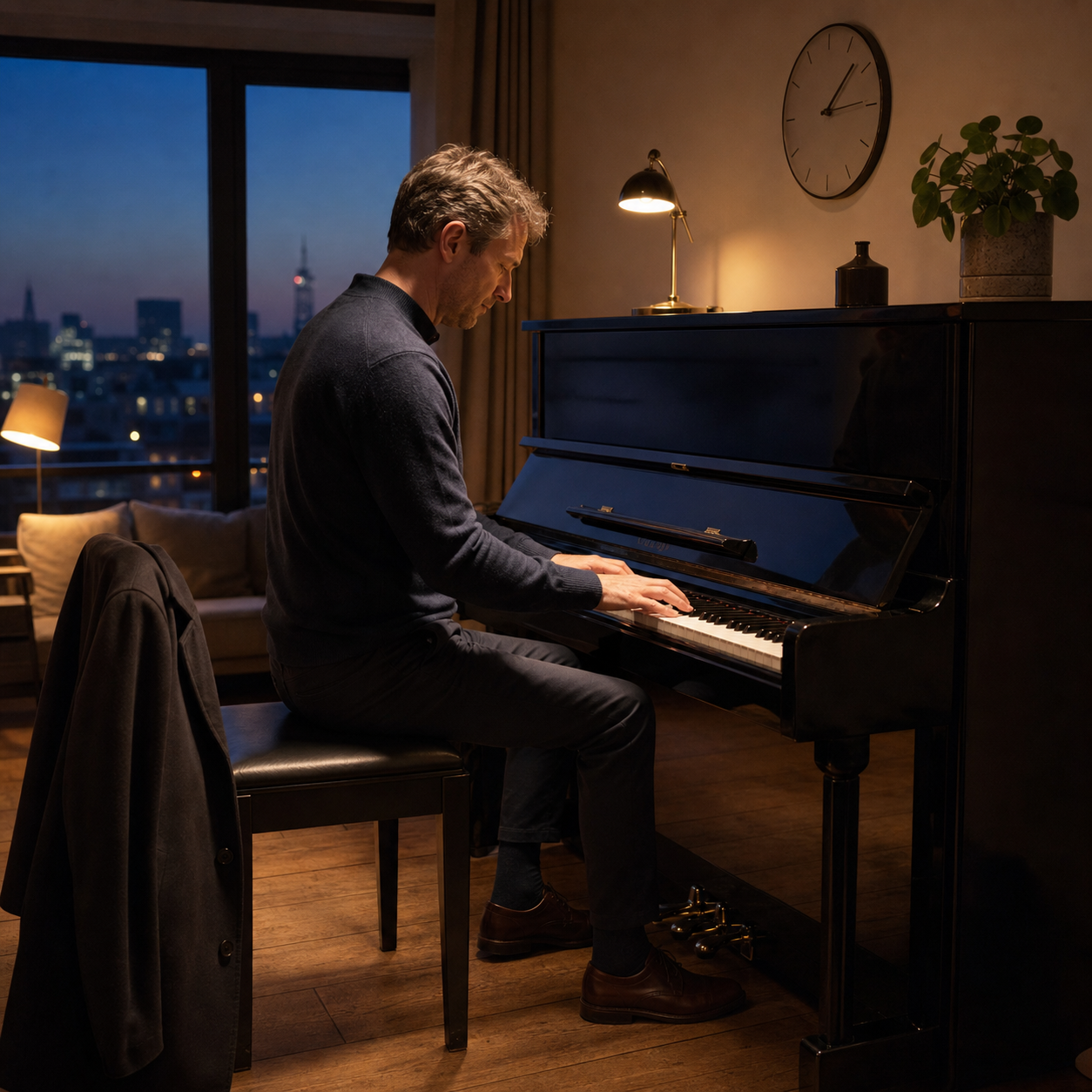
There is no need to recreate childhood lessons or chase the exact standard you once held. Returning to piano after years can be more thoughtful than the first encounter because you now hear more, choose more deliberately and understand what sustained attention costs. Begin below your pride, listen above your fingers, and let fluency arrive as the consequence of good work.
For a wider view of WKMT’s teaching culture and classical piano study in the capital, visit WKMT London.
Questions adult returners often ask
Should I restart at the grade I reached?
Usually not immediately. A former grade describes what you once prepared under particular conditions; it does not measure today’s reading, stamina or available time. Spend two to four weeks surveying comfortable repertoire and fundamental skills. You may recover quickly in some areas and need a patient reset in others. Choose the next goal from evidence gathered now, not from an old certificate.
How long before returning to piano after years feels natural?
There is no reliable universal timetable. Previous training, length of the break, current health, practice regularity and repertoire choice all matter. Many adults notice meaningful changes within several consistent weeks, but fluency is rarely linear. Judge progress by easier movement, steadier pulse, faster problem diagnosis and a growing ability to finish music, rather than by speed alone.
Do I need an acoustic piano to begin again?
A well-regulated acoustic instrument offers the richest control of tone and touch, but a good weighted digital piano can support an effective restart. What matters first is reliable key response, an adjustable seat, a sensible playing height and easy access for regular practice. If returning to piano after years becomes a lasting commitment, a teacher or technician can help assess whether the instrument still serves your developing control.
Sources on returning to piano after years as an adult
- BAPAM, Returning to Playing and Performance for Instrumental Musicians (last reviewed October 2024; checked 20 August 2026).
- Skoe and Kraus, A Little Goes a Long Way: How the Adult Brain Is Shaped by Musical Training in Childhood, Journal of Neuroscience.
- Pascual-Leone and colleagues, Cortical Motor Circuits after Piano Training in Adulthood, PLOS ONE.
- Guye and colleagues, Increased Functional Connectivity after a Full Year of Piano Training in Healthy Older Adults.
- Sarah Evans Moore, The Self-Efficacy Beliefs of Three Adults Returning to Piano Study, University of South Carolina.
- ABRSM, Open Music Assessment (checked 20 August 2026).
Related video
Adult beginner piano approach is embedded below from YouTube for educational listening and context. Rights remain with Piano Lessons London by WKMT / YouTube.