
 TRIAL LESSON
Piano Lessons
Classical Piano Concerts in London: What Learners Can Hear Before Lessons
Aug
A London listening guide for piano learners
Classical Piano Concerts in London: What Learners Can Hear Before Lessons
A well-chosen concert can become an aural lesson in tone, timing and musical architecture. Here is how to select the right room, listen with purpose and bring the experience back to the piano.
Classical piano concerts in London are not only nights out: for a learner, they are vivid demonstrations of what written notation becomes in a real acoustic. A recording lets you repeat a passage, but a live performance reveals distance, projection and the physical span of a phrase. You hear how a pianist carries a quiet melody to the back row, how a pause changes the room, and how the instrument balances against strings, winds and brass.
The most useful concert is not necessarily the grandest or most expensive. It is the one that matches the question you are working on. If you are developing voicing, an intimate solo recital may help most. If you are learning to sustain a long movement, a concerto can reveal the relationship between individual detail and large-scale direction. The guide below turns London’s variety into a practical listening plan for classical piano concerts in London.
Why classical piano concerts in London change what a learner hears
A piano is capable of extremes that domestic speakers compress. In a hall, a soft chord can retain a clear core; a fortissimo can feel orchestral without becoming hard; a bass note can alter the colour of everything above it. You also perceive decay: the moment after the hammer strikes, when the sound blooms, mixes with the room and disappears.
That experience sharpens judgement at home. Instead of asking only, “Did I play the notes?”, you begin to ask, “Where is this phrase going?”, “Which voice should reach the listener?” and “How much sound can this harmony carry?” These are interpretative questions. They help learners connect technique to musical intention, which is central to thoughtful piano study in London. In that sense, classical piano concerts in London give lessons a shared reference point.
“Listen for the decision behind the sound: where the pianist waits, leans, releases and lets the hall answer.”
Choose the concert type that answers your question
London calendars can feel overwhelming. Begin with the format, not the celebrity name. Each setting magnifies a different part of pianism. The most useful classical piano concerts in London are the ones that answer a question already alive in your lessons.
| Format | What it reveals | A useful learner question |
|---|---|---|
| Solo recital | Tone, voicing, pacing and one player´s command of silence | How does the melody remain present inside a thick texture? |
| Chamber music | Listening, balance and conversational timing | When does the piano lead, support or disappear into the ensemble? |
| Piano concerto | Projection, dramatic scale and dialogue with an orchestra | How does the soloist keep a long argument moving? |
| Student recital or masterclass | Process, risk and ideas close to a learner’s own work | Which adjustment changes the musical result most clearly? |
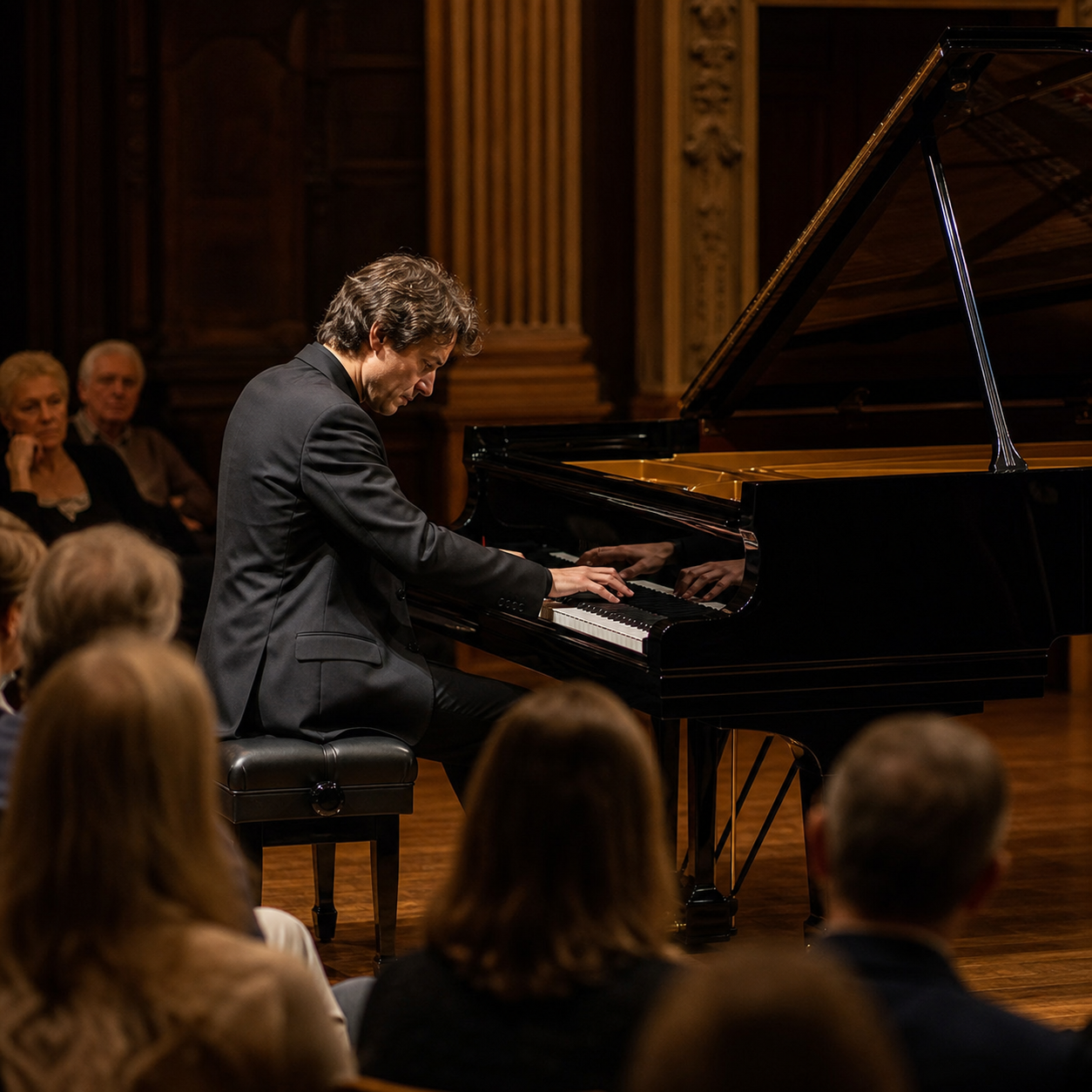
Four London routes for serious listening
1. Wigmore Hall: intimacy and detail
Wigmore Hall specialises in chamber music, instrumental repertoire, song and early music. Its scale makes it especially useful for hearing the grain of a pianist’s sound: the difference between a voiced chord and a merely loud one, or between a rhetorical pause and a break in concentration. Its season contains solo piano alongside chamber collaborations, so it is a strong starting point for repertoire-focused listening among classical piano concerts in London.
2. Barbican and Southbank Centre: recital and orchestral scale
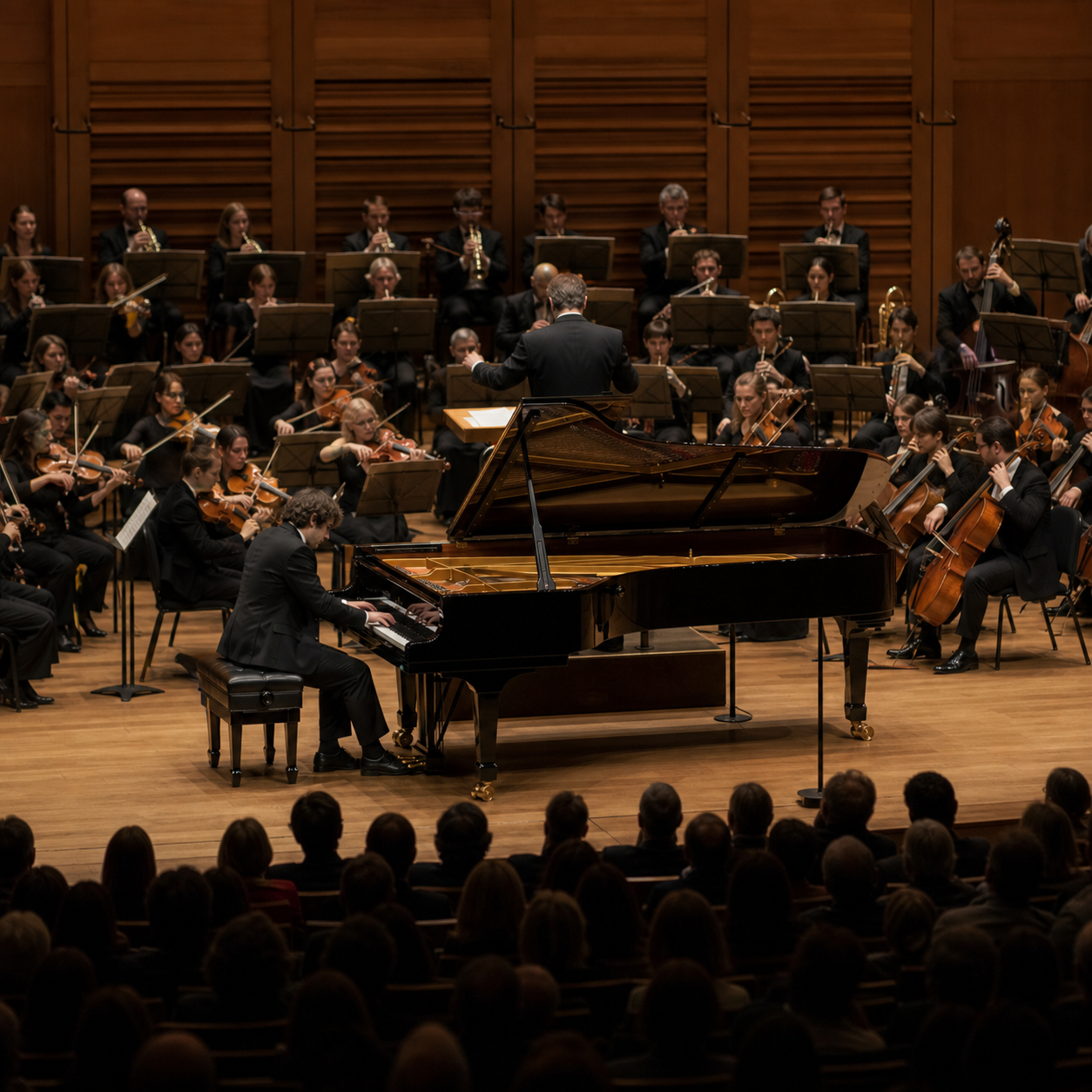
The Barbican’s recital series and wider classical season let listeners compare solo playing with large orchestral programmes. Across the river, Royal Festival Hall offers the broad acoustic and visual scale of major orchestral concerts. These settings are excellent for hearing how a pianist projects a line without forcing, how the piano’s attack differs from sustained orchestral sound, and how a solo entry changes the energy of a movement. They are classical piano concerts in London at a scale where projection and structure become impossible to ignore.
3. London conservatoires: process at close range
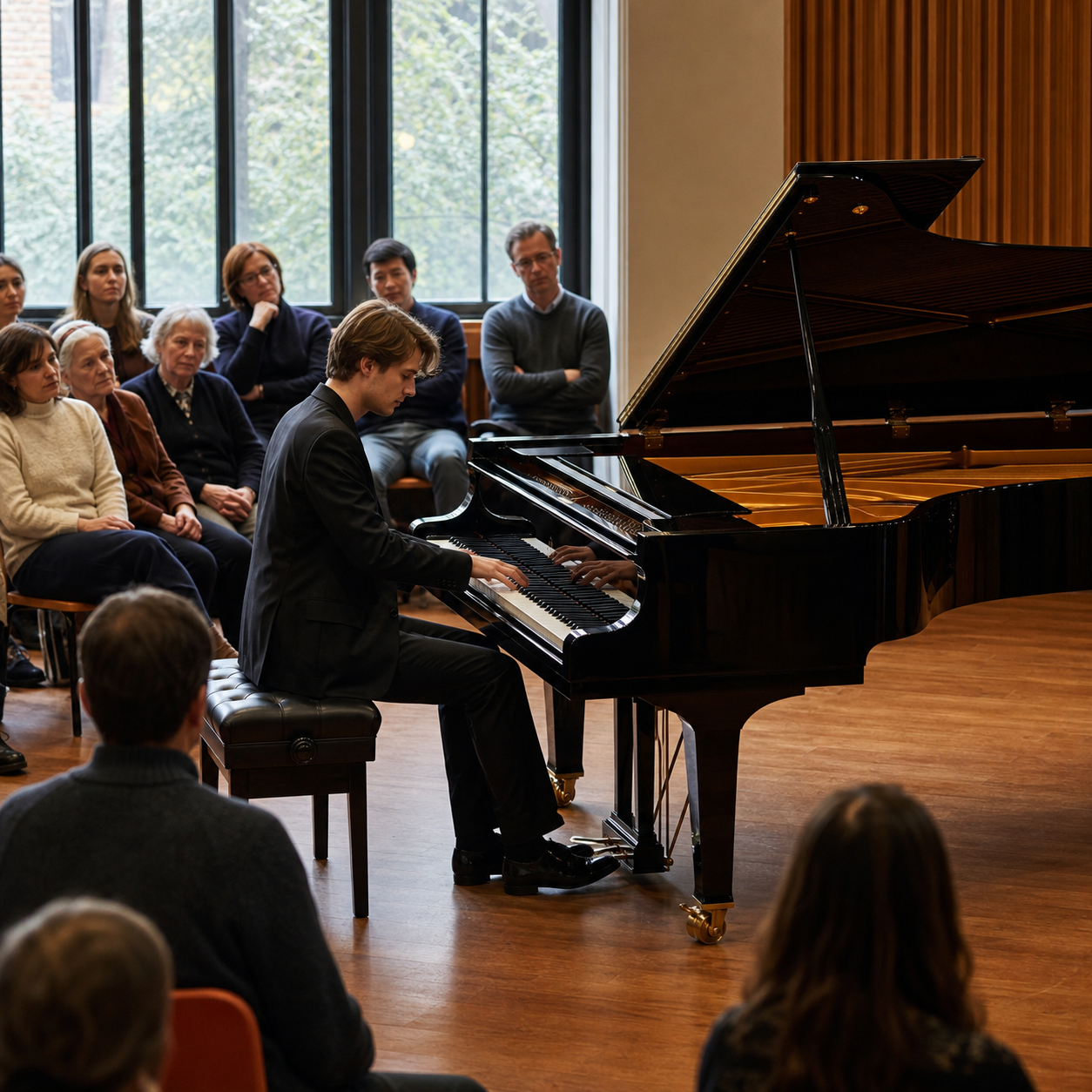
The Royal College of Music, Royal Academy of Music and Guildhall School of Music & Drama publish active performance calendars. Student recitals can be particularly valuable: the repertoire is substantial, the musical risks are real, and the experience often feels close to a learner’s own path. Masterclasses add another layer by showing how a precise suggestion about sound, gesture or structure changes a performance. These classical piano concerts in London often make the learning process itself visible.
Dates, booking conditions and access arrangements change, so consult the venue´s current page before travelling. WKMT also maintains a wider guide to music events in London and information about London piano masterclasses.
4. A mixed route: repeat one composer in different rooms
For a more focused experiment, follow one composer across several formats. Hear a Chopin solo work in recital, a concerto with orchestra, then a student performance or masterclass. Repetition gives your ear a stable reference. Differences in tempo, pedalling and character become easier to notice because the musical material is already familiar. This is one of the strongest ways to use classical piano concerts in London for study rather than passive attendance.
The four-part listening compass
You do not need to analyse every bar. Pick one point of the compass before the lights dim, then let the rest of the performance remain a pleasure.
Before, during and after: a simple concert routine
Before the concert
Read the programme once and listen briefly to one unfamiliar work, but resist trying to master the entire programme. Choose a seat according to your goal: closer for physical gesture and attack, farther back for blend and the room´s overall balance. Allow enough travel time to arrive calmly; a hurried entrance is a poor beginning to attentive listening.
During the concert
Follow your chosen question for a few minutes, then release it. Notice one opening, one transition and one ending. If a passage moves you, let it. A concert is first an artistic encounter, not a test of concentration. The learner’s task is simply to catch a few decisions that recordings or notation had not made obvious.
After the concert
Write three short lines: what you heard, what surprised you, and what you want to try. At the piano, test the idea on a small passage within twenty-four hours. You might practise carrying a melody over quieter accompaniment, shape a cadence with more patience, or reduce pedal to clarify harmonic change. This turns memory into action.
How adult learners can make concerts part of study
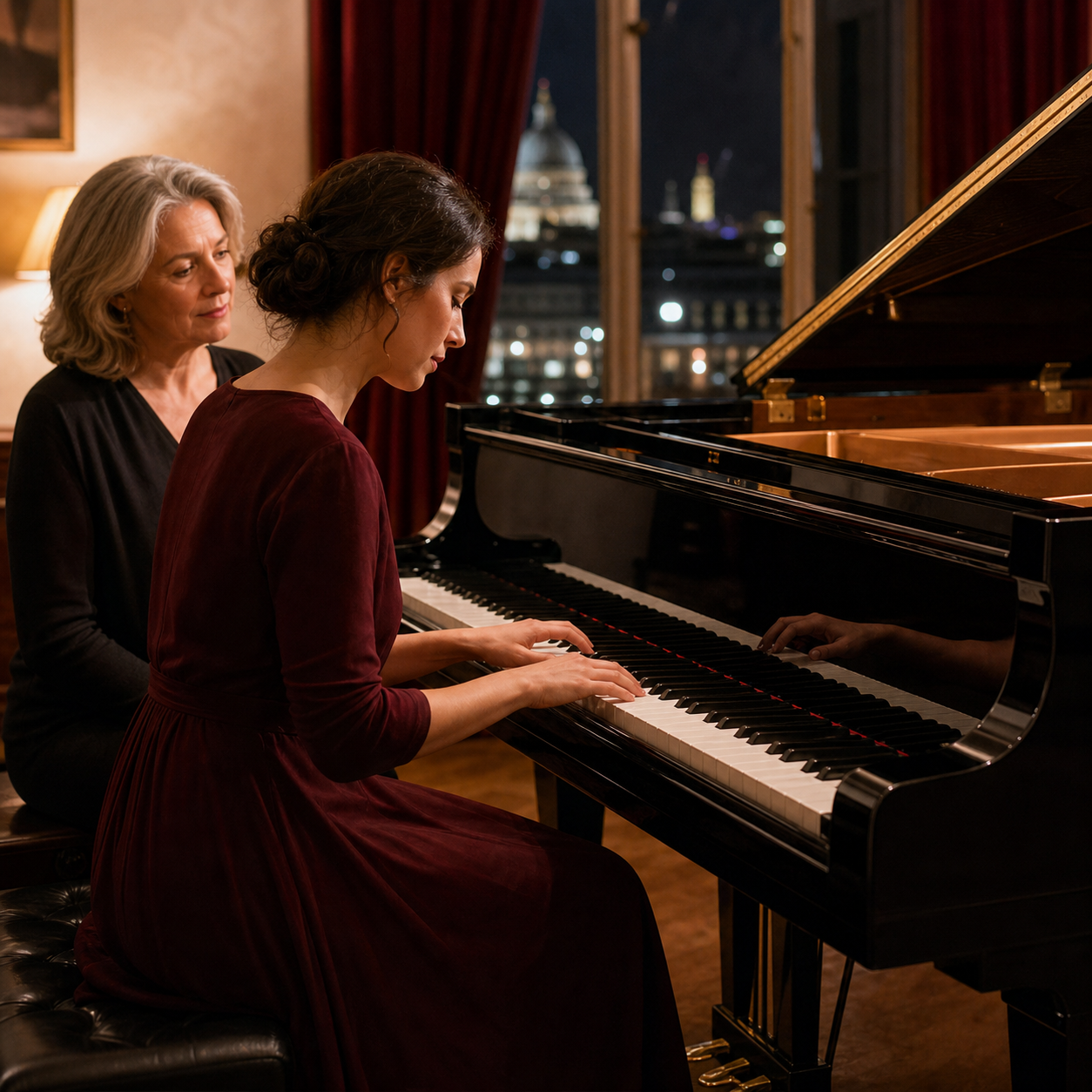
Adults often bring rich listening experience but limited practice time. A concert can connect those strengths. Instead of adding another task, use it to define the next one: a sound to seek, a phrase to organise or a composer to explore. The best observation is concrete enough to test and open enough to discuss after classical piano concerts in London.
A teacher can help separate the visible gesture from the musical cause. What looked like effortless freedom may rest on rhythmic control; what sounded spontaneous may depend on exact voicing. This is where adult piano lessons in London can turn inspiration into a workable technical and musical plan. For wider context, read WKMT´s reflection on why classical music rewards sustained curiosity.
Build a personal London concert season
A useful personal season needs contrast. Start with three dates spread across several months rather than booking everything at once. Choose a solo recital, an ensemble programme in which the piano shares the stage, and a concerto or conservatoire event. The gap between them gives you time to hear the effect on your own practice. It also prevents classical piano concerts in London from becoming another obligation rather than a source of musical clarity.
Next, connect one date to music you already play. The work need not match exactly. A Mozart sonata can prepare your ear for clarity in a Mozart concerto; a Chopin nocturne can make you attentive to cantabile sound in another Romantic programme. Then reserve one date for genuine discovery. A new composer, an unfamiliar ensemble or a contemporary work can loosen expectations and show that attentive listening is not dependent on prior expertise.
Keep the plan financially realistic. Compare venue areas, concession schemes and conservatoire calendars before buying. An inexpensive recital that you can attend calmly may teach more than a prestigious event reached in a rush. If possible, go with another learner and exchange one observation afterwards. Different ears often catch different things: one person follows rhythmic energy, another notices balance or character. That conversation helps turn a private impression into precise language.
Finally, keep a one-page concert notebook. Record the date, venue, programme and only three musical observations. Add a fourth line after your next practice session: “What changed when I tried this?” Over a year, those brief entries become a map of your developing taste. They also show which performers, composers and acoustics prompt the most productive questions for your playing.
Practical booking questions
- Is the programme right? One familiar work plus one discovery is a useful balance.
- Is the duration manageable? Check intervals and finishing times, especially on a weekday.
- Where should I sit? Venue plans help, but there is no universally perfect seat; choose for detail or blend.
- Are concessions available? Age-based, student and access schemes vary. Confirm on the current booking page.
- What if I am new to concert etiquette? Arrive before the advertised start, silence devices, and follow the room´s applause cues. No specialist knowledge is required.
Frequently asked questions
Which venue is best for a first piano recital?
An intimate hall is often easiest because the connection between gesture and sound is clear. Wigmore Hall and conservatoire recital rooms are useful places to begin, subject to the live programme.
Should I know the music beforehand?
No. Familiarity can help you compare interpretations, while unfamiliar music encourages fresh attention. Listening once to a single work is enough preparation.
How often should a piano learner attend?
Consistency matters more than frequency. One thoughtfully chosen concert every month or two can provide plenty of material for listening, practice and discussion.
Bring London’s concert life into your playing
WKMT teachers help learners connect attentive listening with technique, repertoire and confident musical decisions.
Explore piano lessons at WKMTOfficial venue sources on classical piano concerts in London
- Wigmore Hall — About the hall
- Barbican — Recitals
- Southbank Centre — Royal Festival Hall
- Royal College of Music — Events
- Royal Academy of Music — What’s on
- Guildhall School — What’s on
Venue information last checked 19 August 2026. Programmes and booking conditions may change; verify details on the official event page.
Related video
Yunchan Lim piano live at Wigmore Hall is embedded below from YouTube for educational listening and context. Rights remain with Wigmore Hall / YouTube.