
 TRIAL LESSON
Pianists, Piano Lessons
Isata Kanneh-Mason in London: curiosity, colour and serious listening

Aug
Isata Kanneh-Mason in London

WKMT London listening guide
Isata Kanneh-Mason in London: curiosity, colour and serious listening
Isata Kanneh-Mason is one of the most compelling British pianists of her generation: a soloist, chamber musician, composer and arranger whose programmes invite listeners to connect familiar repertoire with less expected voices. For London concertgoers and piano students, her playing offers a particularly useful lesson. Musical seriousness can be exacting without becoming narrow, and curiosity is itself a form of discipline.
Isata Kanneh-Mason at a glance
She trained at the Royal Academy of Music, records for Decca Classics and has appeared in London at the Barbican, Queen Elizabeth Hall, Wigmore Hall and the Royal Albert Hall. Her repertoire moves from Clara and Fanny Mendelssohn to Gershwin, Samuel Coleridge-Taylor and Prokofiev. The thread connecting it is an alert ear for character, partnership and contrast.
A London formation with an outward-looking ear
Kanneh-Mason attended the Royal Academy’s Junior Academy before completing undergraduate and master’s degrees there, graduating in 2020. That London formation matters because it placed solo playing, ensemble work and exposure to a wide repertoire within the same musical life. The Academy later welcomed her back for a 2025 masterclass on Debussy’s Études, where the focus was not merely correctness but boldness of expression.
Her early professional profile developed quickly. The Royal Academy records London debuts at the Barbican, Queen Elizabeth Hall and Wigmore Hall during the 2022/23 season. A BBC Proms solo debut followed in 2023, and in July 2024 she appeared at the First Night of the Proms with the BBC Symphony Orchestra and Elim Chan. These are very different rooms and musical situations, demanding projection on a large scale as well as the concentrated speech of recital playing.
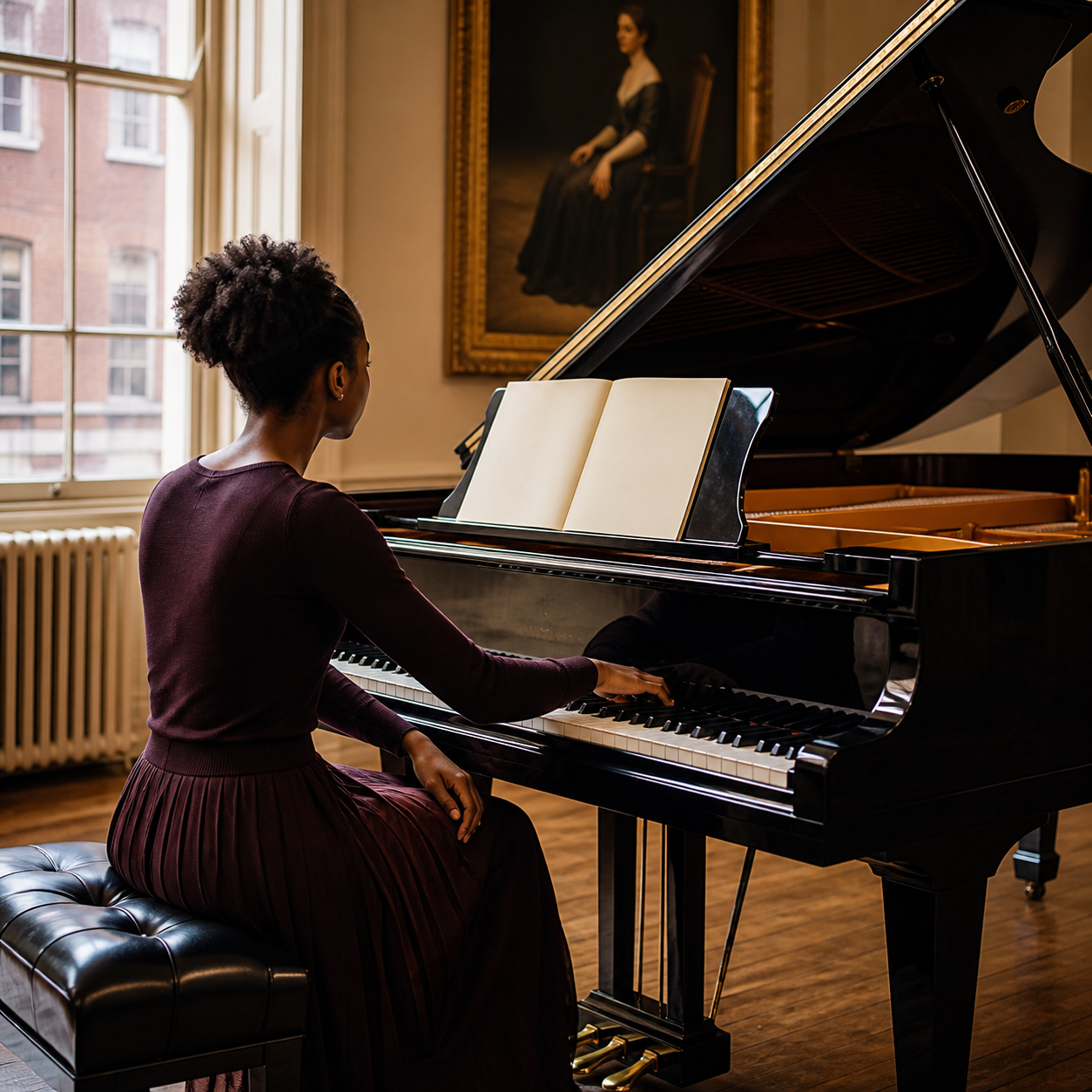
For anyone pursuing classical piano study in London, that range is instructive. A pianist’s identity is not made by polishing one sonority indefinitely. It grows through changing acoustics, partners, audiences and repertoire while retaining a recognisable quality of attention.
WKMT perspective
The most valuable kind of curiosity is audible: it changes the weight of a phrase, the timing of a reply and the colour reserved for a new musical character.
Chamber music as a way of thinking
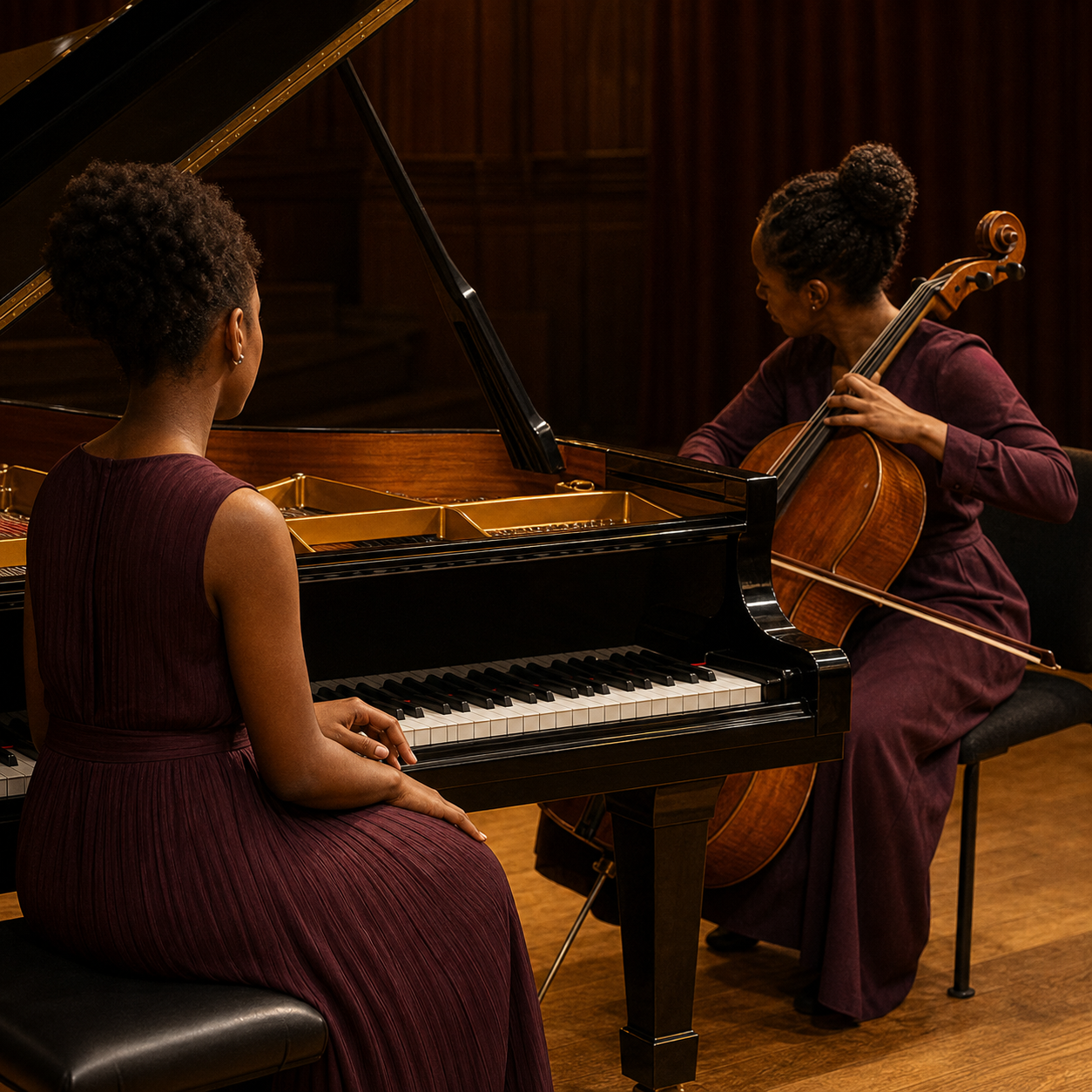
Kanneh-Mason’s official biography places chamber music close to the centre of her work. Her frequent performances with her brother, the cellist Sheku Kanneh-Mason, make that aspect especially visible, but the deeper point is broader than one partnership. Chamber playing trains a musician to hear intention before responding. Balance becomes a living negotiation rather than a fixed dynamic marking.
At the piano, this means resisting the temptation to fill every space. A bass line may need to support without dominating; an inner voice may illuminate a harmonic turn and then recede. When another instrument enters, the pianist must recognise whether the moment requires warmth, transparency, propulsion or stillness. WKMT’s guide to London chamber music explores the culture in which this responsive listening develops.
Recordings that widen the recital map
Kanneh-Mason’s discography is a compact portrait of her programming instincts. Romance (2019) centred Clara Schumann; Summertime (2021) brought together twentieth-century American music and included a world-première recording of Samuel Coleridge-Taylor’s Impromptu in B minor; Childhood Tales (2023) considered music shaped by memories of youth. Her 2024 Mendelssohn album placed works by Fanny and Felix Mendelssohn in dialogue. The official biography now lists Prokofiev (2026) as her fifth solo Decca album.
This sequence avoids the false choice between a recognisable canon and discovery. Clara Schumann, Coleridge-Taylor and Fanny Mendelssohn are not presented as dutiful supplements. They become part of the central listening experience, capable of changing how the surrounding repertoire is heard.
| Recording | Listening lens | Question to carry |
|---|---|---|
| Romance | Romantic line and intimacy | How does a phrase sing without losing structure? |
| Summertime | Rhythm, colour and American voices | Where does rhythmic character change the touch? |
| Mendelssohn | Sibling voices and lyrical clarity | What becomes newly audible through juxtaposition? |
| Prokofiev | Edge, momentum and pianistic brilliance | How can precision retain wit and danger? |
How to listen to Isata Kanneh-Mason
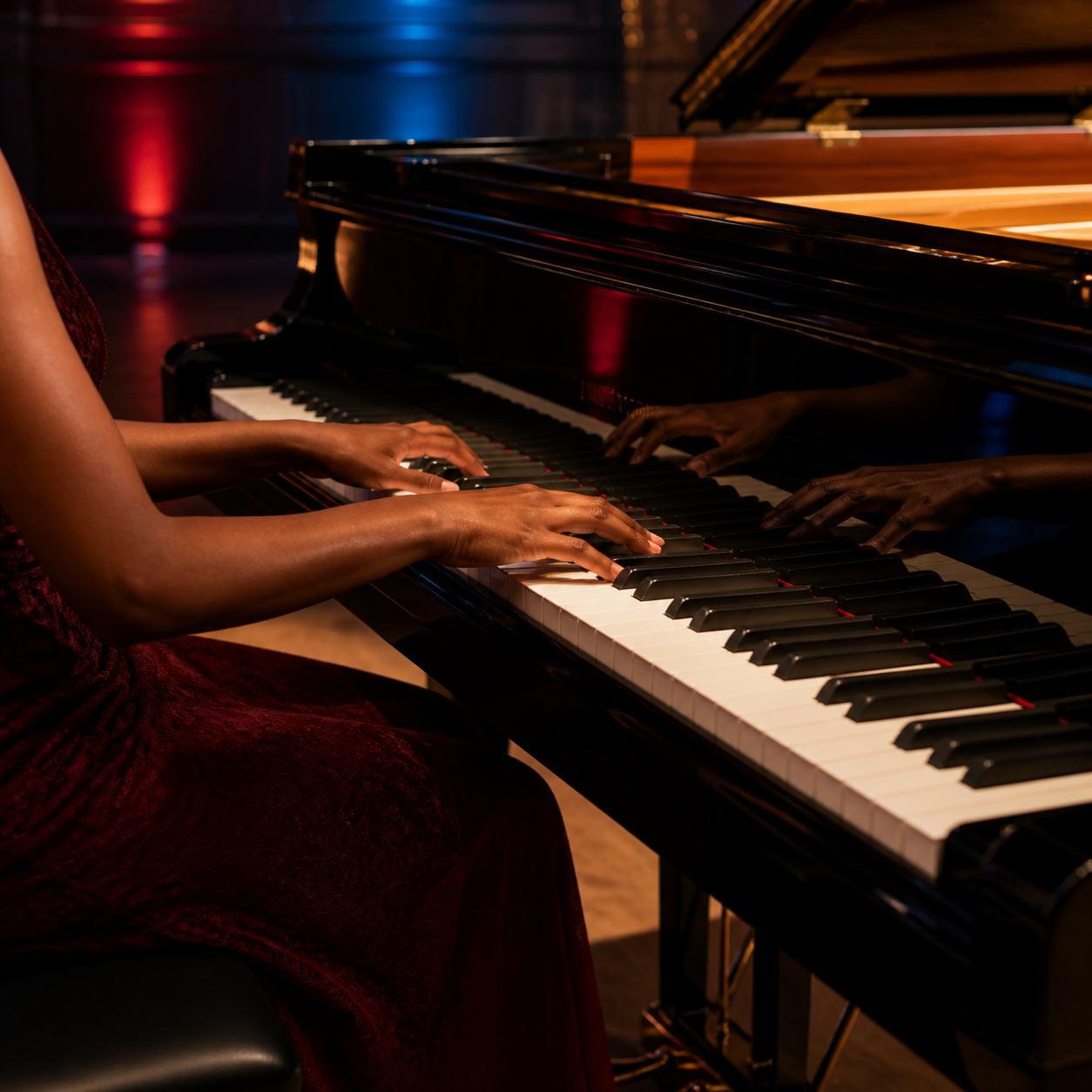
A useful first hearing should be focused but not overburdened. Choose one movement and give it three passes. On the first, follow the large emotional contour. On the second, listen only for the hierarchy between melody, bass and inner voices. On the third, notice how timing changes at cadences, transitions and returns.
Five details worth following
- Voicing. Listen for the distance between the principal melody and everything that supports it. In finely balanced playing, an inner line can become briefly luminous without displacing the main argument. This is especially revealing in Romantic repertoire, where generous sonority can otherwise obscure the shape of the texture.
- Rhythmic character. Rhythm is more than steadiness. Notice whether a passage walks, dances, glides or bites. Kanneh-Mason’s broad repertoire makes these differences unusually clear: the rhythmic poise suitable for Mendelssohn cannot simply be transferred to Gershwin or Prokofiev.
- Transitions. The arrival of a new theme is less interesting than the way a performer prepares it. Follow changes in register, pedal, density and pulse during the bars before a return. Convincing interpretation often declares itself in these apparently secondary places.
- Shared breathing. In duo playing, watch and hear how the musicians release one phrase and begin the next. Ensemble freedom depends on a common sense of direction. It is coordination guided by listening, not mechanical simultaneity.
- Contrast without fracture. Kanneh-Mason has spoken of wanting recital programmes to expand expectations through contrast. Ask how separate pieces illuminate one another. A programme succeeds when difference sharpens attention while the evening still feels like a considered whole.
Listening insight
Compare rather than rank. Ask how the transparent quickness of Mendelssohn differs from the denser rhetorical weight of Clara Schumann, or how Prokofiev’s sharp profiles alter the pianist’s use of attack. The aim is to hear artistic decisions, not to collect approving adjectives.
This method is equally valuable for players. Recording a short passage and listening away from the keyboard often reveals more than another immediate repetition. WKMT’s article on the importance of listening develops that habit further. Adult learners may also find that guided piano lessons for adults in London turn concert impressions into clearer choices about touch, voicing and repertoire.
What players can take back to the piano
The most useful response to an admired performance is not imitation. It is a better question. If a melody appeared unusually free, identify the bass notes that kept it grounded. If a climax sounded powerful without harshness, listen for the preparation: the widening register, the pace of crescendo, the way the pedal cleared before the arrival. A recording can then become a laboratory for cause and effect.
For adult pianists, this approach protects listening from becoming passive admiration. Select four bars from your own repertoire and name one relationship you want to hear more clearly: melody against accompaniment, dissonance against resolution, or pulse against rubato. Play once, record once, then listen without looking at the score. The exercise is brief, but it turns a concert insight into an audible decision of your own.
Hearing her in London
London has been central to Kanneh-Mason’s public development, from her Academy years to performances at major halls. The official concert listing, checked on 17 August 2026, includes a London appearance at Ronnie Scott’s on 30 November 2026. Concert information can change, so always confirm the venue page and artist listing before booking.
When choosing a seat for a piano recital or chamber concert, musical priorities matter more than prestige. A central position gives a blended sound, while a closer side seat may reveal attack and physical dialogue more vividly. Arrive early enough to read the programme, but leave yourself a few quiet minutes before the music begins. WKMT’s guide to classical concerts in London offers a wider route into the city’s listening culture.
The hall itself is part of the interpretation. Wigmore Hall gives chamber textures an immediate presence; a larger auditorium asks sound to travel and encourages the listener to hear architecture over a longer distance. Rather than judging a performance by volume alone, attend to how the pianist adapts articulation and resonance to the room. A dry release can clarify quick writing, while a longer pedal may allow a lyrical line to bloom without losing its harmonic direction.
Programme order also deserves attention. Kanneh-Mason’s stated wish to make audiences curious places contrast at the centre of the recital experience. Read the sequence before the concert and predict where the strongest change of atmosphere will occur. Afterwards, ask whether an unfamiliar piece altered your hearing of the familiar one beside it. That question turns a list of works into an argument, and it is often where the most rewarding memory of a recital begins.
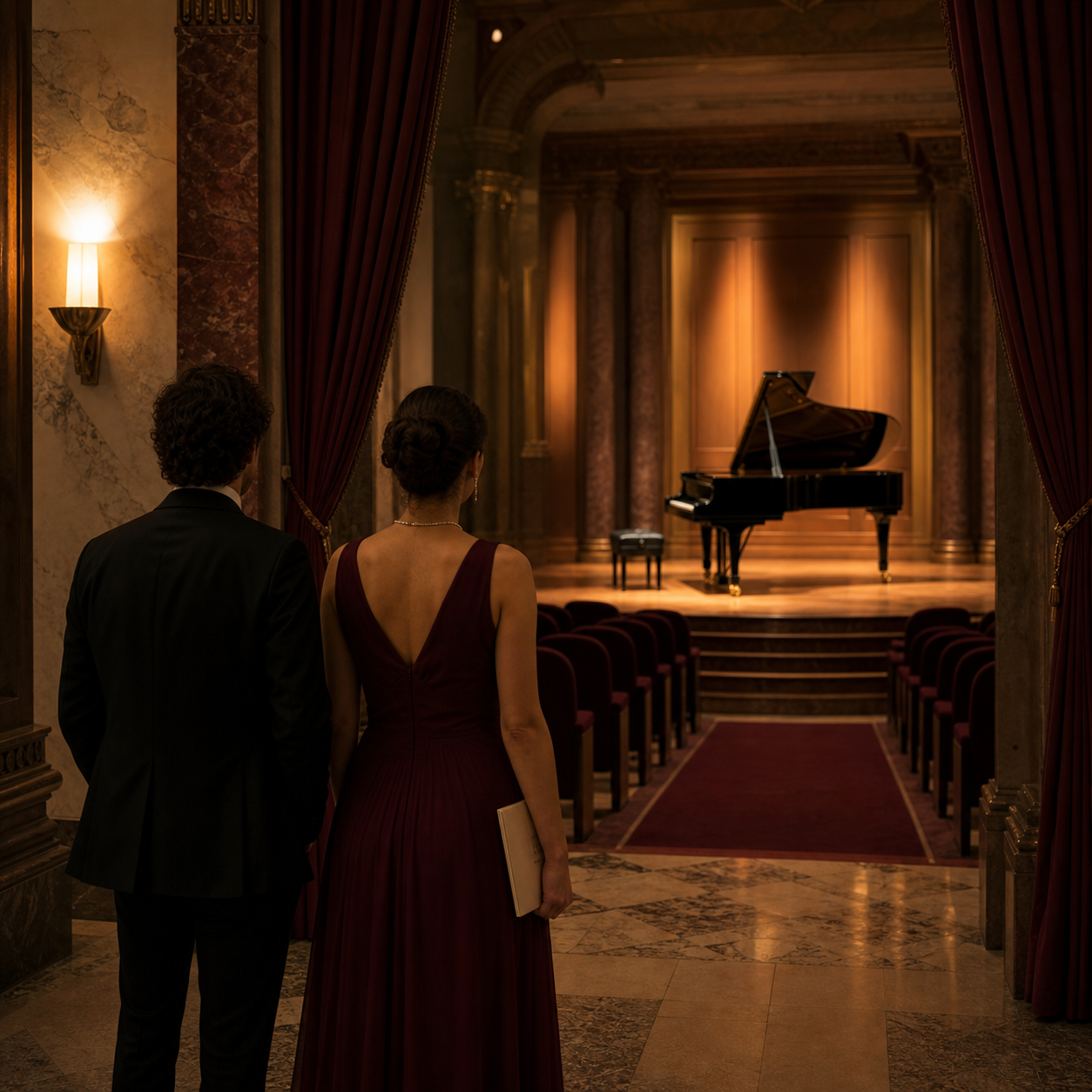
Turn listening into musical understanding
WKMT brings performance, interpretation and serious piano teaching together across London. Explore an approach in which the ear leads technique and repertoire becomes a source of lasting curiosity.
Frequently asked questions on Isata Kanneh-Mason
Who is Isata Kanneh-Mason?
She is a British pianist, composer and arranger, a Royal Academy of Music alumna and a Decca Classics recording artist known for solo, concerto and chamber performances.
What is a good first recording to hear?
Romance is a natural introduction to her lyrical playing and advocacy of Clara Schumann. Summertime reveals a broader rhythmic and colouristic range, while Mendelssohn shows her interest in placing related musical voices in illuminating conversation.
Why is chamber music important to her artistry?
Her official biography describes a strong passion for chamber music, and her collaborations demonstrate the responsive balance, flexibility and shared timing that chamber playing requires.
Where has she performed in London?
Documented London appearances include Wigmore Hall, the Barbican, Queen Elizabeth Hall and the Royal Albert Hall. Consult the official concert listing for future dates.
Sources
- Isata Kanneh-Mason, official biography (checked 17 August 2026)
- Isata Kanneh-Mason, official concerts listing (checked 17 August 2026)
- Royal Academy of Music artist profile (checked 17 August 2026)
- Royal Academy of Music, Junior Academy masterclass report (11 June 2025; checked 17 August 2026)