
 TRIAL LESSON
Piano Lessons
Music and Memory: What Parents Should Know About Piano Practice
Aug
Music and Memory – Definitive Guide on this topic by WKMT London
WKMT London parent guide
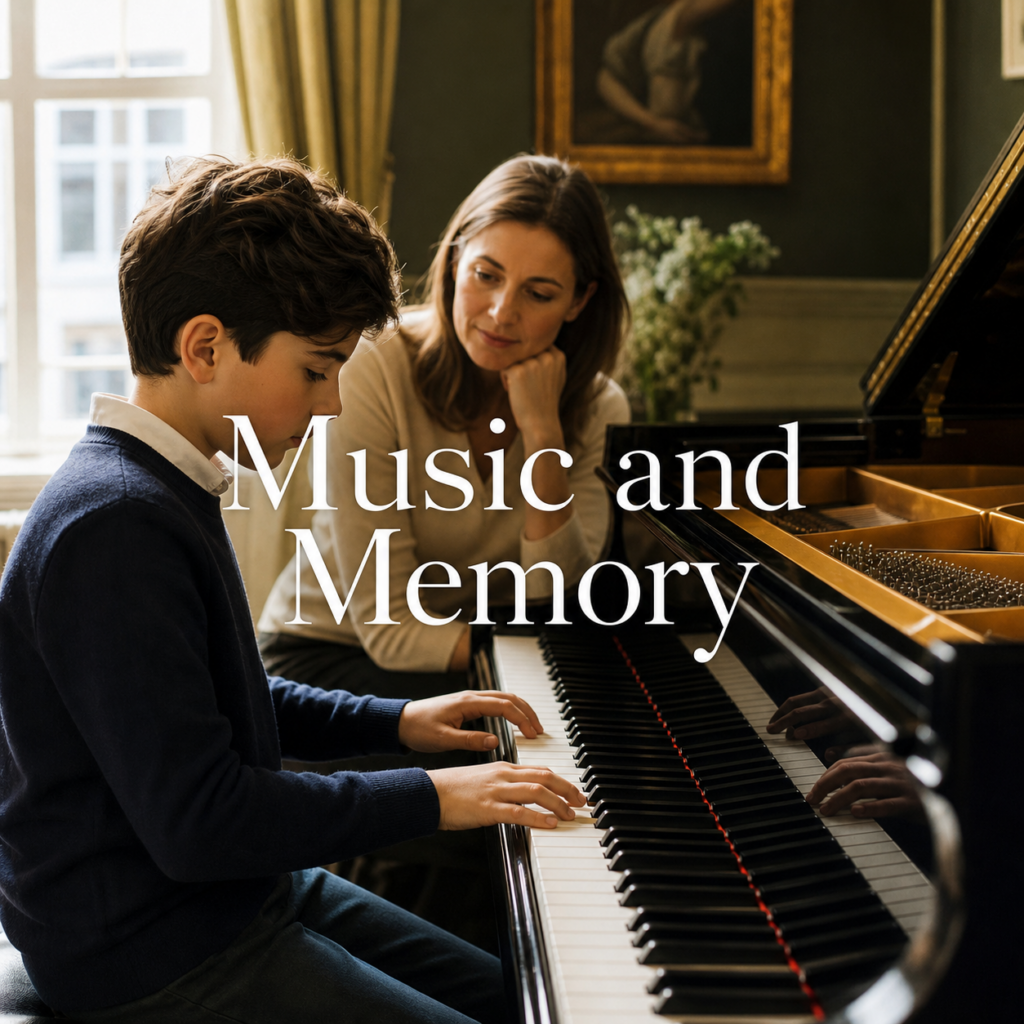
Music and memory meet before memorising begins. Memory at the piano is not a trick children either have or lack. It is built slowly through sound, movement, rhythm and meaning, until a child can recognise a musical idea before their fingers rush past it.
The short answer
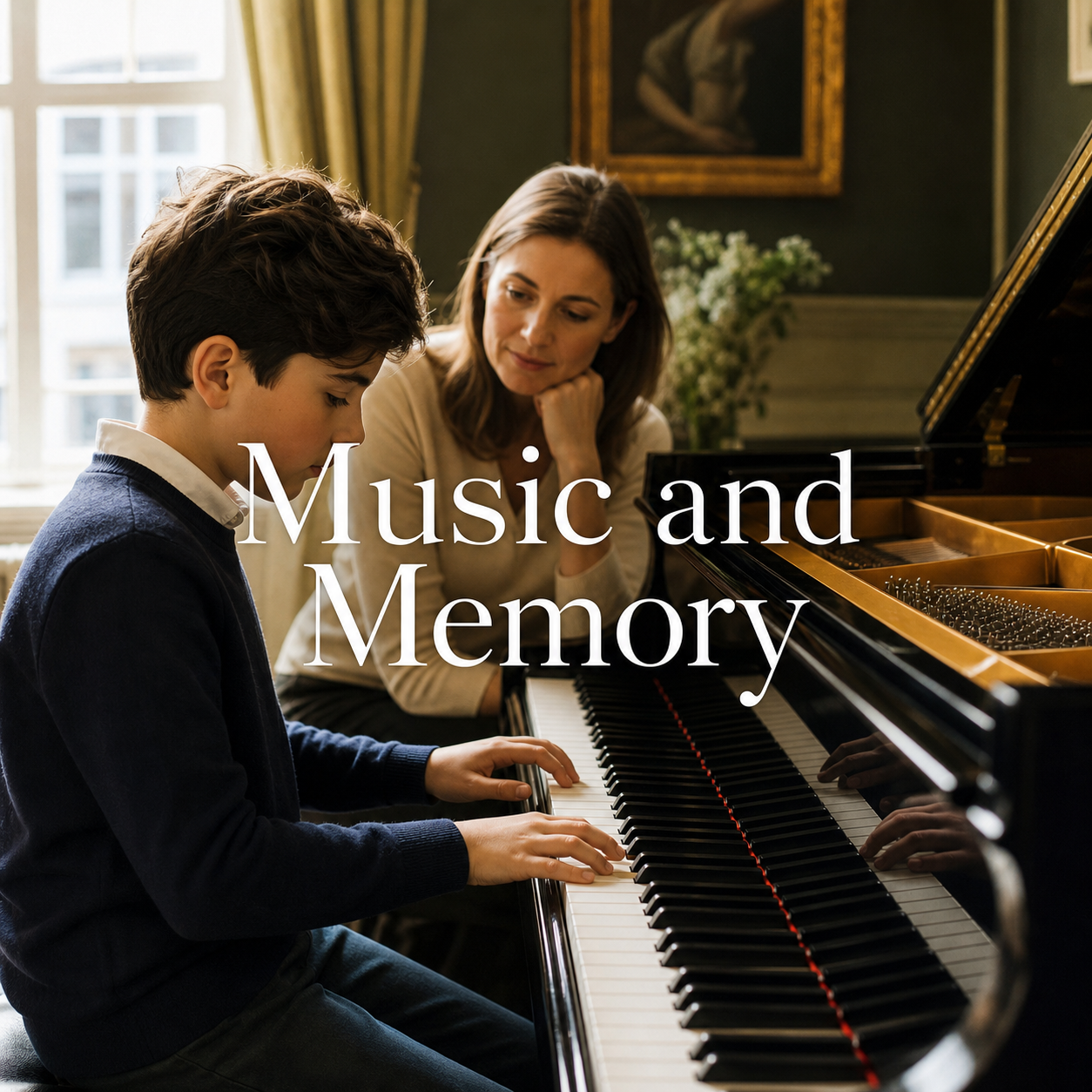
Music and memory become useful for children when practice connects listening, pulse, hand movement and musical meaning. Piano supports a child’s memory when practice connects listening, pulse, hand movement and musical meaning. The strongest lessons do not ask children simply to repeat more; they teach children what to notice, how to group it, and how to retrieve it calmly.
Why music and memory at the piano start before memorising
For parents: a child remembers better when the music has been understood in small, musical pieces.
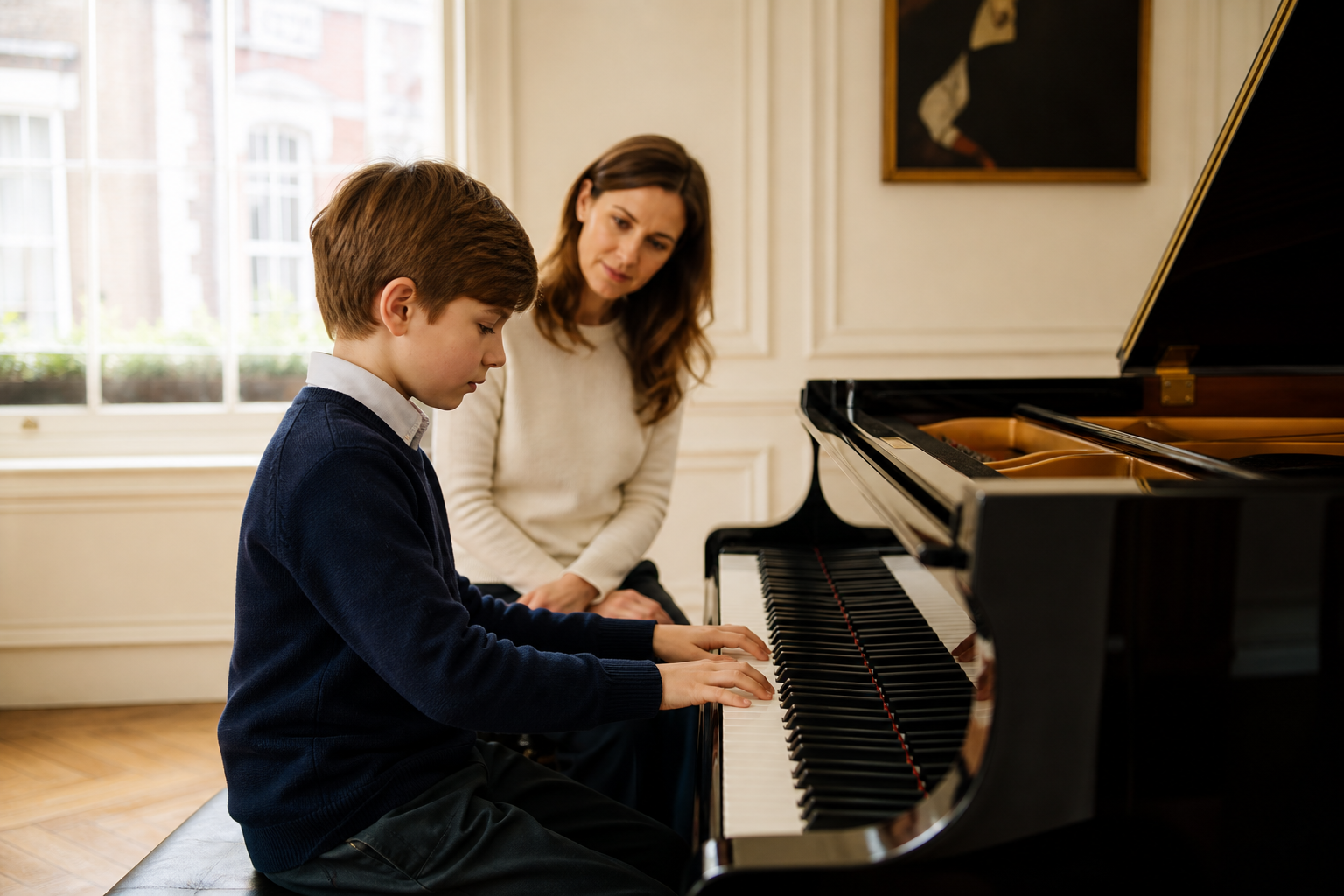
Many parents first notice memory when a child forgets a bar at home. The more useful moment comes earlier, inside the lesson. Can the child hear that two phrases are almost the same? Can they clap the rhythm without the keys? Can they say whether the tune steps, skips or repeats? These are modest questions, but they turn a fragile memory into a map.
That is why serious children’s piano lessons in London should treat memory as musicianship. A child who understands pattern, pulse and sound is less likely to panic when a note slips, because there is more than one route back into the piece.
For parents
After practice, ask one question: what part came back most easily? The answer tells you whether your child is remembering notes, rhythm, hand shape or musical character.
The four memories a young pianist uses
What matters in practice: secure piano memory is layered. Children need ear memory, rhythm memory, movement memory and visual understanding.
A piece becomes easier to hold when it is not stored in only one way. Ear memory lets a child notice when the melody goes somewhere unexpected. Rhythm memory keeps the music alive when the notes are still slow. Movement memory helps the hand find a familiar shape. Visual understanding connects the keyboard and the printed score.
Music and memory should be understood musically before being treated as a general benefit. Music education research often describes links between structured musical training, auditory processing, attention and executive function. The practical lesson for families is not that piano magically improves every school skill. It is that music gives children a disciplined way to coordinate several kinds of attention at once.
A memory map for piano practice
Can the child sing or recognise the phrase?
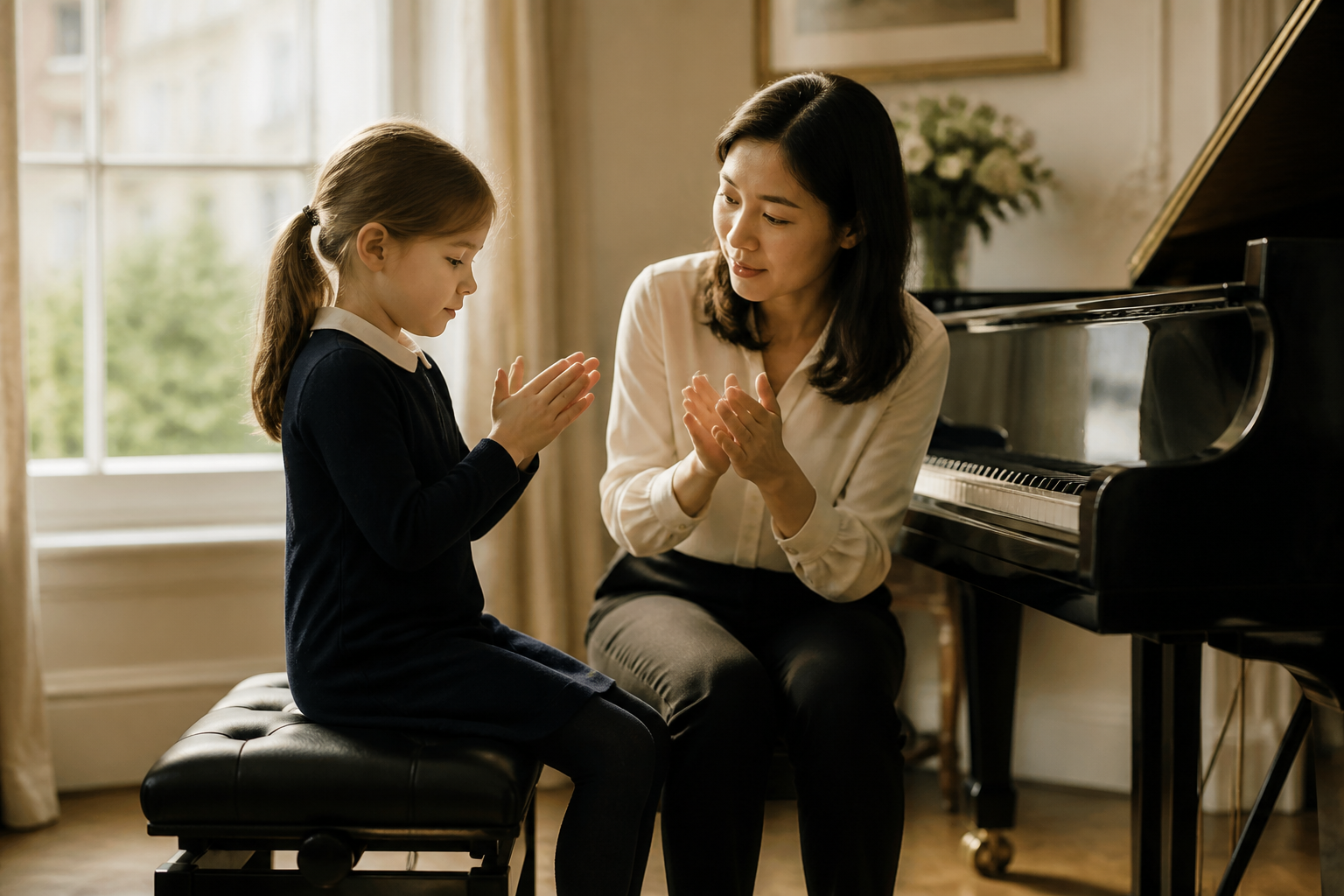
Can they clap the rhythm away from the keyboard?
Does the movement feel calm and repeatable?
Can they point to the pattern on the page?
What good teaching does with repetition
A better repetition rule: children do need repetition, but the repetitions must change attention.
Ten identical run-throughs can make a mistake more permanent. A better lesson changes the listening task. First the child plays only the rhythm. Then they name the starting note. Then they notice the finger change. Then they play the phrase with a different sound. The memory grows because each pass adds a reason.
This is where a teacher’s judgement matters. A child who is tired may need a shorter loop. A child who is anxious may need a win before correction. A confident child may need to play from a different starting point so the piece is not remembered only from the beginning.
Instead of another full run-through
Keeps the body of the phrase intact.
Tests whether the map exists beyond the opening.
Turns memory into conscious listening.
Watch the WKMT children’s lesson context
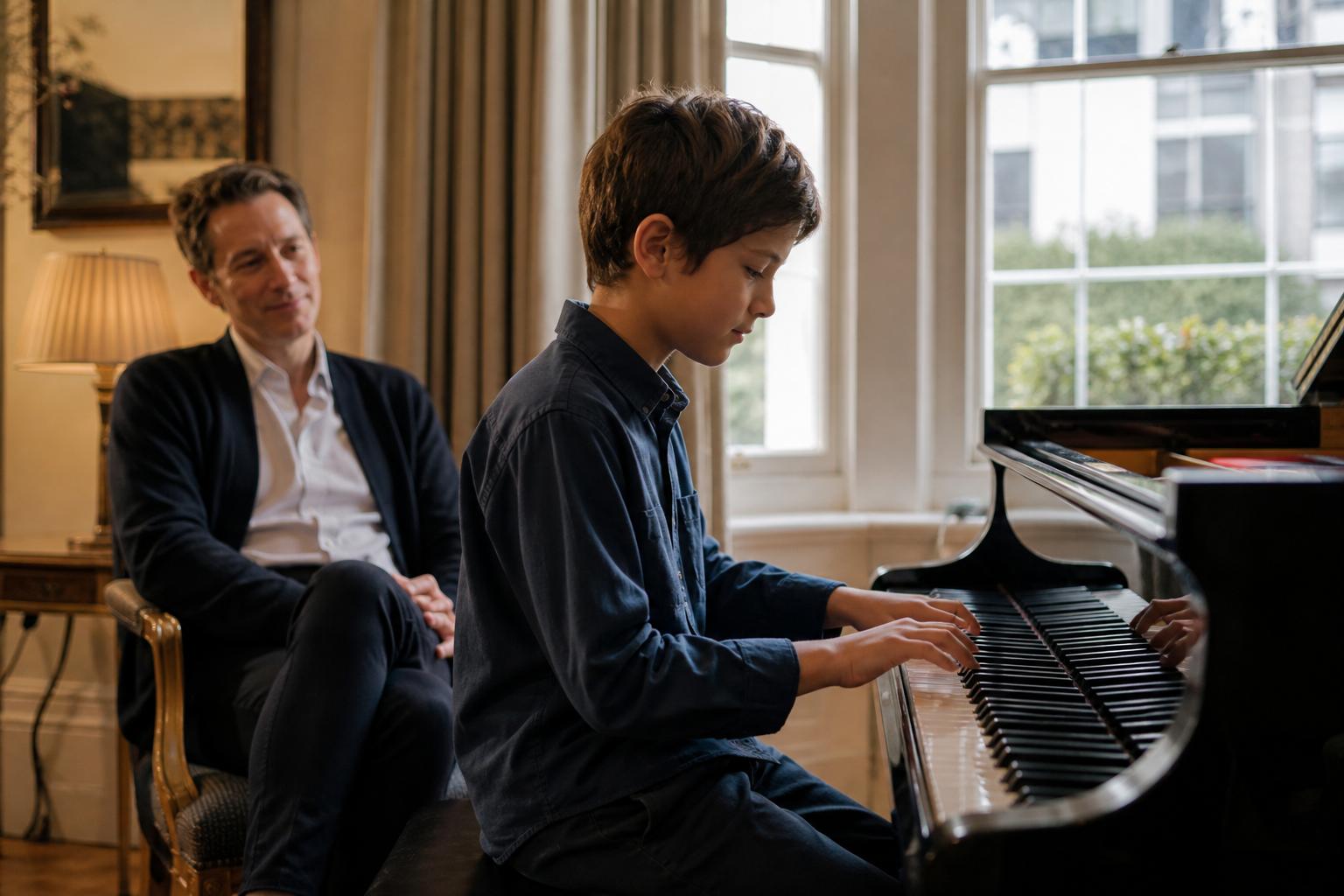
Lesson atmosphere: a good children’s lesson keeps the atmosphere warm while making the musical task more exact.
If the embedded player is unavailable, open the WKMT memorisation masterclass video on YouTube.
How parents can help without turning practice into a test
Home practice note: memory improves in an atmosphere where the child can recover from a mistake.
A child who fears being caught out will often restart the piece again and again. That habit can make the middle weaker. Try asking for one tiny recovery skill: start from the second phrase, clap the rhythm, find the left hand alone, or sing the first note before playing.
WKMT’s guides to music and concentration and music and brain development give useful context for parents who want the wider picture. The musical principle remains simple: a child remembers what they have learned to hear.
“A young pianist’s memory becomes stronger when every repeat gives the ear something clear to hold.”
A thoughtful next step
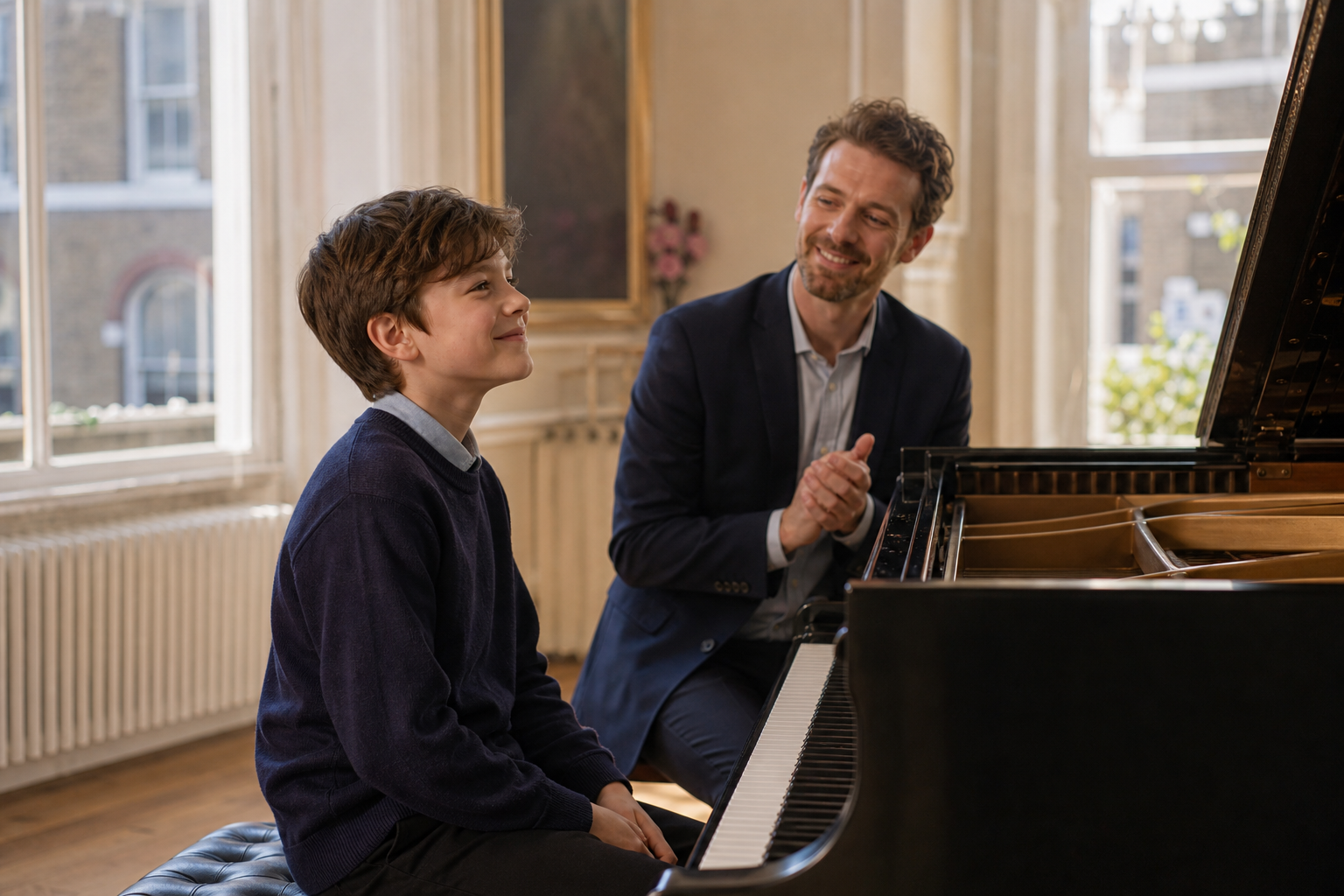
WKMT helps young learners build secure musical memory through listening, notation, technique, rhythm and calm face-to-face guidance.
Sources and further reading on music and memory
- WKMT London children’s piano lessons, checked 16 August 2026.
- Department for Education, Research review series: music, published 12 July 2021, checked 16 August 2026.
- Music training and children’s executive function research review, checked 16 August 2026.
- Music training and executive functions in preschool children, checked 16 August 2026.
- Frontiers in Psychology: music training and working memory, checked 16 August 2026.
- WKMT: music and concentration, checked 16 August 2026.