
 TRIAL LESSON
Uncategorized
Jean-Efflam Bavouzet in London: French Colour, Ravel and Serious Piano Listening
Aug
WKMT London listening guide
Jean-Efflam Bavouzet in London: French Colour, Ravel and Serious Piano Listening
Jean-Efflam Bavouzet rewards listeners who hear colour as structure rather than decoration. His Ravel, Debussy and Haydn recordings show how tone, articulation and timing can become practical listening lessons for serious piano study in London.
Quick answer
Jean-Efflam Bavouzet is valuable for London piano students because his playing makes colour sound disciplined rather than vague. His Ravel and Debussy show how pedalling, voicing and timing can create atmosphere without blurring the score; his Haydn shows how wit and articulation can be built from small releases; his wider recording life shows why a serious lesson should train the ear as carefully as the fingers.
Some pianists announce themselves through weight. Bavouzet often does the opposite. He catches the ear with a sound that seems lit from the side: a chord that glows and then clears, a phrase that bends without losing its pulse, a quick Ravel figure that sparkles while the harmony remains perfectly legible.
That is why he is such a useful pianist for London learners to hear. His playing does not flatter the listener with a single grand emotion. It asks for attention to smaller causes: the fraction of pedal that changes a colour, the bass note that anchors a sentence, the release that lets Haydn smile, the tiny delay that makes a cadence breathe.
The facts support the fascination. Bavouzet’s official discography places him deep inside Debussy, Ravel, Haydn, Beethoven, Mozart and contemporary French music. HarrisonParrott notes major critical recognition across his Chandos recordings, and BBC Music Magazine’s review pages have treated his complete Ravel solo-piano project as a recording event rather than a routine catalogue addition. For a student, those facts matter because they point to an artist whose recorded detail survives close listening.
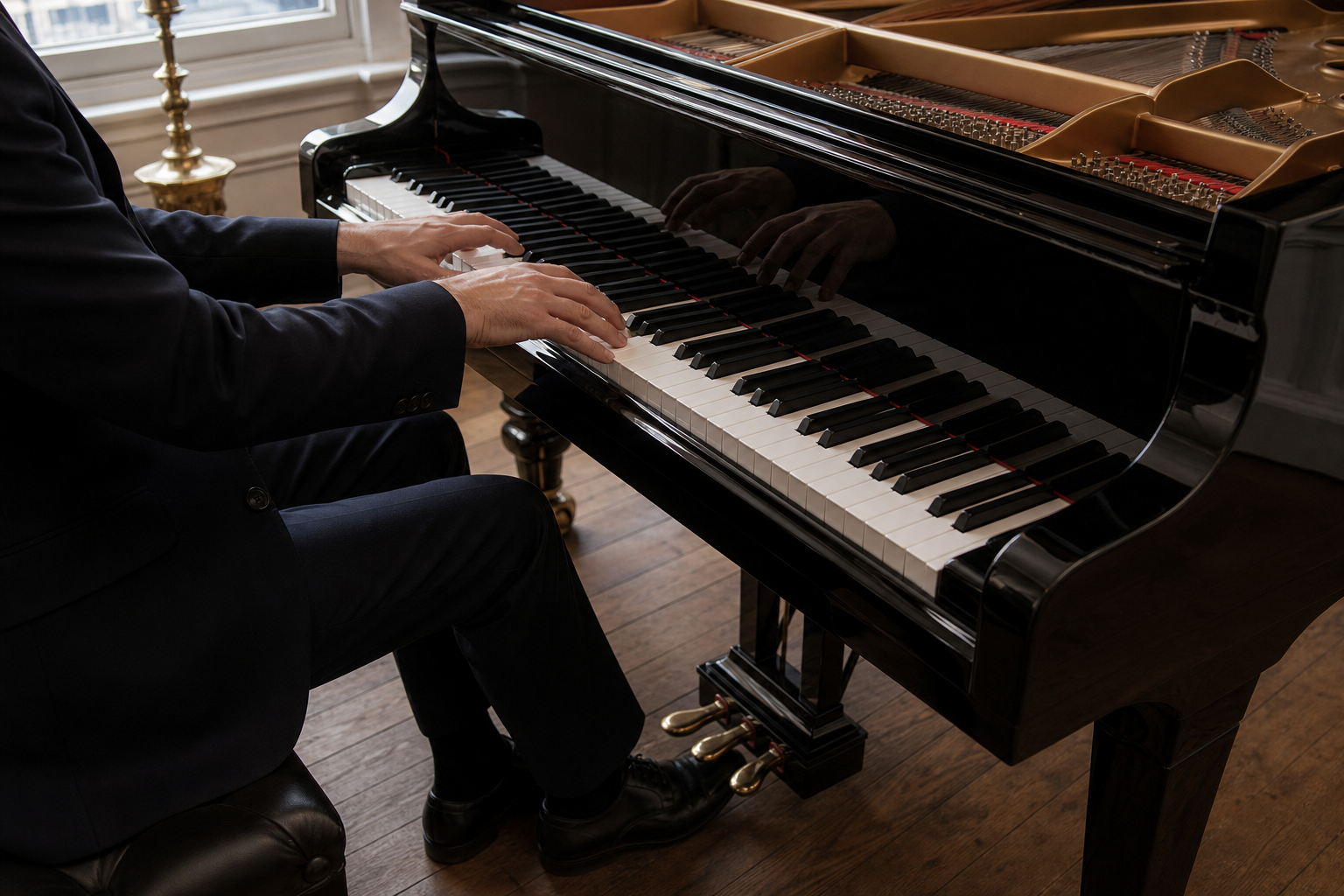
At WKMT, that kind of listening belongs naturally beside face-to-face classical piano lessons in London. A recording can awaken the ear; a teacher can show the hand, wrist, arm and pedal decision behind the sound.
Jean-Efflam Bavouzet at a glance
Why Jean-Efflam Bavouzet’s colour matters
French piano music can tempt students into soft-focus playing. Debussy is too often reduced to mist; Ravel to elegance; impressionist colour to a generous pedal and a lowered dynamic. Bavouzet is a useful antidote because the surface may be luminous, but the playing is never careless. The ear senses edges, layers and direction inside the atmosphere.
In Debussy, this means listening for the moment when resonance becomes harmony rather than haze. The hand cannot simply press and hope the pedal will supply poetry. The attack has to be graded, the bass has to support without thickening, and the pedal must clear just before the sound loses contour. Students who listen in that way begin to understand why tone production is a physical, musical and intellectual skill.
That idea connects naturally with Scaramuzza technique, where physical movement and musical intention are treated as one action. A passage sounds freer when the body is organised; pedalling becomes clearer when the arm, wrist and finger are not fighting the phrase.
A Bavouzet listening map for London learners
Do not begin by asking whether you like the performance. Begin by choosing one musical question and staying with it. Bavouzet rewards that discipline because his playing is unusually clear about relationships: melody against bass, resonance against line, freedom against pulse, brilliance against proportion.
Listen for: pedal changes, inner voices and colour that does not blur the form.
Lesson value: students hear why atmosphere needs clean technique.
Listen for: transparency, dance rhythm, glittering articulation and exact proportions.
Lesson value: virtuosity becomes a question of clarity, not merely velocity.
Listen for: wit, surprise, dry release and conversational timing.
Lesson value: technique starts to speak like language.
Listen for: dialogue with orchestra, lightness and long-breathed phrasing.
Lesson value: students learn that accompaniment and melody must listen to each other.
Ravel without perfume
Jean-Efflam Bavouzet’s recent Ravel focus is a strong place to start because Ravel exposes a pianist’s discipline. The music may dazzle, but it punishes vagueness. Jeux d’eau needs water-like movement without smudged harmony. Miroirs asks for imagery that still has contour. Gaspard de la nuit demands frightening control at the edge of the instrument’s possibilities. Le Tombeau de Couperin needs elegance, grief and dance to coexist.
The most useful first stop is Valses nobles et sentimentales. The opening refuses to be merely pretty: the chords have bite, the dance rhythm is proud, and the harmony keeps shifting the ground under the listener’s feet. Bavouzet’s value is that he lets those contradictions remain audible. Refinement does not soften the shock; it gives the shock a cleaner shape.
For a student, the practical exercise is to listen for edges. Where does the sound begin? Where does it end? Which notes are foreground, which are colour, and which simply keep the harmony alive? Ravel is not easier when played prettily. It becomes convincing when every small colour has a function.
A 2025 Bachtrack review of Bavouzet’s complete Ravel programme at Alice Tully Hall described the performance through contour, rhythm and colour. Those three words are a useful triangle for any pianist. If one side collapses, the music suffers: contour without colour becomes dry, colour without rhythm becomes blurred, and rhythm without contour becomes mechanical.
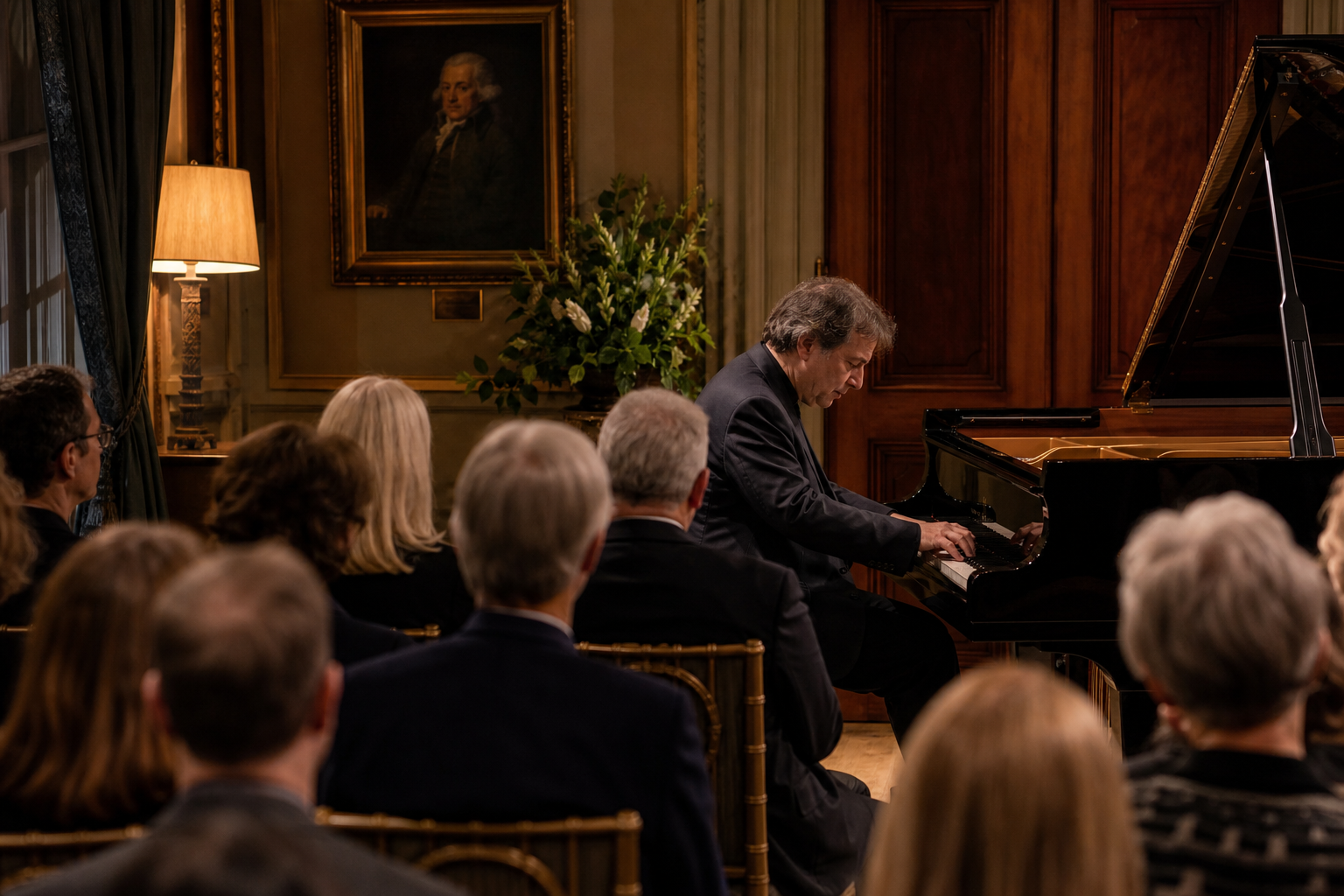
Watch and listen: one complete Ravel piece
Use Valses nobles et sentimentales as a focused listening session rather than background music. The whole piece gives enough time to hear Bavouzet’s control of attack, dance rhythm, harmonic surprise and release.
If the embedded player is unavailable, open the Ravel performance directly on YouTube and return to the listening questions below.
What Haydn reveals about Bavouzet
Haydn is an important counterweight to the French repertoire. It prevents colour from becoming the whole story. In Haydn, Bavouzet’s quickness of mind appears through articulation, humour and proportion. A short rest can become comic timing; a light release can change the character of a phrase; a sudden accent can suggest theatre rather than weight.
This is valuable for students because articulation is often taught too mechanically. Staccato is not one length. Legato is not one kind of connection. An accent is not simply louder. Haydn teaches the pianist to think like a speaker: consonants, vowels, punctuation, breath and wit. Bavouzet’s Haydn recordings make those differences unusually audible.
A pianist who can hear the length of a release is already learning to shape musical character.
Three passes through one recording
Choose a short movement or a three-minute section. Listen once for pleasure, then return with a pencil and one practical aim. The point is not to copy Bavouzet’s sound, but to become more exact about what the sound is doing.
Why the London setting matters
London gives piano students an unusual advantage: the city places high-level teaching, recital culture, international artists and serious amateur music-making close together. A learner can hear an artist at Wigmore Hall, return to a lesson in Kensington, Camberwell or Bermondsey, and ask a precise question about sound the same week.
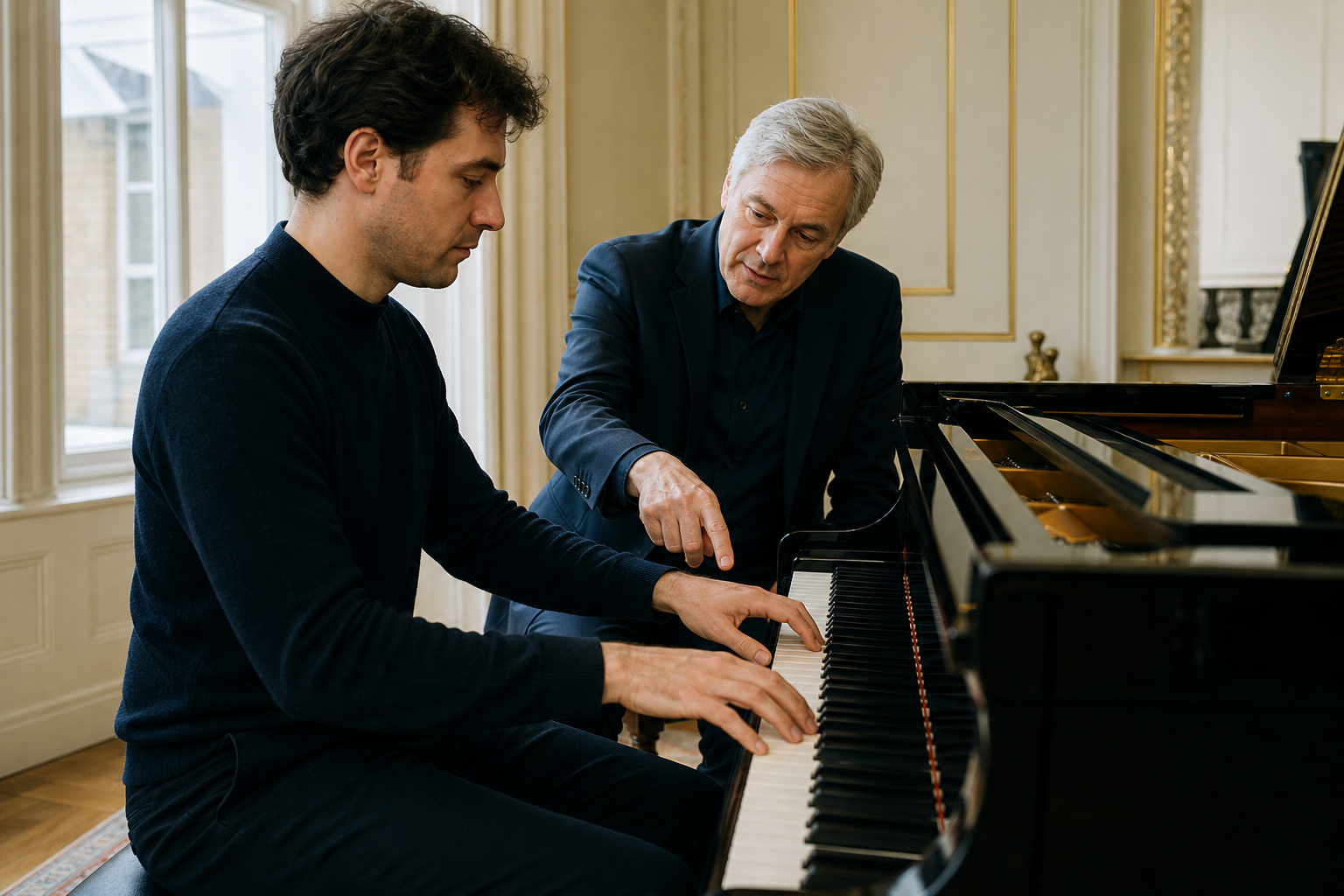
That link between listening and teaching is central. A recording can inspire, but it cannot diagnose why a student’s left hand is covering the melody, why the pedal clouds a cadence, or why a phrase loses breath just before the arrival. A teacher can make the problem visible and audible at the keyboard.
For readers comparing piano teachers in London, Bavouzet offers a useful standard. Look for teaching that develops the ear, not only the fingers. The strongest lessons help a pianist recognise the difference between a correct passage and a musically alive one.
Develop a more discerning piano sound
WKMT teaches face-to-face classical piano lessons in London for learners who want technique, sound and interpretation to grow together. If Bavouzet’s playing makes you want to hear more carefully at the keyboard, that is exactly the kind of work a serious lesson can begin.
A learner’s conclusion
Bavouzet is compelling because he makes refinement active. His best playing does not invite the listener to relax into beauty alone. It asks the ear to notice how beauty is made: the balance of a chord, the honesty of a pulse, the courage to keep a texture transparent, the decision to let a phrase end before it becomes sentimental.
That is why his musicianship belongs naturally in a London student’s listening life. It offers a model of musical intelligence that can travel from concert hall to lesson room and from recording to daily practice. The reward is not imitation. It is a more awake ear, and eventually a more truthful sound.
Editorial note
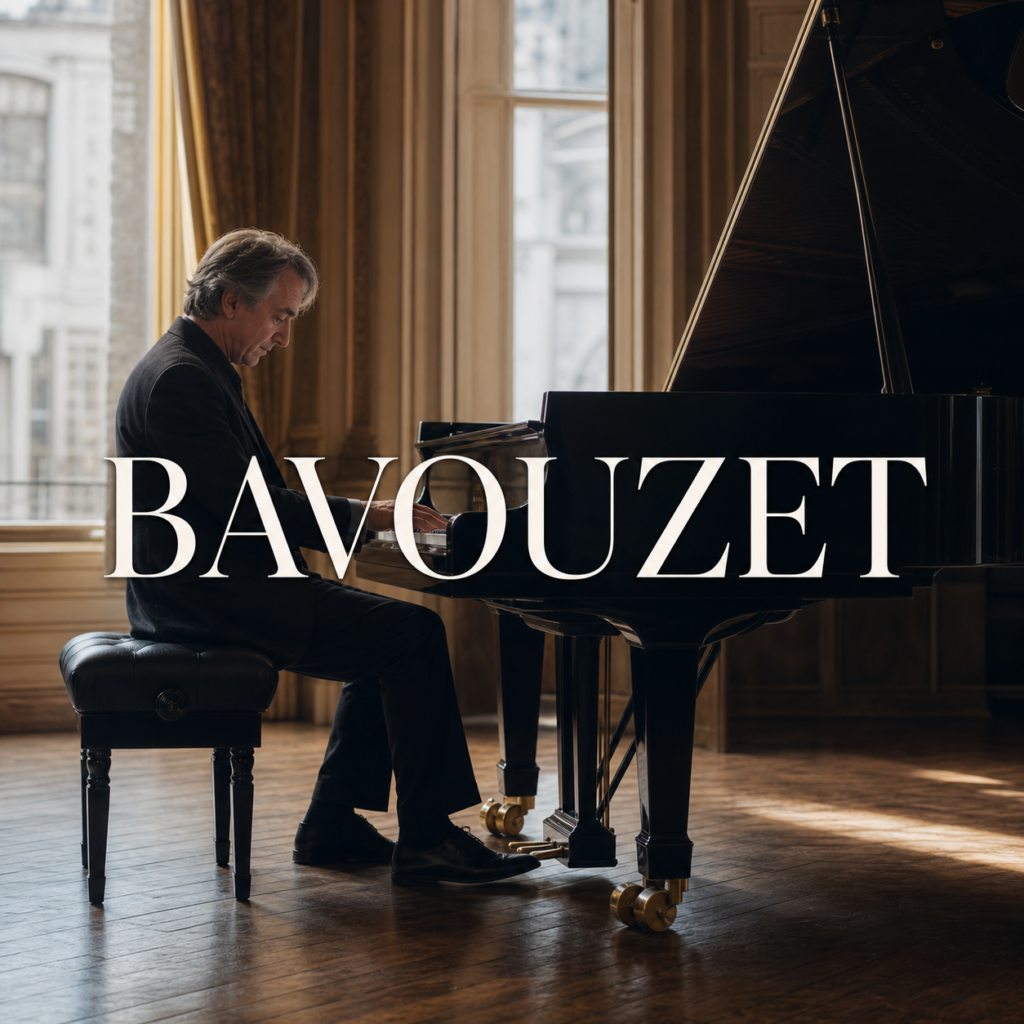
This article is an educational homage and listening guide. It is not affiliated with, authorised by, sponsored by or endorsed by the pianist, their estate, management, record label, publisher or concert representatives. Names, recordings, performances and biographical references are used for cultural commentary, teaching context and source-backed music education. Any portrait-style image used by WKMT in this article is an original AI-generated editorial illustration, not a documentary photograph or official likeness, unless otherwise credited.
Sources on Jean-Efflam Bavouzet
Jean-Efflam Bavouzet official website, checked 2026-08-15.
HarrisonParrott artist biography for Jean-Efflam Bavouzet, checked 2026-08-15.
Jean-Efflam Bavouzet recordings archive, checked 2026-08-15.
BBC Music Magazine / classical-music.com review of Bavouzet’s Ravel solo-piano recording, checked 2026-08-15.
Bachtrack review of Bavouzet’s complete Ravel programme at Alice Tully Hall, checked 2026-08-15.
WKMT London, checked 2026-08-15.