
 TRIAL LESSON
Piano Lessons
Benefits of Music for the Brain: What Parents Should Know About Piano and Growing Minds
Aug
Benefits of Music for the Brain: What Parents Should Know About Piano and Growing Minds
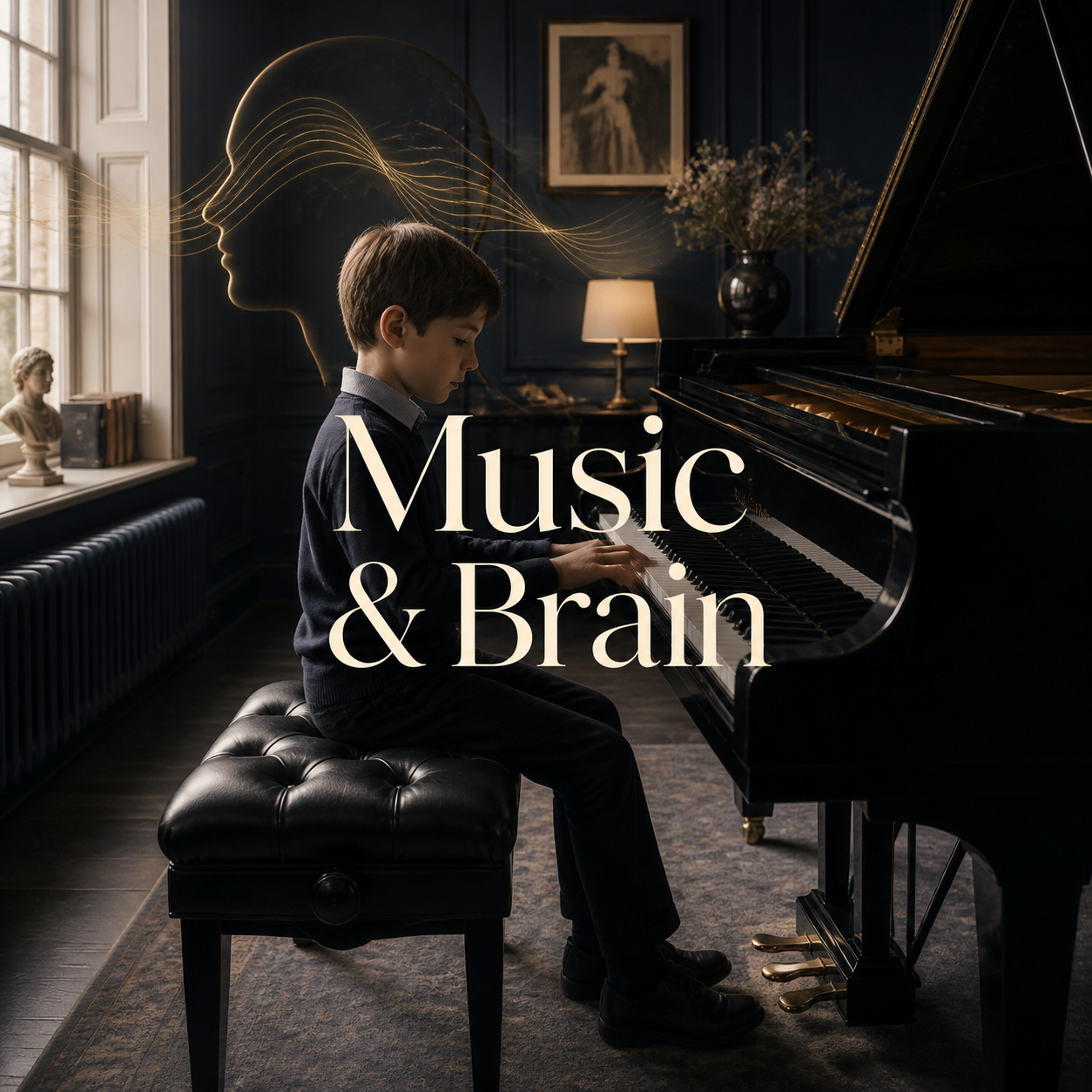
The benefits of music for the brain are real enough to be interesting, but more specific than many headlines suggest. For children, active music-making can exercise listening, movement, memory and self-control together. Piano study gives those systems a particularly rich task, without offering a shortcut to higher intelligence.
Quick take for parents
The strongest case for music is not that it makes every child “smarter”. It is that learning music repeatedly coordinates perception, movement, attention, memory and feeling. That combination can strengthen musical skills and may also support some aspects of executive control, language and motor development.
The fairest expectation is steady growth in musicianship, concentration during a demanding task, physical coordination and confidence earned through mastery. Wider academic effects are possible, but research is mixed and family background, teaching quality and motivation matter greatly.[1][2]
How music engages a developing brain
Music is not processed in one isolated “music centre”. Listening recruits auditory regions; following a beat involves motor planning; remembering a phrase engages memory; and judging timing or correcting an error calls on attention. Emotional responses add another layer. Reviews of music and neuroplasticity describe a distributed network spanning auditory, motor, cognitive, memory and emotional systems.[2]
Neuroplasticity simply means that the brain changes with experience. Repeated, meaningful activity can refine the efficiency and coordination of the networks used for that activity. A child who learns a piano phrase is not merely pressing keys. They are listening ahead, translating symbols into movement, comparing the result with an internal goal and adjusting in real time.
Benefits of music for the brain: what the evidence shows
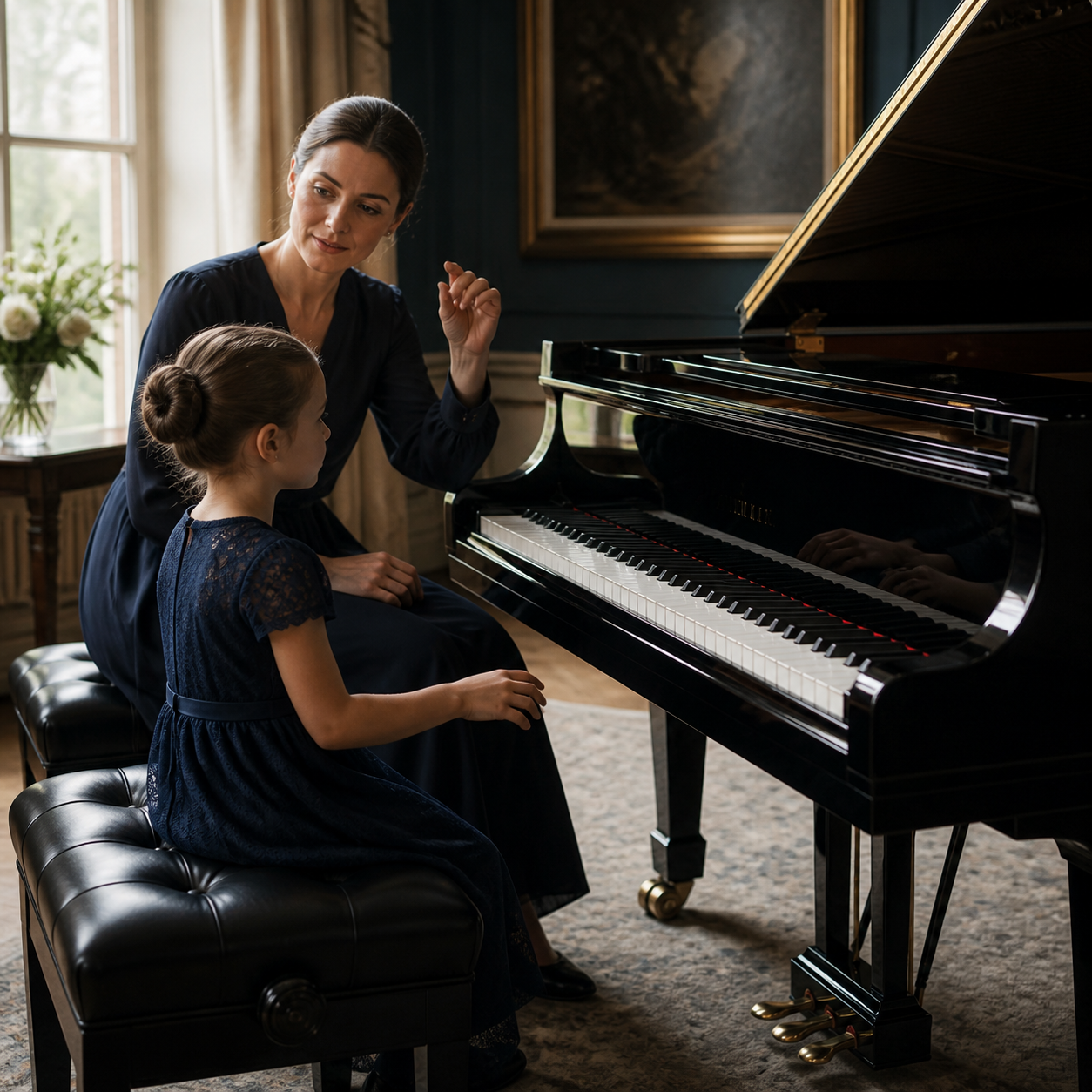
Research is most persuasive when it follows children over time or randomly assigns them to different activities. Even then, studies vary in age, teaching method, intensity and outcome measures. A 2024 meta-analysis of 22 controlled longitudinal studies, including eight randomised trials and 1,734 children, reported improvements in inhibition control. Effects were moderate to large among the randomised trials and smaller across the broader set of studies.[3] Inhibition is the ability to pause an automatic response, a useful part of self-regulation.
That finding is relevant to instrumental learning because music constantly asks a player to inhibit one response in favour of another. A beginner may need to resist rushing, wait through a rest, keep one hand quiet while the other continues, or stop and listen before repeating a phrase. These are specific musical acts. They overlap with executive control, but parents should not assume that every child will show the same change outside music.
A 2025 systematic review of paediatric music interventions found only seven randomised studies with 337 participants. Some language, motor and IQ measures improved, while one widely used early-development scale showed no significant cognitive gain. The authors stressed differences in age, population and intervention design.[4] This is promising evidence, not a universal prescription.
A useful evidence ladder
Consistent: music learning develops music-specific listening, timing and instrumental control.
Promising: structured training may support inhibition, language-related processing and motor coordination.
Mixed: broad claims about IQ, general academic attainment or lasting transfer to every non-musical skill.
Harvard Health’s accessible overview makes an important caution: associations between music exposure and wellbeing do not prove that music caused the difference. Families with greater resources may provide both musical opportunities and other educational advantages.[1] Good research tries to control for those differences, but no study removes them perfectly.
The popular “Mozart effect” is therefore a poor model for understanding development. Briefly hearing a particular composition does not confer a permanent increase in intelligence. The more credible account is slower and less sensational: active, sustained learning can refine the systems repeatedly used, while enjoyment and a good relationship with the teacher help a child remain engaged long enough for learning to accumulate.
The most dependable benefit is a child becoming more skilful at listening, coordinating and expressing music; wider gains should be welcomed, not promised.
Why piano is such a rich learning task
Piano combines two-handed movement, visual spacing, notation, rhythm and sound in a transparent way. The keyboard shows pitch direction clearly: movement to the right rises, movement to the left falls. Both hands may play different rhythms or shapes while the ears monitor balance. This makes piano unusually useful for practising bimanual coordination and sequencing.
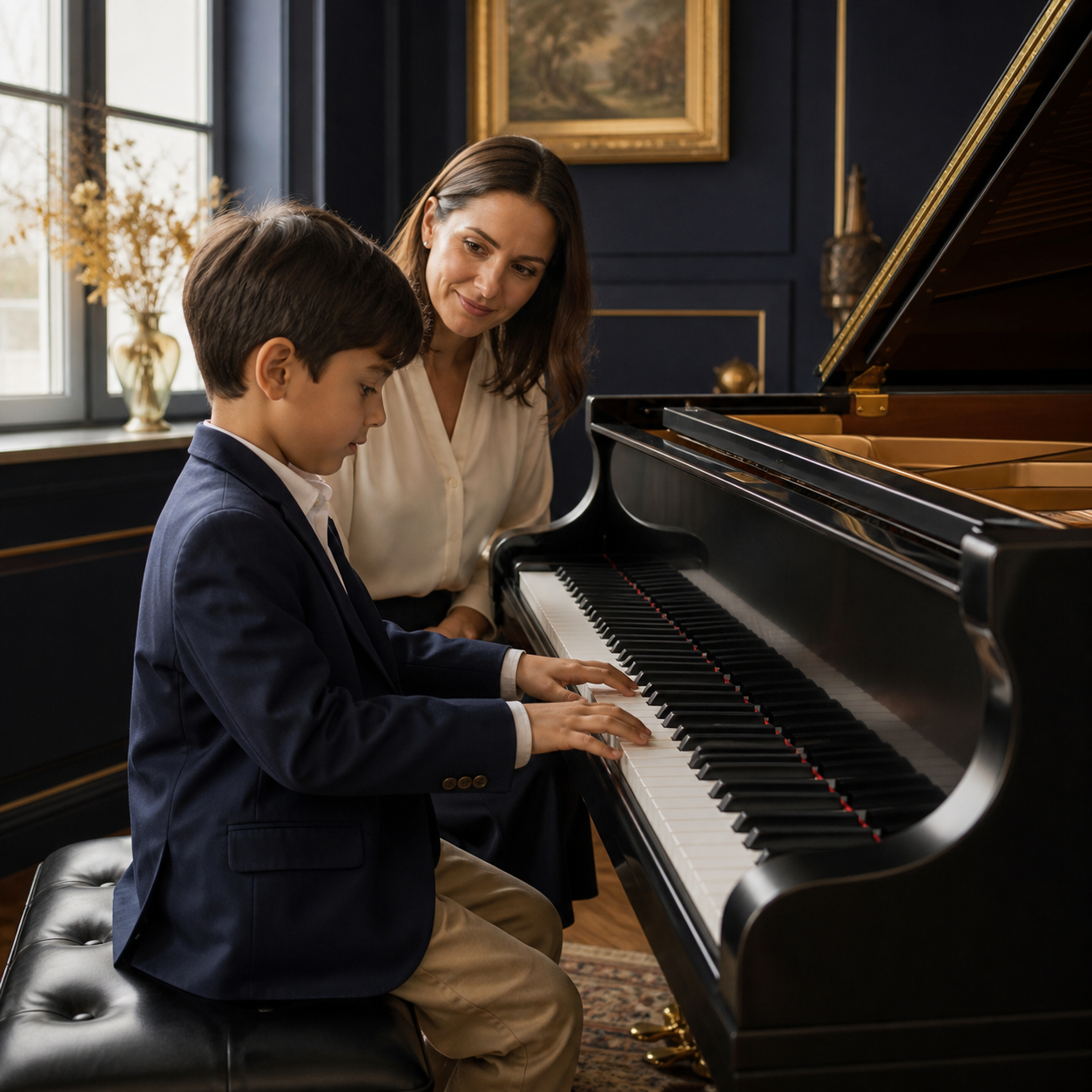
Sight-reading adds another layer. A pupil sees pitch, duration and phrasing symbols, anticipates what comes next and converts them into timed movements. Yet none of this means that piano automatically transfers into better marks at school. Transfer is most plausible when two tasks share mental processes. Careful rhythmic work may exercise timing and attention; memorising a piece may strengthen strategies for grouping information. Those are reasonable mechanisms, not guarantees.
Active learning also differs from passive exposure. Listening can be absorbing and emotionally valuable, but instrumental study requires repeated decisions and corrections. A child has to produce the next sound and take responsibility for its timing and quality. That is why a supportive teacher matters: difficulty must be calibrated so effort remains purposeful rather than overwhelming.
Piano also makes progress audible. A phrase that once stopped at every note becomes continuous; an uneven accompaniment begins to support a singing melody; a pupil hears that the final chord has not settled and corrects it without being told. These small acts of monitoring are educationally valuable because the feedback is immediate and meaningful to the child.
What to expect at different ages
| Stage | A sensible focus | What parents may notice |
|---|---|---|
| Early years | Pulse, singing, imitation, keyboard geography and short playful turns. | Better musical response, willingness to copy and growing control of small movements. |
| School age | Notation, coordination, repertoire, listening and manageable independent work. | Longer concentration within music, clearer self-correction and satisfaction in finishing pieces. |
| Teen years | Interpretation, personal repertoire, technique, performance and ownership of goals. | Greater independence, expressive identity and resilience with complex projects. |
There is no single “brain deadline” after which learning loses value. Younger children may absorb sound and movement readily, while older beginners bring stronger reasoning and self-awareness. Readiness is better judged through curiosity, ability to follow simple guidance and willingness to return to a task than through birthdays alone.
Parents can also separate developmental readiness from performance speed. A thoughtful child may take time to coordinate a new pattern yet show excellent listening; another may learn notes quickly but need help shaping a phrase or accepting correction. A good curriculum leaves room for these different profiles while maintaining clear musical standards.
Choosing lessons that support healthy development
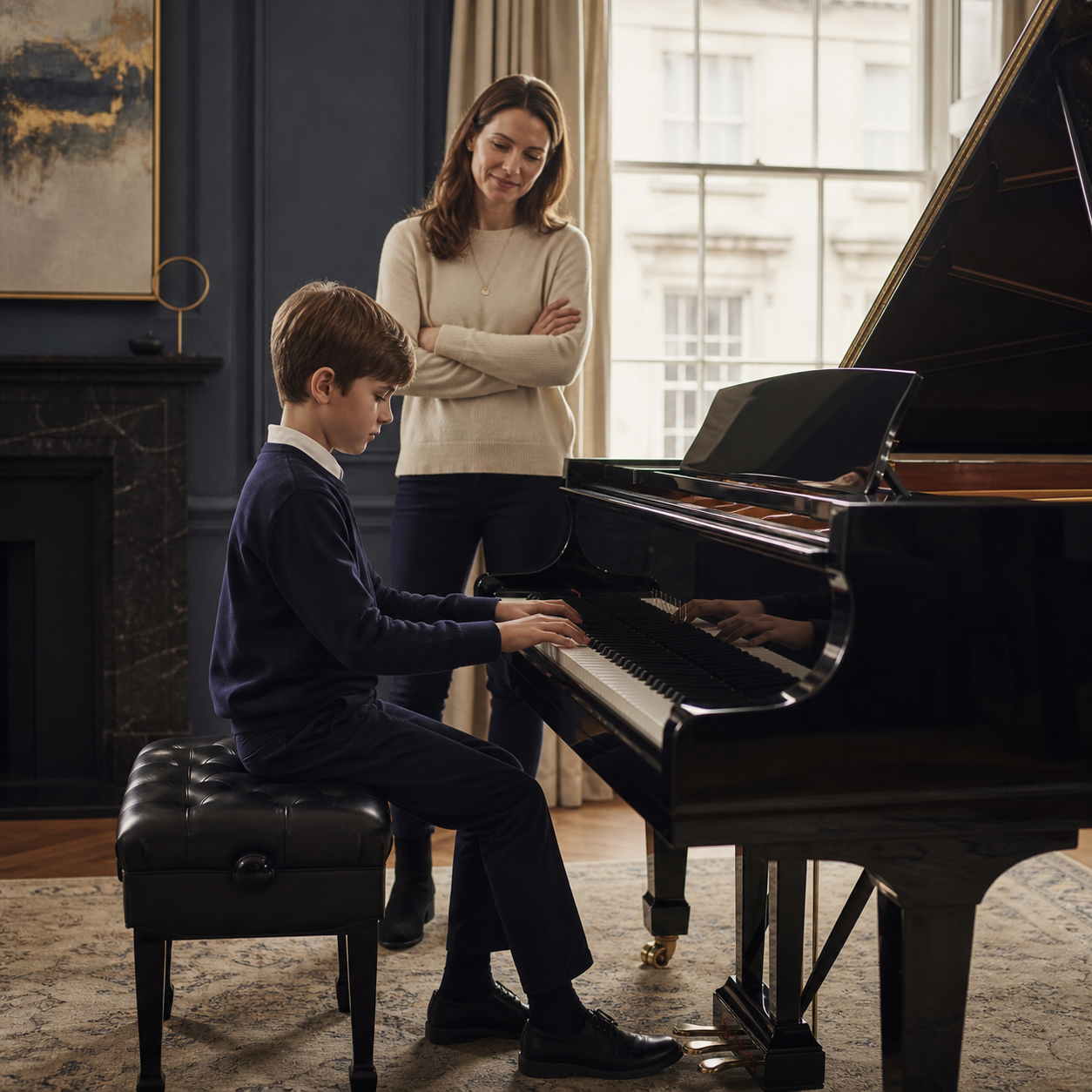
Look first for teaching quality and the relationship between teacher and child. A strong lesson has a clear musical purpose, adjusts challenge thoughtfully and leaves the pupil knowing what to do next. The teacher should be able to explain progress in musical terms: steadier pulse, more fluent reading, freer movement, stronger listening or more independent problem-solving.
Short, regular contact with the instrument is usually more workable than one heroic weekly session. Exact duration depends on age, experience and temperament. For a young beginner, a few attentive minutes can be valuable; an older pupil may sustain a longer, more organised session. Consistency matters, but the home atmosphere matters too. Pressure that turns music into continual conflict defeats much of its educational value.
For parents
Measure progress against the child’s previous self, not a sibling, classmate or prodigy online. Ask whether listening is sharper, movements are easier, pieces last longer in memory and the child can recover from a mistake with less distress.
England’s National Plan for Music Education frames instrumental learning, singing, composing and ensemble participation as parts of a rich education. It also points families towards local Music Hubs for opportunities and support.[5] In London, private tuition can sit alongside school music, concerts and ensemble playing rather than replacing them.
A thoughtful path into piano
WKMT’s structured piano lessons for children in London help young pupils build musical understanding, coordination and confidence at an age-appropriate pace.
Confidence, connection and the bigger picture
Brains do not develop apart from relationships. A child who prepares a piece, plays it for others and receives warm, specific feedback is learning more than notes. They are learning to tolerate uncertainty, communicate an idea and continue after a small mistake. Group music adds listening, turn-taking and shared timing.
Confidence built in this way is different from constant praise. It comes from evidence the child can recognise: a difficult bar becomes manageable, a duet stays together, or a performance continues despite nerves. That kind of mastery can make music a stable source of identity and pleasure even when no measurable academic transfer appears.
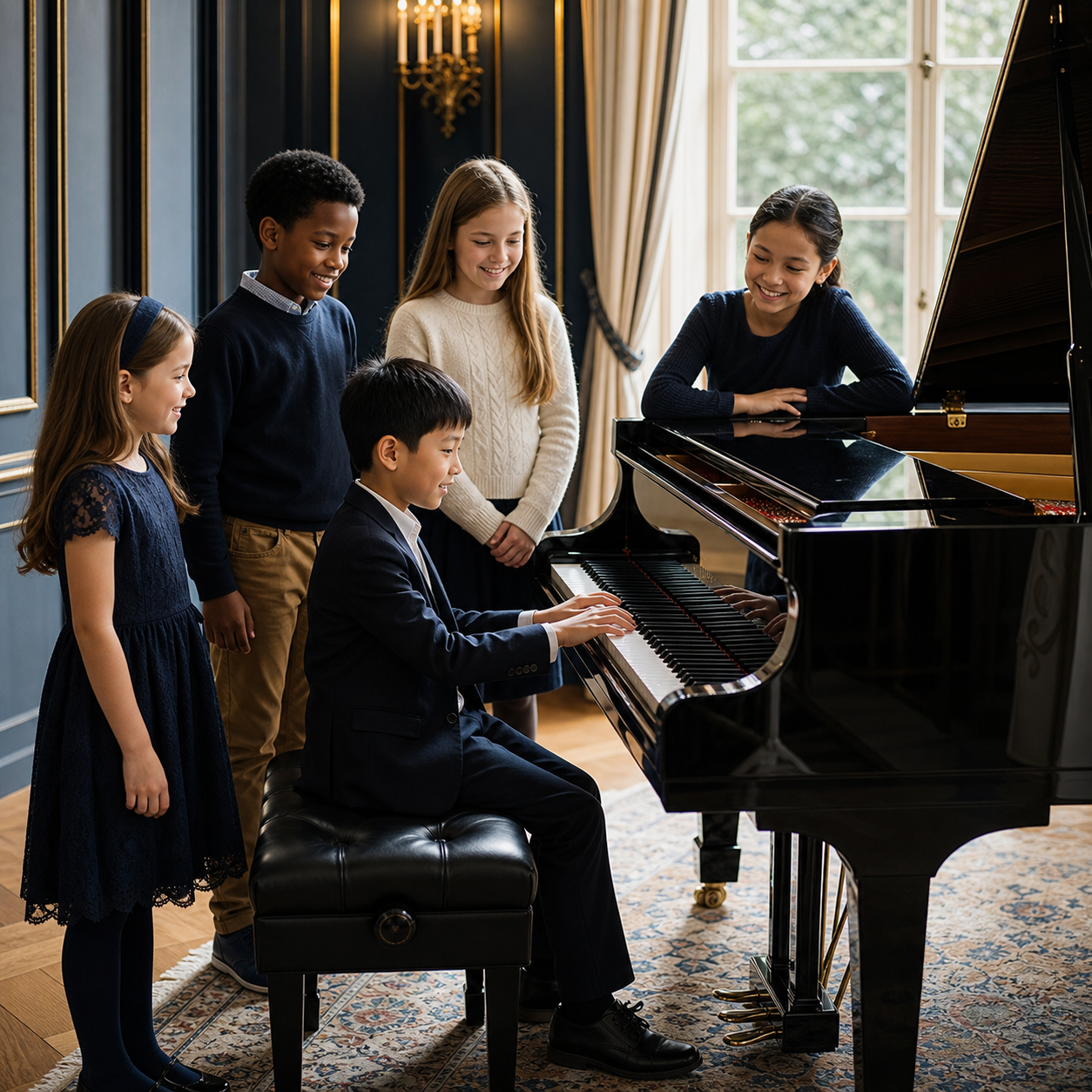
Families interested in this social dimension may also explore WKMT’s children’s ensemble opportunities. For the cognitive side of learning, the article on memory and music learning offers a useful next step. These supporting routes deepen the subject, while the children’s lessons page remains the place to consider tuition.
Questions parents often ask
Will piano lessons make my child smarter?
No responsible teacher can promise that. Music lessons reliably build musical abilities and may support certain executive, language and motor processes. Broad changes in intelligence or school attainment are less certain and influenced by many other factors.
How soon should we notice benefits?
Early signs are usually musical and behavioural within the activity: recognising patterns, keeping a steadier pulse, coordinating simple movements or concentrating for longer. Research programmes often run for months or years, so claims of dramatic change after a few sessions deserve caution.
Is listening to music enough?
Listening is valuable for enjoyment, emotion and musical familiarity. Active learning adds planning, movement, feedback and self-correction, making it a more demanding form of engagement. Children benefit from both.
Sources on benefits of music for the brain
- Benefits of music for the brain Guide Harvard Health Publishing, “Why is music good for the brain?” (accessed 12 August 2026).
- The transformative power of music: insights into neuroplasticity, health and disease, peer-reviewed review (accessed 12 August 2026).
- Does music training improve inhibition control in children?, Cognition, 2024.
- Music intervention for neurodevelopment in the paediatric population, systematic review and meta-analysis, 2025.
- Department for Education: what the National Plan for Music Education means for children and young people (accessed 12 August 2026).
- Evaluating predisposition and training in shaping the musician’s brain, developmental review.
- Cognitive enrichment through art, randomised controlled trial protocol and developmental evidence review. benefits of music for the brain
This article discusses education research and does not provide medical or developmental diagnosis. Families with specific concerns should consult an appropriately qualified professional.