
 TRIAL LESSON
Piano Lessons
Piano Lessons for 9 Year Olds: What Parents in London Should Know
Jul
Piano lessons for 9 year olds in London with WKMT
WKMT parent guide
Piano Lessons for 9 Year Olds: What Parents in London Should Know
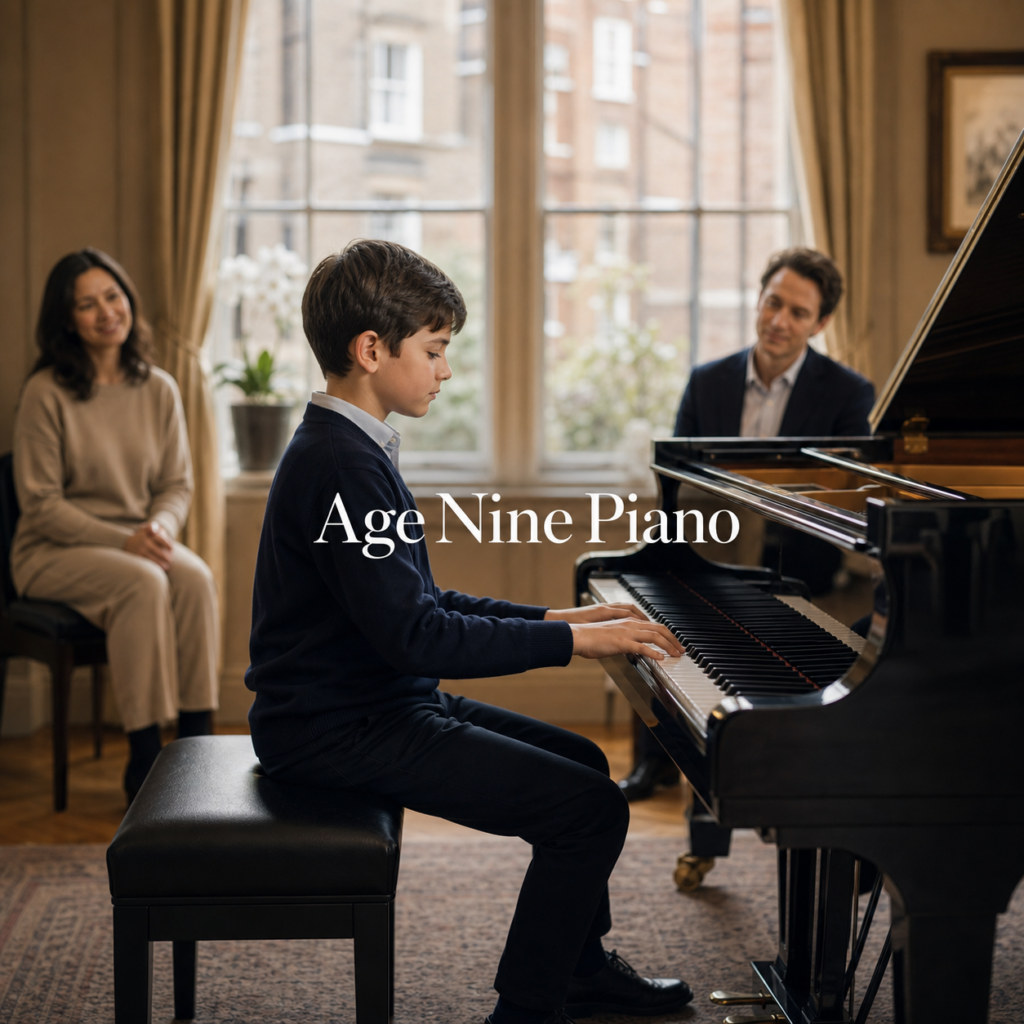
Piano lessons for 9 year olds work best when lessons respect a child’s growing independence, still give clear structure, and help parents judge progress without turning home practice into a battle.
Curious Key Stage 2 pupils who can concentrate for short, purposeful tasks.
Usually 30 minutes, moving to 45 minutes when stamina and repertoire justify it.
Encourage rhythm and routine, but let the teacher lead the musical correction.
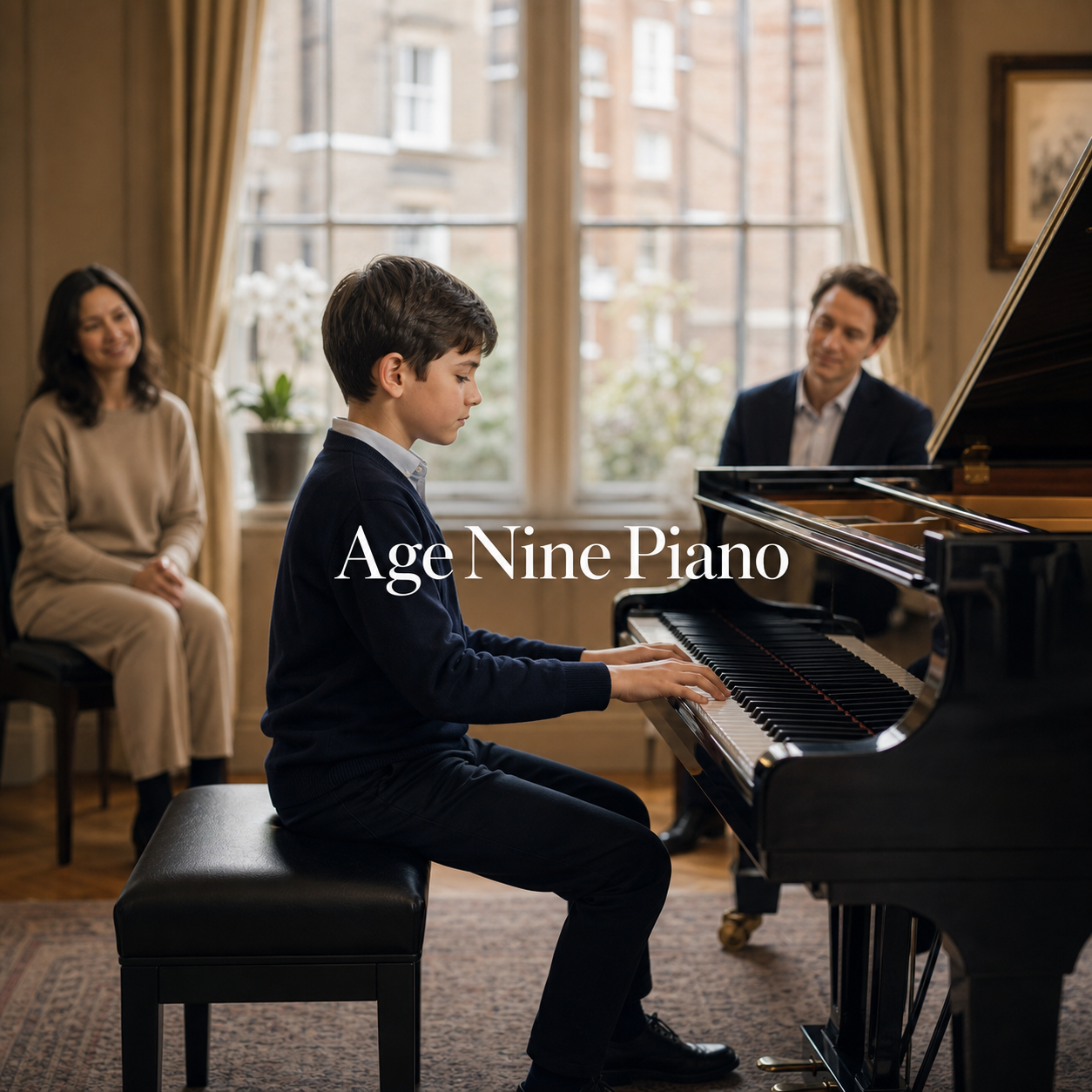
Nine is a particularly good age for piano study. A child is usually old enough to follow a teacher’s explanation, notice patterns in notation, and accept a modest practice routine, yet young enough for technique, listening and musical confidence to develop without hurry. The best lessons avoid both extremes: they are not nursery music dressed up as tuition, and they are not miniature adult lessons.
Teacher’s note: The question is rarely “is my child talented enough?” It is usually “can the lesson give this child a clear weekly pattern, a beautiful sound goal, and enough success to want to return?”
Why Age 9 Is a Strong Moment to Start
By nine, most children can manage more than imitation. They can compare two attempts, hear whether a phrase sounds even, and remember a teacher’s instruction from one week to the next. This makes piano lessons for 9 year olds more stable than very early lessons because the child can participate in the learning process rather than simply follow an adult’s prompts.
There is also enough physical maturity for hand shape, finger independence and sitting posture to be addressed gently. No teacher should force a large span or adult technique, but a nine-year-old can usually understand why curved fingers, balanced wrists and relaxed shoulders matter. The Department for Education’s music guidance continues to frame music as part of a broad school education, and Key Stage 2 pupils are expected to sing, play, listen and understand musical structure with increasing confidence [1].
Parents should still expect variation. Some children at nine are ready for notation, scales and short recital pieces. Others need a slower bridge from pattern, rhythm and keyboard geography into full reading. Both are normal. A good teacher uses the assessment lesson to find the level, not to prove the child is advanced.
Choosing the Right Lesson Format
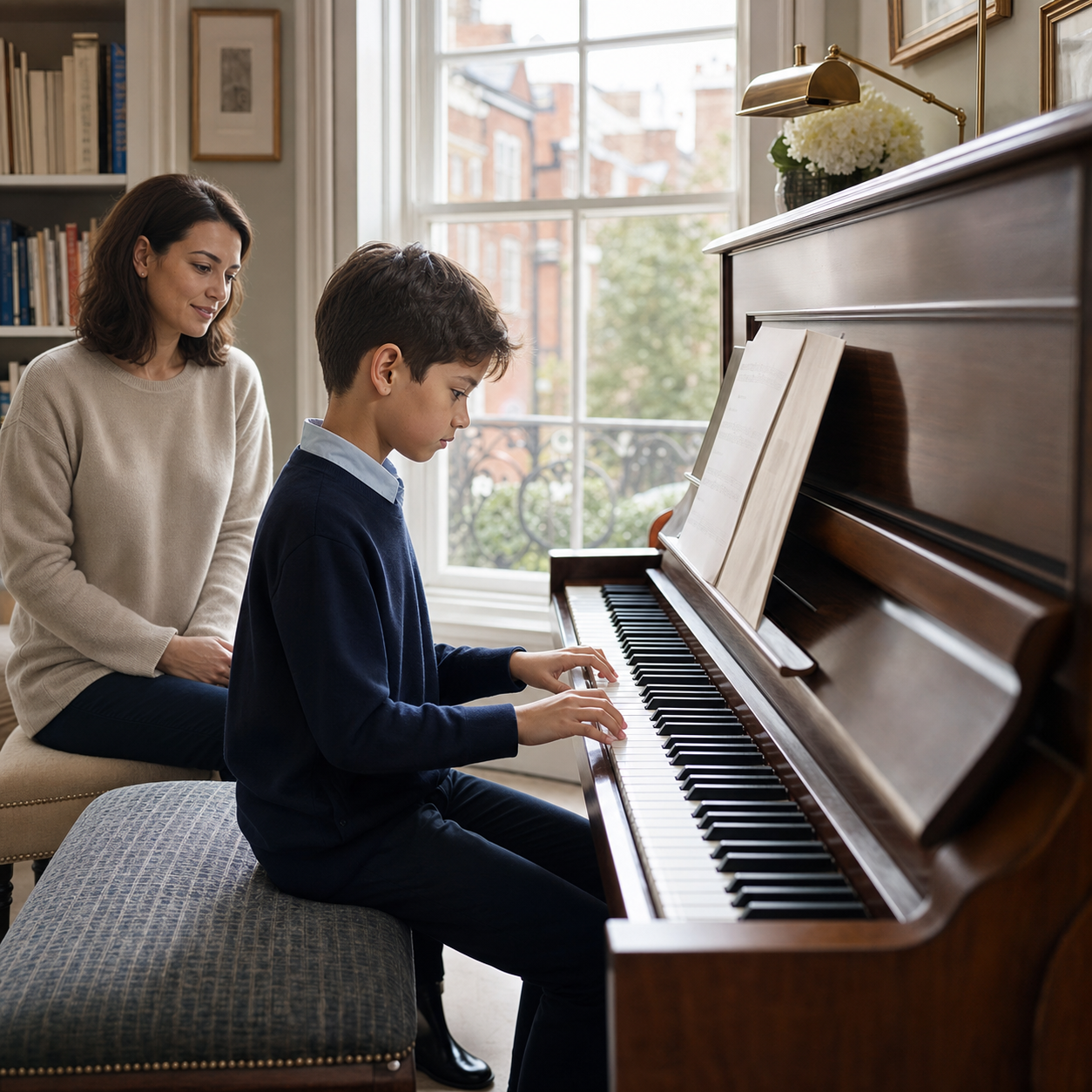
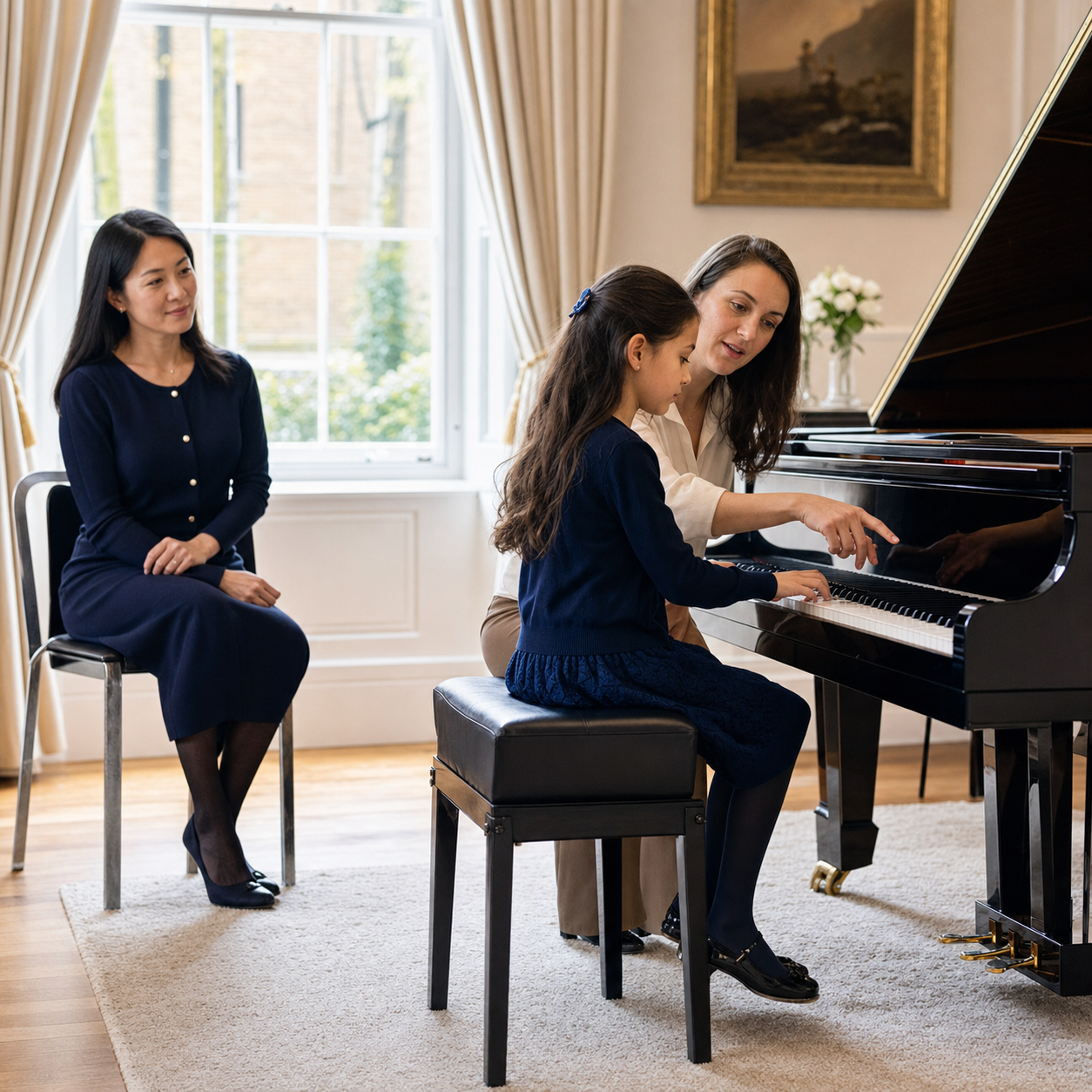
Private lessons give a nine-year-old the clearest technical attention. The teacher can adjust posture, sound and reading instantly, which is useful when a child is moving from “I can play the tune” to “I can shape this phrase beautifully.” Group lessons can be sociable and motivating, but they work best when the group is small and children are at a similar level.
In London, the choice between studio, home and online lessons is practical as well as musical. Studio lessons usually give the best instrument, fewer household distractions and a more serious learning atmosphere. Home lessons save travel time but require a suitable piano or weighted digital instrument and a quiet space. Online lessons can support continuity, but for beginners and younger children they rarely replace the value of in-person correction.
For a first assessment, ask the teacher to check reading level, rhythm, hand comfort, listening response and motivation. The child should leave with one clear success, not with a long list of faults. WKMT’s structured piano lessons for children in London are the natural place to continue this decision.
Assessment Checklist
Reading
Can the child follow simple note direction and rhythm?
Touch
Can the teacher improve tone without tension?
Attention
Can the lesson shift tasks before fatigue sets in?
Trust
Does the child feel corrected, or embarrassed?
A Realistic 6-12 Month Learning Trajectory
The first three months should establish posture, hand shape, basic rhythm, note reading, pulse and a small number of attractive pieces. A nine-year-old beginner does not need to rush into exams. They need to experience that regular practice leads to audible improvement.
By six months, many pupils can play short pieces hands together, read simple notation more fluently, understand basic dynamics and begin technical patterns such as five-finger positions, contrary motion and early scales. By twelve months, a consistent pupil may be ready for a first informal performance, a graded exam discussion, or a more ambitious repertoire plan. This is not a promise of a particular grade; it is a sensible range for a child who practises regularly and is taught well.
The most useful parent question is not “what grade will my child be?” but “what does the child now hear, control and understand that they did not hear, control or understand three months ago?” That keeps progress musical.
“Progress at nine should sound like better listening, not merely faster fingers.”
Exams, Boards and London Performance Opportunities
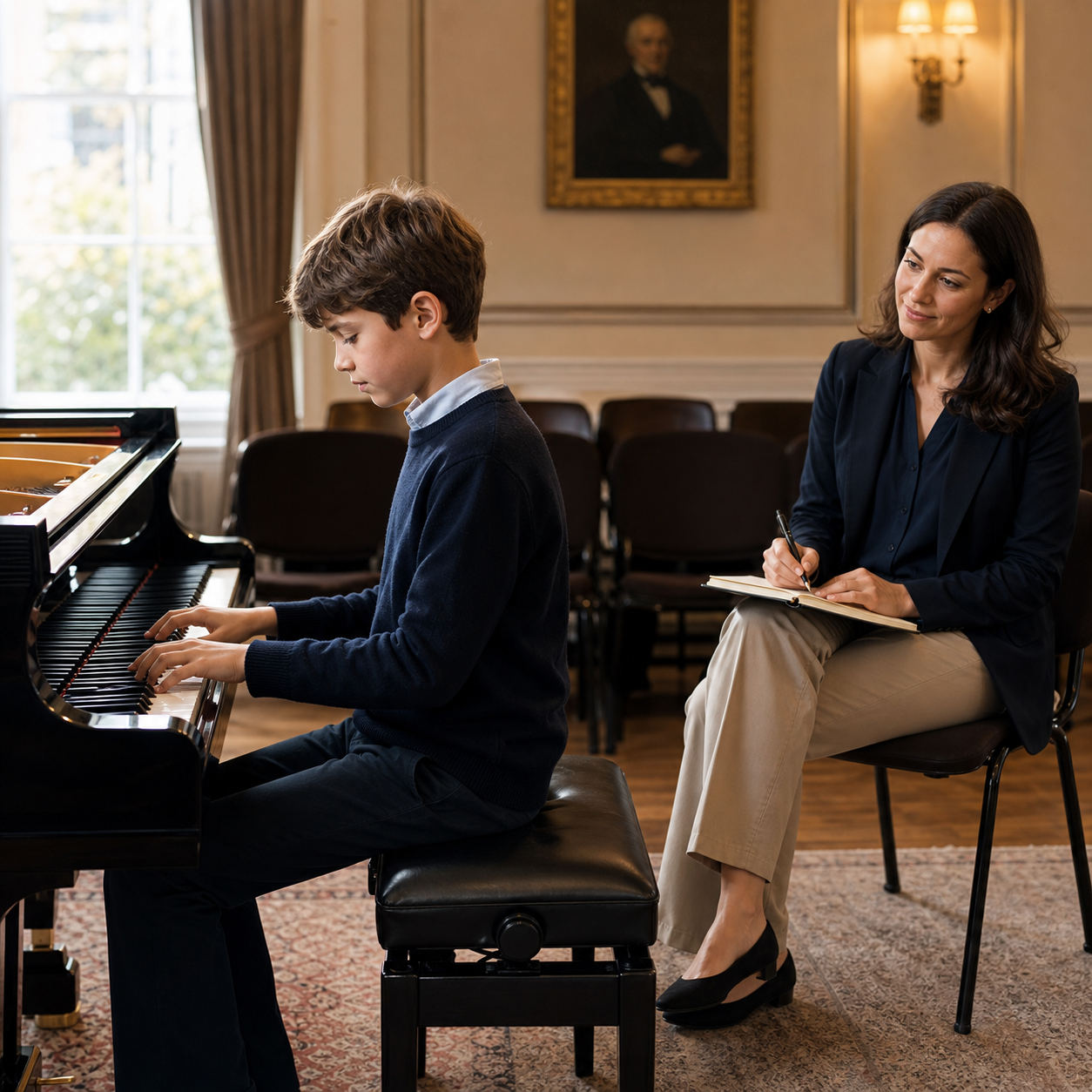
ABRSM and Trinity College London both offer graded music exams used widely by UK families. ABRSM’s practical grades and Trinity’s piano qualifications provide recognised pathways, with repertoire, technical work and supporting tests published by the boards [2][3]. For a nine-year-old, the right moment to enter an exam depends on readiness, not age. A child who plays musically at a pre-grade level may gain more from a small studio concert than from an exam entered too early.
London parents can also use performance opportunities to build confidence. Music education hubs, school concerts and studio recitals give children a reason to prepare without turning every term into a test. The Mayor of London and London music education hub information is useful for understanding local music provision and access routes [4]. WKMT’s own music events in London page is a relevant second step for families who want children to experience performance as part of musical life.
Choosing a Teacher in London
For piano lessons for 9 year olds, the teacher’s manner matters as much as their biography. Look for a teacher who can explain technique plainly, notice tension early, choose repertoire with taste, and keep standards high without making the child anxious. Diplomas, conservatoire training and experience with Key Stage 2 pupils all help, but the lesson itself reveals the fit.
Safeguarding should be explicit. Parents should ask about DBS checks, lesson policies, waiting arrangements, communication boundaries and who is present during lessons. The Disclosure and Barring Service explains the role of DBS checks in safer recruitment and regulated activity [5]. A professional studio should treat this as normal administration, not as an awkward question.
Ask: “How will you help my child practise when motivation dips?” The answer should be specific and calm.
A strong teacher protects childhood enjoyment while building the musical habits that later allow serious progress.
Practical Instrument Setup at Home
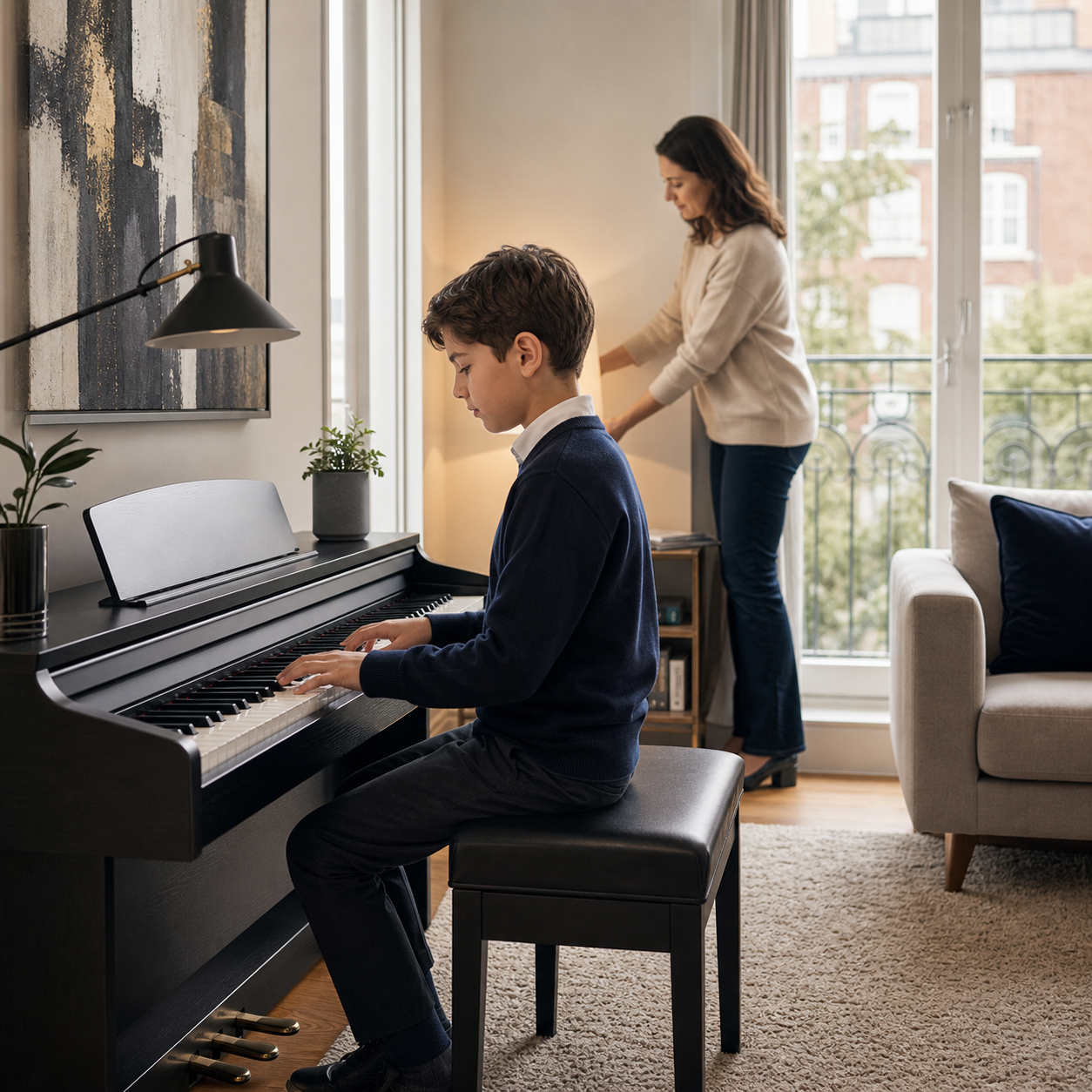
A nine-year-old does not need a concert grand at home, but they do need an instrument that allows real control. A weighted digital piano is usually a better starting point than a light keyboard because it teaches the hand to feel resistance and balance. If space and neighbours allow, a well-maintained upright piano gives richer sound and more natural response.
In a London flat, think practically: stable stand, adjustable bench, headphones only when necessary, and a practice time that respects the household. The instrument should sit somewhere the child can use it without asking an adult to move furniture. Ten focused minutes on most days will do more than one resentful hour on Sunday.
Pricing, Value and Common Parent Questions
Lesson value is not simply the lowest hourly rate. For piano lessons for 9 year olds, value means an appropriate teacher, reliable progression, good communication, a serious instrument and a lesson plan that fits the family’s week. A slightly more expensive lesson that prevents bad habits can be better value than months of vague encouragement.
| Parent question | Practical answer |
|---|---|
| How long should lessons be? | Start with 30 minutes unless the child is already focused and playing more developed repertoire. |
| How much practice is enough? | Short, frequent practice beats long, irregular sessions. The teacher should set realistic weekly aims. |
| When should exams start? | When the child can prepare without losing musical curiosity or confidence. |
A calm next step for London families
If your child is nine and ready for structured, encouraging tuition, arrange an assessment through WKMT’s children’s piano lessons page. The aim is simple: match the child with the right teacher, level and routine before committing to a longer plan.
Sources on Piano lessons for 9 years olds in London
- Department for Education, National curriculum in England: music programmes of study
- ABRSM, Practical Grades and piano exams, https://www.abrsm.org/en-gb/exams/practical-grades
- Trinity College London, Piano graded exams and syllabus information
- Mayor of London / London music education hubs information
- Disclosure and Barring Service, DBS checks and safeguarding guidance