
 TRIAL LESSON
Piano Lessons
Piano Lessons for 13 Year Olds: Motivation, Independence and Teenage Progress
Jul
Piano lessons for 13 year olds in London with WKMT
WKMT parent guide
Piano Lessons for 13 Year Olds: Motivation, Independence and Teenage Progress
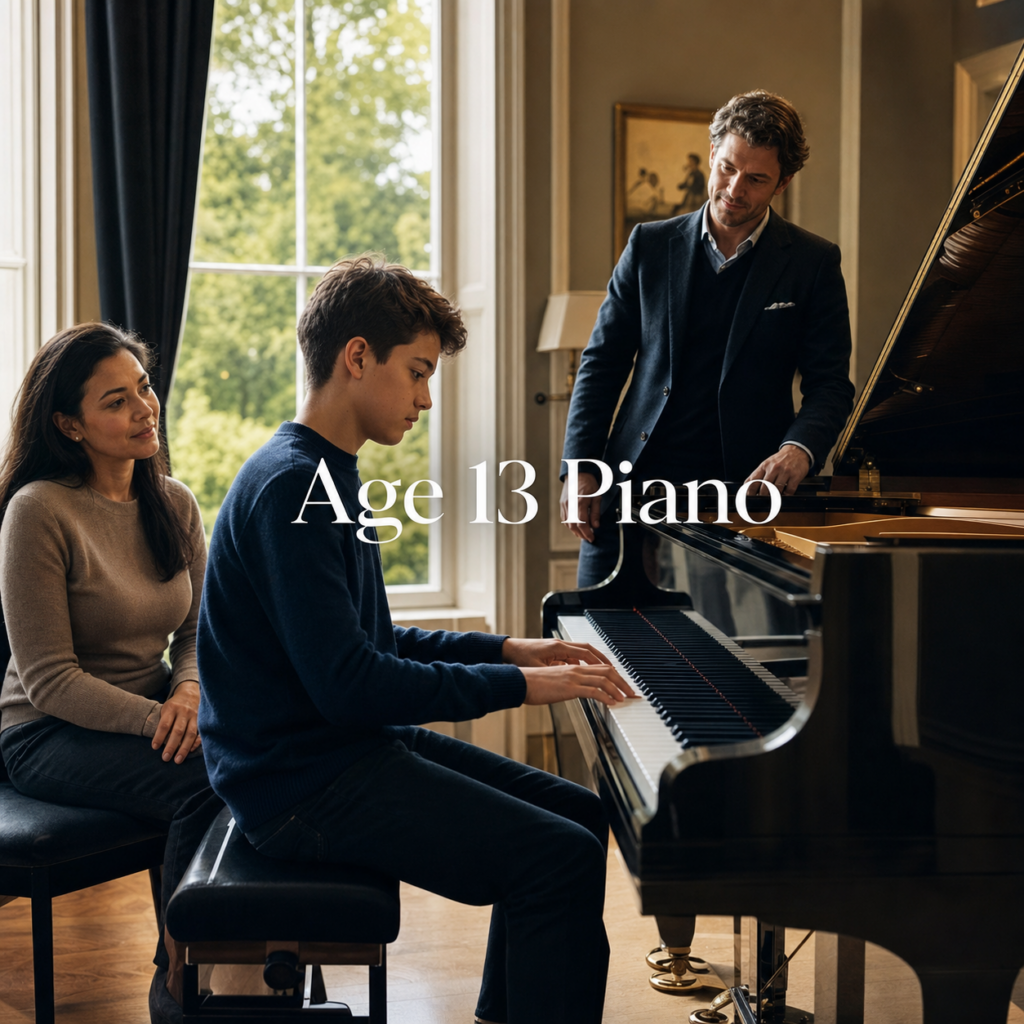
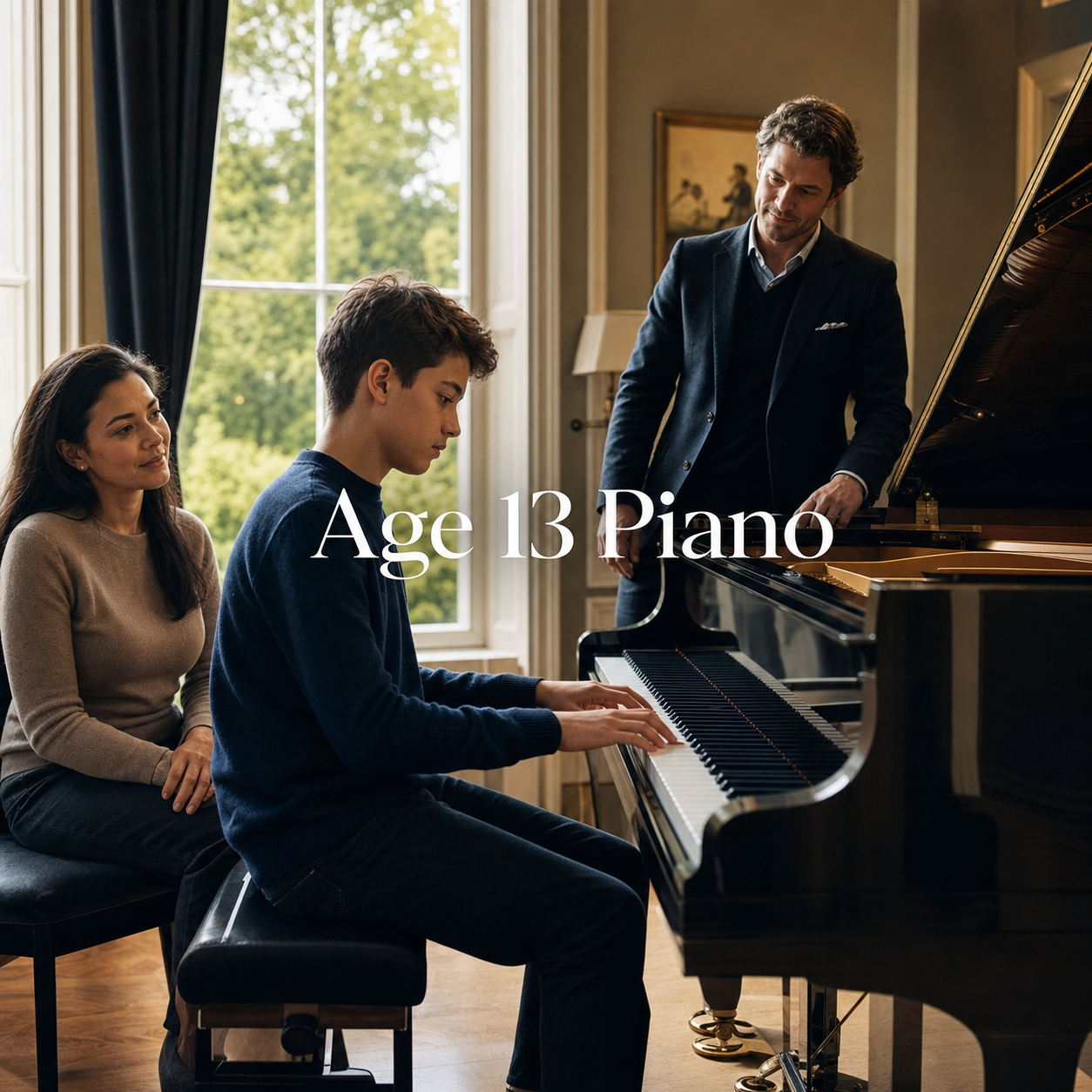
At 13, a young pianist can begin with real maturity, continue with sharper independence, or return after a pause with clearer musical purpose. The best lessons respect school pressure, teenage confidence and the need for visible progress.
Quick answer: is 13 a good age to start or continue piano?
Yes. piano lessons for 13 year olds can work exceptionally well when the teaching is structured around teenage motivation, school workload and realistic goals. A beginner at 13 usually understands cause and effect more clearly than a younger child: careful practice produces better sound, secure rhythm and faster reading. A continuing pupil may also be ready for deeper repertoire, graded exams, GCSE Music preparation or performance confidence. The important decision is not whether 13 is too late. It is whether the teacher can make the lesson feel age-appropriate, musically serious and manageable alongside secondary school.
For London parents, the search is rarely abstract. You may be comparing a studio lesson after school, a hybrid arrangement during exam weeks, a teacher who can prepare ABRSM or Trinity work, or a non-exam path that keeps music alive without adding another pressure point. WKMT’s structured piano lessons for children in London are the primary route for families who want serious teaching with a clear parent-facing framework.
A 13-year-old does not need childish encouragement. They need a teacher who can turn independence into musical discipline without making piano feel like another school subject.
Why 13 is a strong age for piano learning
Thirteen sits at a useful musical threshold. The pupil is old enough to understand style, long-term effort and the difference between playing notes and shaping a phrase. They are also young enough for technique, reading and listening habits to develop naturally over several years. This makes the age particularly suitable for either a carefully guided start or a more ambitious continuation.
Parents often worry that children who started at five or seven have an uncatchable advantage. Early starts help, but they are not the only route to musicianship. A 13-year-old can absorb explanations quickly, remember teacher feedback, notice poor sound, and take pride in adult-sounding repertoire. A beginner may progress from simple hands-together pieces to classical minuets, film themes, Burgmuller studies or Kabalevsky miniatures within the first year, provided the lesson plan is consistent and the home instrument is adequate.
For parents
Look less at how many pieces are covered in the first month and more at whether your child leaves the lesson knowing exactly what better playing sounds like. At 13, that listening standard is the engine of progress.
Lesson formats that suit 13 year olds
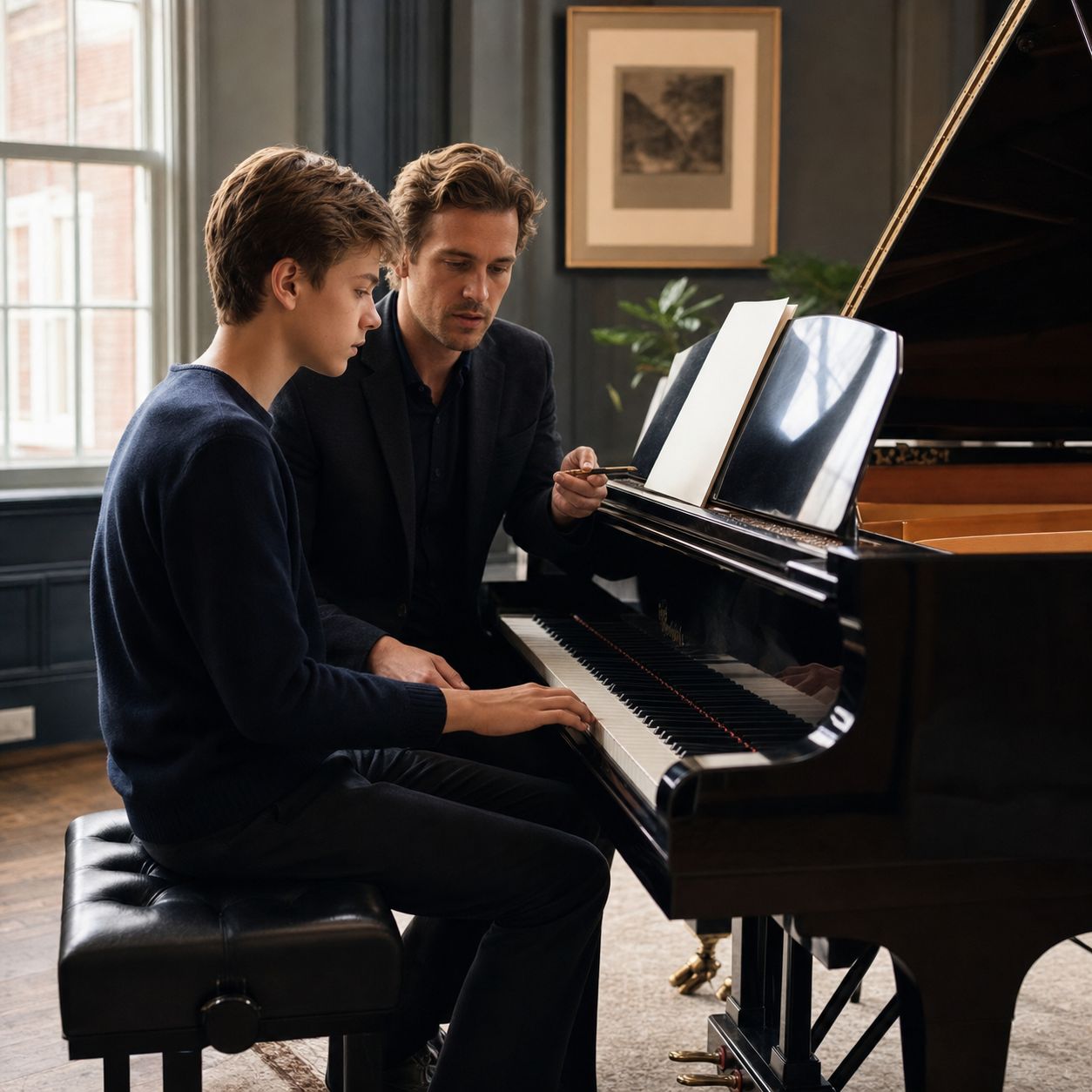
One-to-one lessons are usually the strongest format for teenage piano because they allow precise correction of posture, rhythm, reading and tone. A weekly 45-minute or 60-minute lesson gives enough time for repertoire, technique, sight-reading and conversation about goals. Thirty minutes can work for a cautious beginner or a very busy school week, but it should not become a permanently rushed arrangement if the pupil is progressing well.
Group or duo lessons can help social motivation, particularly for shy learners, but piano remains an instrument where individual hand position, sound and reading need close attention. Online lessons can be useful during illness, travel or revision periods, but a teenager still benefits from regular in-person sound checks on touch, pedalling and physical ease. A hybrid plan is often practical for London families: studio lessons as the anchor, online lessons only when logistics demand it.
| Format | Best for | Watch point |
|---|---|---|
| One-to-one studio lesson | Technique, confidence, exam or non-exam progress | Requires regular travel and a consistent home routine |
| Online or hybrid lesson | Busy school weeks, illness, continuity during travel | Camera angle and sound quality must be good enough for feedback |
| Duo or small group | Peer motivation, ensemble awareness, less exposed beginners | Individual technical issues may need separate attention |
Balancing piano with school, homework and teenage motivation
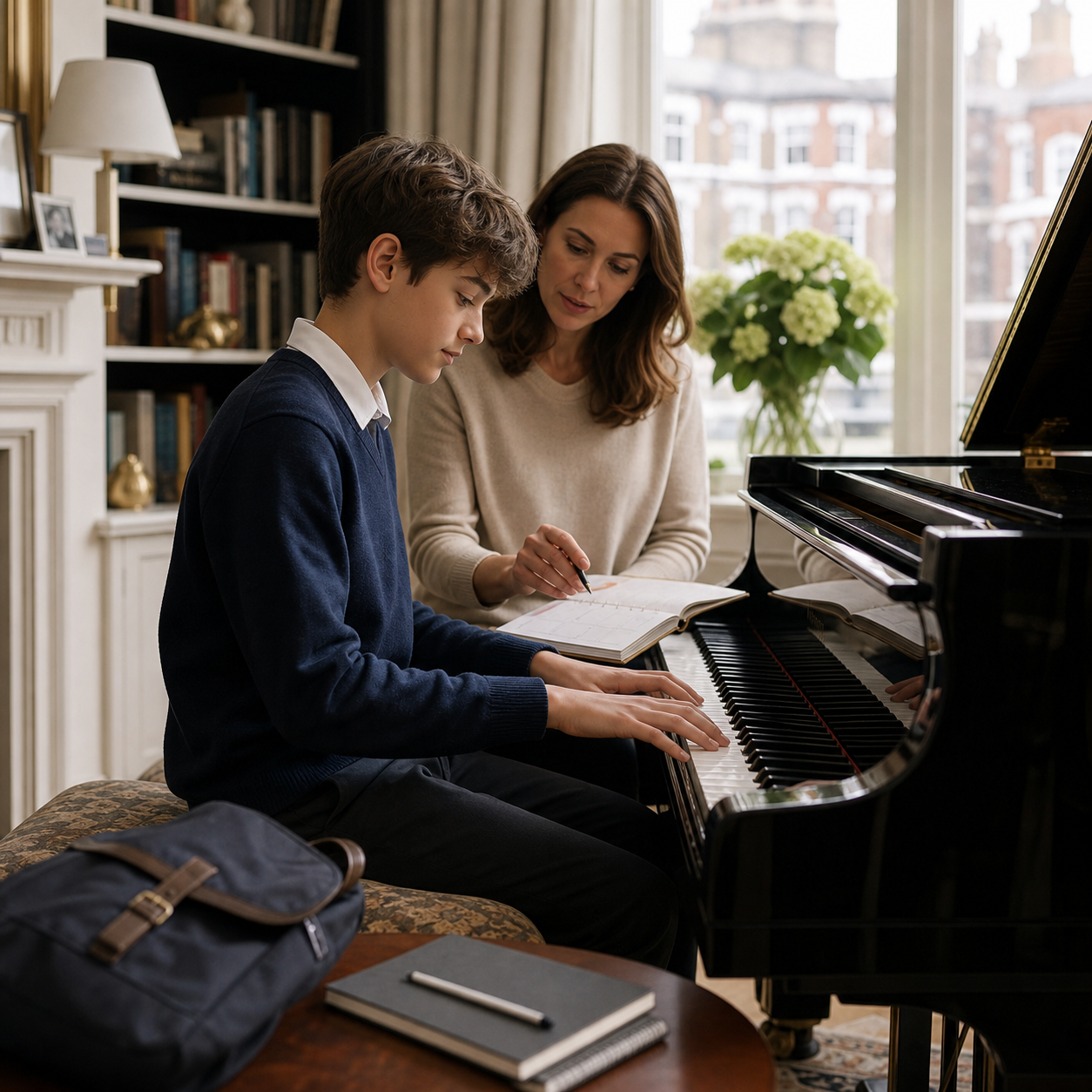
The central challenge at 13 is rarely ability. It is rhythm. School days lengthen, homework becomes more serious, friendships matter intensely and motivation can fluctuate. Good teaching turns piano into a stable weekly anchor rather than another battleground at home.
A realistic home plan for a beginner might be four short practice windows each week, often 15 to 25 minutes. A continuing pupil preparing an exam or recital may need longer blocks, but the parent should still watch for fatigue. The goal is not to police every minute. It is to protect a repeatable routine: same time of day where possible, clear assignment from the teacher, and a weekly check that the pupil knows which small improvement matters most.
Secure lesson rhythm, home setup and two manageable musical goals.
Noticeable reading fluency, steadier pulse and one polished piece.
A repertoire path, possible grade target and growing independence.
Exams, exams-free pathways and long-term progress
Many parents ask whether a 13-year-old should take ABRSM or Trinity exams. Both boards provide recognised graded routes, and both can give structure when the pupil enjoys goals. ABRSM describes Practical Grades as face-to-face assessments of all-round musical knowledge and skills, and its current piano syllabus sets out practical qualification objectives. Trinity’s piano route also offers graded piano syllabuses and repertoire options, including digital pathways for some candidates. These official routes can be valuable, but they should not become the only definition of success.
For some teenagers, a grade gives focus. For others, it creates unnecessary pressure. A good teacher will judge whether the pupil needs a formal exam, a recital target, a school performance, a composition project, or a serious non-exam repertoire plan. GCSE Music can also influence the decision. GOV.UK’s GCSE music subject content sets out a framework of performance, composition, listening and understanding; a 13-year-old in Year 8 or Year 9 may benefit from piano lessons that support those broad skills before GCSE choices harden.
Teacher’s note
A 13-year-old who wants independence may resist a grade if it feels imposed. Present exams as one possible musical project, then compare that with a recital, a favourite piece or a GCSE-support plan.
Choosing the right teacher in London
The right teacher for piano lessons for 13 year olds should be musically strong and emotionally perceptive. Parents should ask how the teacher handles teenage motivation, what progress normally looks like after one term, how feedback is communicated to parents, and whether the teacher is comfortable with both exam and non-exam routes. Safeguarding also matters. For child tuition, parents should expect clear professional boundaries, appropriate supervision, and sensible DBS and safeguarding checks for those working with children.
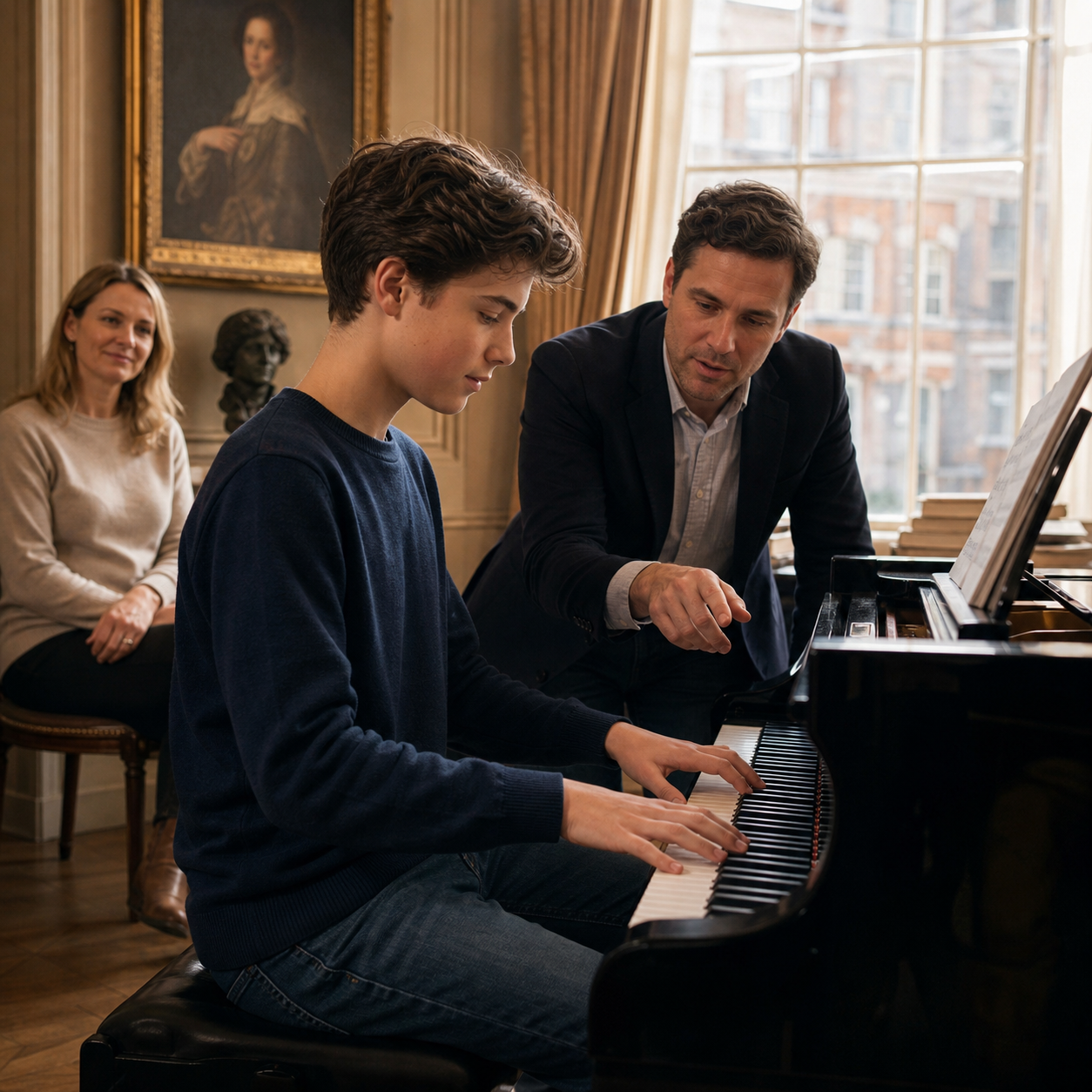
A trial lesson should reveal more than friendliness. Watch whether the teacher listens to the pupil, corrects one or two issues precisely, avoids overwhelming them, and gives a clear next step. A 13-year-old should leave feeling challenged, not embarrassed. Parents should leave knowing what will be practised, how progress will be measured, and how to raise concerns without turning every lesson into a negotiation.
Trial lesson checklist
- Does the teacher explain one clear technical or musical priority?
- Does the teenager feel respected rather than spoken down to?
- Is the home practice plan specific enough to follow?
- Can the teacher describe exam, recital and non-exam options?
- Are safeguarding, communication and cancellation expectations clear?
Practical London considerations: instrument, cost and travel
London families often make piano decisions inside small flats, tight timetables and expensive travel. A good digital piano with weighted keys is usually acceptable for a beginner or early intermediate teenager, especially where neighbours or space are concerns. An acoustic piano, when practical, develops a richer relationship with sound and pedalling. The essential point is that the instrument must feel stable, in tune and available.
Pricing varies by teacher, location, lesson length and qualifications. Parents should be cautious of choosing only by the lowest price if the pupil needs serious guidance. At 13, the cost of poor teaching is often lost confidence, not just slower progress. Travel time should also be counted. A brilliant teacher who is unreachable during school terms may be less useful than a consistent studio route, especially when exams, concerts or homework intensify.
Plan your child’s next step
For parents comparing teenage lesson options, WKMT’s children-focused piano route offers structured teaching, parent communication and a London studio framework for young learners who need confidence and discipline in balance.
London performance opportunities and teenage confidence
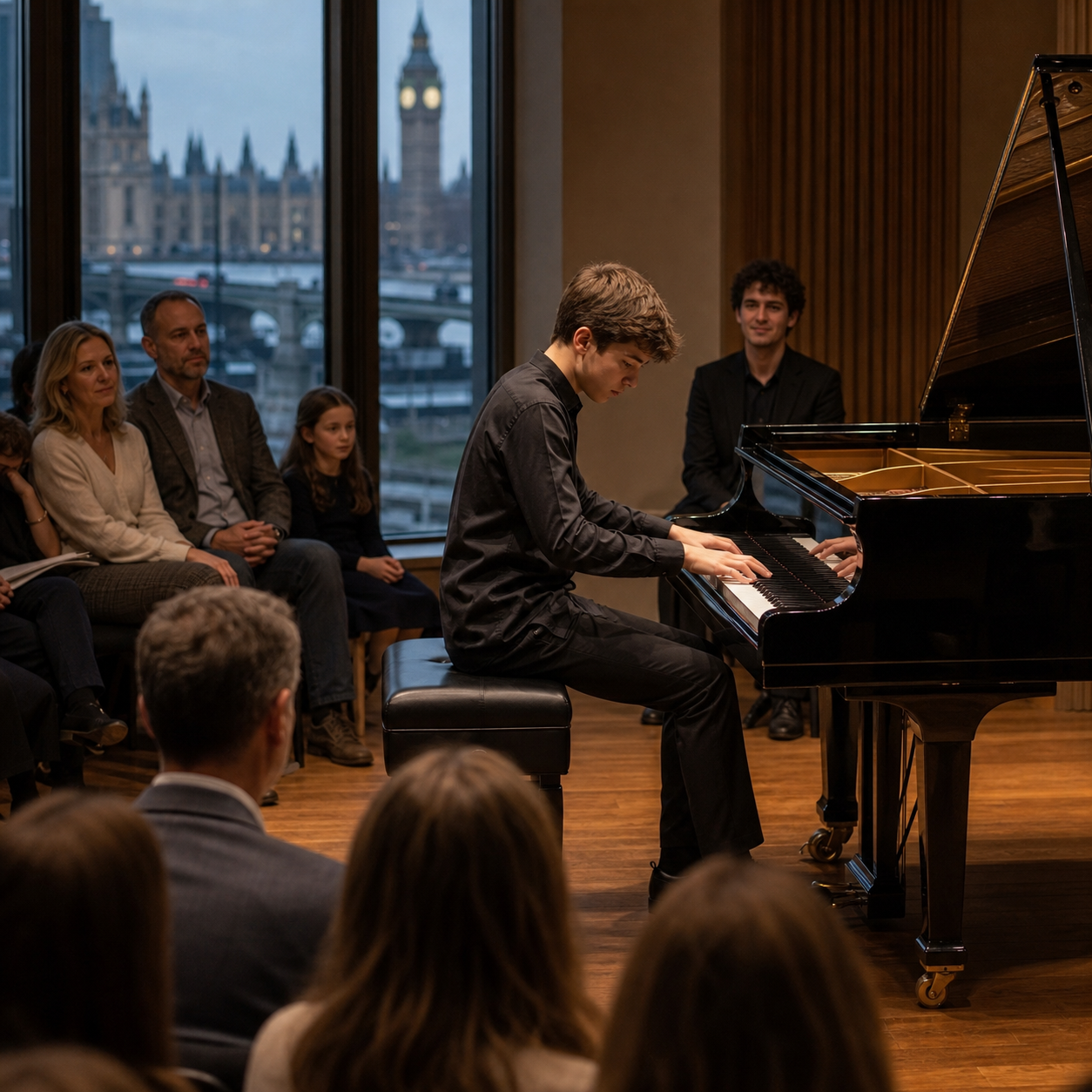
A 13-year-old often needs a reason to play beyond the weekly lesson. London gives families useful possibilities: school concerts, youth music projects, local music hubs, studio recitals and carefully chosen masterclasses. The London Music Fund describes its work with borough Music Services, schools and arts organisations to widen access to musical opportunities for young Londoners. Even when a pupil is not using a public programme, that wider London ecosystem matters because it normalises music as part of teenage life.
Performance should be handled thoughtfully. Some teenagers enjoy the stage; others need gradual exposure through informal play-throughs, duet work or small studio gatherings. The aim is not public display for its own sake. It is to teach the young musician how to prepare, recover from mistakes and experience music as communication.
Frequently asked questions
Is 13 too late to start piano?
No. A 13-year-old beginner can make strong progress because they understand instructions, goals and musical detail more maturely than many younger children.
Should my child take ABRSM or Trinity exams?
Only if the exam supports motivation and musicianship. Some teenagers thrive with grades; others do better with recital, repertoire or GCSE-support goals first.
How much should a 13-year-old practise?
A beginner often benefits from four focused 15 to 25 minute sessions each week. More advanced pupils may need longer blocks, especially before exams or performances.
A calm route into serious teenage piano study
The most successful piano lessons for 13 year olds treat the pupil as a young musician, not a small child and not yet an adult. The teaching should be precise, encouraging and honest. Parents should expect clear guidance, practical communication and a route that can flex between exams, repertoire, school music and personal enjoyment. When those elements are in place, age 13 can be a powerful moment to begin, continue or rediscover the piano.
Sources on Piano Lessons for 13 Year Olds: Parent Guide
- ABRSM, Practical Grades and Piano Practical Grades syllabus 2025 and 2026 abrsm.org
- Trinity College London, Piano grade exams and repertoire information trinitycollege.com
- GOV.UK, GCSE subject content for music gov.uk
- London Music Fund, music education charity overview londonmusicfund.org
- WKMT, piano lessons for kids landing page piano-composer-teacher-london.co.uk