
 TRIAL LESSON
Piano Lessons, Scaramuzza Technique
Piano Legato Technique: A London Teacher’s Guide to Singing Tone and Connected Touch
Jun
Piano legato technique Complete Guide
Technique and Tone
Piano Legato Technique: A London Teacher's Guide to Singing Tone and Connected Touch
A practical WKMT guide to connected touch, arm weight, pedalling and musical line for serious piano students.
Piano legato technique is one of the decisive skills in classical playing because the piano cannot literally sustain a note once the hammer has struck the string. The pianist has to create continuity through timing, balance, release, resonance and listening. This is why good legato is never a single trick; it is the meeting point between technique and musical imagination.
At WKMT London, legato work belongs to a wider discipline of classical piano study. The goal is not blurred sound or exaggerated pedal. It is a singing line: clear enough to preserve harmony and style, warm enough to make the listener believe that the phrase is breathing.
Teacher's checkpoint
If the line sounds uneven, first ask whether the problem is finger transfer, tone matching, release timing or pedal. Each fault needs a different correction. Guessing usually makes the hand tighter.
Why legato still defines beautiful piano playing
Legato is often translated as smooth or joined playing, but pianists must treat that definition carefully. A singer or violinist can continue a tone after it has begun; the piano tone begins to fade immediately. The art is therefore to make each new attack belong to the previous sound rather than interrupt it.
A convincing legato line depends on the ear. The student listens for tiny breaks between notes, notices when one note arrives too loudly, and learns to release the previous key at the last musically useful moment. In repertoire, that attention changes everything: a Mozart slow movement becomes more vocal, a Chopin nocturne becomes less sentimental, and a simple study becomes genuinely musical.

Finger connection and weight transfer
Begin with two neighbouring notes. Play C with the thumb and D with the second finger. The second finger should receive the weight of the hand as the thumb releases. The thumb should not remain trapped, and it should not leave so early that the listener hears a gap. This small transfer teaches the whole arm how to pass balance from one point of contact to the next.
Students often mistake legato for pressing. They hold keys too long, grip the hand, or keep unnecessary fingers down in the hope of avoiding silence. That produces stiffness. A better sensation is one of giving the phrase away: each finger supports the sound for a moment, then allows the next finger to inherit it.
Legato Control Map
Finger transfer
Move weight from one finger to the next without gripping the hand.
Release timing
Leave the previous key at the last useful musical instant.
Tone matching
Make the next note enter at a colour and dynamic that belong to the line.
Pedal judgement
Use resonance to support phrasing, not to hide poor connection.
When true legato is impossible
Wide intervals, repeated notes, melody notes taken by the same finger and inner voices inside chords often cannot be joined physically. The pianist must then create the illusion of legato. Tone matching is the first tool: if the first note is dying away, the next note should enter at a level that belongs to that decay. A sudden new accent exposes the gap.
The second tool is calm movement. A hand that prepares a leap nervously usually breaks the phrase before the next note has arrived. Practise slowly enough to remove excess motion, then keep the ear on the line rather than the distance travelled.

Pedal comes after the fingers
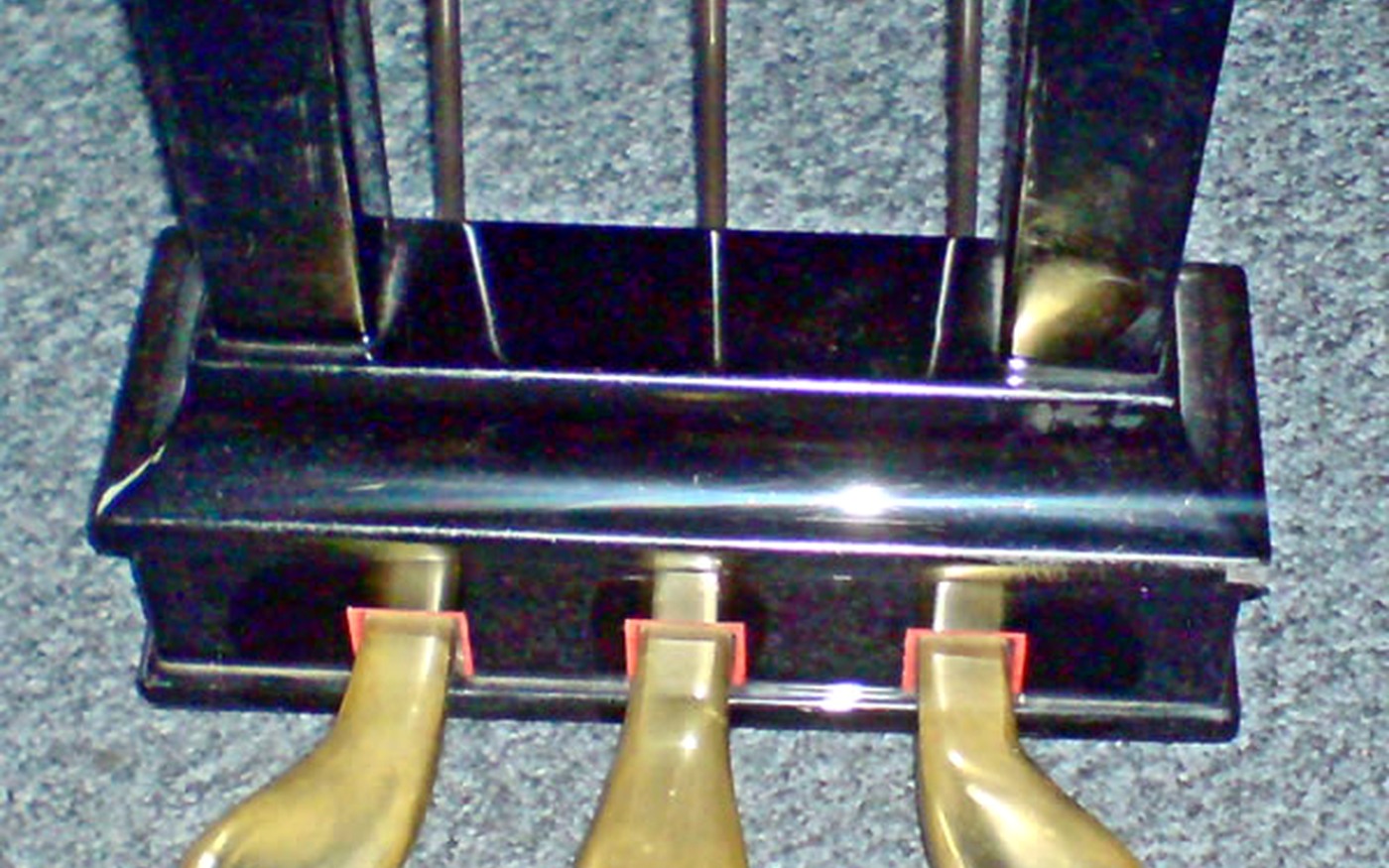
The sustaining pedal is central to piano colour, but it cannot replace piano legato technique. If the fingers are careless, the pedal only makes the carelessness louder. First create the clearest possible connection without pedal. Then add resonance where the phrase, style and room require it.
Good pedalling for legato is usually changed with the harmony. The fingers play the new harmony, then the pedal clears the previous resonance. This late change can connect sound gracefully while preserving definition. Mozart, Debussy, Beethoven and Rachmaninoff all need different degrees of resonance, so a one-pedal habit is never enough.
Legato is a listening discipline before it is a finger habit.
A ten-minute practice sequence
Use this short routine before applying the idea to repertoire:
- Neighbouring notes: connect C-D, D-E and E-F with slow finger transfer.
- Five-note patterns: play evenly, first with full tone and then softly.
- Same-finger illusion: move one finger between two notes and match colour.
- Two-note slurs: let the wrist release through the second note without punching it.
- Pedal check: repeat a short phrase without pedal, then add clean harmonic changes.

How WKMT teachers diagnose legato
A teacher does not only hear whether notes are joined. They hear why they are not joined. A gap may come from a late finger, a tense wrist, a weak fingertip, a rushed release, a pedal change that is too early, or a phrase that has no clear destination. The correction depends on the cause.
This is why legato is a diagnostic skill. It reveals the relationship between the ear, the body and the score. A pianist with good legato usually listens in longer units. They do not think only note by note; they think in direction, breath and arrival.
Internal study route
For related WKMT reading, this article connects naturally to rotation movement in Scaramuzza piano technique and wrist movement. Both topics deepen the physical side of connected tone.
Work on connected tone with WKMT London
Students who want to refine piano legato technique need a teacher who can hear the cause of each gap, adjust the movement and connect the technical solution to the style of the music. WKMT London offers structured classical piano lessons in West Kensington, Camberwell and Bermondsey.