
 TRIAL LESSON
Pianists, Piano Lessons
Harriet Cohen in London: The British Pianist Whose Public Voice Still Teaches Musical Courage

May
Harriet Cohen in London Guide
Harriet Cohen in London: The British Pianist Whose Public Voice Still Teaches Musical Courage
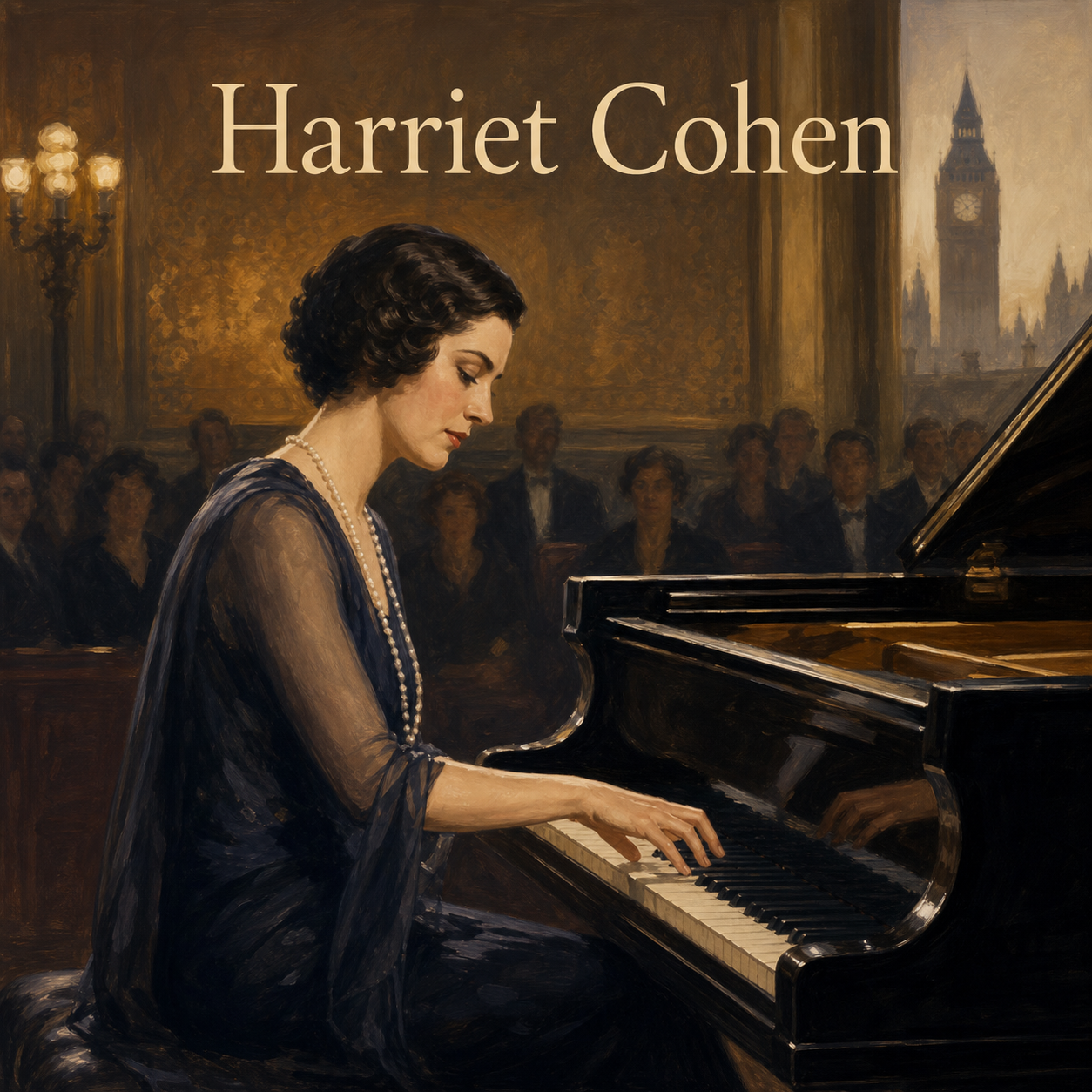
Harriet Cohen is not merely a name from the margin of British piano history. She was a pianist of formidable intelligence, a public advocate for new music, and one of the artists through whom London heard a more vivid version of itself in the first half of the twentieth century.Born in London in 1895, Cohen studied at the Royal Academy of Music and emerged as a performer whose career was closely bound to British musical modernism. Her name is especially associated with Arnold Bax, who dedicated important works to her, but her significance is wider than any single artistic friendship. She brought conviction to music that still needed defenders, made herself useful to composers, and built a public identity in which pianism, intellect, and moral courage were difficult to separate.
For WKMT readers, Cohen’s life is valuable because it shows what serious piano culture can become when technical training is joined to curiosity and public purpose. The lesson is not that every pianist must become a public figure. It is that musical discipline gains depth when it serves an idea larger than self-display. That is the same spirit behind classical piano study in London at WKMT: technique is the means, not the destination.
A London Formation
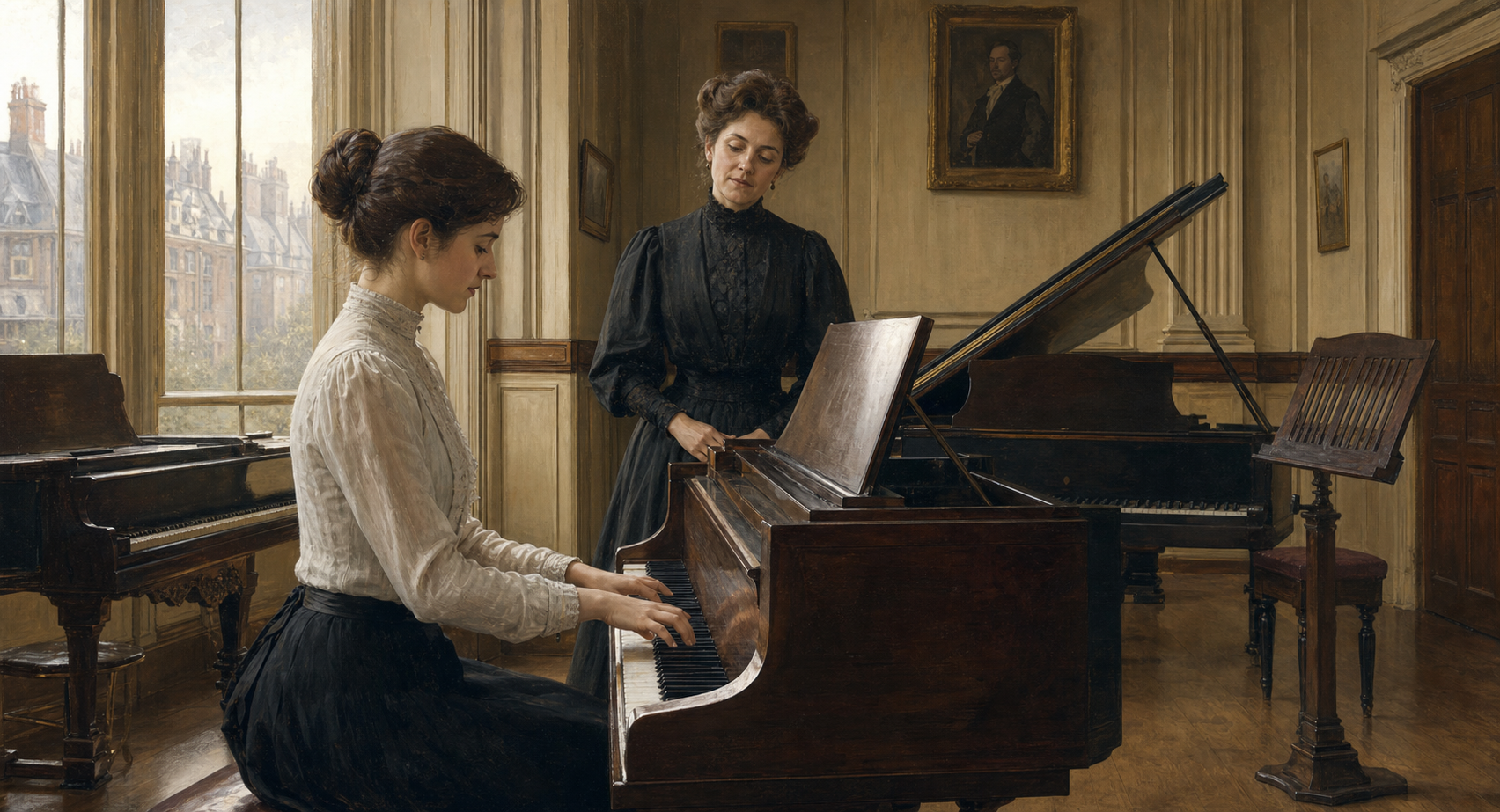
Cohen’s early education at the Royal Academy of Music matters because it places her inside an institution where British performance, composition, and professional ambition met. The Academy was not simply a finishing school for accomplishment. For a young pianist with enough appetite, it could become a point of entry into London’s concert and composer circles.
The strongest accounts of Cohen repeatedly show a pianist whose reputation was not built on empty brilliance. She had a cultivated mind, a distinctive presence, and a gift for drawing attention to music that asked for active listening. This is a useful correction to a common misunderstanding about pianistic success. The public remembers dazzling hands; serious musicians remember judgement, stamina, and taste.
Her career also reminds modern students that a pianist’s formation is partly social. Lessons, practice, and repertoire build the craft, but musical identity is sharpened by teachers, colleagues, libraries, concerts, and conversation. London offered Cohen that network. It still offers it to pianists who use the city as more than a convenient address.
Championing British Music
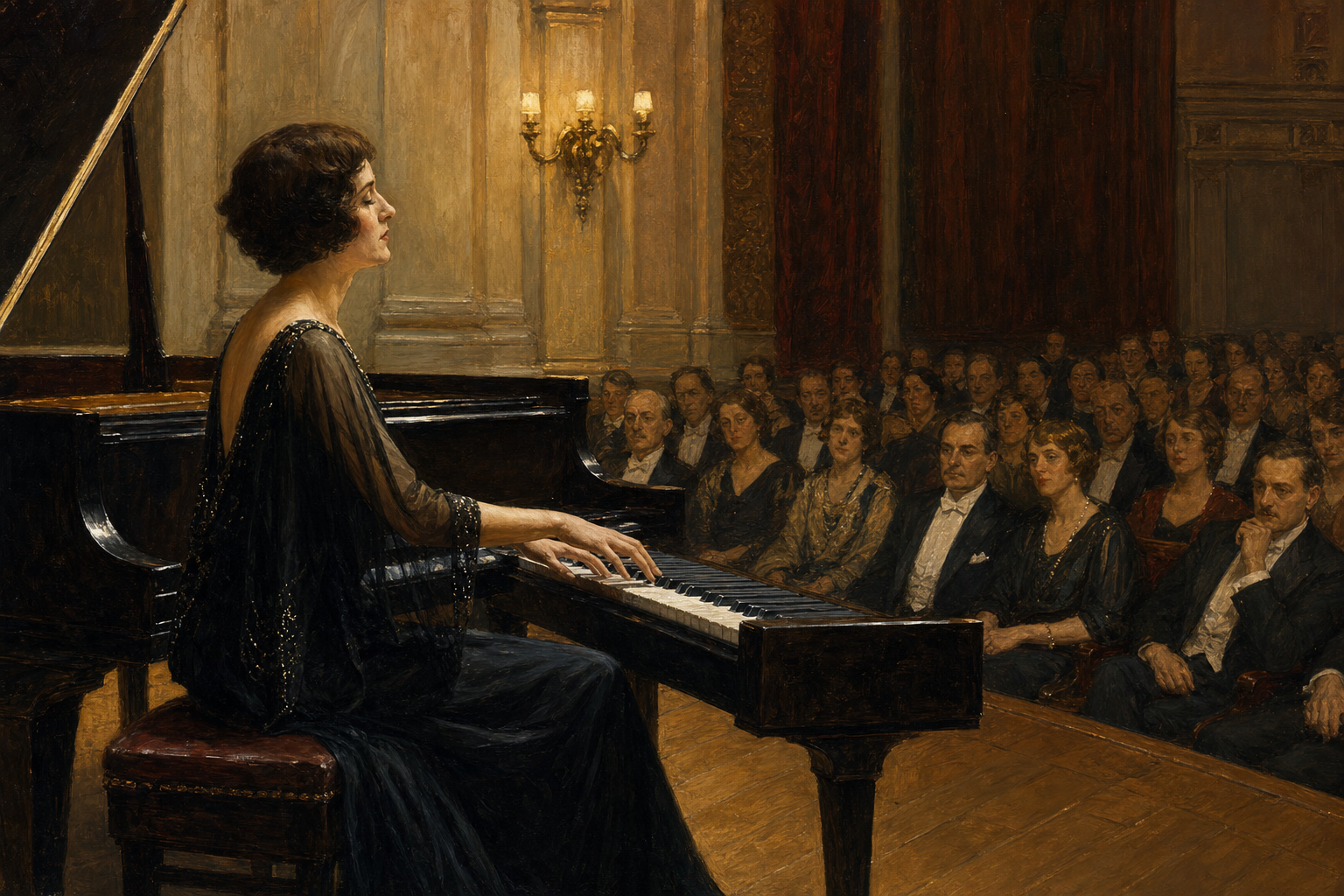
Cohen’s association with Arnold Bax is one of the central facts of her story. Bax dedicated music to her, and her advocacy helped make his piano writing audible as living repertoire rather than private manuscript culture. Yet the relationship should not reduce her to the role of muse. The word can be too passive. Cohen was an interpreter, organiser, persuader, and public carrier of musical ideas.
British music in the early twentieth century needed performers who could make new scores convincing in the concert hall. A composition may be printed, praised, or privately admired, but it only enters musical memory when performers give it shape in sound. Cohen did that work. She understood that a pianist can alter the fate of a piece by playing it with enough clarity to make an audience trust it.
That point is relevant to students working on any repertoire, whether Bach, Chopin, Debussy, Bax, or contemporary music. A performance is not persuasive because the notes are present. It is persuasive because the pianist has made decisions: how the line breathes, where harmony darkens, which rhythm must stay strict, and when tone must become speech. WKMT’s work on Scaramuzza technique is valuable here because technical organisation gives interpretative decisions a physical foundation.
The Composer Circle
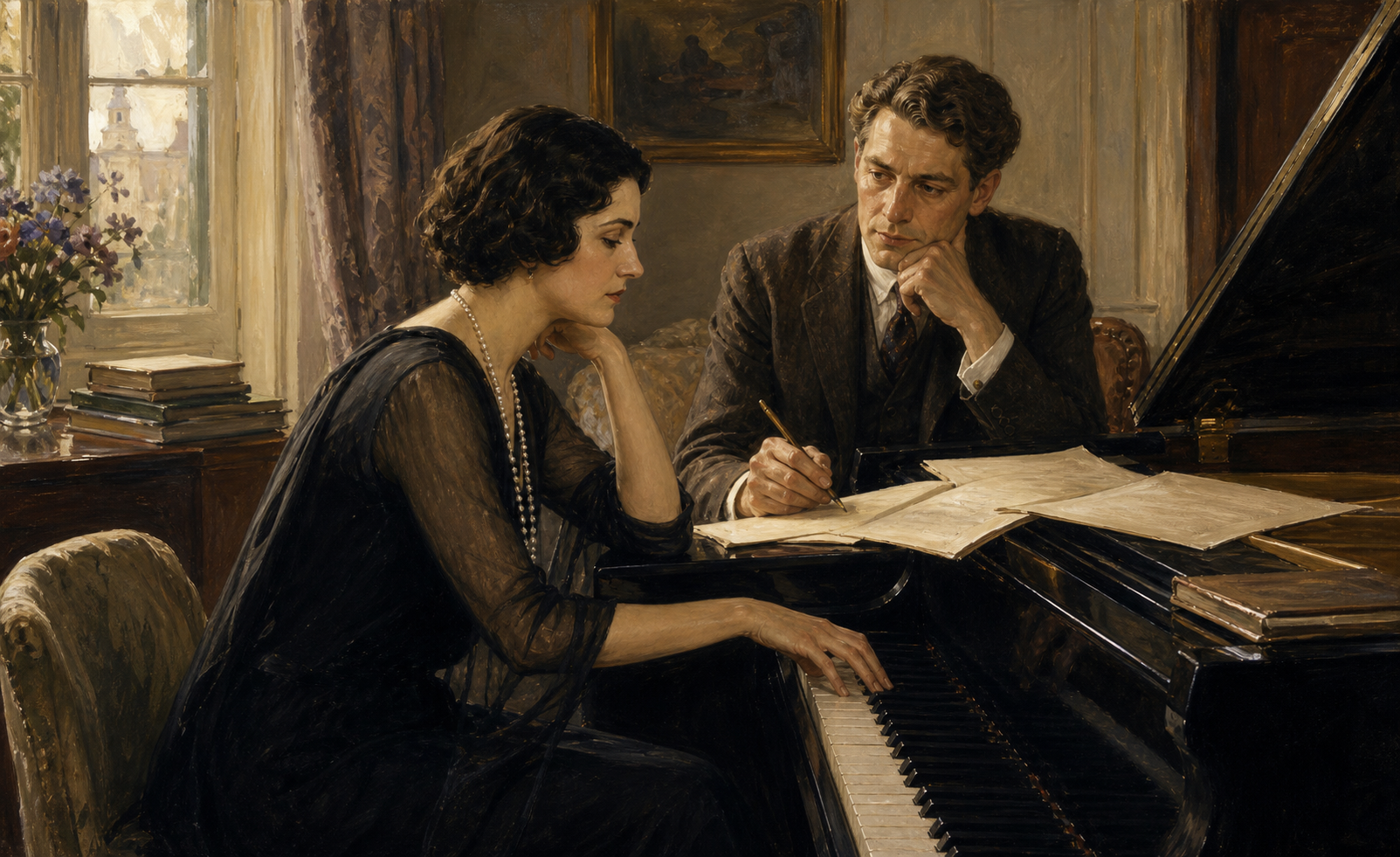
Cohen moved through a world in which music, literature, politics, and public speech often touched. Her friendships and associations placed her near some of the defining figures of British cultural life. This is not gossip as ornament; it helps explain the particular force of her career. She belonged to a London in which a pianist could be heard as an intellectual presence.
Her advocacy extended beyond purely musical loyalties. Accounts of her life emphasise her public voice, her international sympathies, and her willingness to attach her name to causes. That element gives her story its modern edge. The pianist was not hidden behind the keyboard. She understood that artistic reputation could become a kind of responsibility.
Students should treat this carefully. Public courage without musical discipline becomes noise. Musical discipline without human meaning becomes sterile. Cohen’s example is compelling because the two qualities were joined. She built the craft, entered the repertoire deeply, and allowed musical life to reach outward.
What Her Playing Still Teaches
Cohen’s recorded legacy and written memory point towards a pianist concerned with colour, character, and direct communication. This matters for modern piano training because many students mistake accuracy for completion. Accuracy is essential, but it is only the grammar of the language. The purpose of grammar is speech.
A Cohen-inspired approach to practice would ask three questions before a passage is considered ready. First, what is the music saying? Secondly, what kind of sound makes that meaning audible? Thirdly, what physical habit is preventing the sound from appearing naturally? These questions move practice away from repetition for its own sake and towards interpretation with evidence.
For advanced students, her career also raises a larger repertoire question. Which pieces do we choose because they are famous, and which do we choose because they need our advocacy? A healthy musical education includes both. Canonical works teach proportion and inheritance. Less familiar works teach responsibility, independence, and listening without borrowed opinion.
Public Musical Courage
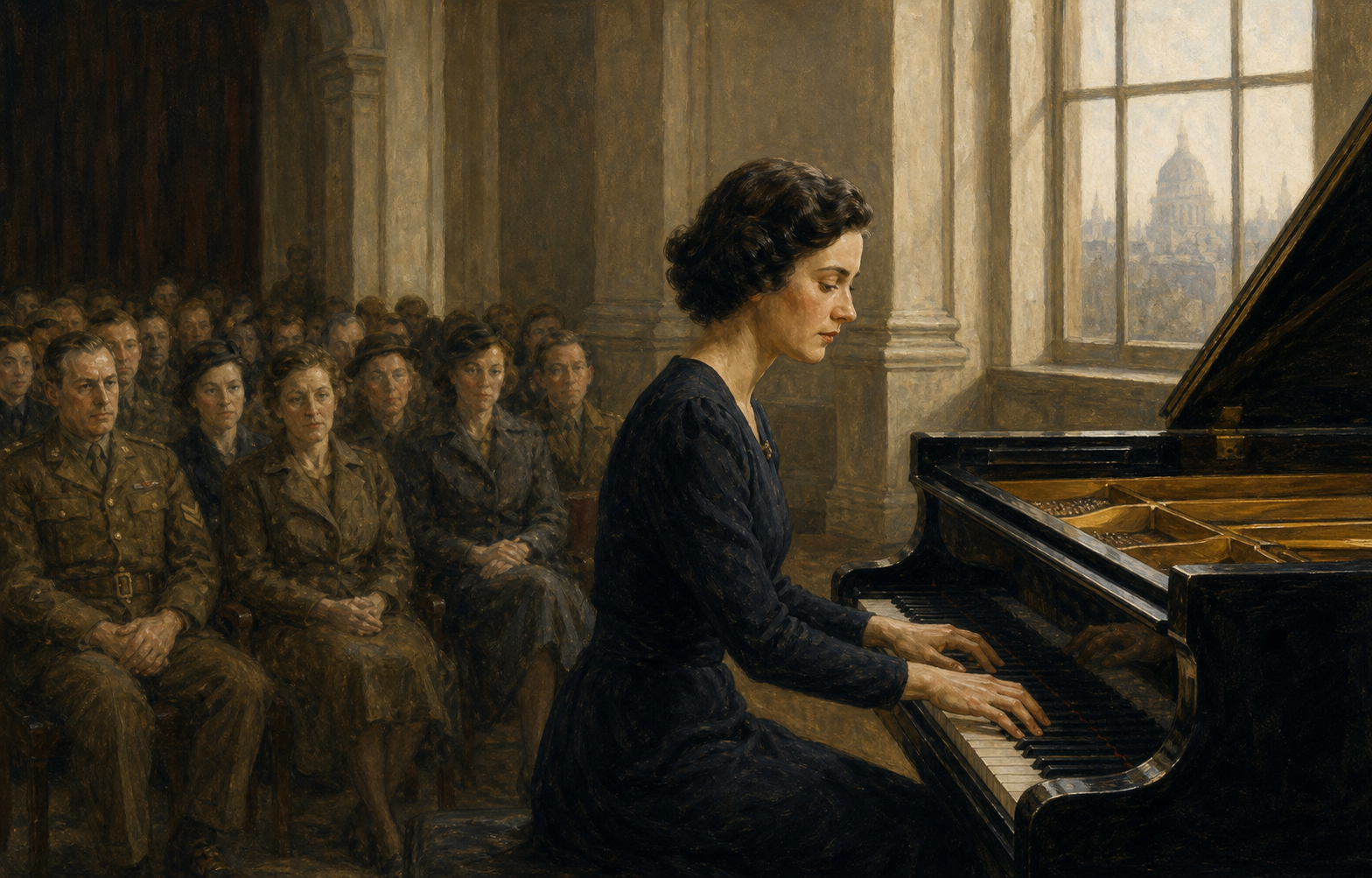
London’s piano history is full of great visitors, but Cohen represents something different: the city producing one of its own artistic voices. Her example sits naturally beside the broader WKMT interest in major pianists, including the historical perspective gathered in WKMT’s guide to great pianists. The value of such figures is not celebrity. It is the chance to ask what made their musical choices last.
Her answer was courage of a very specific kind. It was not loudness. It was the willingness to stand behind serious music, to cultivate a personal sound, and to let artistic work touch public life. That remains a refined lesson for pianists in London today. A student may begin with scales, fingerings, and exam pieces, but the deeper education is the growth of judgement.
Judgement tells a pianist when to simplify, when to insist, when to listen again, and when to take responsibility for a neglected phrase or unfamiliar score. Cohen’s life offers that lesson with unusual clarity. She shows that the pianist’s task is not merely to reproduce music from the past. It is to make musical value present, audible, and necessary.
For London students and adult pianists returning to serious study, this is a generous inheritance. Technical work can be patient. Repertoire can be chosen with intelligence. Concert life can become part of education. And the piano, when approached seriously, can still become a public voice.
WKMT students who want to connect interpretation, technique, and performance culture can also explore classical concerts and performance opportunities in London, where musical study continues beyond the practice room.
Sources on Harriet Cohen in London
- Encyclopedia.com, Harriet Cohen biography (last checked 20 May 2026).
- Jewish Women’s Archive, Harriet Cohen (last checked 20 May 2026).
- National Portrait Gallery, Harriet Cohen collection entry (last checked 20 May 2026).
- Royal Academy of Music, institutional context (last checked 20 May 2026).
- Encyclopaedia Britannica, Arnold Bax (last checked 20 May 2026).