
 TRIAL LESSON
Piano Lessons
Claudio Arrau in London: The Curious Backstory Behind His Most Admired UK Recitals
Apr
Claudio Arrau in London Complete Guide
Claudio Arrau in London: The Curious Backstory Behind His Most Admired UK Recitals
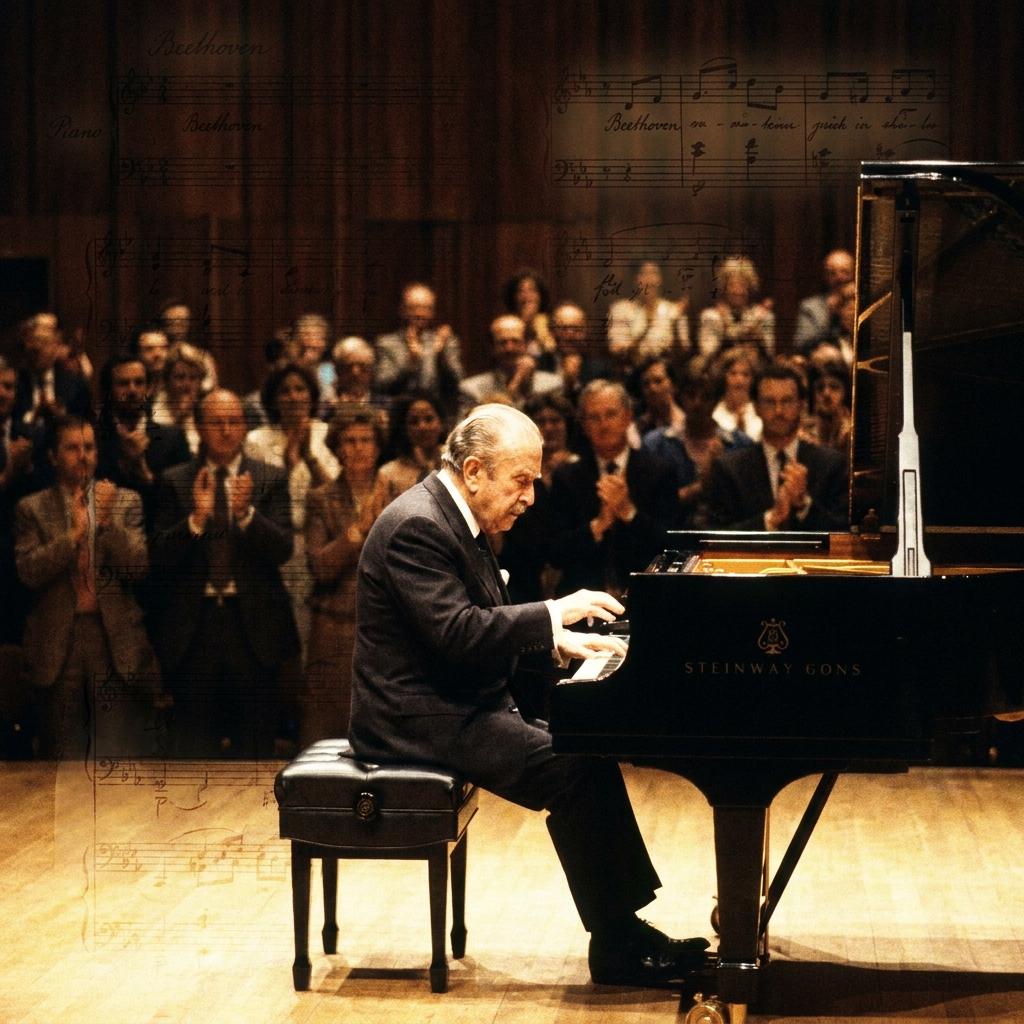
In the memory of London concert life, one Claudio Arrau evening keeps returning with unusual force: 3 June 1986 at the Royal Festival Hall. Arrau was eighty-three. The programme was all Beethoven. The next morning The Times would say that the four sonatas “would have taxed a man half his age”, while the Financial Times remarked that “Arrau’s technique seemed to lose 30 years”. Southbank’s own recollection is simpler, and perhaps more telling: a “huge ovation”.
Those lines matter not because they flatter an octogenarian virtuoso, but because they capture a deeper London feeling around him. This was not nostalgia, nor dutiful reverence. It was the recognition that an old master had turned seriousness, weight, and structural command into something actively thrilling. The curious backstory is that London had not always heard Arrau chiefly as a Beethoven sage. He first arrived as a Bach-playing prodigy, became a recurring Festival Hall presence, and only gradually turned his UK recitals into a kind of public lesson in how great piano music can be made to sound inevitable.
- Born: 6 February 1903, Chillán, Chile (not Santiago)
- Died: 9 June 1991, Austria
- Training: Berlin, under Martin Krause
- London associations: Beethoven, Liszt, Brahms, Schumann, Chopin, Debussy — with Beethoven heard as existential rather than merely virtuoso
Quick facts & London timeline
Arrau’s London story begins earlier than many listeners realise. Steinway & Sons notes that his London debut came in 1920 at the Aeolian Hall, where the seventeen-year-old played Bach’s Goldberg Variations and Scarlatti sonatas — already an unusually serious calling card for a young pianist. By 1951, the Southbank Centre records him at the Royal Festival Hall during the Festival of Britain, in only the hall’s second week. In 1959, surviving programme archives document a complete Beethoven-sonata cycle at the Festival Hall in seven recitals. In the 1970s and 1980s, Southbank’s own retrospective says, he returned for annual Royal Festival Hall recitals. The all-Beethoven evening of 3 June 1986 remains the performance the venue itself singles out as perhaps his greatest on that stage.
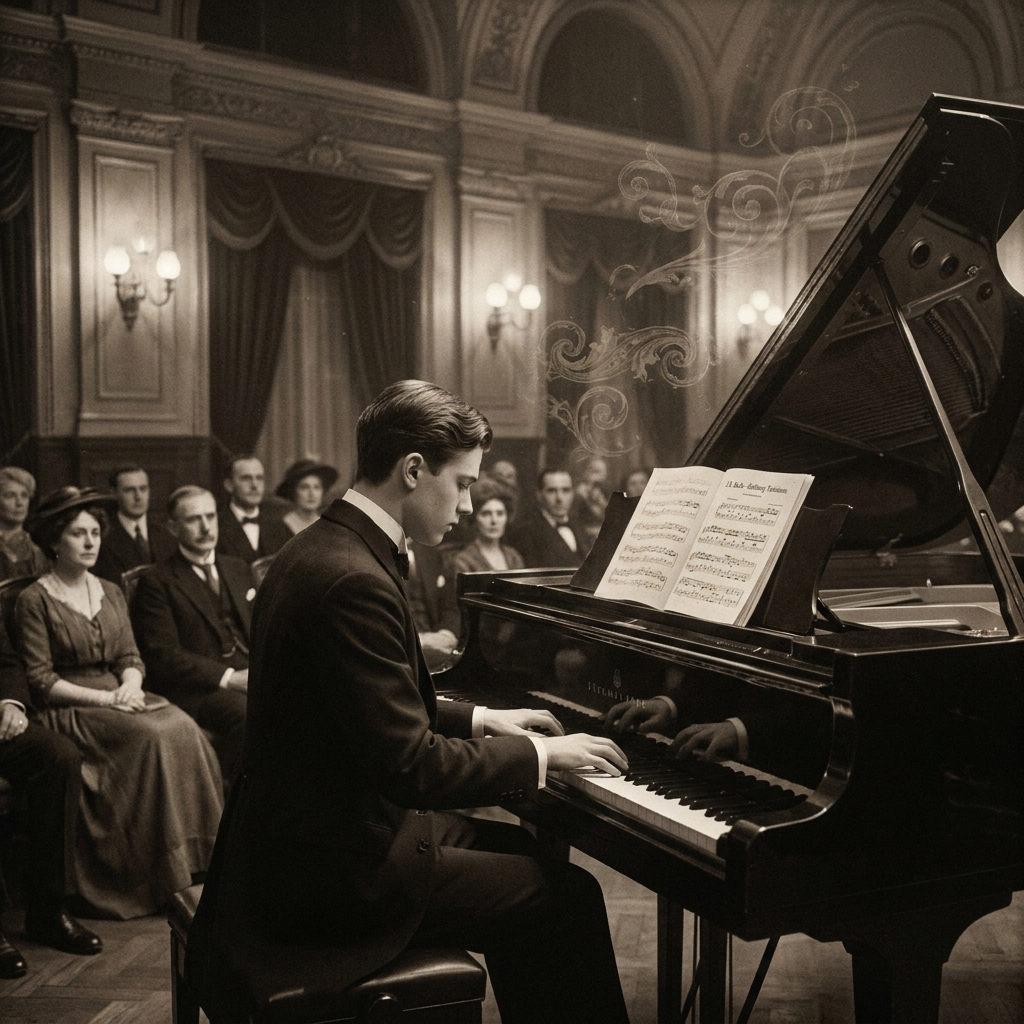
Did you know? London first met Claudio Arrau not as a granite Beethovenian, but as a teenage Bach specialist bold enough to bring the Goldbergs into a public recital in 1920.
How Arrau arrived on the British stage
The route mattered. Southbank’s summary is concise: Arrau moved from Santiago to Berlin in 1912 to study with Martin Krause, the Liszt pupil who gave him both lineage and discipline. Steinway’s feature adds a crucial detail: Krause insisted on Bach as technical and intellectual bedrock; Arrau was expected to command The Well-Tempered Clavier in every key. That helps explain why even Arrau’s later Beethoven playing in London sounded less rhetorical than architectural. The structures were heard from the inside out.
By the time of his Southbank debut, Arrau had relocated to the United States, but London eventually became one of the cities that regularised his public image. Festival Hall advertising from the mid-1970s shows his recitals handled by Victor Hochhauser and Harold Holt Ltd, names central to postwar British concert promotion. That matters because Arrau’s London rise was not accidental. He arrived in a recital culture that still prized seriousness, long-form programmes, and the grand continental soloist; by the 1970s, his annual appearances had become part of the city’s high-musical calendar rather than isolated celebrity visits.
The London fascination with Claudio Arrau was never merely about virtuosity. It was about hearing structure, patience, and tonal gravity turned into something publicly thrilling—recital programmes treated as long-form argument.
Landmark London recitals
London’s Arrau was made, in public, through programmes that insisted on long spans and big arguments. Across the best-documented evenings, one hears the same proposition stated in different ways: the piano recital can still be a moral form, not a sampler tray.
“Arrau’s technique seemed to lose 30 years.”
4 June 1975, Royal Festival Hall
The mature London formula is already in place. Contemporary advertising gives the programme clearly: Beethoven’s Les Adieux, Beethoven’s Appassionata, and then Brahms’s Third Sonata. Ronald Crichton in the Financial Times wrote that “the crown” of the evening was the Appassionata, praising a reading whose breadth did not blunt momentum. The pairing is revealing. Beethoven is the moral centre; Brahms arrives as the symphonic afterweight. Arrau was not offering miscellany. He was building an evening that behaved like a single, extended piece of thought.
9 November 1981, Royal Festival Hall
A mixed recital can sometimes expose a pianist’s weaknesses — stylistic switching, a tendency to treat one composer as a ‘rest’ between bigger statements. This programme, by contrast, was heard as continuous argument. Programme evidence points to a Beethoven sonata in E flat, Schumann’s Études symphoniques, Debussy’s Estampes, Chopin’s F-minor Fantaisie, and Liszt. What impressed The Times was, in three perfectly chosen words, Arrau’s “sense of structure”. That detail matters because it identifies what London thought it was hearing: not merely sound and style, but destination — even in Debussy, where Arrau did not dissolve into perfume.
10 June 1985, Royal Festival Hall (Shandwick Recital)
Another Festival Hall evening, another programme that refuses to be casual: Beethoven’s Les Adieux, Beethoven’s Appassionata, and Liszt’s B-minor Sonata. Noel Goodwin’s review in The Times is one of the clearest late-Arrau documents in the British press. Octogenarian pianists, he wrote, “no longer have to contend with the keyboard. It is, as it were, an extension of themselves.” He traces the evening from Beethoven’s tragic concentration to the Liszt Sonata, where Arrau’s own note described the piece as a “great Faustian tone poem”. London admired the recital because it made old age sound not reduced but distilled: less glitter, more command; less display, more inevitability.
3 June 1986, Royal Festival Hall
Then came the evening that became legend. Surviving programme evidence confirms an all-Beethoven recital; corroborating sources identify the sequence as Sonata No. 7, the Appassionata, Les Adieux, and the Waldstein. The Times praised a finale performance “magnificently memorable for its discipline as well as its grandeur”, while the Financial Times concentrated on the Waldstein, writing that Arrau’s “technique seemed to lose 30 years”. Southbank’s later institutional memory adds the audience response: a huge ovation. What London admired, in the end, was not merely stamina. It was the refusal to separate physical command from philosophical depth. The 1986 recital felt like a summation because it sounded earned.
Repertoire choices & interpretive trademarks in London
Across the verified London programmes, one pattern is unmistakable: Claudio Arrau used Beethoven as the axis, then placed Liszt or Brahms beside him to prove that largeness of thought could survive Romantic rhetoric. Even when he turned to Debussy or Chopin, he did not become miniature-minded. The 1981 Times review is useful precisely because it names “structure” as the governing quality; the 1975 Financial Times notice, meanwhile, describes a “soft-edged” sonority that still preserved grandeur of conception. London did not adore Arrau because he was heavy. It adored him because he showed weight could remain supple.
The 1986 Times review makes the point more exactly. Arrau’s greatest Beethovenian virtue, Noel Goodwin wrote, was that he was always concerned with the “musical reasons” for what happened, and with the consequences that followed from those decisions. That phrase goes to the centre of Arrau’s London appeal. He made scores feel argued rather than decorated. Repeats were not routine. Tempo breadth was not indulgence. Even the famous late-Arrau sonority — dark, rounded, and unhurried — served an analytical end.
Did you know? Arrau’s Royal Festival Hall Beethoven cycle of 1959 was not an isolated stunt but part of a lifelong habit of returning to the sonatas as public thought, not private repertoire.
Listening cue (for today’s London ears)
When you revisit Arrau’s Beethoven from this period, listen for how the long line is built: the weight of bass voices, the pacing of transitions, and the way climaxes arrive as consequences rather than effects. It is a recital style that rewards patient, architectural listening.
Recordings, BBC broadcasts & UK releases
Arrau’s London legacy remains audible partly because it intersects with British broadcasting history. Steinway’s feature notes that he played a complete Beethoven-sonata cycle for the BBC in 1952. More concretely, the BBC Legends issue BBCL 4162-2 preserves studio performances recorded in London on 3 March 1959 and 16 October 1960: Schoenberg’s Op. 11, Beethoven’s Op. 27 No. 1, and Schumann’s Fantaisie. The Classical Source adds an archival detail: the tapes for that release were supplied by the British Library.
London also survives in the commercial catalogue. Warner Classics issued The Complete Warner Classics Recordings (14 October 2022) and The LP Era (1955–1962) (11 November 2022); Warner’s own notes describe the latter as containing some of Arrau’s most important Beethoven sonatas and the Brahms concertos. A later Warner release, Beethoven: 12 Piano Sonatas, The 5 Piano Concertos (Remastered 2022), explicitly says the recordings were “made in London from the late ’40s to the late ’50s”. Warner’s 2013 Rarities 1929–1951 also points to youthful records made in Berlin and London, with UPC 0825646394272. These label pages were still live when checked on 2026-04-20.
Reception and influence on British pianism
Arrau’s British importance lies partly in the way London placed him. A 2025 piece in The Guardian looking back on the capital’s piano life of the late 1970s and early 1980s calls that period a golden age and places Arrau firmly among the “senior elite”, adding that every one of his appearances was eagerly anticipated. That retrospective language matters because it describes not a niche connoisseur’s cult, but a citywide expectation: Arrau belonged to London’s mainstream idea of great recitals.
His influence on British pianism is best understood as an influence on standards rather than on a local school. Later British criticism kept invoking him as shorthand for breadth, architectural patience, and Brahmsian weight. A Guardian review of Barry Douglas, for example, recalled Arrau’s advice that Brahms should be played “from the shoulders, not the fingers”; another London review described a concerto account as “almost Claudio Arrau-like” in its expansiveness. In Britain, Arrau became one of the names critics reached for when they needed to describe seriousness without dryness, largeness without bombast.
Where to hear Arrau in London today
For listeners in London, the first stop is institutional rather than commercial. The British Library states that it provides the only public access to the BBC sound archives, and its public research pages say a free Reader Pass is required to request collection items in London. The Library also notes that its Sound and Moving Image catalogue is operating in interim form as services continue to recover from the 2023 cyber-attack.
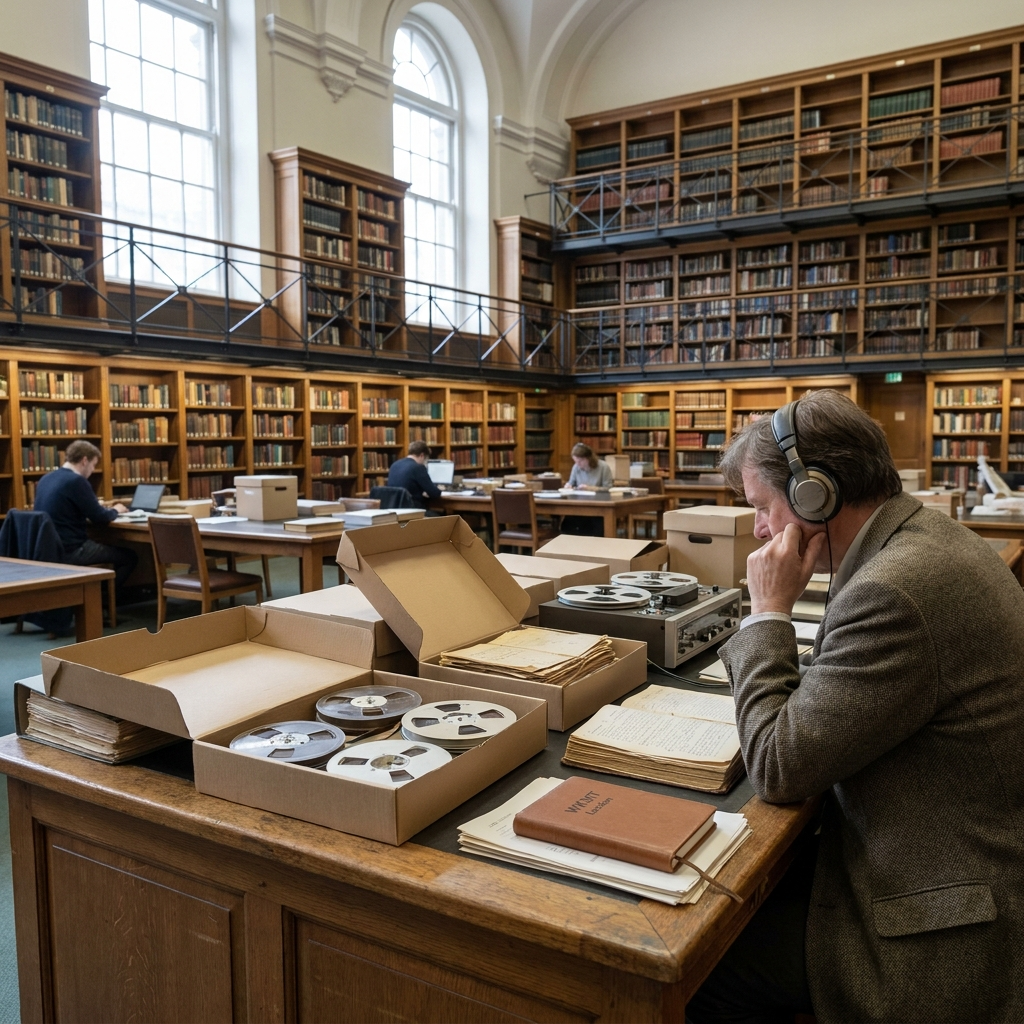
For home listening, three routes stand out. First, the BBC material: BBC Legends BBCL 4162-2 for London studio documents tied to British Library tapes. Second, the Warner remasters: The Complete Warner Classics Recordings and The LP Era (both still listed by Warner on 2026-04-20), plus the Beethoven set whose notes explicitly foreground the London provenance of the recordings. Third, a current British reissue label: First Hand Records lists FHR172, The Ambassador Auditorium Recitals, released 27 June 2025 and still listed on 2026-04-20. It is not a London document, but it offers a direct way of hearing the same late style London audiences prized.
Did you know? The British Library’s own collections page says it offers the only public access to the BBC sound archives — an unusually direct institutional route from recital history to living listening.
If this repertoire is part of your musical life, it is worth pairing listening with context. WKMT’s London community of pianists and concertgoers thrives on that same principle: the deeper you hear into structure, the more expressive the music becomes. You can explore more writing and events via WKMT. Adults and Kids are always welcome to WKMT and to our piano festivals and musical Soirées where we celebrate great pianists like Claudio Arrau.
FAQs on Claudio Arrau
Was Arrau’s London debut really Bach-centred?
Yes. Steinway’s feature states that his 1920 London debut at Aeolian Hall included Bach’s Goldberg Variations and Scarlatti sonatas.
Why does 1986 dominate the London story?
Because it compressed several decades of affinity into one evening: late Beethoven, age-defying technique, a huge ovation, and emphatic press notices from both The Times and the Financial Times.
Was Claudio Arrau only a Beethoven pianist in London?
No. Beethoven was the axis, but verified London programmes also show strong commitments to Liszt, Brahms, Schumann, Chopin, and Debussy. What stayed consistent was the method: structural hearing, tonal gravity, and a refusal to trivialise virtuosity.
Conclusion
What made Claudio Arrau’s admired UK recitals special was not greatness in the abstract. London heard a particular kind of greatness: one built on memory, lineage, and repeat visits; on Beethoven as public argument; on a recital programme treated as a serious form. The curious backstory is that Arrau’s most famous London appearances were the end point of a long evolution — from Bach prodigy to Festival Hall sage — and that British listeners learned to value precisely the qualities that later fashions sometimes resisted: breadth, gravity, patience, and an almost orchestral command of the piano’s inner life.
If you value that tradition, keep listening with the score’s long line in mind — and, when you can, follow the paper trail. In London, Arrau’s legacy is not only remembered; it is researchable.
Continue the London listening tradition
If Claudio Arrau’s London story speaks to you—Beethoven heard as structure, patience, and consequence—consider exploring more reading and events via WKMT, and keep pairing listening with context whenever possible.
Sources for Claudio Arrau in London
Southbank Centre — “7 left-handed classical pianists and the Southbank Centre.”
The Times digital full-text archive — reviews and listings for 10 June 1985 and 5 June 1986.
Financial Times digital full-text archive — reviews for 6 June 1975 and 5 June 1986.
British Library — collection access, Reader Pass, and BBC sound archive access notes.
Warner Classics — Claudio Arrau release pages and London recording notes.
First Hand Records — The Ambassador Auditorium Recitals (FHR172).
Steinway & Sons — “How Claudio Arrau Nearly Became Glenn Gould.”
ArrauHouse — concert-program archive and chronology used for program cross-checking.