
 TRIAL LESSON
Piano Lessons
Godowsky Chopin Etudes: Technical Demands, Fingering Concepts and a Practice Framework for Elite Pianists
Aug
Godowsky Chopin Etudes Complete Guide
Godowsky Chopin Etudes: Technical Demands, Fingering Concepts and a Practice Framework for Elite Pianists
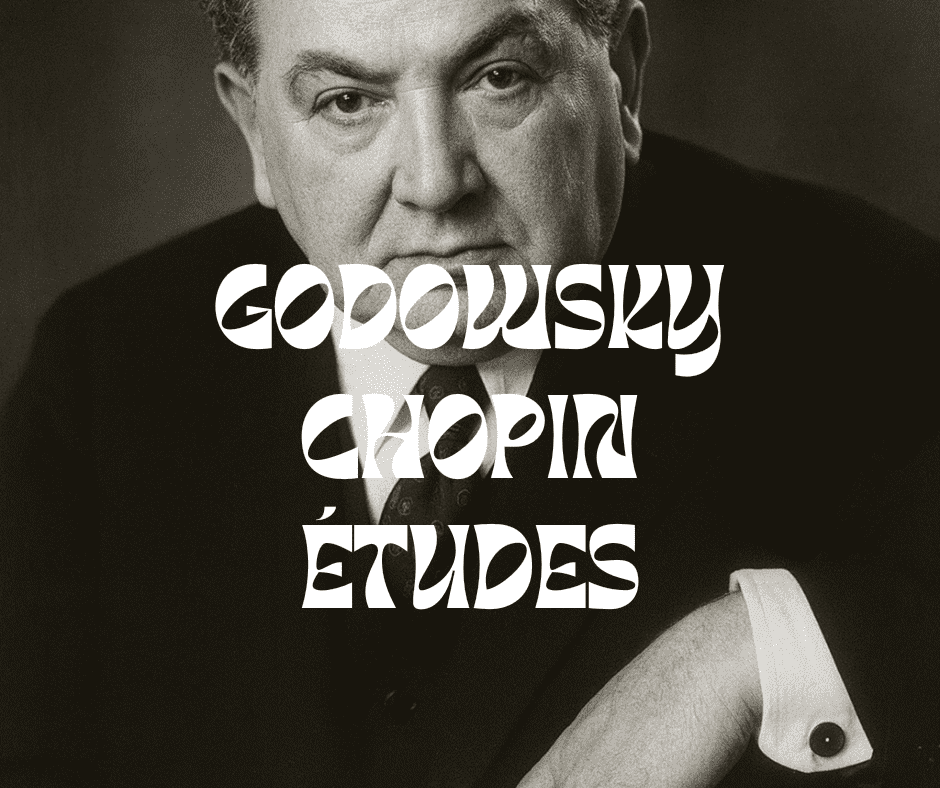
Leopold Godowsky’s “53 Studies on Chopin’s Études” stand as a pinnacle of piano virtuosic writing. Composed 1894–1914, they take Chopin’s famous Op.10, Op.25 and posthumous études and transform them into “monumentally difficult studies”. Godowsky layers new contrapuntal lines and countermelodies atop Chopin’s originals, amplifying their harmonic and rhythmic complexity. In Schonberg’s words, these works are “the most impossibly difficult things ever written for the piano”. Indeed, reviewers describe the complete cycle as “a veritable Everest of superpianism” that only a few pianists (Marc-André Hamelin, Carlo Grante, etc.) have mastered. Godowsky himself explained that his aim was “to develop the mechanical, technical and musical possibilities of pianoforte playing” by building on Chopin’s solid foundation. In doing so he did not seek to supersede Chopin’s music, but to draw out hidden beauties by subjecting each étude to nearly every conceivable technical challenge.
Conception and Structure of Godowsky’s Chopin Études
Godowsky’s project was exhaustive. He ultimately published 48 numbered studies (plus alternate ossia versions, bringing the count to roughly 53–55). These cover essentially all of Chopin’s etudes (Op.10, Op.25 and three posthumous Nouvelles Études), except only Op.25 No.7. Highlights of the structure include:
-
Left-hand alone (22 studies): Godowsky believed Chopin’s originals under-trained the left hand. In his prefatory remarks he asserts the left hand is “favoured by nature… having the strongest part of the hand for the upper voice… and… the strongest fingers for the strongest parts of a melody.” Consequently 22 of Godowsky’s studies are written for the left hand alone, turning the left hand into the primary melodic voice.
-
Both hands (32 studies): The remaining études require both hands. In these, Godowsky often redistributes Chopin’s original figuration between the hands, or adds entirely new counter-melodies that each hand must negotiate.
-
Multiple variants: Several Chopin etudes gave rise to multiple Godowsky versions. For example, four of Chopin’s études became the basis for up to five different Godowsky studies each. This reflects Godowsky’s intent to wring out every possible technical and musical permutation from the source material.
-
Double-studies: Uniquely, two late studies each combine two Chopin etudes into one. Study No.47 (“Badinage”, in G♭) fuses Chopin’s Op.10 No.5 (the “Black Key” Étude) with Op.25 No.9. Study No.48 (F major) similarly merges Op.10 No.11 and Op.25 No.3.
These facts underscore Godowsky’s pedagogical ambition. As he wrote, he did not aim to “improve” Chopin’s masterpieces, but to use them as material to further the art of pianoforte playing, developing their “mechanical, technical and musical possibilities.” In that spirit, he assured that after “assiduously studying [Godowsky’s] versions, many hidden beauties in the original Studies will reveal themselves”. In practice this means each Godowsky study is essentially a new composition – carrying Chopin’s soul but layered with Godowsky’s virtuoso invention.
Technical Demands of Godowsky’s Chopin Etudes
Godowsky’s études are notorious for their punishing technical requirements. Pianists and critics alike emphasize that these pieces push technique far beyond Chopin or Liszt. Key challenges include:
-
Extreme difficulty: Schonberg’s famous verdict in The New York Times is instructive – these etudes are “the most impossibly difficult things ever written for the piano.” Today’s performers echo this; Carlo Grante called the complete set “a veritable Everest of superpianism”. Learning even one study requires monumental effort (Marc-André Hamelin notes that playing the left-hand “Revolutionary” study at speed requires “blood, sweat and tears” just from inspecting the score). This is far beyond routine virtuosity.
-
Left-hand virtuosity: With 22 left-hand études, pianists face the unusual task of making one hand do as much as two. The left hand must sing melodic lines, accompany itself, and even supply inner counterpoint, often simultaneously. Because Godowsky assigns many melodies to the left hand’s strong fingers (thumb, index), the left hand must execute huge stretches and fast scales entirely on its own. These are not typical left-hand exercises – they require the same agility and legato control we usually train in the right hand.
-
Polyphonic density: Godowsky’s texture is exceedingly thick. He “goes to extremes in avoiding ‘unused fingers’ by adding extra voices, chords, etc.,” often so much that even listeners find it hard to parse the harmony. In performance the piano can sound like two (or more) pianists at once. One commentator notes that some études are so full of notes “each [etude] is … filled with notes” that the listener must focus carefully or the music just becomes background blur. In other words, absolute clarity of each voice is mandatory.
-
Advanced counterpoint: New counter-melodies and contrapuntal lines intersect Chopin’s originals. Godowsky’s score demands the pianist juggle multiple independent lines: one hand may play Chopin’s theme while the other weaves an elaborate counter-subject, or both hands may interlock in counterpoint. This is as much a test of intellectual coordination as of finger dexterity. (Frank Cooper praised Godowsky for opening “new vistas for developing our pianistic mechanisms” through such devices.)
-
Re-voicing and finger redistribution: In many studies Godowsky literally swaps hands. For example, the study “Ignis Fatuus” (on Chopin Op.10 No.2) shifts the original right-hand arpeggio to the left hand. Other études transpose entire textures so that left-hand and right-hand roles are inverted or cross over. These reassignments force utterly new fingering solutions: pianists must use thumb-over crossings, finger substitutions and hand crossings that Chopin never imagined.
-
Extreme jumps and rhythms: Many études feature gigantic leaps, requiring unusually large hand spans and impeccable accuracy. Additionally, Godowsky often introduces polyrhythms (e.g. one hand in triplets against the other’s duplets) and syncopations. The rhythmic complexity is high – one commentator observes that Godowsky’s studies contain rhythmic effects “to heights undreamed of even by Liszt”. Combining this with relentless speed means only the best-prepared fingers (and hearts) can keep up.
In sum, the Godowsky–Chopin studies are technical mountains: anything from simultaneous fast scales, wide finger stretches, and hammering octaves, to complex hand-independence and endurance. Pianist Jed Distler aptly describes them as a “veritable Everest of superpianism”. Even practicing them is an ordeal – it’s easy to understand why one guide recommends listening and practicing “not too much at a time” in order to digest the flood of note.
Fingering Concepts and Innovations
Godowsky’s unique fingering philosophy underpins these studies. He approached fingering as part of the composition: melodies often reside in the left hand’s thumb or index, exploiting its power. As Godowsky wrote, he wanted to challenge the myth that the left hand is weaker – in reality it has the “strongest fingers for the strongest parts of a melody”. Many of his left-hand études even use two staves for one hand, literally writing a single-hand part on two systems to show separate voices.
Godowsky’s own technique was legendary. He reportedly had “the most perfect pianistic mechanism of his time,” being “unequalled in independence of hands, equality of finger and [in] his ability to delineate polyphonic strands.” In practice, this means that achieving his intended legato and clarity often requires non-intuitive fingerings. Pianists tackling these studies commonly must devise custom fingerings: for instance, using the right-hand thumb to play successive white-key notes (a feature Chopin’s original would do but is extremely hard at tempo), or substituting fingers to sustain a melody line while another finger jumps.
In short, Godowsky fingerings prioritize voice-leading. If a melody is in the left hand, it is placed under the strongest fingers (as he explicitly notes). If inner voices cross hands, the fingering is rewritten so that each hand’s fingers can maintain evenness. Sometimes this means violating Chopin’s original fingerings entirely. (It is telling that Godowsky was comfortable doubling some left-hand lines – he treated the piano almost as four-hand instrument, freely crossing hands and voices.) Today, performers study Godowsky’s suggested fingerings (often printed in edited editions) but also adapt them for their own hands. The guiding principle is always connectivity and clarity: each phrase must flow regardless of the bizarre hand positions.
Practice Framework for Elite Pianists on Godowsky Chopin Etudes
Mastering Godowsky’s Chopin etudes is a long-term project even for top professionals. A systematic practice approach is essential. The first step is segmenting. Work on one voice or motif at a time before combining. For left-hand alone studies, this often means practicing the left-hand slow and alone; Godowsky himself even wrote some on two staves to aid this process. For two-hand studies, practice each hand separately, and then hands together, so that the interlocking parts become second nature.
Emphasize clarity. Because the texture is so dense, clarity must come before speed. Practicing with minimal pedal helps isolate each voice. One reviewer notes that Godowsky “fills the études with extra voices” to avoid any idle fingers – the danger is that, without focus, the result can become a muddy blur. Thus, practise very slowly at first, ensuring every note and voice is audible. Gradually increase tempo only when the phrasing is secure. Polyrhythms should be drilled with a metronome or rhythm coach to lock in independent lines.
Build endurance and technique. These études train both stamina and finger strength. Schedule shorter, concentrated sessions focusing on difficult passages, and build them up over weeks. Rest hands as needed – the goal is steady improvement, not strain. Because Godowsky often expects a relaxed hand, pianists should also practice with a light, even touch. In fact, Hamelin’s approach to many of these studies is to favor legato and a gentle tone (using more pedal) once the notes are secure. Observe that Carlo Grante’s recording took slightly faster, more percussive tempos (and even used less pedal); trying both approaches in practice can give insight into phrasing and color.
Learn from the masters. Recordings by Hamelin and Grante (and others like Ivan Ilić) serve as guideposts. Studying their fingerings and tempos can suggest practice tempos and articulations. For example, Hamelin describes one study as containing “all the passion and fury” of Chopin within a colossal technical shell – knowing this, a student might focus first on expressing the underlying lyricism even amid the thicket of notes. Generally, listening carefully (and not too exhaustively) helps: commentators warn that these studies can be “tiring” to the ear if played indiscriminately.
Embrace the challenge. Frank Cooper argues that when pianists “apply themselves to [Godowsky’s] enormous challenge,” they open new horizons of technique and expression. In other words, treat the Godowsky études as both concert music and the ultimate technical exercises. Break each étude into manageable sections, celebrate incremental victories, and remember that even approaching them expands a pianist’s skills. Over time, segments of the etudes can be tied into longer runs and complete pieces. Only a very advanced (“elite”) pianist should attempt to learn the complete cycle, but even confronting a single study demands a disciplined, almost surgical practice regimen.
Conclusion on Godowsky Chopin Etudes
Godowsky’s Chopin etudes remain a towering monument in piano literature. They preserve the emotional core of Chopin’s originals while subjecting them to virtually every technical imaginable, from extended counterpoint to single-hand extravaganzas. For the ambitious pianist, they offer an unparalleled workout: conquering even one study builds endurance, independence and musical insight. As Frank Cooper notes, these studies present “new vistas for developing our pianistic mechanisms” – when treated seriously, they can turn Chopin’s beloved etudes into a profound technical and artistic training program. In short, Godowsky’s Chopin etudes remain both a testament to extreme virtuosity and a resource for deepening piano technique for those who dare to tackle them – Godowsky Chopin Etudes Guide.
Do not miss out post about the Visits of Chopin to London.