
 TRIAL LESSON
Piano Lessons
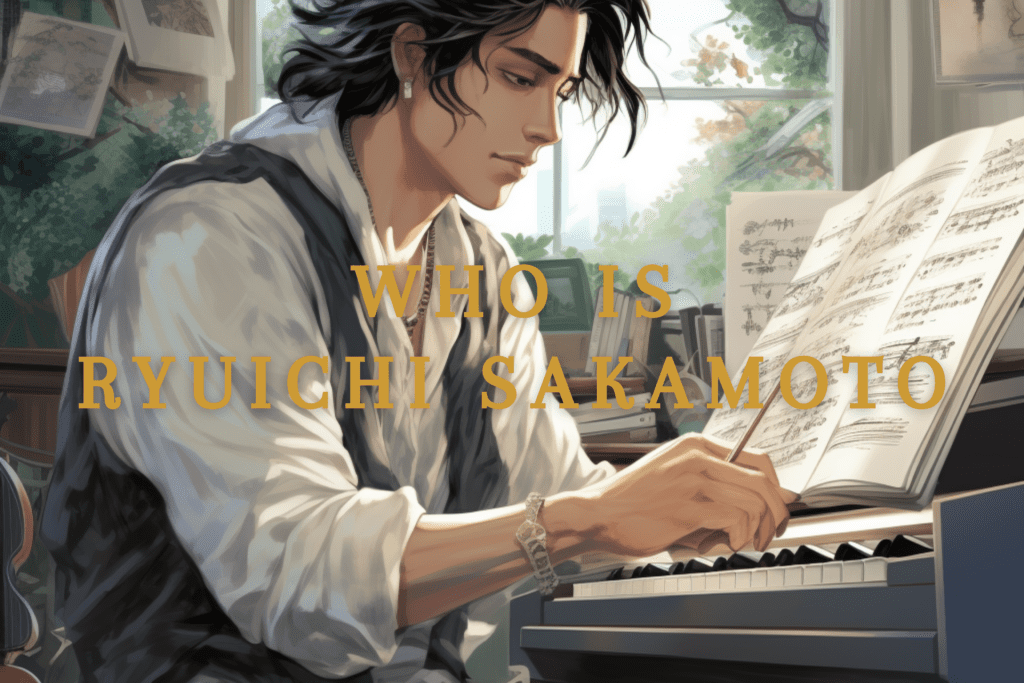
Who Is Ryuichi Sakamoto? A Complete Guide to His Piano Music and Legacy
Jan
Ryuichi Sakamoto piano
Who Is Ryuichi Sakamoto? A Complete Guide to His Piano Music and Legacy
Ryuichi Sakamoto piano music spans four decades — from film scores and electronic albums to deeply personal solo recordings made in the final months of his life. This guide explains who he was, why his work matters to piano students, and which of his pieces are within reach.
What You Will Find in This Guide
- Who Ryuichi Sakamoto was — biography and career overview
- His most important piano works and film scores
- Difficulty guide: which pieces suit which level of student
- His final album 12 — what it is and why it matters
- Practice notes for approaching Sakamoto’s minimalist style
- How WKMT London teaches contemporary piano alongside classical repertoire
Years of recording
Academy Award
Final album, 2023
Typical difficulty range
Biography: The Musician Behind the Music
Ryuichi Sakamoto was born in Tokyo in 1952 and grew up studying piano from the age of three. His gift for composition was evident early: by adolescence he was already exploring the intersection of Western classical harmony and electronic sound — a preoccupation that would define his entire career. He trained formally at the Tokyo National University of Fine Arts and Music, graduating with degrees in composition and electronic music.
In the late 1970s Sakamoto broke into public consciousness as a founding member of Yellow Magic Orchestra (YMO), a Japanese electronic trio whose influence on synthesiser-based music is difficult to overstate. YMO’s use of sequencers, drum machines, and layered keyboards anticipated much of what we now call electronic music. But even within that context, Sakamoto was always the pianist first — the member most rooted in classical European tradition.
His international profile rose sharply in 1983 when he both acted in and composed the score for the film Merry Christmas Mr. Lawrence, directed by Nagisa Oshima. The piano theme from that film became one of the most recognised instrumental pieces of the twentieth century. Four years later, his score for Bernardo Bertolucci’s The Last Emperor (1987) won the Academy Award for Best Original Score — the first Japanese musician to receive the honour.
Sakamoto continued composing prolifically for the rest of his life, releasing solo piano albums, orchestral works, electronic experiments, and film scores. He died in March 2023, aged 71, following a prolonged illness. His final album, 12, was released just weeks before his death and widely regarded as his most intimate and profound statement as a pianist.
Ryuichi Sakamoto Piano: Key Works for Students and Listeners
Understanding Ryuichi Sakamoto’s piano output means understanding a musician who refused to be confined by genre. His solo piano works range from accessible lyrical pieces to austere contemporary writing. For students and teachers, the key question is not simply “is this beautiful?” but “is this within my technical reach — and what will I learn from playing it?”
Merry Christmas Mr. Lawrence (1983)
The piano theme from this score is the work most people encounter first. It is built on a repeating harmonic sequence with a descending melodic line that is, in structural terms, simple — but emotionally it is extraordinarily concentrated. The original recording features Sakamoto playing the theme on an upright piano in what sounds like a single uninterrupted breath. ABRSM-equivalent difficulty: Grade 5–6, with the challenge lying in tone control and timing rather than technical complexity. A well-prepared Grade 5 student can learn the melody; producing the right quality of tone is another matter entirely.
Ryuichi Sakamoto performing Merry Christmas, Mr. Lawrence
Forbidden Colours (1983)
Recorded in the same year as Merry Christmas Mr. Lawrence and featuring vocals by David Sylvian, Forbidden Colours is a companion piece to the film score. The piano writing is spare but harmonically rich, sitting at a similar Grade 5–6 level. What distinguishes it for students is the way Sakamoto uses silence — rests that feel as considered as the notes themselves. This makes it excellent practice for students developing phrasing and expressive control.
Ryuichi Sakamoto — Forbidden Colours (Original)
Energy Flow (1999)
A short, lyrical solo piano piece released as part of the compilation ULTIMATE HITS, Energy Flow became the first instrumental single to reach number one on the Japanese singles chart. It is around 90 seconds long, written in a single flowing line over a gentle accompaniment, and has become one of the most played Sakamoto pieces in piano teaching contexts worldwide. Difficulty: Grade 5. It is an ideal introduction to Sakamoto’s aesthetic for students approaching the end of their lower-intermediate stage.
BTTB (1998)
The album BTTB (Back to the Basics) was Sakamoto’s first dedicated solo piano recording. It contains 16 short pieces, many composed in a single session. The harmonic language is post-romantic — influenced by Satie, Debussy, and Arvo Pärt as much as by any Japanese tradition. Technically, the pieces range from Grade 5 to Grade 7. The most commonly taught tracks — including Thousand Knives and Energy Flow in their solo piano versions — sit comfortably within the upper-intermediate range. Students who enjoy Einaudi will find Sakamoto’s BTTB writing more structurally complex and harmonically rewarding.
async (2017)
One of Sakamoto’s most experimental releases, async incorporates field recordings, prepared piano, and electronic processing alongside conventional piano playing. It is not standard repertoire for most students, but for advanced players interested in contemporary sound-worlds, it opens significant possibilities. Grade equivalent: 7–8 for the piano-dominated passages, though the musical challenge is more about interpretation and sound concept than technical difficulty in the traditional sense. Leo Ornstein offers a useful point of comparison — another composer who explored extreme sound and unconventional piano technique well ahead of his time.
12 (2023)
Sakamoto’s final album was recorded during the last phase of his illness and released on 17 January 2023. Each track is named by its recording date. The music is almost entirely piano and synthesiser — spare, luminous, and unhurried. The album reached number one on the US Classical Albums chart and received a Metacritic score of 85, with critics calling it a profound farewell. For students, the pieces from 12 occupy a Grade 5–7 range. The technical demands are modest; the interpretive demands are not. Playing Sakamoto’s final pieces with the restraint and depth they require is a significant artistic challenge.
Ryuichi Sakamoto — The Last Emperor (Academy Award-winning theme)
Difficulty Ladder: Ryuichi Sakamoto Piano Repertoire by Grade
The following diagram maps Sakamoto’s most frequently taught piano pieces against approximate ABRSM grade equivalents. These ratings reflect a polished, expressive performance — not simply reading through the notes at tempo.
Difficulty ratings are approximate ABRSM grade equivalents for a polished performance — not just reading through the notes.
Detailed Difficulty Reference Table
| Piece | Year | ABRSM Grade (approx.) | Key Challenge | Recommended For |
|---|---|---|---|---|
| Energy Flow | 1999 | Grade 5 | Tone, legato line, phrasing | Lower intermediate; after Grade 4 exam |
| Merry Christmas Mr. Lawrence | 1983 | Grade 5–6 | Sustained tone, harmonic voicing | Mid-intermediate; emotionally mature player |
| Forbidden Colours | 1983 | Grade 5–6 | Use of silence and space | Mid-intermediate; phrasing-focused study |
| Selected pieces from 12 | 2023 | Grade 5–7 | Restraint, interpretive depth | Intermediate to upper intermediate |
| BTTB (various) | 1998 | Grade 6–7 | Harmonic language, voicing | Upper intermediate; post-Grade 6 |
| The Last Emperor (piano arr.) | 1987 | Grade 6–7 | Orchestral reduction, texture | Upper intermediate with teacher guidance |
| async (selected) | 2017 | Grade 7–8 | Contemporary sound concept | Advanced; teacher-supervised exploration |
Playing Sakamoto: Technique and Approach
Sakamoto’s solo piano writing demands something that is not always emphasised in formal graded examinations: the ability to do very little, very well. His melodic lines are often single-voiced, unharmonised, and slow-moving. There is nowhere to hide. A student who relies on forward motion, fast passages, or dynamic contrast to carry the music will find Sakamoto uncomfortable.
“The music comes from silence and must return to silence. The silence is as important as the notes.”
— Ryuichi Sakamoto, on his compositional process
The following principles apply when working on any Sakamoto piece at the piano:
- Begin without pedal. Understand the harmonic structure first, and establish clean voice-leading before adding sustain pedal. Sakamoto’s harmonies are carefully chosen; blurring them with indiscriminate pedalling obscures the writing.
- Work on touch before tempo. The pieces should be practised at a tempo at which you can control every dynamic nuance — often much slower than you will eventually perform them. Speed will come naturally once touch is internalised.
- Isolate the rests. In pieces like Forbidden Colours and several tracks from 12, the rests are structural. Practise counting them precisely and maintaining the musical intention through silence rather than anticipating the next note.
- Study the recordings. Sakamoto’s own recordings are irreplaceable reference points. Note how he shapes phrases — the barely perceptible inflections, the unhurried beginnings of notes. Then develop your own interpretation.
- Use the score, then leave it. Sakamoto’s piano pieces are short enough to memorise. Playing from memory releases the hands, the posture, and the musical attention in ways that page-turning cannot.
Students often approach Sakamoto’s pieces expecting a straightforward or relaxing experience, then become frustrated when the simplicity of the written notes does not translate into an easy performance. Minimalist writing requires more interpretive preparation, not less. Work with a teacher before attempting a piece like Merry Christmas Mr. Lawrence in public.
The Final Album: 12 and What It Means for Piano Students
Released on 17 January 2023, 12 is the definitive statement of Sakamoto’s late piano aesthetic. The album consists of twelve short pieces, each named by its recording date: 2022 01 14, 2022 04 20, and so on. The documentation of dates has a deliberate meaning — these are dispatches from a particular time, made by a composer who knew he was dying and chose to continue working in the most direct possible way.
Musically, 12 is sparse. The piano lines are thin, often single-note or minimally harmonised. Some tracks incorporate gentle electronic textures; others are almost entirely unaccompanied. The album reached number one on the US Billboard Classical Albums chart and received near-universal critical acclaim, with Metacritic giving it an aggregated score of 85 from professional reviewers.
In 12, Sakamoto distilled everything he had ever composed into a series of tiny, perfectly weighted gestures. There is no excess. Nothing is held back. It is the sound of a musician who has nothing left to prove.
— WKMT editorial note
For piano students, 12 offers a rare educational opportunity: the chance to study a contemporary masterwork that is technically within reach but demands a level of interpretive seriousness that exceeds most graded examination repertoire. Advanced and upper-intermediate students who have developed strong tonal awareness will benefit greatly from bringing one or two pieces from this album into their lessons.
Is Sakamoto’s Piano Music Right for Your Lessons?
Ryuichi Sakamoto piano music is well suited to students who are already working at Grade 5 and above, and who have a teacher capable of guiding them through the specific demands of minimalist and contemporary writing. It is not a shortcut to “easier” piano study — it is a different kind of challenge, one that rewards patience, tonal sensitivity, and musical maturity.
At WKMT London, we include contemporary and non-classical composers within a framework that remains grounded in the classical technique. The Scaramuzza method — which underpins all our teaching — emphasises natural arm weight, refined touch, and deep listening: precisely the qualities that Sakamoto’s music requires. Students who can play a Chopin nocturne with genuine musical understanding will find that the discipline of classical training transfers directly to this repertoire.
We typically introduce Sakamoto pieces to students who have completed their Grade 5 examination and are developing their expressive range before Grade 6. Energy Flow and the principal theme from Merry Christmas Mr. Lawrence work particularly well as supplementary repertoire alongside Romantic-era pieces. They develop tonal control and phrasing in a musical context students often find immediately meaningful and motivating.
If you are based in London and interested in developing your piano technique to the point where you can play Sakamoto’s music with genuine depth and expression, WKMT London offers specialist piano lessons in London for students from beginner through to advanced level.
Frequently Asked Questions
How difficult is Merry Christmas Mr. Lawrence on piano?
The main theme is approximately ABRSM Grade 5–6 in terms of written difficulty. The challenge is not in reading the notes but in producing the sustained, even tone and precise phrasing the piece demands. A competent Grade 5 student can learn the melody within a few sessions; playing it with genuine musical depth takes considerably longer.
Is Ryuichi Sakamoto’s piano music suitable for beginners?
Most of his solo piano works are intermediate to upper-intermediate level. Energy Flow is the most accessible, sitting around Grade 5. Complete beginners will find most of his catalogue beyond their current technical range, though listening to and studying the recordings is valuable at any level.
What style of piano music did Ryuichi Sakamoto write?
His solo piano writing sits at the intersection of post-romantic harmony, minimalism, and contemporary classical composition. Influences include Satie, Debussy, and Arvo Pärt, as well as Japanese musical traditions. His film scores are more orchestral and dramatic; his solo piano albums are contemplative and spare.
What is the album 12 and why is it significant?
12 is Sakamoto’s final solo album, released in January 2023 and recorded during his terminal illness. Each track is named by the date it was recorded. It is widely regarded as one of the most significant piano recordings of recent years — intimate, unadorned, and profound. It reached number one on the US Classical Albums chart.
Can a piano teacher recommend Sakamoto pieces for examination?
Ryuichi Sakamoto’s piano pieces do not appear on current ABRSM or Trinity syllabi, so they cannot be submitted as examination pieces in those formats. They are excellent supplementary repertoire for students who wish to develop expressive range and tonal control outside the constraints of graded programmes.
Did Ryuichi Sakamoto train as a classical pianist?
Yes. He studied formally at the Tokyo National University of Fine Arts and Music, graduating in composition and electronic music. His classical training was thorough, and it underpins all of his piano writing — even the most experimental work shows a deep understanding of voice-leading, harmony, and form derived from Western classical tradition. Ryuichi Sakamoto piano guide.
Study Piano in London with WKMT
Interested in developing the technique and musical understanding to play Sakamoto, Debussy, or Chopin with genuine depth? WKMT London offers specialist piano lessons for all levels, grounded in the classical Scaramuzza technique.