
 TRIAL LESSON
Piano Lessons, Scaramuzza Technique
Taubman Piano Technique: An Advanced Pianist’s Guide to Injury‑Free Speed and Control
Oct
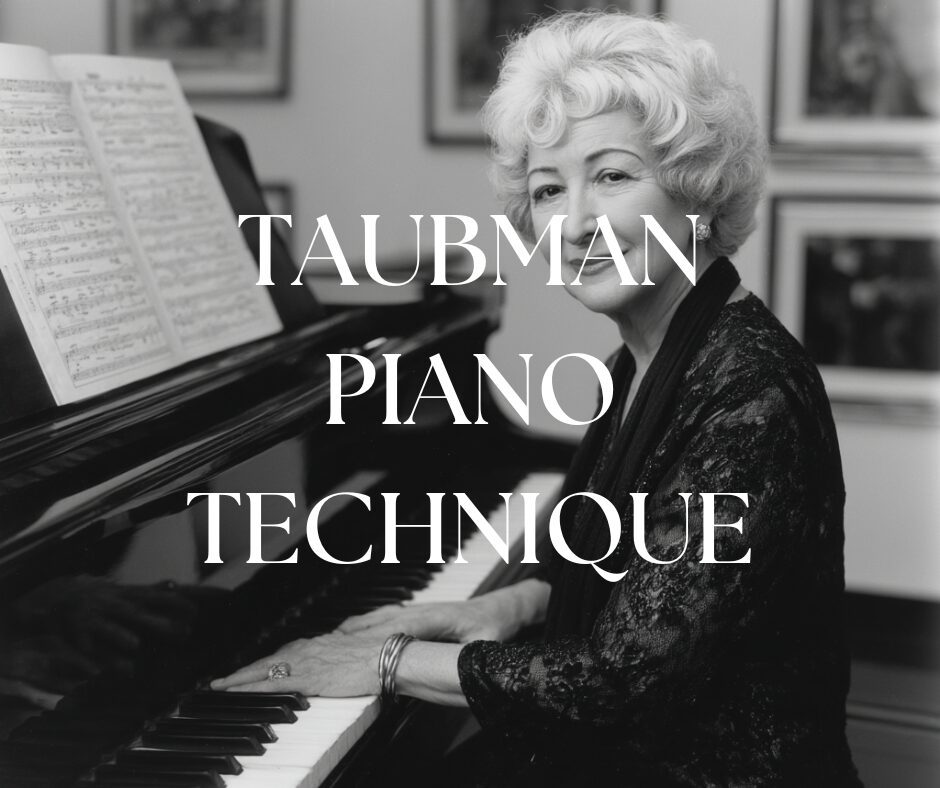
Taubman Piano Technique
Taubman Piano Technique: An Advanced Pianist’s Guide to Injury‑Free Speed and Control
For many advanced pianists, the pursuit of technical mastery is a constant balancing act between speed, precision, and physical well-being. Hours of practice can leave fingers aching, wrists stiff, and forearms fatigued, sometimes leading to chronic conditions that threaten careers. Yet, it does not have to be this way.
The Taubman Piano Technique, developed by Dorothy Taubman, offers a revolutionary path toward injury-free virtuosity. It is not merely a collection of exercises, but a philosophy of movement. By understanding the natural mechanics of the hand, wrist, and arm, pianists can achieve technical brilliance while preserving long-term physical health. This guide explores the origins, principles, exercises, and practical applications of the Taubman Approach for advanced pianists seeking both artistic expression and physical endurance.
Origins of the Taubman Approach
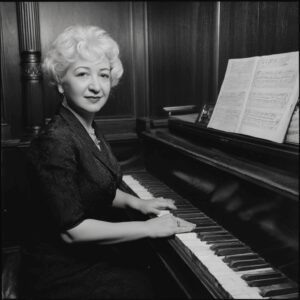
Dorothy Taubman (1917–2013) did not achieve fame as a concert performer. Instead, she observed the struggles of countless students who, despite talent and diligent practice, encountered physical limitations. She recognized a pattern: injuries and technical difficulties often stemmed not from lack of skill, but from inefficient movement.
Taubman devoted her life to studying the subtle mechanics of piano playing. She analyzed the interaction of fingers, hands, wrists, and arms, identifying movements that promoted both efficiency and musical expression. Early on, she noticed that even minor misalignments—such as collapsed knuckles or locked wrists—could compound over time into significant strain.
Her insights were not theoretical. Through decades of teaching, she developed methods that retrained the pianist’s entire kinetic chain. Students who had been unable to perform without pain found that, with guided practice, they could regain control, speed, and comfort. Today, her legacy continues through the Golandsky Institute, which preserves and disseminates her work, offering masterclasses and workshops worldwide. The approach has gained recognition not only for rehabilitation but also for helping healthy pianists optimize technique and prevent future injury.

*AI Image Generated
Why Pianists Need the Taubman Technique
Piano playing is physically demanding. The repetition of thousands of notes during a single practice session can strain the smallest tendons in the fingers, wrist, and forearm. An advanced repertoire, featuring rapid scales, large leaps, and complex polyrhythms, can push the body to its limits.
Traditional finger-centric methods often emphasize strength and independence, neglecting the role of the arm and wrist in motion. While such exercises can build dexterity, they frequently encourage tension, limiting fluidity and increasing the risk of injury. Even professional pianists, when relying solely on finger-based techniques, are susceptible to conditions such as tendonitis, carpal tunnel syndrome, or focal dystonia.
The Taubman Technique addresses these issues by emphasizing coordinated movement and ergonomic alignment. Fingers are never isolated; they operate as part of a connected system involving the hand, wrist, and forearm. Through this approach, pianists can achieve faster passages, cleaner articulation, and greater endurance, all while minimizing strain on their hands. In essence, Taubman provides a map for playing not only with brilliance, but also with safety and longevity.
Beyond preserving physical health and enhancing technique, pianists today often seek ways to share their performances with a broader audience. By combining the Taubman Technique with thoughtful recording and online promotion strategies, musicians can, as described in this article about music promotion services, showcase their skills effectively to a broader audience.
Core Principles Explained
At the heart of the Taubman Approach lies a nuanced understanding of human biomechanics. The technique can be summarized in several interrelated principles, but to fully grasp them, one must consider how the entire arm interacts with the keyboard.
- Alignment and Joint Mechanics play a crucial role. Every finger, knuckle, wrist, and elbow should operate within its optimal range of motion. Overextended joints or collapsed knuckles increase tension and reduce responsiveness. Proper alignment allows the hand to move with ease, maintaining strength without unnecessary effort.
- Forearm Rotation is another key concept. Rather than relying solely on finger strength, pianists are taught to rotate the forearm slightly as they play. This natural pivot allows the fingers to glide across the keys, reducing localized strain, particularly in fast scales, trills, or repeated notes. Observers often notice a subtle “swing” in Taubman-trained hands—a movement that looks effortless but is grounded in precise biomechanics.
- Weight Transfer and Coordinated Motion are equally essential. Sound is generated not by pressing the keys with brute force, but through the natural transfer of arm weight. Each motion involves a seamless interaction of fingers, wrist, and forearm. By thinking of the arm as a single system, pianists achieve smooth, articulate passages that maintain tonal consistency.
- Finally, the principle of active relaxation distinguishes Taubman from many traditional methods. Relaxation in this context is not passive; it is a controlled and conscious process. Pianists learn to release muscles that are not needed for the task at hand, conserving energy and preventing tension from accumulating during long practice sessions.
Practical Exercises for Mastery
Translating principles into practice is essential. Exercises in the Taubman Technique are designed not only to build skill, but also to train the body to move efficiently.
- Rotational Scales are a foundational exercise. When playing a C major scale, the forearm rotates gently with each finger change. This rotation allows fingers to glide across the keys without excessive lifting or strain. Beginners often feel the novelty of this approach immediately, noting how much less effort is required. Over time, the motion becomes automatic, freeing the pianist to focus on musicality rather than mechanics.
- Double-Note Practice challenges coordination while reinforcing rotation. Scales in thirds or sixths encourage the forearm to balance weight between fingers. Unlike traditional finger drills, which can quickly fatigue the muscles, this method distributes effort across a larger group of joints, reducing localized stress.
- Arpeggio Waves emphasize lateral movement. Rather than stretching rigidly, the arm moves slightly to “deliver” the fingers to each note. The hand maintains a gentle arch, ensuring flexibility and responsiveness. Pianists report that even wide arpeggios, which once felt impossible, now flow with relative ease.
- Chordal Balance involves controlled weight transfer across block chords. By avoiding forceful pressing, pianists can sustain powerful chords without tension.
- Slow-Motion Passages serve as a retraining tool. Difficult excerpts are practiced at a fraction of normal speed, with an emphasis on exaggerating rotation, lateral movement, and weight transfer. This helps the body internalize correct mechanics before increasing tempo.
Through consistent practice, these exercises retrain deep motor patterns. Even advanced pianists benefit, as the method addresses ingrained habits that may limit speed, clarity, or endurance.
*AI Image Generated
Applying the Technique to Repertoire
One of the greatest strengths of the Taubman Approach is its versatility across styles. In classical repertoire, for instance, Bach’s fugues demand clarity in polyphonic textures. By coordinating rotation and weight transfer, pianists can maintain clean voicing without muscular tension. Chopin’s études, often notorious for rapid scales and repeated notes, become manageable as rotation absorbs much of the effort, allowing fingers to stay supple. Liszt’s grand arpeggios and Rachmaninoff’s wide leaps feel controlled, even during extended passages.
Romantic and impressionist works benefit similarly. Debussy’s delicate, shimmering textures respond beautifully to lateral hand motion, while Scriabin’s harmonically complex pieces demand precise alignment and controlled weight transfer. In jazz, improvisation over fast chord changes becomes sustainable when arm and hand act as a single, coordinated unit, allowing speed and expression to coexist.
Using Taubman principles in performance is not merely about injury prevention; it transforms artistry. Pianists experience greater fluidity, consistency, and freedom, enabling expressive phrasing that feels natural rather than forced.
Injury Prevention and Recovery
Many pianists first encounter Taubman after experiencing pain. Yet the method is equally powerful as a preventive system. Subtle signs—such as tingling fingers, wrist stiffness, or forearm fatigue—should be treated as cues to adjust technique rather than being ignored.
Prevention involves mindful practice. Pausing every 30–40 minutes, incorporating gentle stretches, and alternating slow-motion practice with regular tempo can significantly reduce the risk. For those already injured, Taubman retraining offers structured rehabilitation. Students with tendonitis or early-stage dystonia have reported remarkable recovery, provided they combine the method with professional guidance and patience. The system emphasizes listening to the body and understanding that speed without proper mechanics can be more harmful than beneficial.
Learning the Taubman Technique Today
Access to Taubman instruction has expanded globally. The Golandsky Institute provides summer symposia, online workshops, and certification programs. Certified teachers are available worldwide for in-person or virtual lessons. Self-study materials—such as books, video tutorials, and DVDs—can supplement instruction, but guided feedback remains crucial. Subtle misalignments are often invisible to the untrained eye, and professional observation ensures that practice reinforces correct movement patterns rather than bad habits.
Beyond Technique: Expressivity and Musical Freedom
Technical mastery alone does not define musical artistry. Reduced tension enables a richer tone quality, nuanced phrasing, and increased performance endurance. Pianists discover that as the body moves more freely, the mind can focus on interpretation, shaping the music instead of merely executing notes. By freeing the hand from unnecessary tension, the Taubman Technique opens new expressive possibilities that were previously hindered by physical limitations.
Modern Relevance of the Taubman Approach
In the digital age, pianists face unique pressures. Online tutorials can teach speed, but often neglect healthy mechanics. Competitions, recordings, and social media exposure place additional physical demands on performers. The Taubman Approach provides a scientifically grounded framework that ensures longevity while meeting modern artistic expectations. It is a rare method that unites technical excellence with physical sustainability.
Conclusion on Taubman Piano Technique
The Taubman Piano Technique offers a profound opportunity for advanced pianists: a path to speed, control, and artistry without compromising physical health. By understanding alignment, rotation, weight transfer, and active relaxation, pianists can approach challenging repertoire with confidence, endurance, and a sense of freedom.
This is not a quick fix, but a lifelong approach to playing. For those willing to invest the time and attention, the rewards are remarkable: a sustainable, expressive, and injury-free piano career. Taubman’s legacy reminds us that virtuosity and well-being are not mutually exclusive—they can coexist, creating performances that are as effortless to play as they are inspiring to hear.
FAQ: Taubman Piano Technique for Pianists
Is the Taubman Technique only for injured pianists?
Not at all. While many discover it through injury, it is equally valuable for healthy performers seeking to improve their technique and longevity.
How long does it take to see results?
Retraining ingrained habits can take months to years, but benefits such as reduced tension and improved fluidity often become apparent within a few weeks of consistent mindful practice.
Do I need a certified teacher?
Yes. Small misalignments can be challenging to detect on their own. Feedback ensures exercises are practical and safe.
Can it replace traditional repertoire practice?
No. It complements repertoire practice by providing the technical foundation to perform pieces more efficiently and safely.
Does it limit individuality?
On the contrary, by removing physical restrictions, it expands expressive possibilities rather than constraining them.
Is there any other piano technique that focuses on muscle relaxation and posture?
Yes, Scaramuzza piano technique. WKMT is the main centre in London teaching this famous piano technique to both, students and pianists.