
 TRIAL LESSON
Piano Lessons
Activities to Improve Concentration: Why Piano Gives Children a Reason to Stay Focused
Oct
WKMT London parent and child guide
Activities to Improve Concentration: Why Piano Gives Children a Reason to Stay Focused
Concentration is easier to recognise when it has a purpose. At the piano, a child listens for a pattern, remembers one instruction, chooses the right moment and hears immediately whether the idea worked. These short activities turn that musical loop into something parents and teachers can observe without promising a general cognitive cure.
In brief
Useful activities to improve concentration give a child one clear musical target, an achievable time span and immediate feedback. At the piano, try echoing a two-bar rhythm, freezing on a rest, finding a changed note, keeping one hand quiet while the other plays, or planning a three-step practice loop. The aim is focused musical behaviour: listen, hold the instruction, act and check. Transfer to schoolwork or everyday attention should not be assumed.
Why musical activities to improve concentration feel different
A worksheet can ask a child to stay on task, but music gives attention a direction. The next beat is coming; the phrase has a shape; a wrong note changes something audible. This makes the goal concrete. England’s music curriculum itself asks younger pupils to listen with concentration and understanding, then to recall sounds with increasing aural memory. Piano study gathers those behaviours around a single instrument where sound, movement and notation can be compared in real time.
The distinction matters. Research on music training and executive function is promising but mixed, and studies use different ages, programmes and outcome measures. A systematic review found more consistent evidence for inhibition than for every other executive skill, while a controlled piano-training study improved pitch processing and speech discrimination without a special advantage on general attention measures. These activities to improve concentration are therefore offered as musical practice tools, not as treatment or proof that piano automatically changes attention everywhere.
1. Echo, wait, play: a two-bar listening game
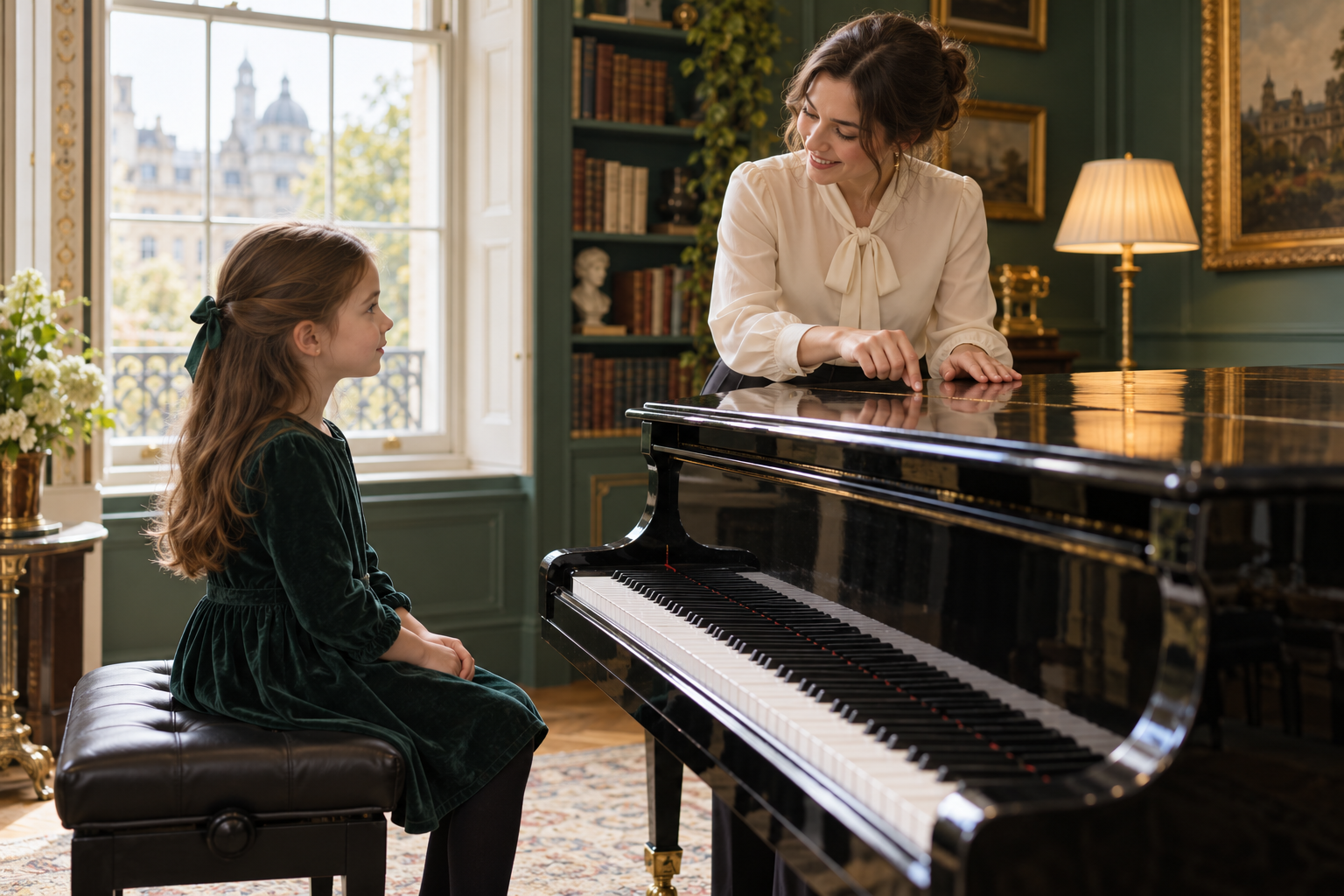
The teacher plays a two-bar pattern on one note. The child keeps both hands in their lap, listens to the whole pattern, waits for a silent count of two and then copies it. Among activities to improve concentration, echoing is useful because the response must wait until listening is complete. Begin with four steady beats. Add one rest only when the first version is secure. The pause prevents impulsive imitation and gives the child a small piece of sound to hold in mind. A parent can play the rhythm on the piano lid or clap it; no reading is required.
Change one feature at a time: the rhythm, the starting note or the dynamic. Ask, ‘What stayed the same?’ before the child plays. That brief question turns repetition into monitoring. Harvard’s executive-function activities guide likewise emphasises games with rules, memory and steadily increasing challenge. If a child guesses repeatedly, shorten the pattern. Successful focus grows from a task that is demanding enough to be interesting but clear enough to complete.
2. Rest detective: hear where the music stops
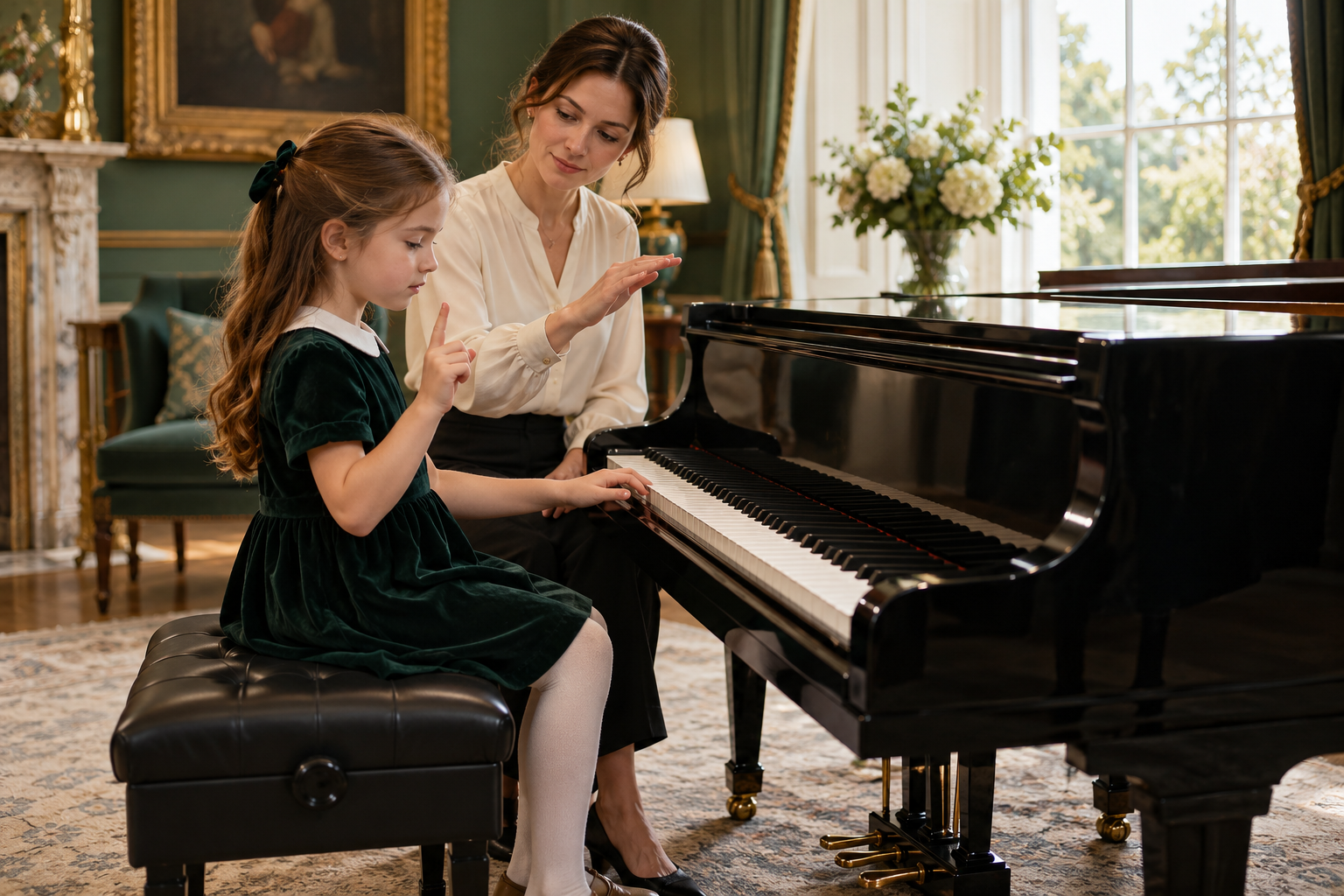
Play or sing a familiar four-beat pattern and ask the child to point upwards whenever the sound stops. Next, the child plays the pattern and says ‘rest’ silently while the hands remain poised. Finally, hide the rest in a short notated phrase. This is one of the simplest activities to improve concentration because the important event is an absence: the learner must resist filling the space and continue feeling the pulse.
Try a worked example: play C-C-[rest]-C in four equal beats, then C-[rest]-C-C. Once both are reliable, alternate them without warning. The task combines selective listening, inhibition and timing while remaining genuinely musical. It also reveals why concentration is not the same as sitting perfectly still. A child may tap a foot, whisper the count or trace the beats in the air; these can be useful ways of organising attention rather than signs that attention has disappeared.
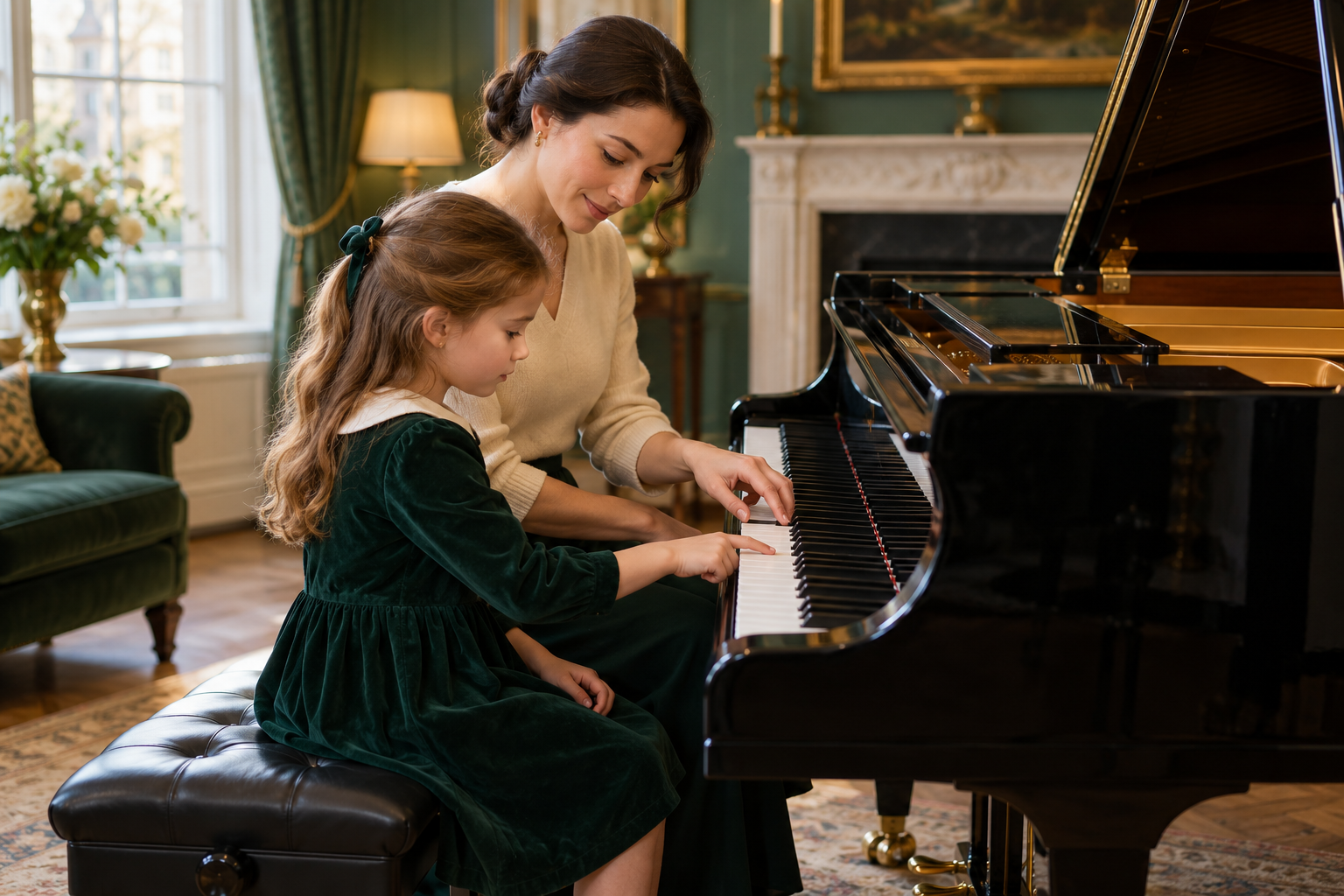
The piano holds attention best when the child knows what to listen for, what to do next and how the sound will reveal the result.
3. Spot the changed note, then explain the clue
Choose a five-note melody the child already knows. Play it once correctly and once with a single changed pitch. The child identifies whether the change came near the beginning, middle or end, then sings or finds the original note. Start with an obvious change and gradually make the contrast smaller. This keeps the activity about attentive comparison rather than catching the child out.
The explanation is as valuable as the answer: ‘I expected the line to step down, but it jumped up.’ Education Endowment Foundation guidance recommends modelling how learners plan, monitor and evaluate within the subject being learned. A London piano teacher can make that thinking audible, then reduce the prompts as the pupil becomes more independent. In face-to-face piano lessons, the teacher can also notice whether the difficulty is listening, keyboard geography, memory or an instruction that contains too many steps.
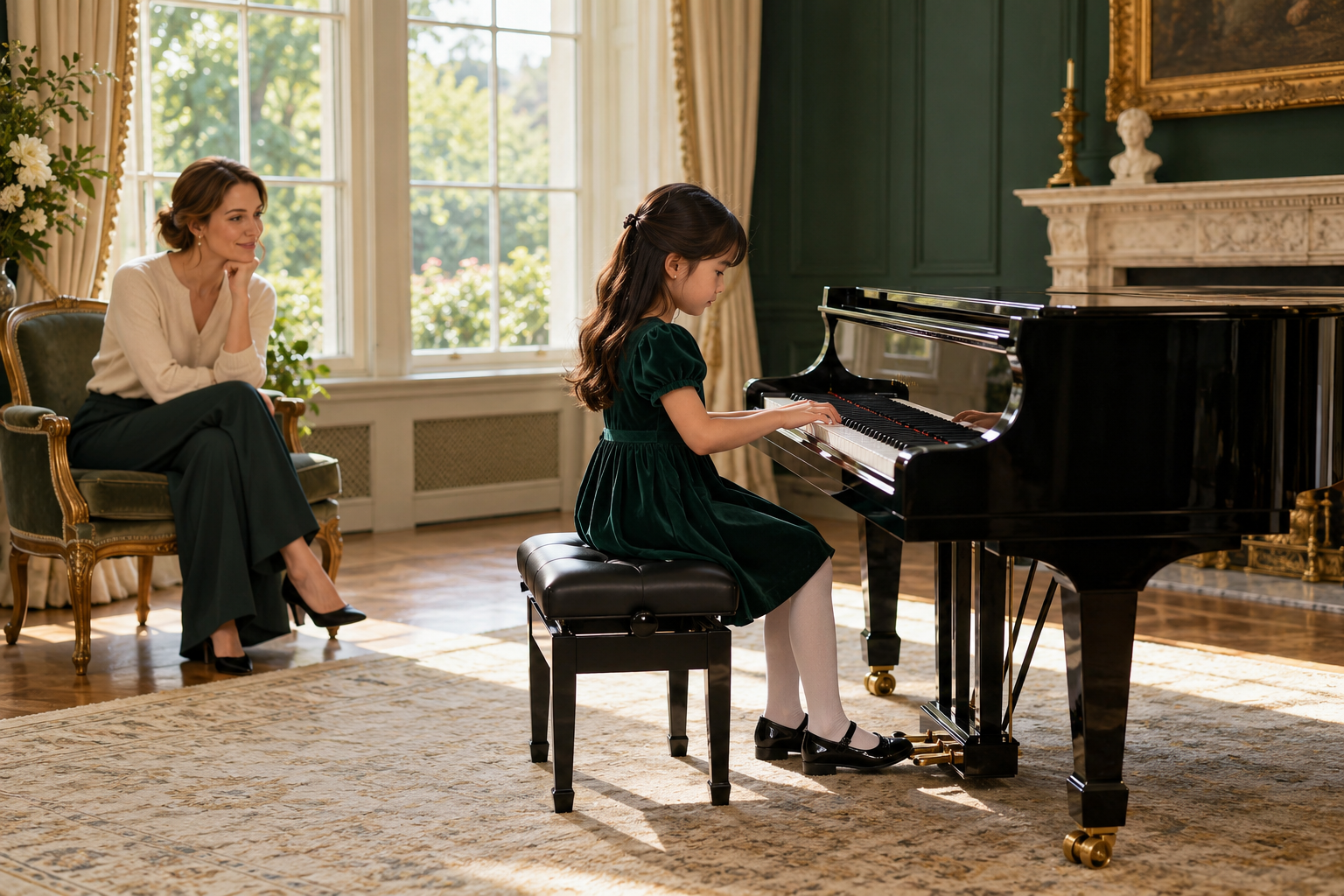
4. Melody spotlight: one hand leads, one hand listens
Give the right hand a three-note melody and the left hand one repeated note. First play the melody alone with a clear shape. Add the left hand so quietly that it feels like a background colour. Stop after each attempt and ask which hand the child heard most clearly. The goal is not merely to keep both hands moving; it is to direct attention towards one musical layer while monitoring another.
For younger beginners, the teacher can play the accompaniment while the child shapes the melody. Older pupils can swap roles, move the melody to the left hand or use a simple two-part passage. Harvard’s guide for seven- to twelve-year-olds notes that learning an instrument can test selective attention, working memory and self-monitoring. At the piano those ideas become specific: which voice matters now, what must remain quiet, and what did the listener actually hear?
5. A three-step practice loop that ends well
Write three small cards: PLAN, PLAY and CHECK. Plan one target, such as ‘the two rests will be exact’. Play the phrase once. Check only that target by pointing to the place that succeeded or needs another attempt. Then decide whether to repeat, simplify or stop. Among activities to improve concentration, this loop is especially useful because it gives the child an ending instead of demanding vague persistence. It also makes activities to improve concentration easy for a parent to repeat without turning practice into a long test.
A realistic home version can last four minutes: one minute to clap the rhythm, two minutes to play two short attempts, and one minute to name the best change. Keep the piano ready and remove unrelated screens, but do not turn every distraction into a conflict. Families considering piano lessons in London can use these observations to tell a teacher what helps the child re-engage. Structured children’s piano lessons can then adjust the musical task, the language and the pace to the individual learner.
Try an immediate listen-and-copy rhythm
Sight Read Drums presents a short clap-back sequence that moves through three beginner levels. Use only a minute or two, pause before each response, and ask the child to name what changed. Video attribution: embedded from YouTube for educational commentary; all rights remain with Sight Read Drums and the rights holder. WKMT is not affiliated with or endorsed by the creator.
WKMT London
Give your child a musical task that can grow from a two-beat echo into confident reading, listening and performance, with attentive face-to-face guidance in London.
Sources on activities to improve concentration
- Department for Education: National curriculum music programmes of study
- Center on the Developing Child at Harvard: Executive function activities guide
- Education Endowment Foundation: Metacognition and self-regulation
- Frontiers in Psychology: Systematic review of music training and executive function
- PNAS: Piano training, pitch processing and speech perception
- Frontiers in Psychology: Experimental evidence on music intervention and attention
Sources checked 18 October 2026. Educational guidance; individual circumstances and progress vary.