
 TRIAL LESSON
Piano Lessons
Musical Storytelling for Children: How Piano Pieces Become More Than Correct Notes
Oct
WKMT London parent guide
Musical Storytelling for Children: How Piano Pieces Become More Than Correct Notes
A child can play every note and still leave the music silent in another sense. Musical storytelling begins when rhythm, touch, harmony and shape answer a shared imaginative question: who is speaking, what changes, and where does the phrase need to go?
In brief
Musical storytelling for children means using sound to suggest character, action, atmosphere and emotional change. At the piano, a child can shape a story through dynamics, articulation, tempo, register, harmony and phrase direction. The story should clarify musical evidence in the score rather than replace accurate rhythm, comfortable technique or careful listening.
Musical storytelling children can hear in the score
A story does not need to be printed above the notes. A rising line can feel like approach, a repeated rhythm like insistence, a sudden low register like a new character entering. Musical storytelling children understand begins with noticing these audible facts. The teacher asks what changed, and the child’s answer must be heard in the playing. This protects imagination from becoming arbitrary. Calling a phrase ‘a giant’ is useful only if the child can connect that idea to weight, register, articulation or pace. A different interpretation may be equally convincing when its musical evidence is clear. The aim is not to guess the teacher’s secret plot, but to make an intentional sound.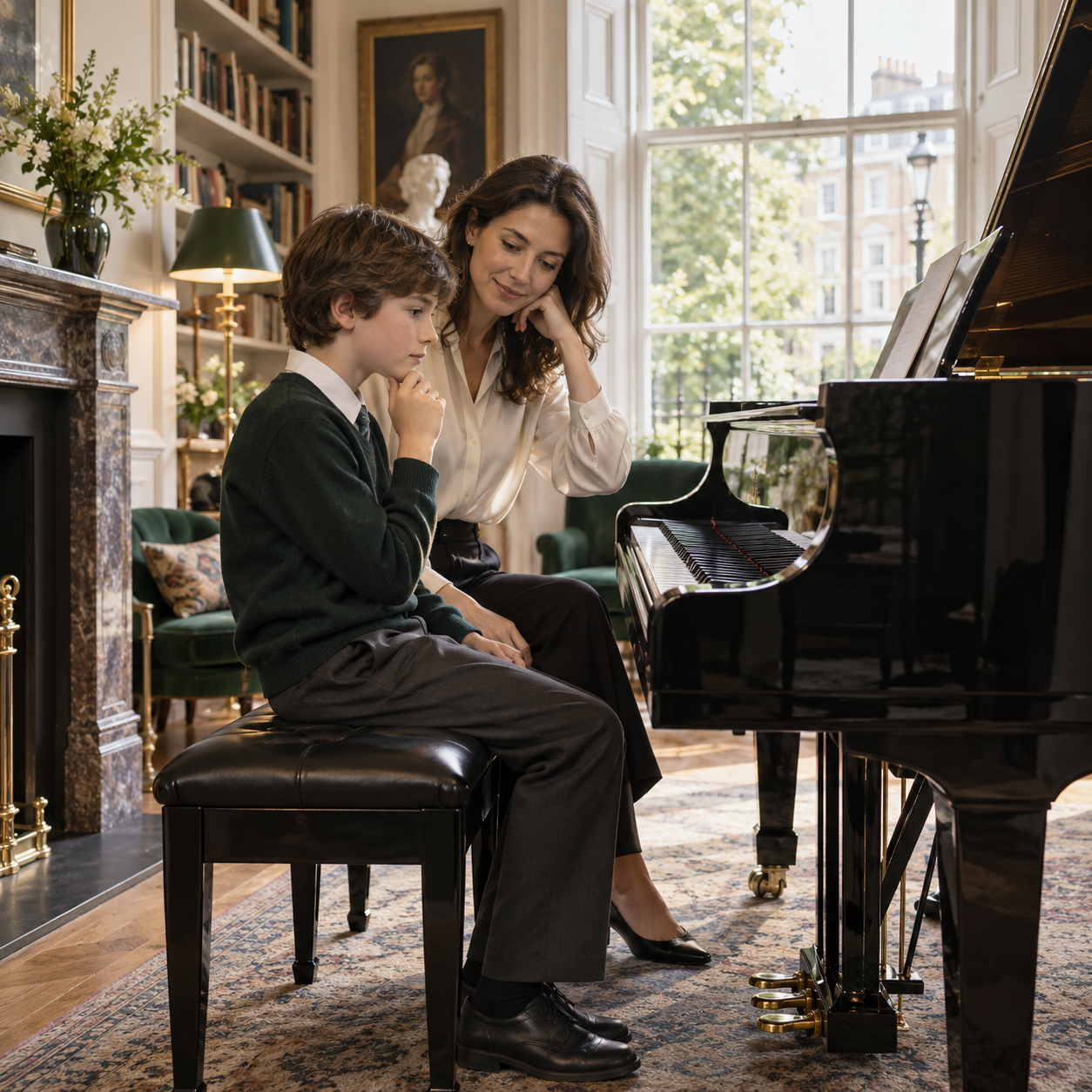
From character words to physical choices
Choose one short section and give it two contrasting character words: perhaps cautious and bold, distant and near, heavy and quick. Play both versions, then identify what changed in the body and sound. The child may use a firmer attack, a lighter wrist, shorter articulation or a different dynamic curve. Language becomes valuable when it leads to a repeatable action. In children’s piano lessons in London, the teacher can keep the sequence precise: hear, imagine, choose, play and compare. Technique remains central because expressive intentions need reliable movement. Musical storytelling gives the movement a reason rather than excusing inaccuracy.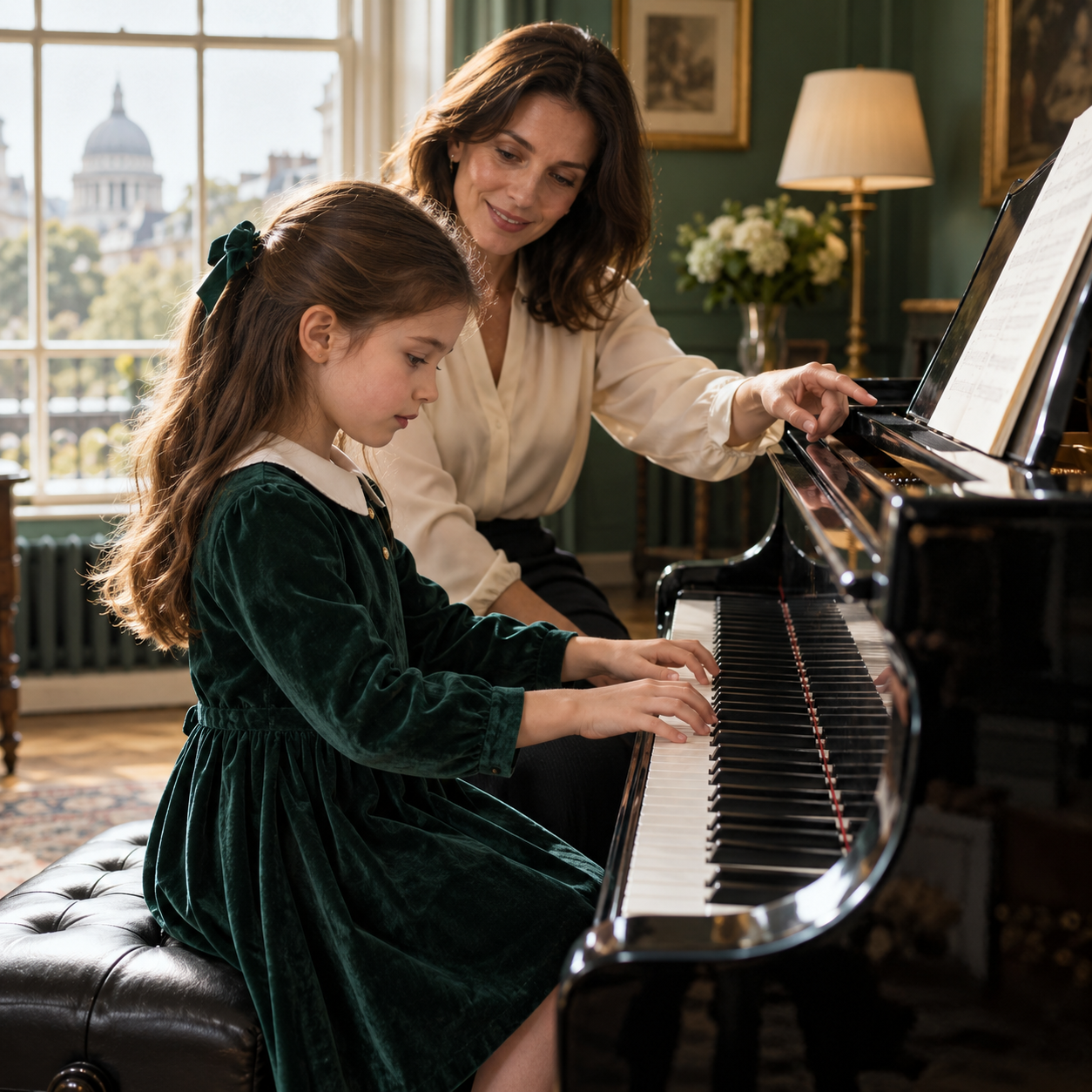
A beginning, a change and an arrival
Musical storytelling children can follow needs a clear shape. Children often invent stories with many events but no shape. Music benefits from a smaller plan. Ask three questions: what is established at the beginning, what changes in the middle, and what feels different at the arrival? This maps naturally onto phrase, contrast and return. Even eight bars can contain a complete dramatic curve. WKMT’s guide to pattern recognition at the piano helps children notice repeated shapes, while the article on music and creativity explores purposeful invention. Musical storytelling joins the two: patterns provide coherence, and imagination gives each return a changed meaning.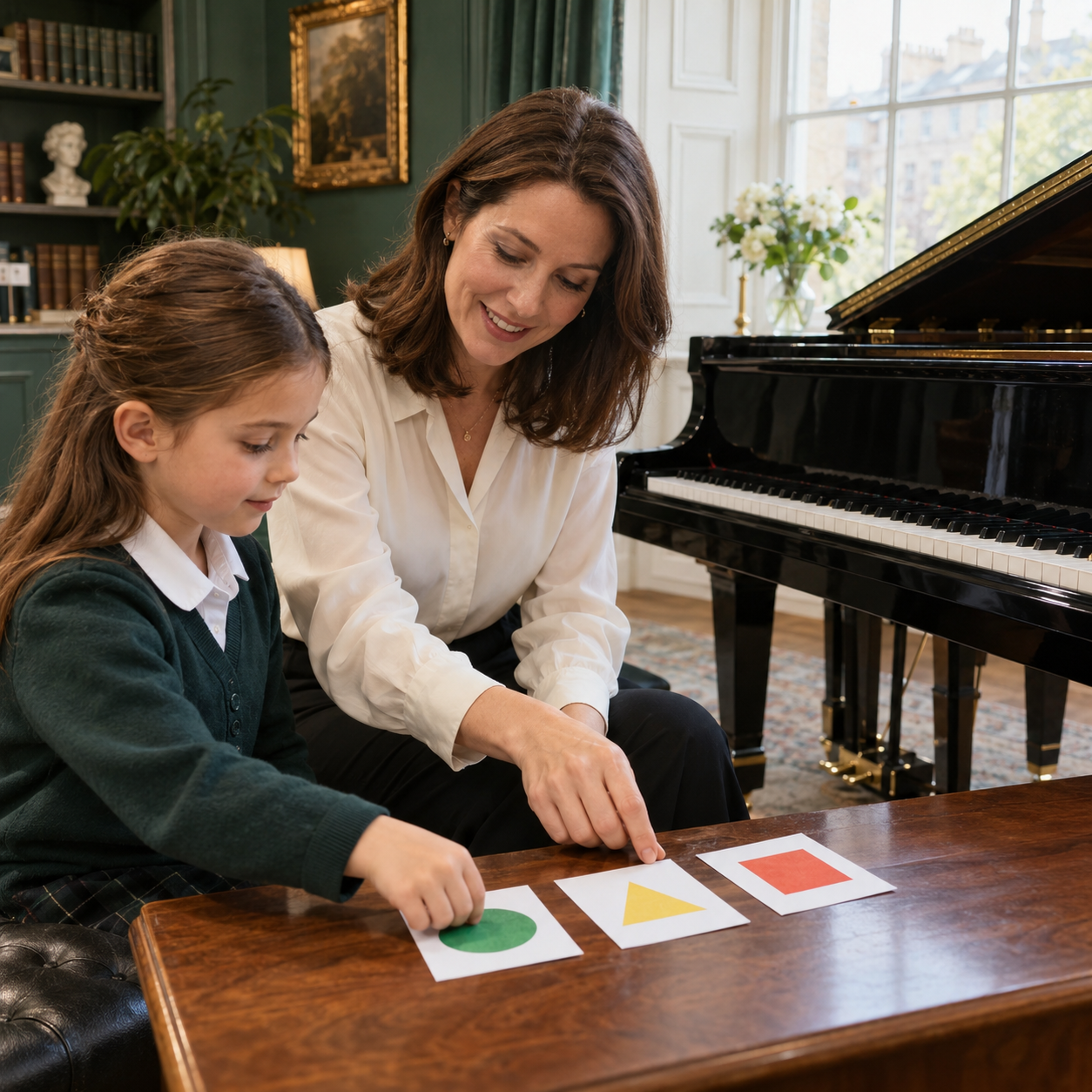
Imagination becomes musicianship when a listener can hear the child’s idea without being told the story first.
What research supports, and what adults should avoid promising
Research on children’s musical play describes relationships between imaginative activity, shared attention and meaning-making. Studies of music education and emotional development also report associations with expression, motivation and recognising emotion, although methods and outcomes vary. These findings support rich educational practice; they do not show that one piano story produces a guaranteed psychological benefit. The strongest claim is also the most musical. Story can focus a child’s listening. It helps a pupil compare versions, remember a phrase’s direction and communicate an interpretation. A piano teacher should not diagnose emotion through a piece or force personal disclosure. The story belongs to the music and the child’s chosen imaginative space.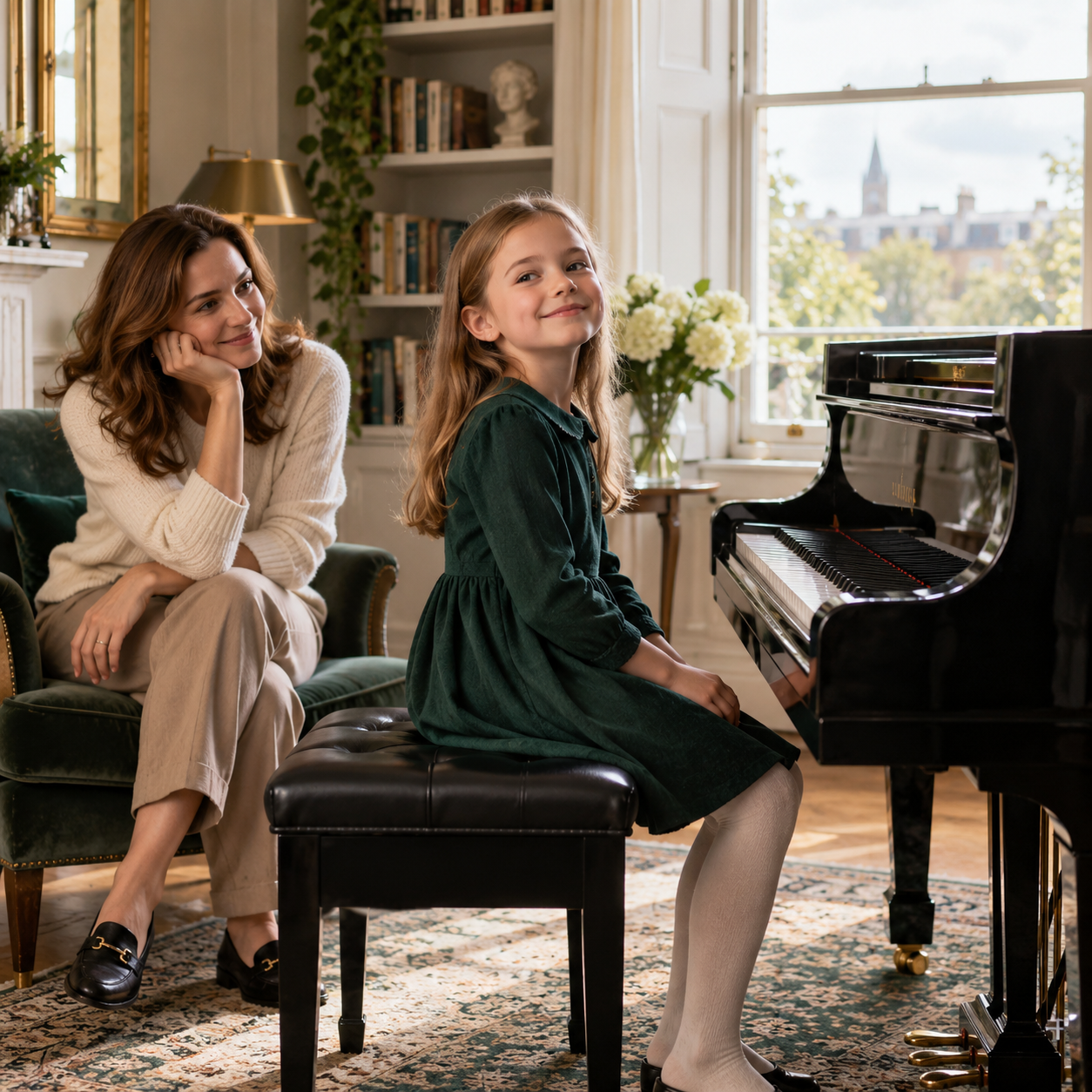
A five-minute storytelling routine for home
Choose four to eight bars. Ask the child for one character and one change. Clap the rhythm as that character, sing the phrase with its dynamic direction, then play it twice: once plainly and once with the chosen story. Finish by asking which musical detail made the difference most audible. In musical storytelling children should retain ownership, so keep the conversation short enough for the piano to answer. Parents do not need to supply a more sophisticated plot or correct every adjective. Musical storytelling children enjoy is collaborative. Praise a specific sound: the soft opening, the sudden contrast or the way the final note really arrived.WKMT London
Give your child piano teaching where secure technique, careful listening and imaginative ownership develop together.
Explore children’s piano lessonsSources
- PMC: The Human Nature of Music
- PMC: music education and children’s emotional development
- PMC: music intervention and attention in children
- Frontiers: children’s musical creativity and improvisation
- Harvard Project Zero: Arts PROPEL
- University of Cambridge Faculty of Education: music research
Sources checked 4 October 2026. Educational guidance; individual circumstances and progress vary.