
 TRIAL LESSON
Piano Lessons
Can Adults Learn Piano? What Mature Beginners Actually Bring to the Instrument
Oct
WKMT London adult learner guide
Can Adults Learn Piano? What Mature Beginners Actually Bring to the Instrument
Adult beginners do not arrive empty-handed. They bring listening histories, language, patience, taste and a clear sense of why music matters to them. The challenge is to connect that experience with new physical habits, reading skills and a practice rhythm that fits real life.
In brief
Can adults learn piano? Yes. Adults can develop reading, coordination, technique, memory and interpretation from a complete beginner level, although progress depends on practice, teaching, health, goals and prior experience. Mature learners often bring strong motivation and analytical skill; they may need more deliberate work on relaxed movement, automaticity and realistic expectations. There is no single age after which meaningful piano learning becomes impossible.
Can adults learn piano from the beginning?
Can adults learn piano when they have never read music, used both hands independently or played an instrument? They can. The first months involve building several maps at once: notation to keyboard, finger movement to expected sound, rhythm to pulse and practice instruction to independent action. Adults sometimes mistake the density of this learning for lack of talent, when it is simply the normal complexity of a new skill.
Mature learners also bring assets children are still developing. They can compare interpretations, understand explanations, plan time and connect repertoire with a lifetime of listening. The most effective teaching uses those strengths without allowing analysis to replace sound. An adult must still sing, imitate, move, repeat and tolerate the temporary awkwardness through which skill becomes fluent.
What changes with age, and what remains trainable
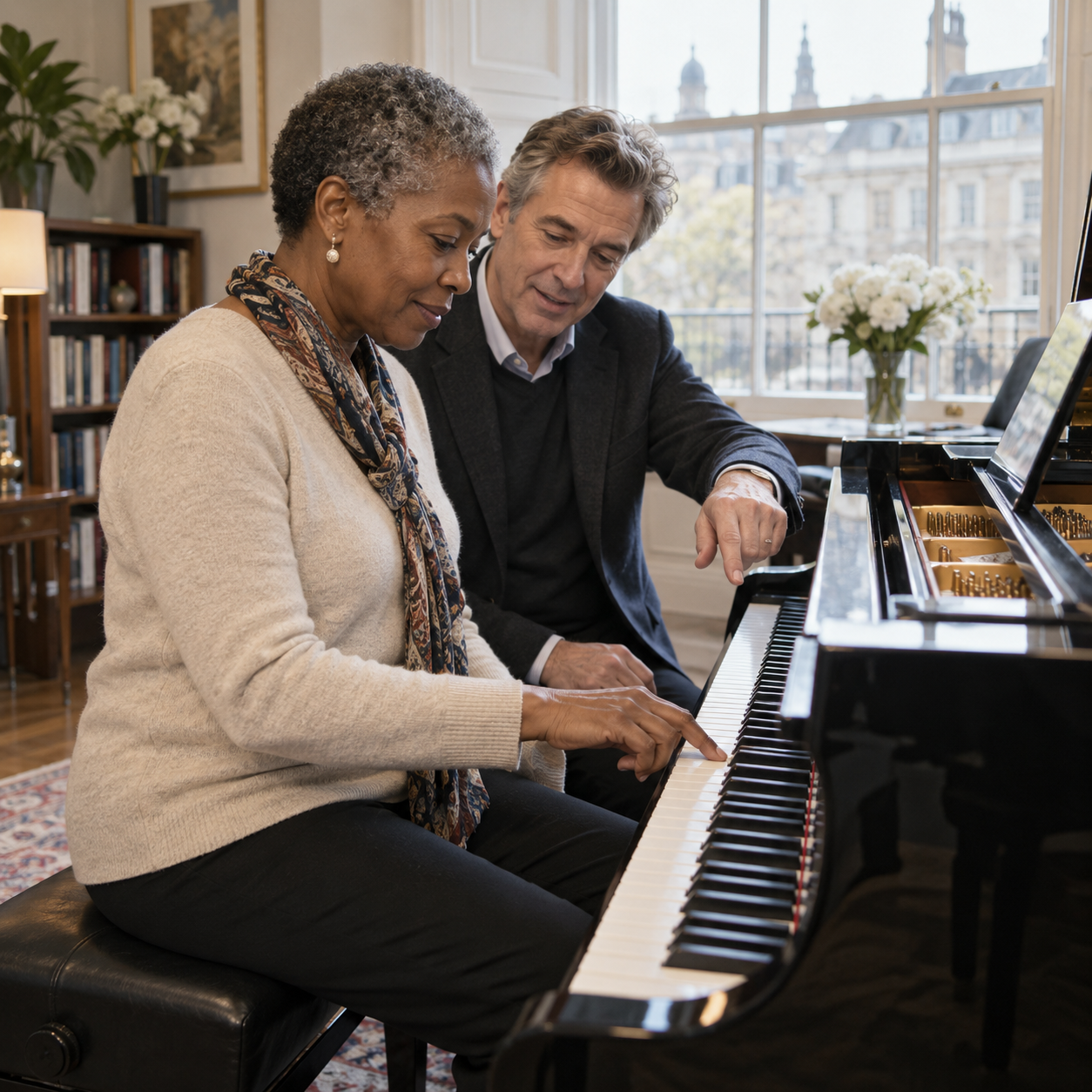
Processing speed, joint comfort, hearing, vision and memory vary widely among adults. None can be inferred from a birthday alone. Research with older novices shows that participants can acquire measurable piano skills across structured programmes, and some studies report changes in fine motor control, working memory or brain measures. Results differ, and piano should not be sold as a medical treatment or a guaranteed cognitive intervention.
The practical message is simpler. Can adults learn piano movements? Yes, when tasks are small enough to repeat accurately and rest is part of the method. Can adults learn piano reading? Yes, when landmarks, intervals and rhythm are taught as patterns rather than as a flood of note names. Plasticity continues through adulthood, but good design matters more than slogans about the brain.
The mature beginner’s strongest advantages
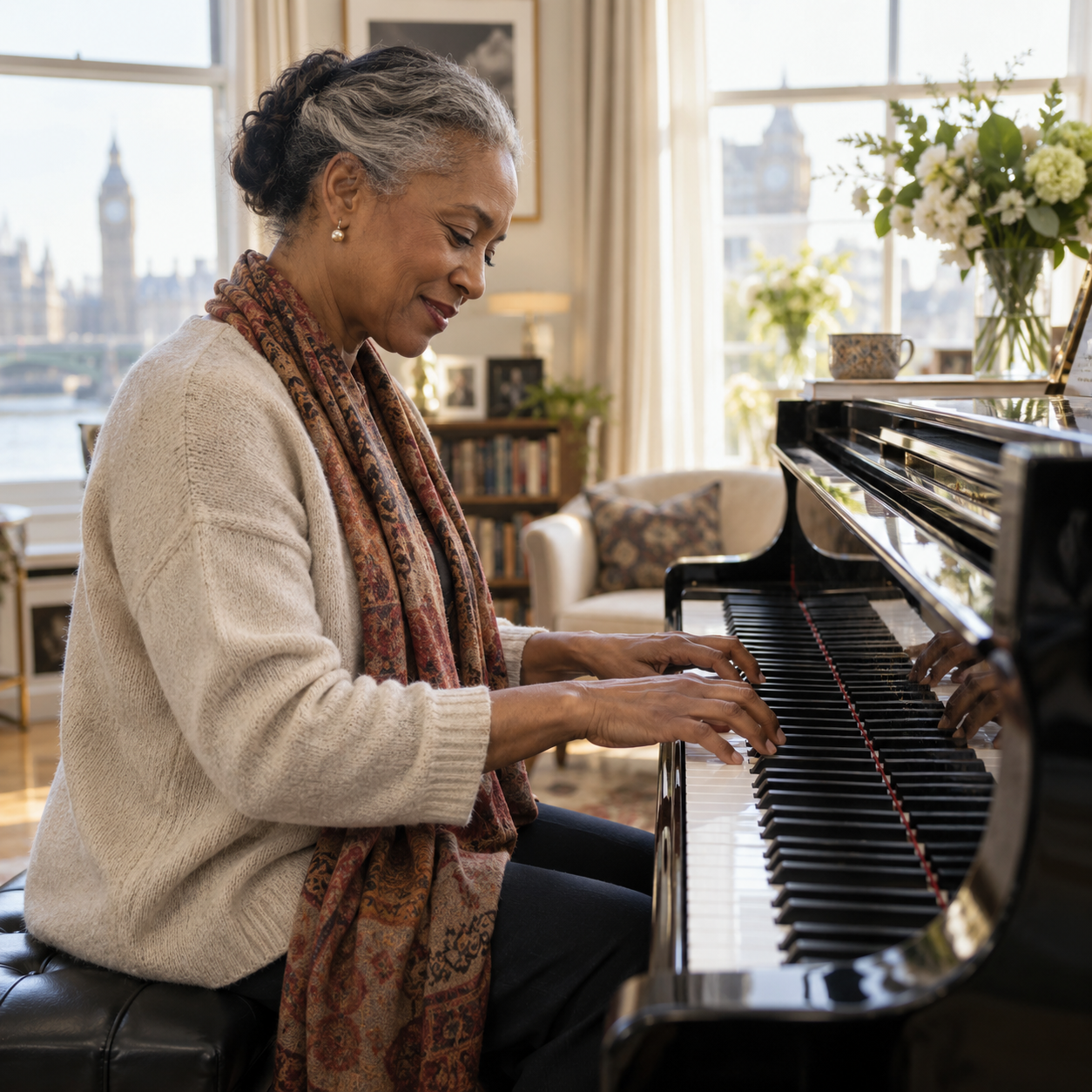
Adults know what moves them. A Chopin prelude, a film score, a hymn or a jazz standard can provide a meaningful destination. They can also articulate difficulty: the left hand loses pulse, the chord is unclear, or the practice plan is too large. That self-observation becomes powerful when it leads to one audible experiment rather than self-criticism.
In adult piano lessons in London, the teacher can connect ambition with sequence. WKMT’s guide Am I too old to learn piano? addresses the emotional barrier, while the adult practice schedule turns intention into a realistic week.
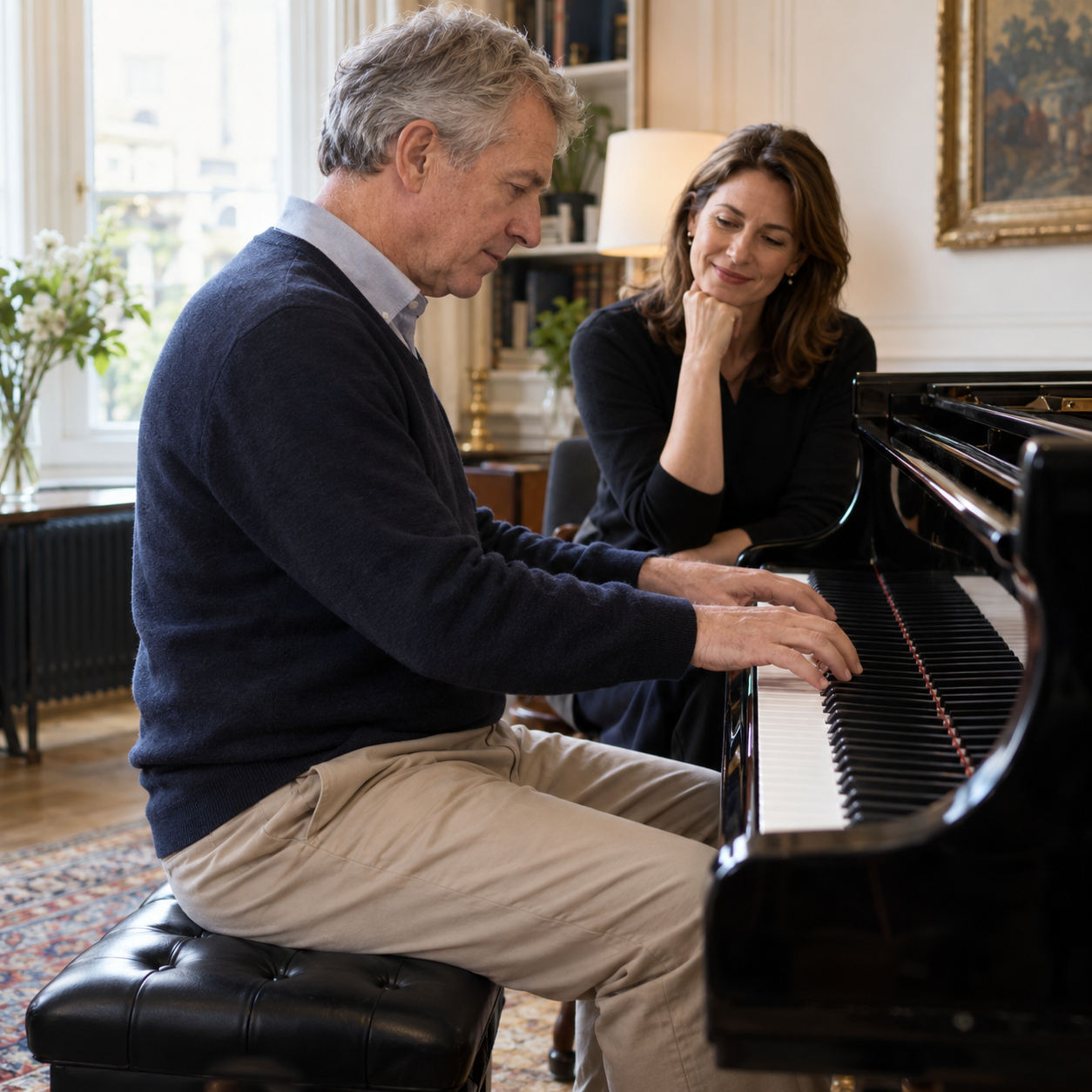
Adults learn piano by bringing experience to beginnerhood, not by pretending experience has removed the need to begin.
What usually slows adult progress
Adults often choose repertoire for emotional importance before it fits their present technique. They may practise only from the beginning, repeat errors at speed or postpone playing until a perfect hour appears. Work, travel and family life then produce gaps that feel like failure. None of these problems proves that the learner is too old; each asks for a better structure.
Can adults learn piano with short sessions? Regular twenty-minute sessions can be more useful than an exhausted weekly marathon. Divide practice into reading, one technical idea, a difficult fragment and a complete musical play-through. Keep one comfortable piece alongside the challenge. Progress becomes easier to notice when every session has a defined finish line.
A realistic first-year picture
The first year should produce more than a stack of pieces. A beginner can learn to keep a pulse, read simple textures, coordinate hands, shape short phrases, understand basic harmony and practise without constant supervision. Repertoire and pace will differ. A strong first year creates habits that make the second year more independent and musically rewarding.
So, can adults learn piano to an advanced level? Some do, but advanced is not the only meaningful destination. The decisive achievement is a growing musical language: hearing more, moving with greater freedom and making interpretative choices that could not be made before. Adult study succeeds when progress is serious without becoming a verdict on personal worth.
WKMT London
Build a thoughtful adult piano programme around your repertoire, timetable, technique and long-term musical aims.
Explore adult piano lessonsSources on can adults learn piano
- PubMed: piano motor learning in older adults
- PubMed: fine motor control after one year of piano lessons
- PMC: acquisition of musical skills in older adults
- PMC: neurobiological effects of music-making systematic review
- PubMed: cognitive, motor and social factors in older adult training
- BAPAM: healthy practice guidance
Sources checked 3 October 2026. Educational guidance; individual circumstances and progress vary.