
 TRIAL LESSON
Piano Lessons
Pitch Perception: How Piano Lessons Help Children Hear High, Low and In Tune

Sep
WKMT London parent guide
Pitch Perception: How Piano Lessons Help Children Hear High, Low and In Tune
Before a child can correct a wrong note, the ear must notice that something has changed. Pitch perception grows through comparison: higher or lower, same or different, settled or unresolved. At the piano, those distinctions become visible, audible and repeatable without turning listening into a test.
In brief
Pitch perception is the ability to hear and organise how high or low a sound seems, including the direction and distance between notes. Children’s piano lessons can develop pitch perception through singing, matching, melodic imitation, keyboard geography and attentive correction. Research links music training with improved detection of pitch changes, but progress varies and lessons should never treat imperfect singing as lack of musical potential.
Pitch perception is more than singing in tune
Pitch perception begins with noticing relationships. A child may recognise that the second note is higher, hear when a familiar tune changes direction or notice that one note in a chord feels out of place. Accurate singing adds the separate challenge of controlling the voice. A child can hear a difference before being able to reproduce it reliably.
This distinction protects confidence. If a sung note misses its target, the teacher can ask whether it needs to move up or down, then offer another reference. The answer reveals listening even when vocal control is still developing. Pitch perception is therefore observed across several tasks, not judged through one performance.
How the piano makes high and low easy to see
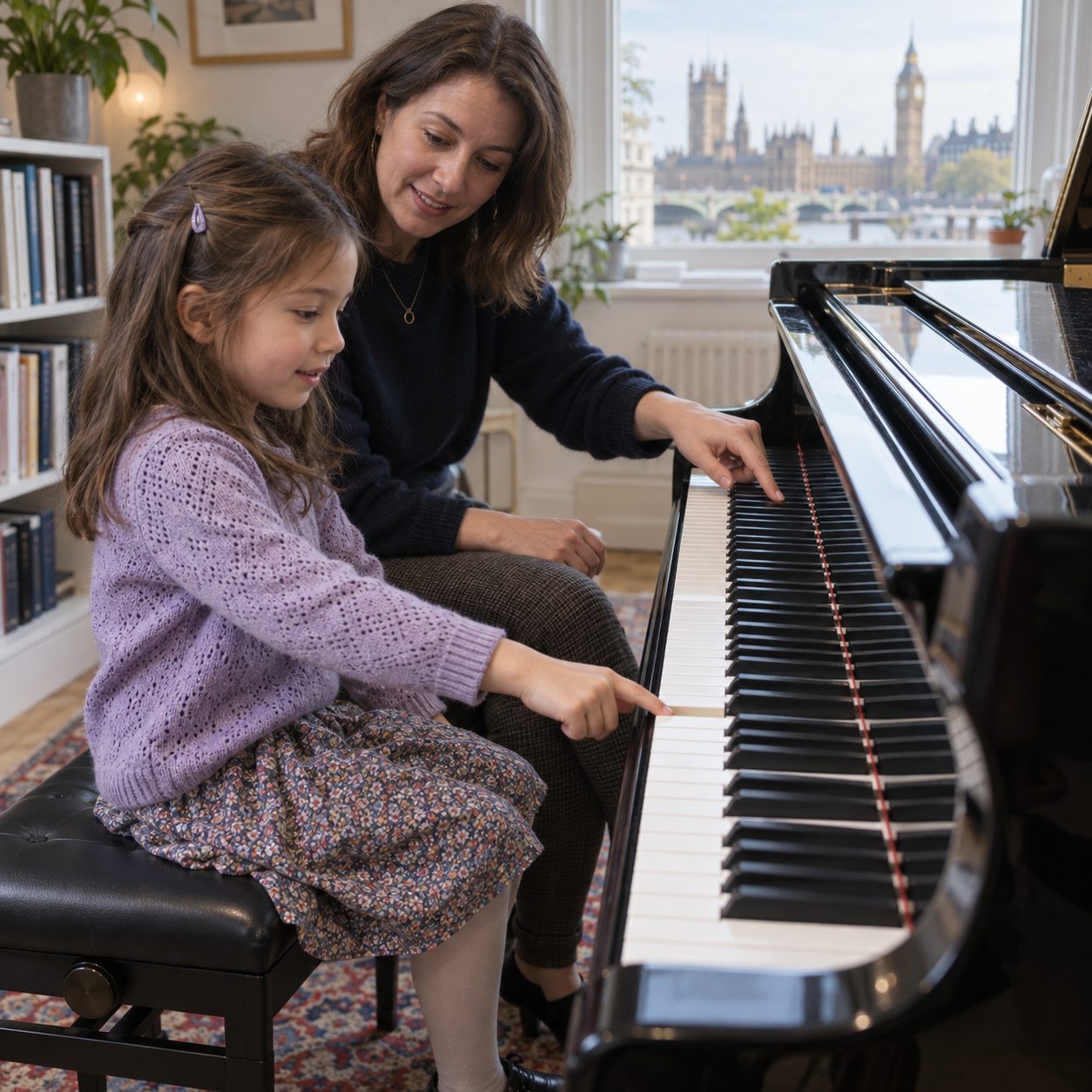
The keyboard gives pitch perception a physical map. Notes to the right sound higher; notes to the left sound lower. Repeated groups of black keys help the child connect a heard change with a visible distance. The instrument can also repeat a pitch consistently, allowing the pupil to compare without relying on an adult voice that naturally varies.
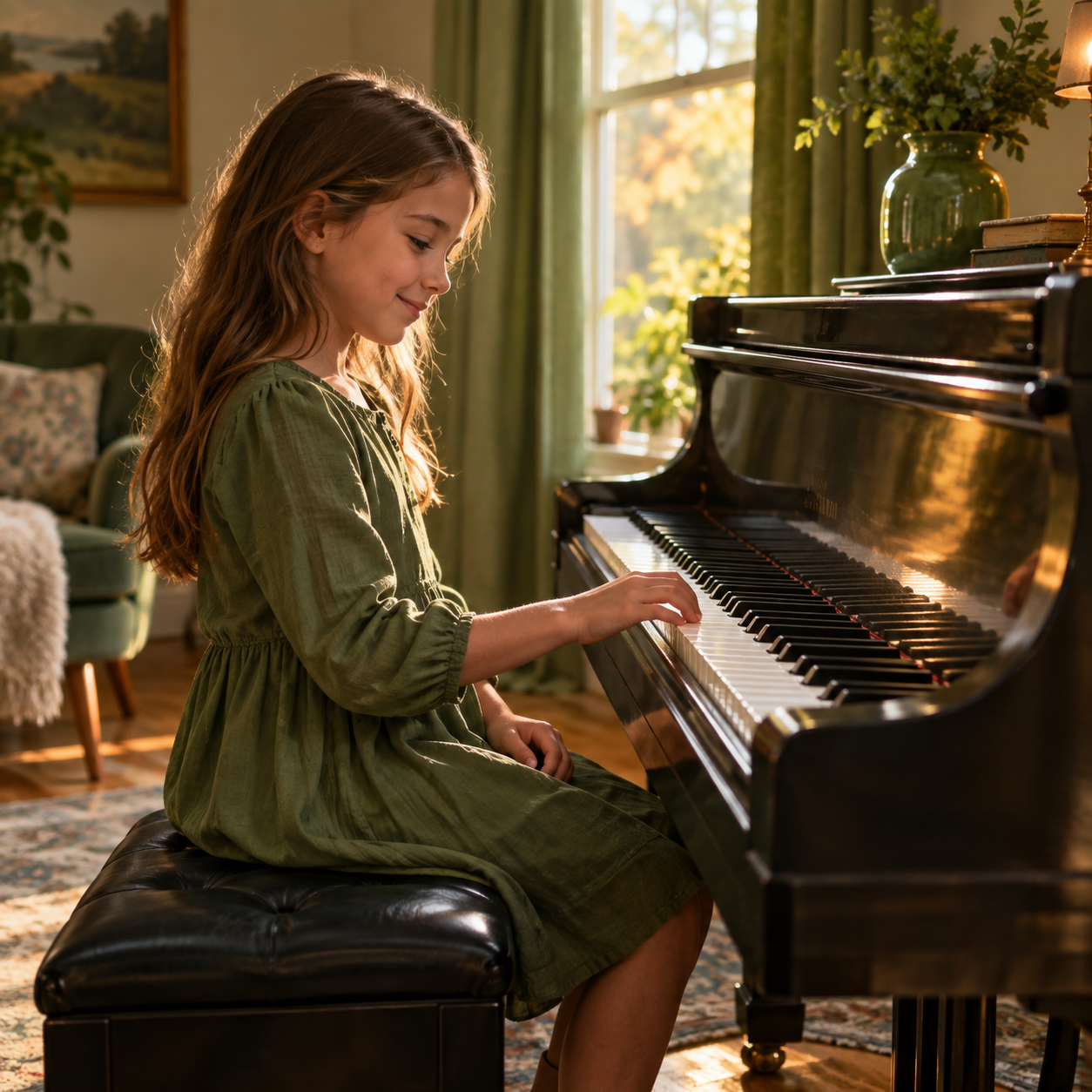
In children’s piano lessons in London, a teacher may play two notes and ask the child to point in the direction the sound travelled. Later, the distance narrows. The same game can use a short melody, asking where it turns, repeats or lands. Pitch perception becomes part of phrasing rather than an isolated ear-training score.
What research suggests about music training and pitch perception
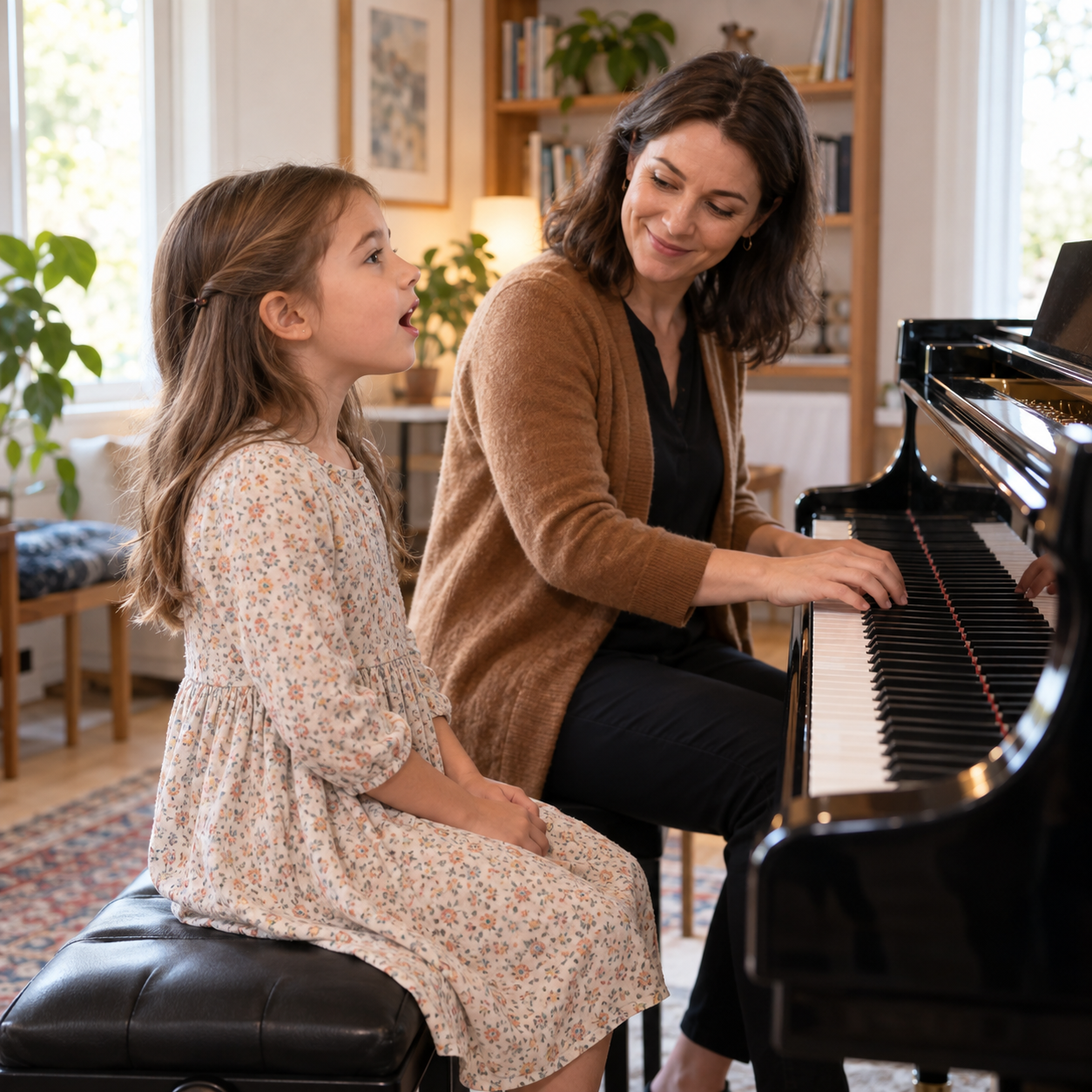
Longitudinal research with children has found that sustained music training can accelerate aspects of auditory development and improve the detection of pitch changes. A study of four- and five-year-olds reported distinctive gains in neural responses to musical pitch after six months of piano training, alongside improvements in some speech-sound discrimination measures.
These findings deserve careful language. They do not prove that piano lessons raise general intelligence, and they do not promise identical transfer for every child. The strongest claim is narrower: repeated, meaningful attention to sound can refine auditory processing. WKMT’s article on listening skills beyond the notes shows how that attention works inside a musical lesson.
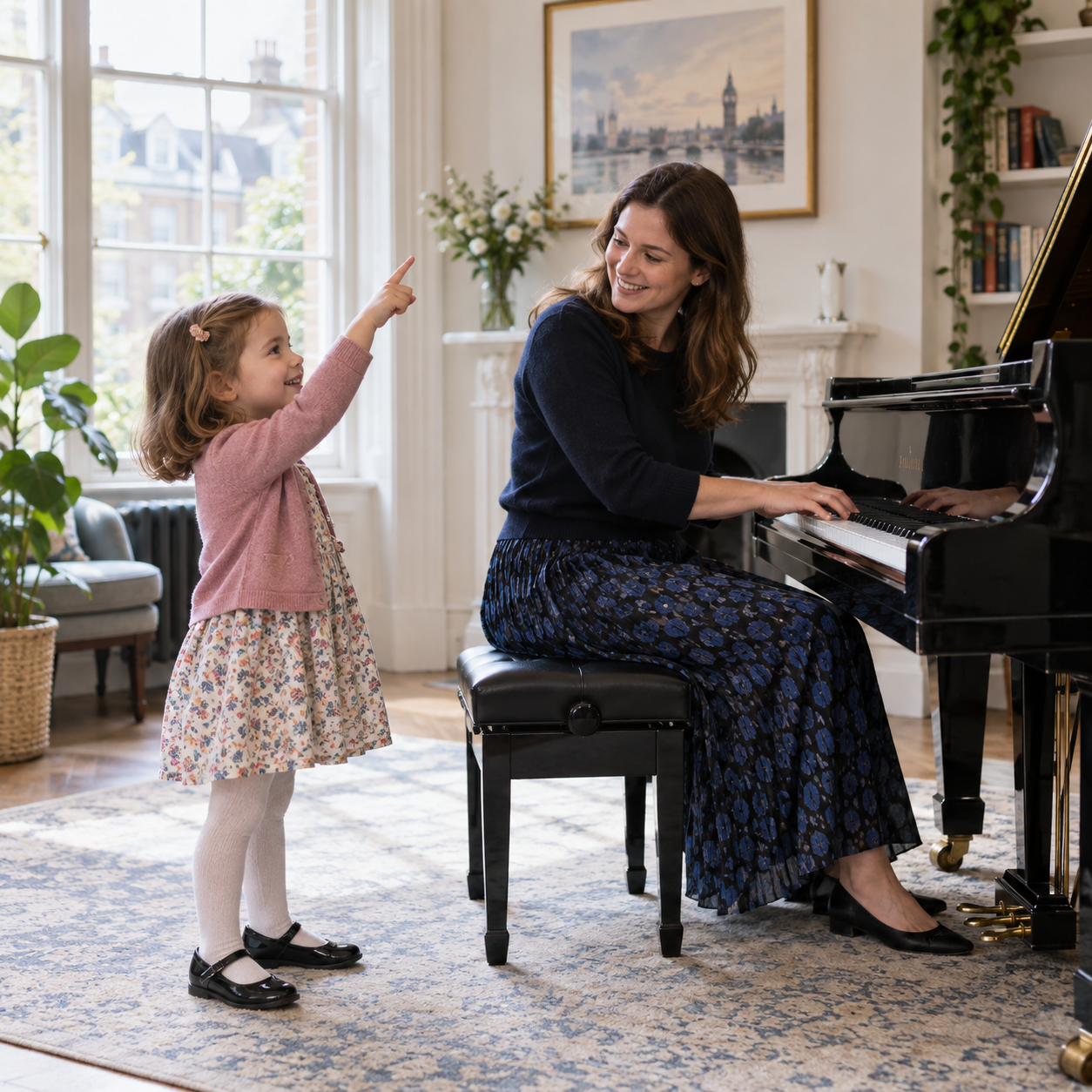
A trained ear is not one that never misses; it is one that notices, compares and knows what to try next.
Four games that develop pitch perception musically
First, play two separated notes and let the child move a hand up or down with the sound. Second, hide the keyboard and ask whether two notes are the same or different. Third, sing a three-note pattern for the child to find by experiment. Fourth, play a familiar tune with one changed note and ask where the musical path became surprising.
Keep the examples short enough for memory and change one variable at a time. Large intervals are easier than neighbouring notes; a familiar tune is easier than an abstract sequence. Ask for a description before giving the label. Words such as brighter, heavier or unfinished may show accurate pitch perception even when the child does not yet know interval names.
When a child finds pitch difficult
Pitch perception develops at different rates and is influenced by attention, experience, hearing and task design. Reduce background noise, use comfortable registers and avoid making the exercise a public guessing contest. Some children respond more clearly through movement or keyboard choice than through singing. Difficulty should guide the next teaching step, not become a verdict on talent.
If parents or teachers notice persistent concerns about hearing or speech, an appropriate health professional should assess them; a piano teacher does not diagnose auditory conditions. Within ordinary lessons, the aim is patient discrimination. As pitch perception becomes more precise, children can tune their own playing, shape melodies with greater intention and notice details that previously passed unheard.
WKMT London
Give your child a lesson environment where careful listening, keyboard understanding and musical confidence develop together.
Explore children’s piano lessonsSources on pitch perception for piano
- PNAS: piano training enhances pitch processing in children
- Developmental Cognitive Neuroscience: auditory processing in music-trained children
- Journal of the Acoustical Society of America: pitch perception in school-aged children
- NIH: the human brain and musical pitch
- University of Minnesota: pitch perception research
- USC Brain and Music Program
Sources checked 24 September 2026. Educational guidance; individual circumstances and progress vary.