
 TRIAL LESSON
Piano Lessons
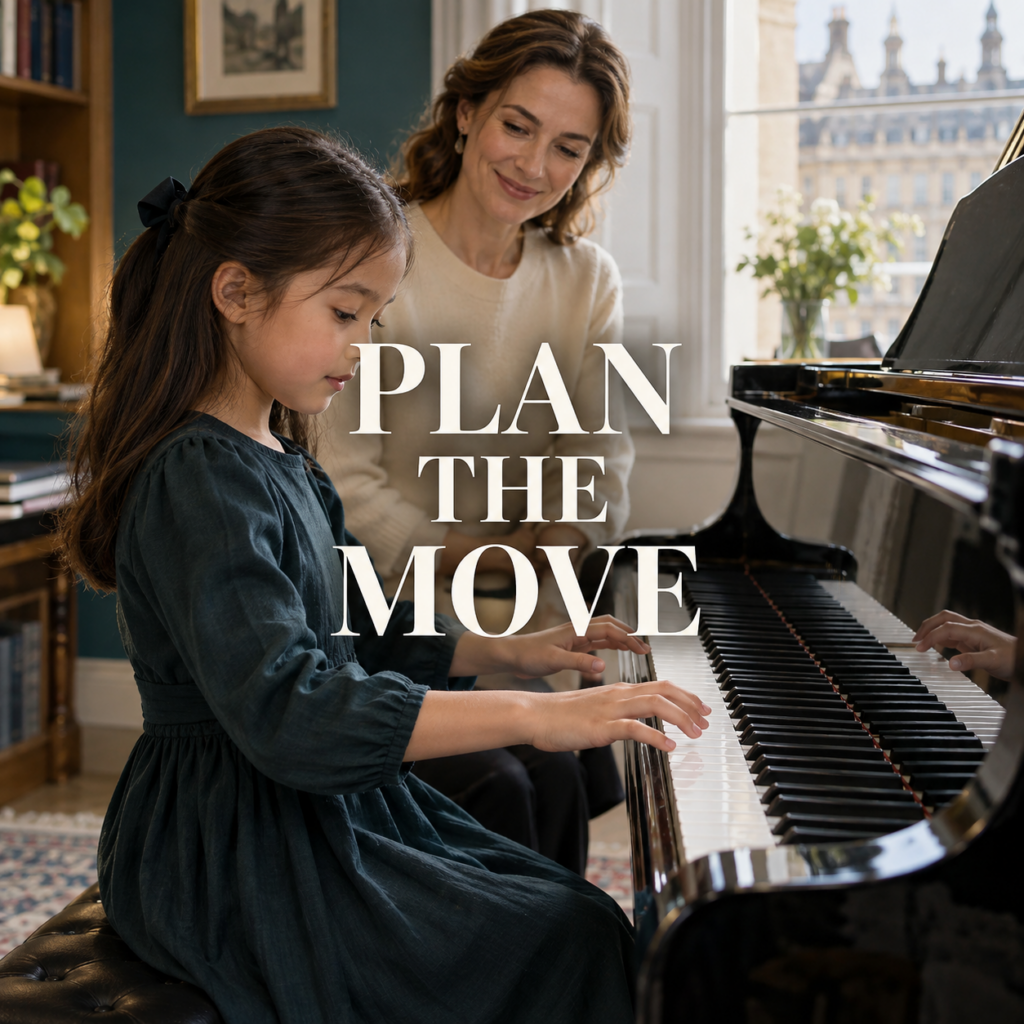
Motor Planning: How Children Organise Movement at the Piano
Sep
WKMT London parent guide
Motor Planning: How Children Organise Movement at the Piano
Before a child plays a note, the body has already begun to solve a problem: where to sit, which hand will move, how far it must travel and when the sound should arrive. Piano teaching makes this hidden preparation increasingly reliable, flexible and musical.
In brief
Motor planning is the process of preparing, organising and adjusting a purposeful movement before and during action. At the piano, children use motor planning to find starting positions, choose fingers, coordinate two hands, move across the keyboard and time each action with an expected sound. It develops through clear goals, manageable sequences and varied repetition.
Motor planning turns intention into organised action
A young beginner may know which note is next yet still hesitate because the movement has not been organised. The hand must locate a key, select a finger, estimate distance and arrive at the right moment. Motor planning links those decisions into a usable action. It is different from strength: a small, well-planned movement can be more successful than a forceful one.
At the piano, sound provides immediate feedback. If the hand lands one key too far, the ear detects the result and the plan can be adjusted. This loop between prediction, movement and listening is central to learning. The teacher’s task is to keep the sequence short enough that the child can notice what happened rather than merely trying again.
From landmarks to movement sequences
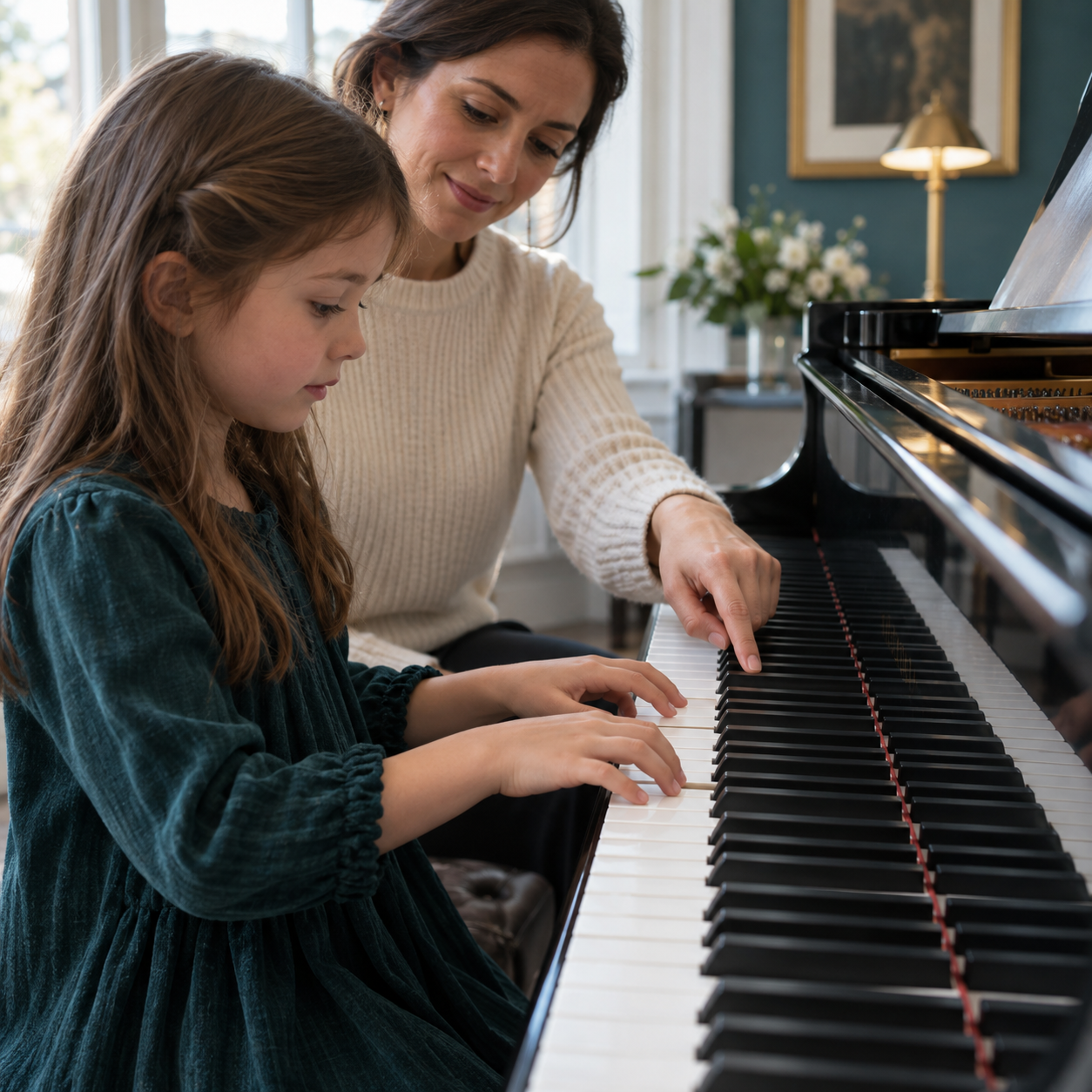
Begin with a reliable landmark such as the group of two black keys, then identify the starting finger before the music begins. Ask the child to hover over the destination and describe the route. For a short phrase, practise the silent choreography on the key surfaces, then add sound. These steps make motor planning visible without burdening the child with technical vocabulary.
In piano lessons for children in London, teachers can vary one feature at a time. Keep the rhythm while changing the starting note, or keep the hand shape while changing dynamics. Variation tests whether the child has formed an adaptable plan rather than memorised one rigid set of sensations.
Two hands, rhythm and looking ahead
Playing with two hands requires separate actions to share one temporal plan. One hand may hold while the other moves; one begins a phrase while the other prepares a leap. Slow practice helps only when it preserves the intended coordination. If every note becomes an isolated stop, the child practises interruption rather than sequence.
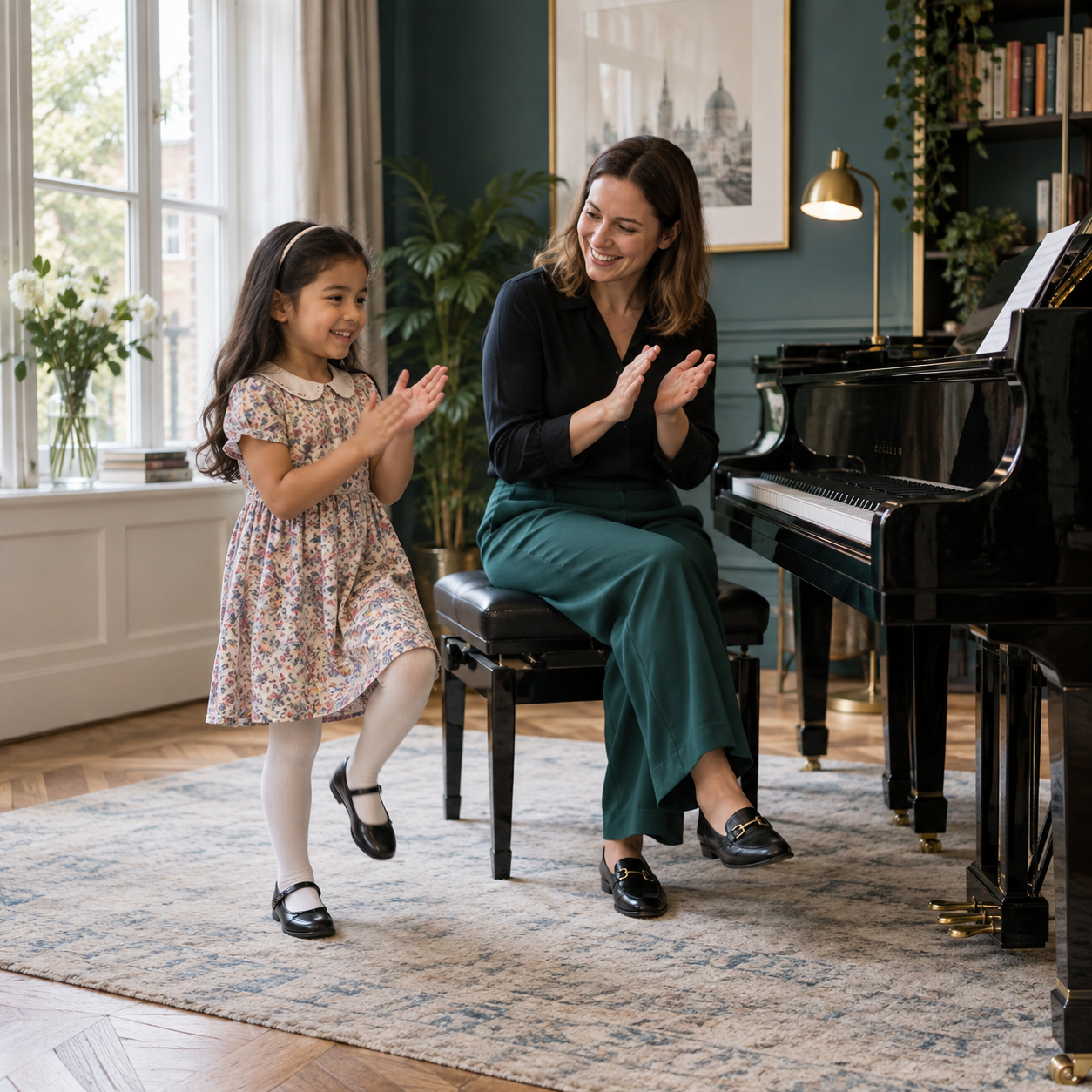
Rhythm gives movement a timetable. Clapping, stepping or speaking the beat before playing can stabilise the plan, especially when a passage includes rests or hand changes. Research on music and executive function describes a mixed evidence base, so lessons should not promise general cognitive transformation. The immediate educational value is clearer: organised movement produces more fluent and expressive music.
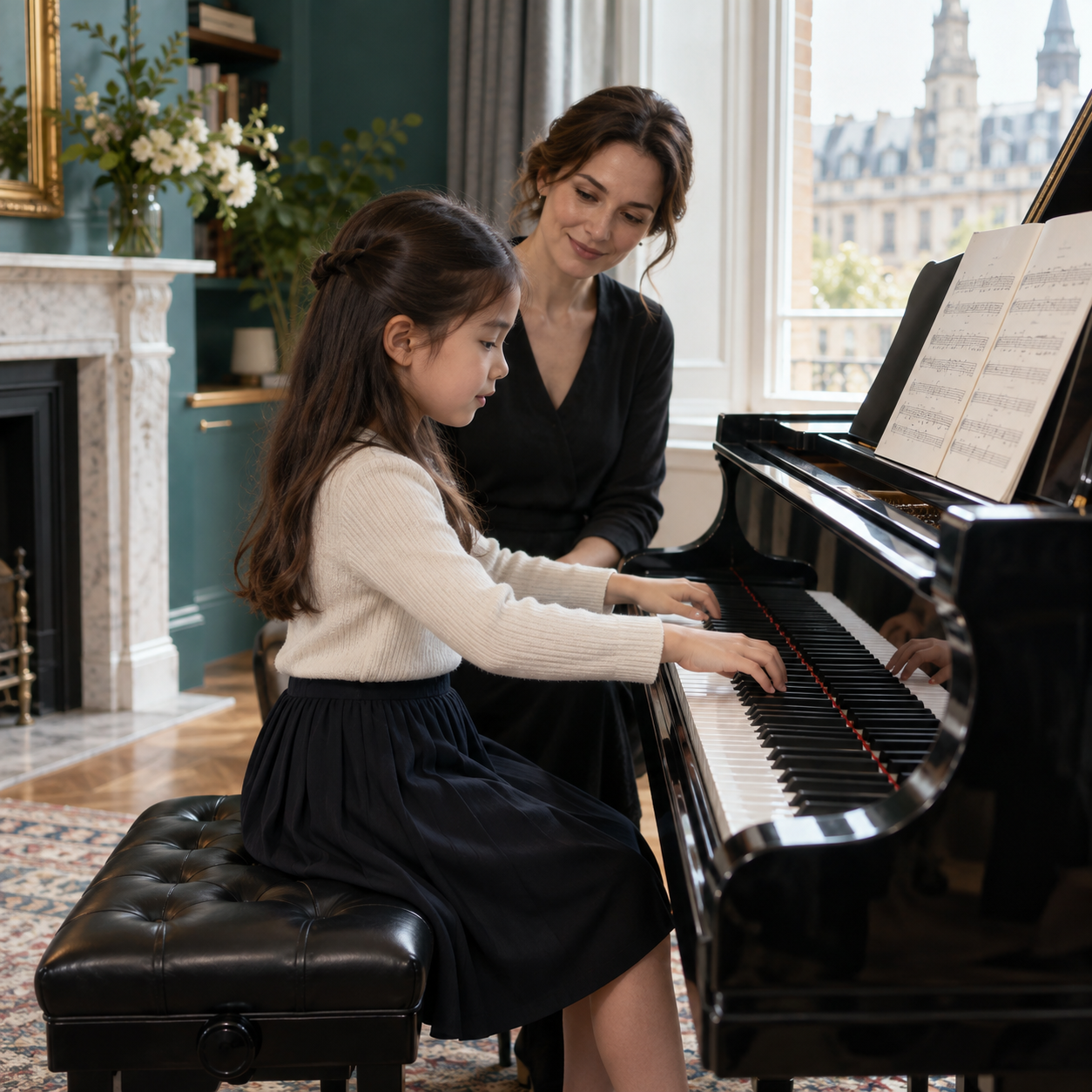
Fluent movement begins with a clear musical intention, not with speed.
Four games that develop motor planning
Try a silent landing game: name a distant key, close the lid or mute the sound, and move there without rushing. Build a three-action chain: tap the rhythm, place the hand, play the phrase. Reverse a familiar five-note pattern so the child must update the route. Finally, place two coloured cards on the keyboard and improvise a musical journey between them.
Each game has a clear goal and quick feedback. If the child repeatedly misses, reduce the distance or shorten the chain. WKMT’s guide to hand-eye coordination at the piano explains a related skill, but motor planning is broader: it prepares the action even when the eyes are not continuously guiding every finger.
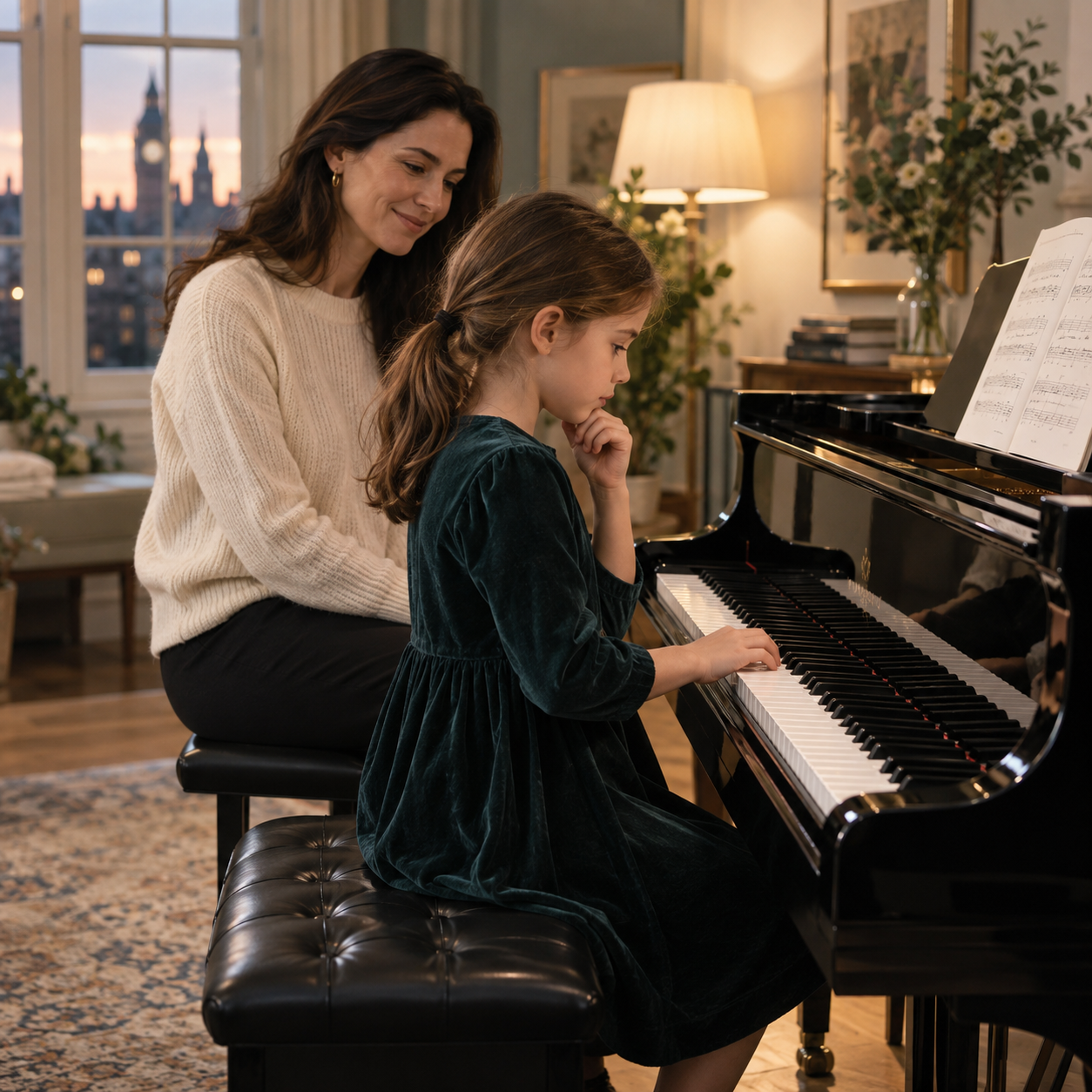
How parents can support movement without over-directing
At home, ask one planning question before correcting: where will your hand begin, what changes next, or which finger needs to be ready? Let the child answer through words, gesture or demonstration. A ten-second pause to prepare can be more useful than five hurried repetitions. Praise a clear plan as well as a correct result.
Progress appears when the child starts with less searching, prepares a hand change early or recovers after a mistake without restarting the whole piece. Motor planning is one component of piano learning, not a diagnosis. Persistent concerns about everyday movement or development should be discussed with an appropriate qualified professional while lessons remain encouraging, musical and proportionate.
WKMT London
Give your child a lesson environment where movement, listening and confidence develop together.
Explore children’s piano lessonsSources on motor planning
- Journal of Neuroscience: planning and execution of movement sequences
- PMC: music training and executive function in children
- Springer: systematic review of music training and executive functions
- Frontiers: auditory-motor interactions in music
- PMC: sensorimotor learning in musical performance
- NHS: developmental coordination disorder overview
Sources checked 18 September 2026. Educational guidance; individual circumstances and progress vary.