
 TRIAL LESSON
Pianists, Piano Lessons
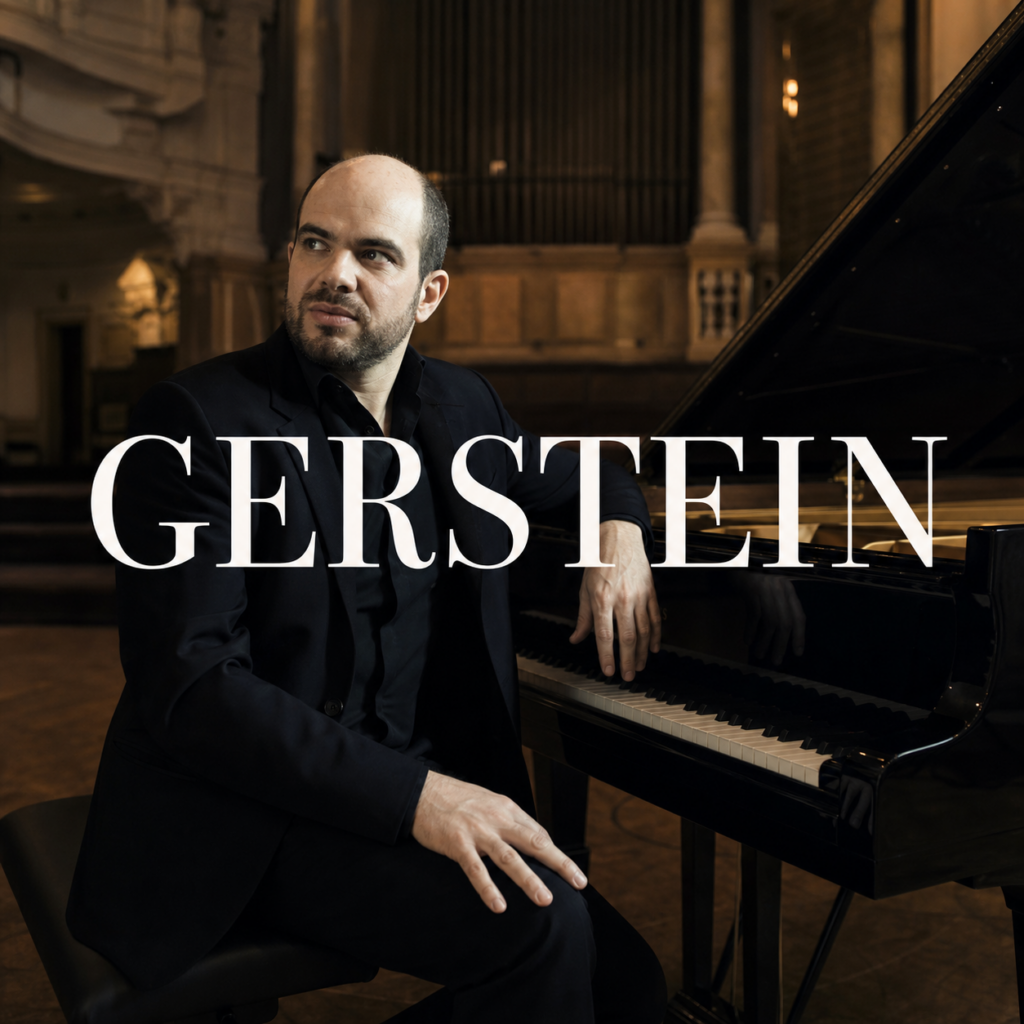
Kirill Gerstein in London: Virtuosity, Intelligence and Listening Detail
Aug
Kirill Gerstein in London
WKMT London listening guide
Kirill Gerstein in London: Virtuosity, Intelligence and Listening Detail
Kirill Gerstein makes formidable music sound like an argument discovered in real time. His classical training, jazz ear and appetite for unusual repertoire offer London listeners a particularly rich lesson in rhythm, colour and intellectual freedom.
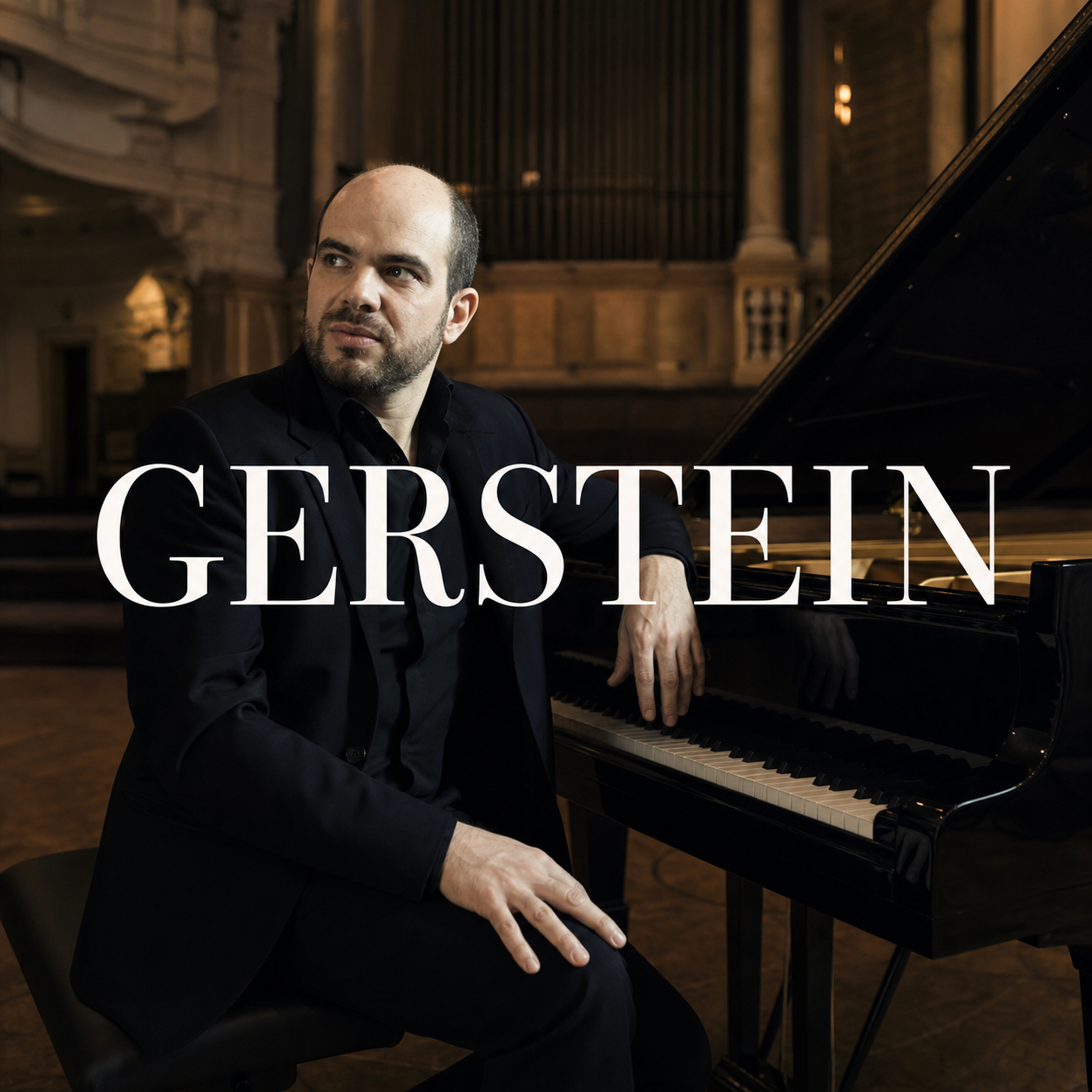
Born in Voronezh in 1979, Kirill Gerstein learned within the Russian specialist-school tradition but also absorbed jazz from his parents’ record collection. At fourteen he met vibraphonist Gary Burton and soon became Berklee College of Music’s youngest student. Later study with Dmitri Bashkirov and Ferenc Rados deepened the classical side of a musical identity that never became stylistically narrow.
That route matters to anyone pursuing classical piano study in London. WKMT London teaches one-to-one lessons in which technique, score reading, listening and interpretation meet. Kirill Gerstein shows why such elements belong together: rhythmic knowledge changes articulation; harmonic hearing changes voicing; curiosity changes what a familiar concerto can mean.
Kirill Gerstein: training, prizes and a singular musical route
The official Kirill Gerstein biography records First Prize at the 2001 Arthur Rubinstein Competition, an Avery Fisher Career Grant and the 2010 Gilmore Artist Award. These distinctions mark more than competitive success. They enabled long relationships with orchestras, composers and recording projects in which Gerstein could treat repertoire as a field of enquiry rather than a sequence of showpieces.
His jazz experience is often mentioned as a colourful biographical fact, yet its deeper effect is audible in timing. A beat can remain stable while an accent arrives with conversational freedom. Classical rubato then feels related to metre, not laid over it. Kirill Gerstein does not make Rachmaninov sound like jazz; he brings to Rachmaninov the alertness of a musician who understands how pulse can breathe without losing direction.
Rhythm
Hear where the phrase leans against the beat and where it settles back into it.
Voicing
Follow the inner line, not only the brilliant top melody.
Architecture
Notice how a local surge prepares a later structural arrival.
Dialogue
Listen for the piano answering an orchestral colour rather than merely projecting over it.
How to listen to Kirill Gerstein in concerto repertoire
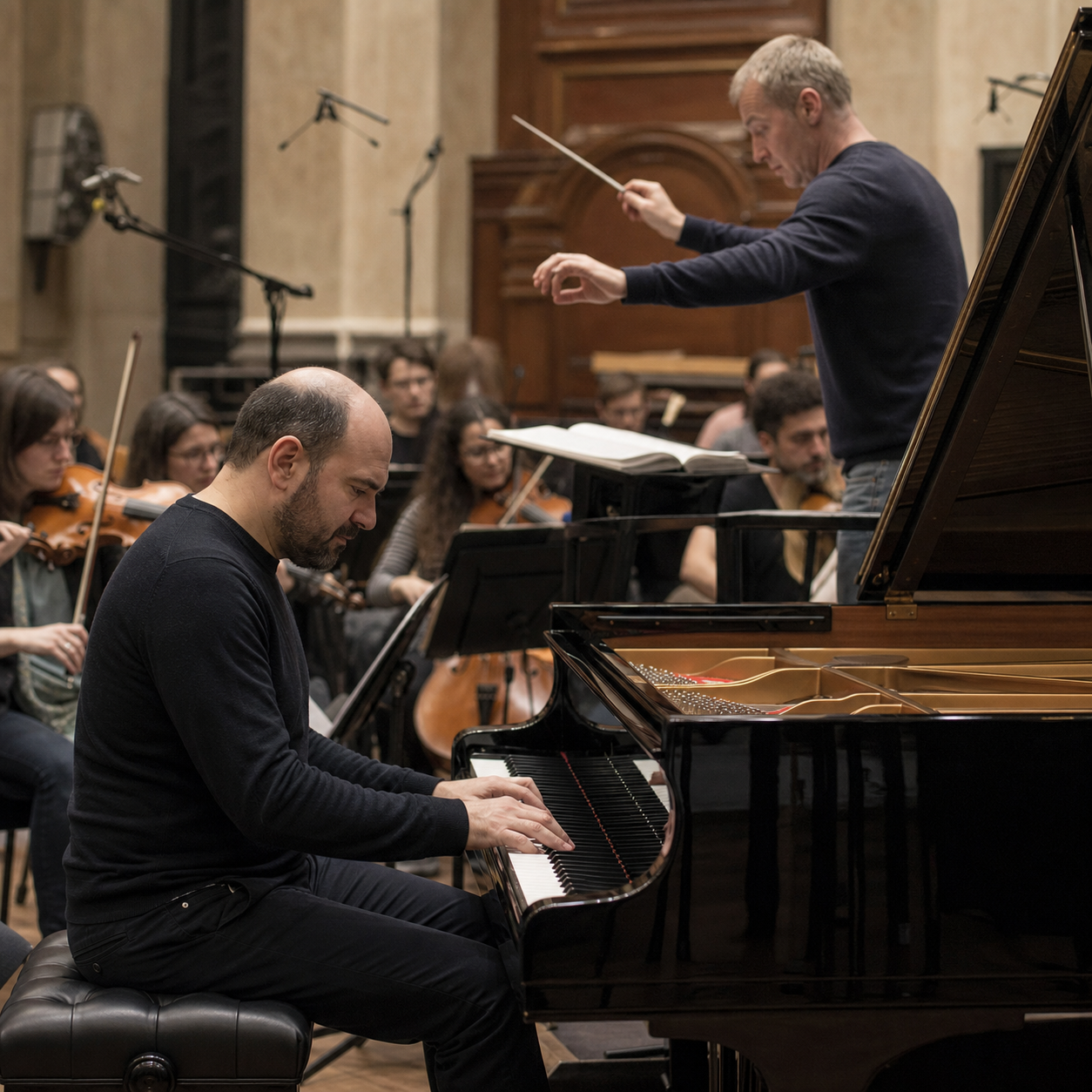
Begin with balance. In Brahms or Rachmaninov, a pianist can produce immense sound and still disappear musically if every layer carries equal weight. Kirill Gerstein often allows bass, inner harmony and melody to occupy different planes. The result is power with perspective. At the piano, a learner can test this by playing one chord four ways, each time choosing which note or register owns the sentence.
Next follow transitions. Gerstein’s virtuosity is most revealing between the celebrated passages: the moment a theme changes character, the accompaniment takes control or the orchestra interrupts. Technical security gives him choices there. For a student, slow practice should therefore preserve the destination of a transition instead of turning it into disconnected note-work.
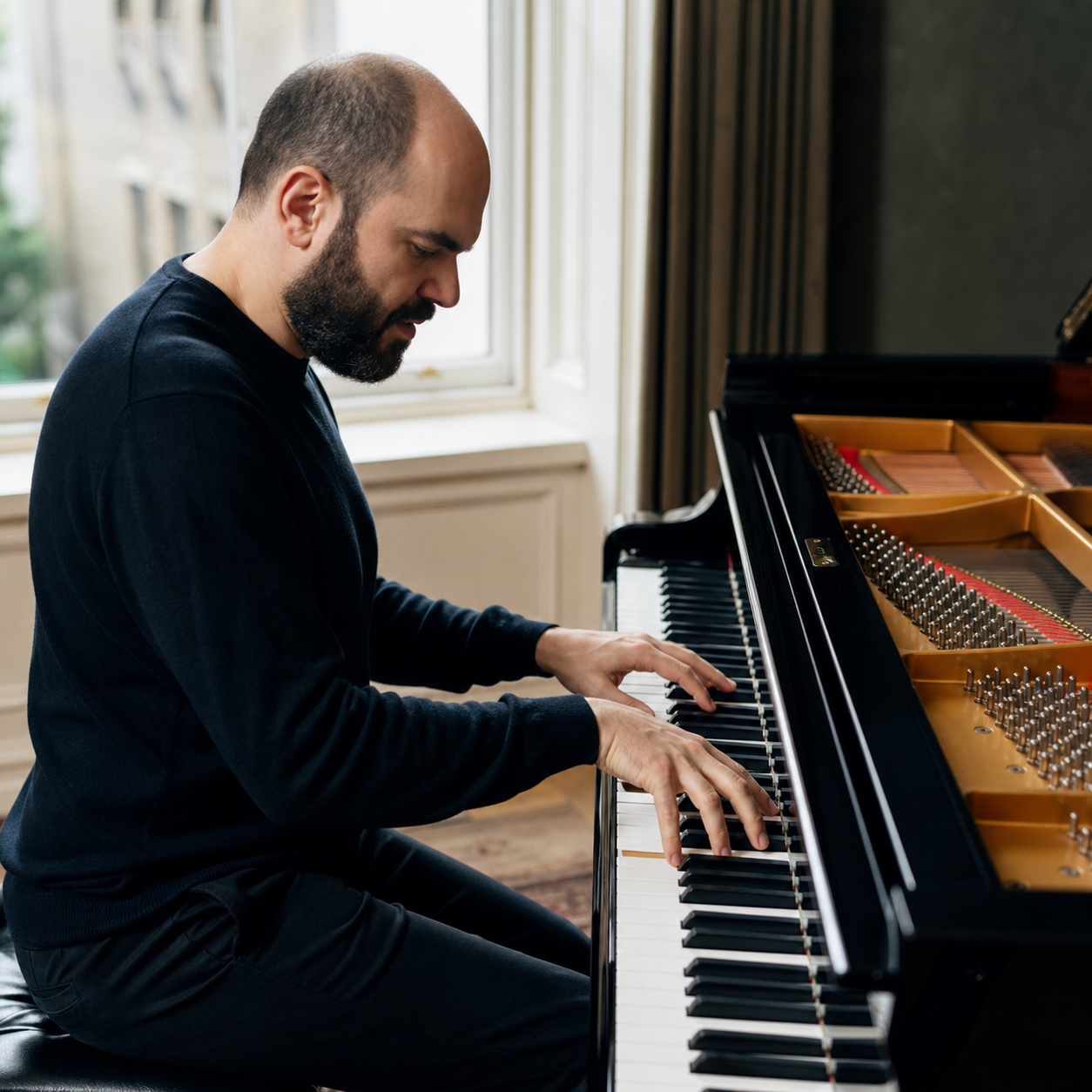
Virtuosity becomes musical intelligence when every difficult gesture answers a question of rhythm, colour or structure.
Busoni, Gershwin and the value of musical curiosity
Kirill Gerstein has championed Busoni’s vast Piano Concerto and explored Gershwin with unusual textual seriousness. His recording work also includes historically informed attention to Tchaikovsky’s First Piano Concerto. These projects resist the idea that interpretation is decoration applied after the notes are learnt. Editions, sources, orchestration and performance traditions all shape what the pianist believes the score is asking.
The Gilmore artist profile and BBC artist material place that curiosity within a substantial international career. For learners, the useful habit is modest and practical: compare two editions, hear an orchestral score, or identify which voice carries the harmony before deciding how loudly to play.
Kirill Gerstein in London
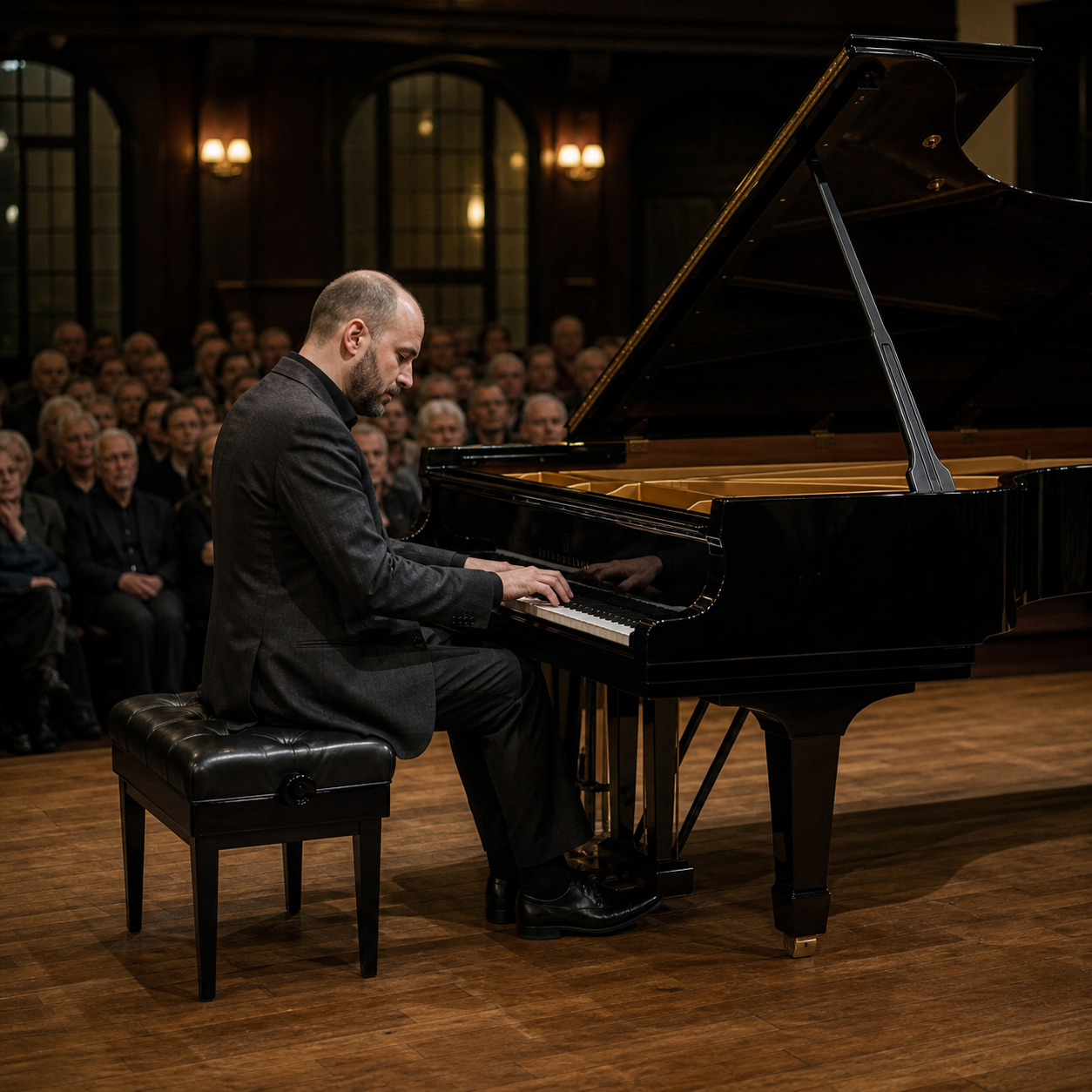
London is a recurring part of Kirill Gerstein’s performing life. He has appeared with the London Symphony Orchestra, London Philharmonic Orchestra and BBC Symphony Orchestra, including Proms and Barbican contexts. A London Symphony Orchestra concert programme documents his work with the orchestra, while Wigmore Hall’s programme archive reflects the chamber and recital side of his London presence.
A hall reveals things recordings can hide: how a soft chord travels, whether a climax hardens, and how silence holds an audience. London students can turn attendance into study by choosing one listening question before the concert. Follow bass direction in Brahms, colour changes in Debussy, or conversational timing in chamber music. One precise question makes a live performance memorable.
A Kirill Gerstein listening route for piano learners
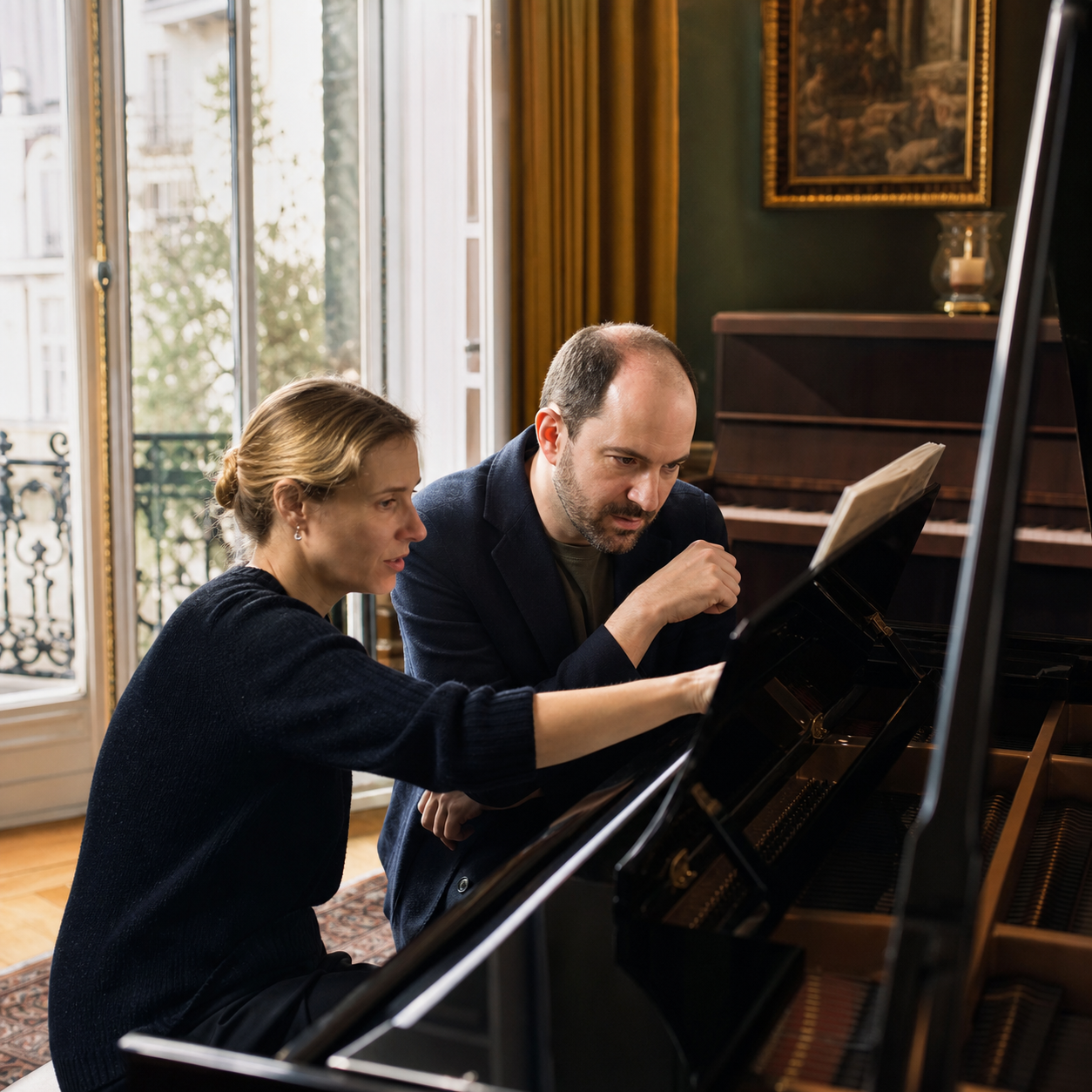
Choose one concerto, one solo work and one collaborative recording. On the first hearing, follow the emotional direction. On the second, attend only to rhythm and releases. On the third, listen for inner voices. This sequence prevents admiration from remaining vague. Kirill Gerstein becomes not a model to imitate, but a musician whose choices sharpen your questions.
The lasting lesson is breadth with discipline. Curiosity does not mean playing every style in the same way. It means bringing enough knowledge and imagination to hear what each work uniquely requires.
WKMT London
Discover WKMT London’s individual approach to classical piano lessons, close listening and serious musical development.
Sources
- Kirill Gerstein: official biography
- The Gilmore: Kirill Gerstein
- BBC: Kirill Gerstein profile
- London Symphony Orchestra concert programme
- Wigmore Hall programme archive
Sources last checked 24 August 2026.