
 TRIAL LESSON
Piano Lessons
How to Improve Memory: Why Piano Practice Can Help Adults
Aug
WKMT London adult learning guide
How to Improve Memory: Why Piano Practice Can Help Adults
Adults asking how to improve memory often imagine a single mental exercise. Piano is richer: it combines sound, movement, pattern, prediction, attention and emotion in one repeatable learning activity.
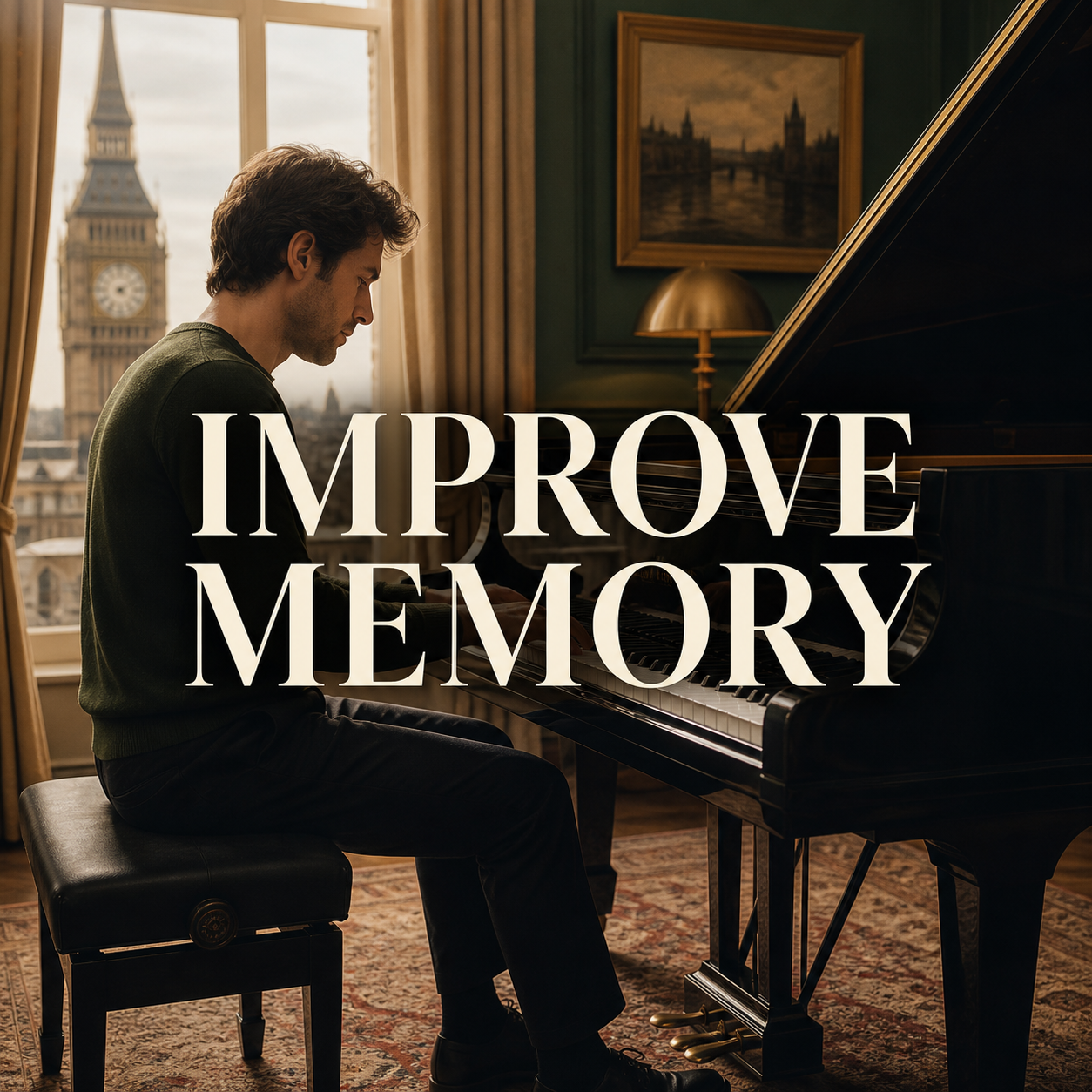
The practical appeal is easy to understand. When an adult learns a phrase, the brain must hold its contour, rhythm and fingering long enough to act. The player then compares the result with an internal expectation and makes another attempt. Memory is not being tested in isolation; it is being used to solve a musical problem that has emotional and sensory meaning.
For adults considering piano lessons in London, this makes study valuable even before a piece is finished. WKMT London offers individual classical piano teaching in which repertoire, listening, reading and technical work can be adapted to a learner’s experience and goals. The central benefit is not a promise of effortless recall. It is a structured reason to pay attention repeatedly.
How to improve memory through musical learning
Memory improves when information is encoded clearly, revisited at useful intervals and retrieved rather than merely reread. Piano naturally invites these processes. A learner sees a pattern, hears it, feels it in the hands and relates it to harmony or phrase. Multiple cues make the material more distinctive. Later, playing from memory requires active retrieval: the learner reconstructs the sequence rather than simply recognising it on the page.
Auditory memory
Retain the sound and direction of a phrase.
Motor memory
Organise a sequence of coordinated movements.
Visual memory
Recognise notation, shapes and keyboard geography.
Structural memory
Understand harmony, form and recurring patterns.
This layered approach explains why memorising bar by bar through repetition can feel fragile. If the hands are the only cue, a hesitation may break the chain. A stronger memory has several routes back into the music: the bass line, harmonic destination, phrase shape, visual landmark or inner sound.
What adult piano research actually shows
A controlled study of musically inexperienced adults aged 61 to 85 found improved verbal recall after a four-month instrumental programme, alongside changes interpreted as greater neural efficiency. The instrument was keyboard harmonica rather than piano, so the finding should not be stretched beyond its design. It nevertheless supports the broader idea that learning a pitched keyboard instrument can engage memory beyond the practised musical task.
Other piano studies are promising but mixed. A 2022 randomised project reported that six months of piano training stabilised white-matter microstructure in the fornix relative to an active control group, with relationships to episodic-memory performance and weekly practice. A later one-year study showed that musically inexperienced older adults could acquire substantial piano skills, while individual learning trajectories varied.
A memory-aware piano practice framework
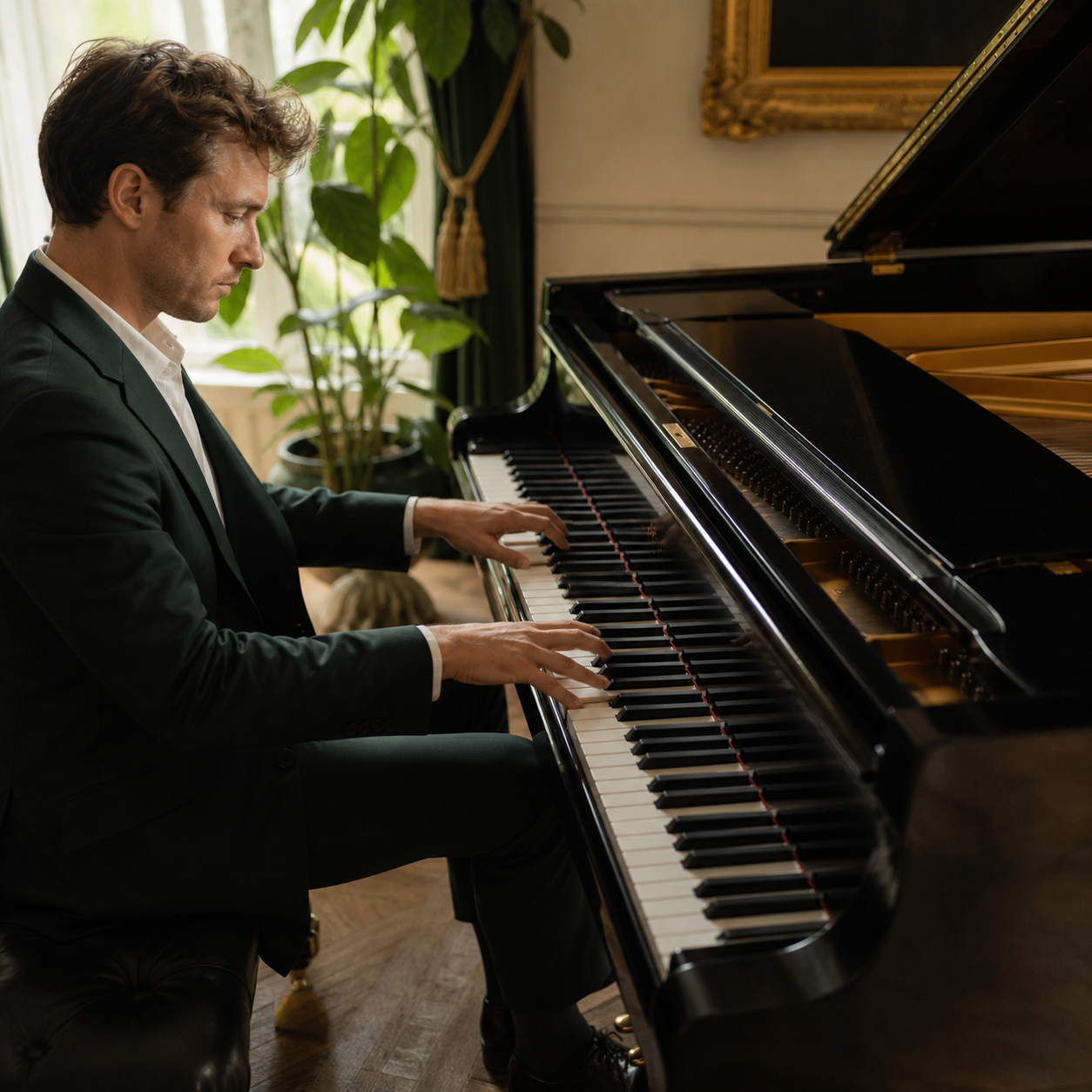
Begin with a small musical unit that still makes sense: perhaps two phrases rather than two isolated bars. Read it slowly, notice the harmony and sing one voice. Then close the score and retrieve only the opening shape. Check, correct and return later. The gap is useful because retrieval after a pause strengthens access more than continuous copying.
Encode
Name the key, pattern, rhythm and destination before repeating.
Connect
Link ear, score, harmony and movement so memory has several cues.
Retrieve
Look away and rebuild a short unit without panic.
Space
Return after minutes, then a day, instead of massing every repetition.
Adults sometimes avoid memory work because forgetting feels like failure. A better interpretation is that retrieval exposes where the representation is vague. If the second phrase disappears, ask what makes it different from the first. If a left-hand pattern fails, describe its harmonic route. The question turns a blank into information.
Memory becomes more reliable when a passage is understood as music, not stored as a chain of finger instructions.
How to improve memory without overloading attention
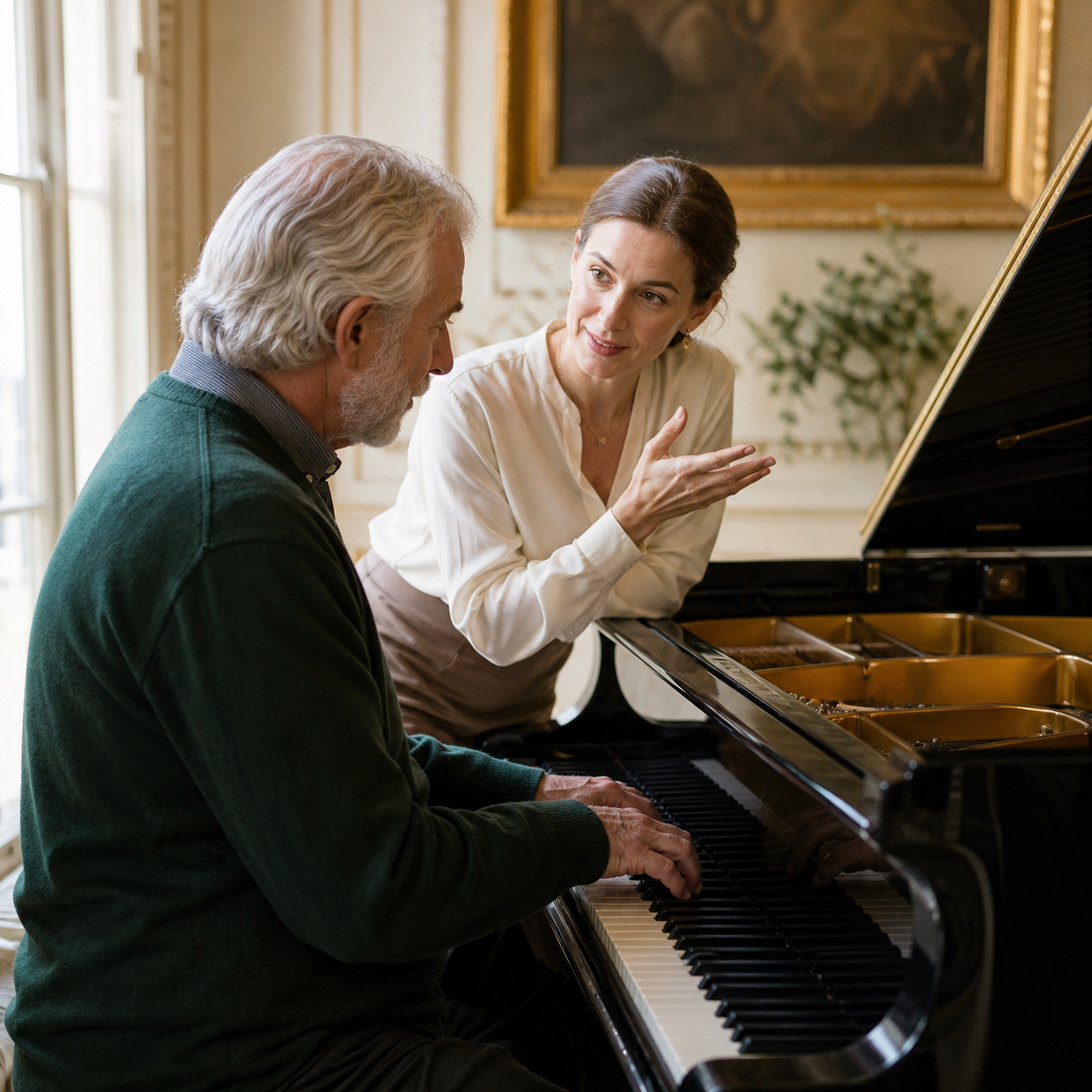
Working memory is limited. Trying to monitor notes, fingering, posture, pedal, rhythm and expression simultaneously can overwhelm any learner. A well-designed lesson changes the focus. One repetition may attend to bass direction, the next to melodic release, the next to pedalling. The parts are then recombined. This sequencing respects cognitive load while keeping the whole musical aim visible.
Rest also belongs to learning. Short, concentrated sessions allow the learner to return with a fresh ear. Sleep supports consolidation, while regular movement and general health affect cognition more broadly. The NHS overview of dementia risk reduction emphasises established health behaviours rather than miracle exercises. Anyone experiencing persistent or concerning memory change should seek clinical advice.
A realistic route for adult learners in London
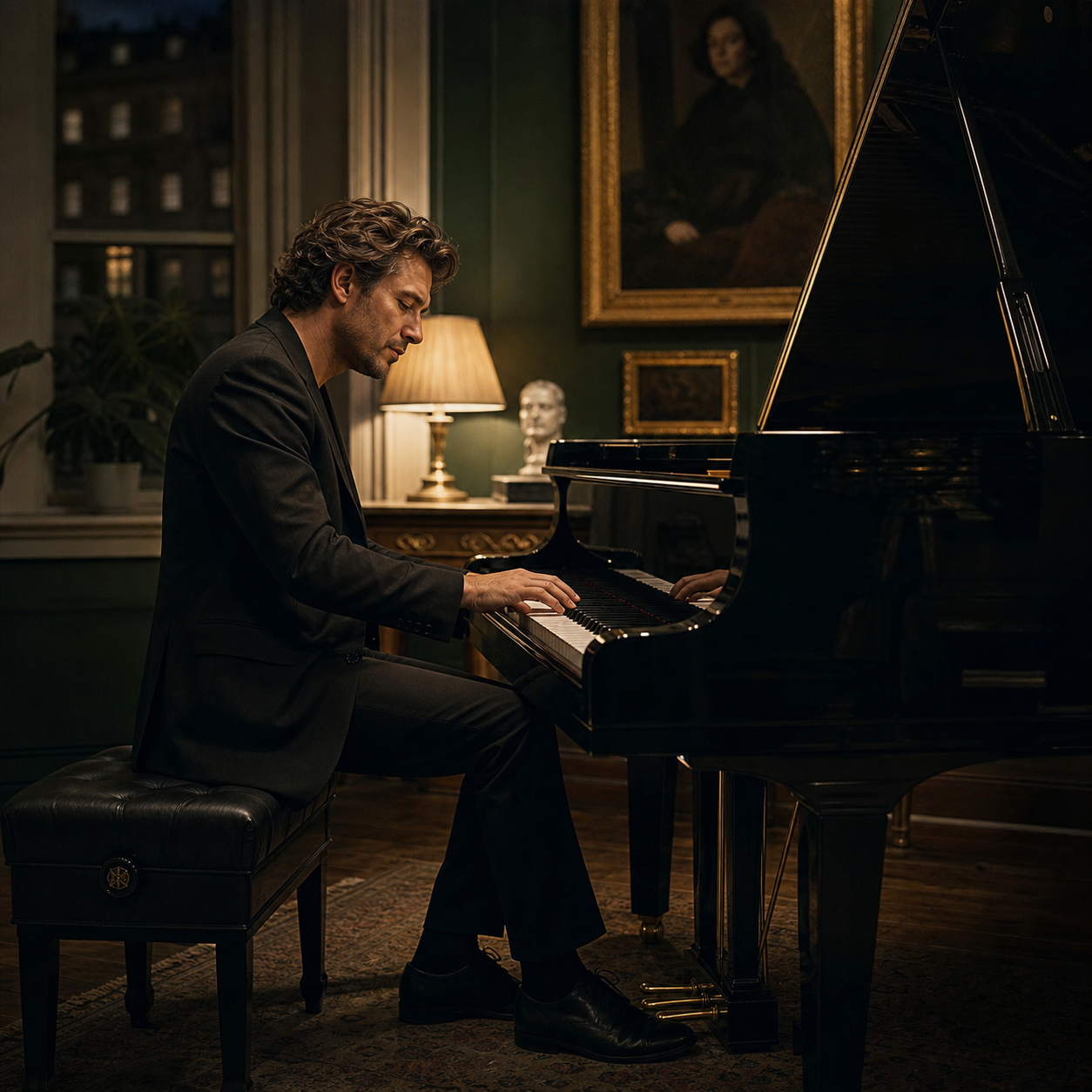
Choose repertoire with enough pattern to understand and enough novelty to remain alert. Ask the teacher to explain harmonic landmarks and to test recall in small, calm sections. Keep a brief record of what was retrieved after a gap, not simply how long practice lasted. Over several weeks, progress may appear as quicker relearning, fewer restarts and greater confidence after an interruption.
How to improve memory is ultimately a question about how to learn. Piano provides a particularly rich answer because the material is structured, audible and expressive. Even when the scientific outcomes are modest, the learner gains a repertoire, a sharper ear and a purposeful relationship with time.
WKMT London
Discover individual adult piano study at WKMT London, whether you are beginning, returning after years away or developing a more serious personal repertoire.
Related video
A useful companion video
The Amazing Way Piano Transforms Your Brain (At Any Age!) is embedded below from YouTube for educational commentary and context. Rights remain with Piano Roadmap / YouTube; WKMT is not affiliated with or endorsed by the creator.
Sources
- Instrument training, verbal memory and neural efficiency in older adults
- Six months of piano training and fornix white matter
- Twelve months of music training in older adults
- Systematic review of neurobiological effects of music making
- Piano training, cognition and everyday function
- NHS: reducing dementia risk
Sources last checked 23 August 2026.