
 TRIAL LESSON
Piano Lessons
Fine Motor Skills: What Piano Practice Trains in Children
Aug
WKMT London parent guide
Fine Motor Skills: What Piano Practice Trains in Children
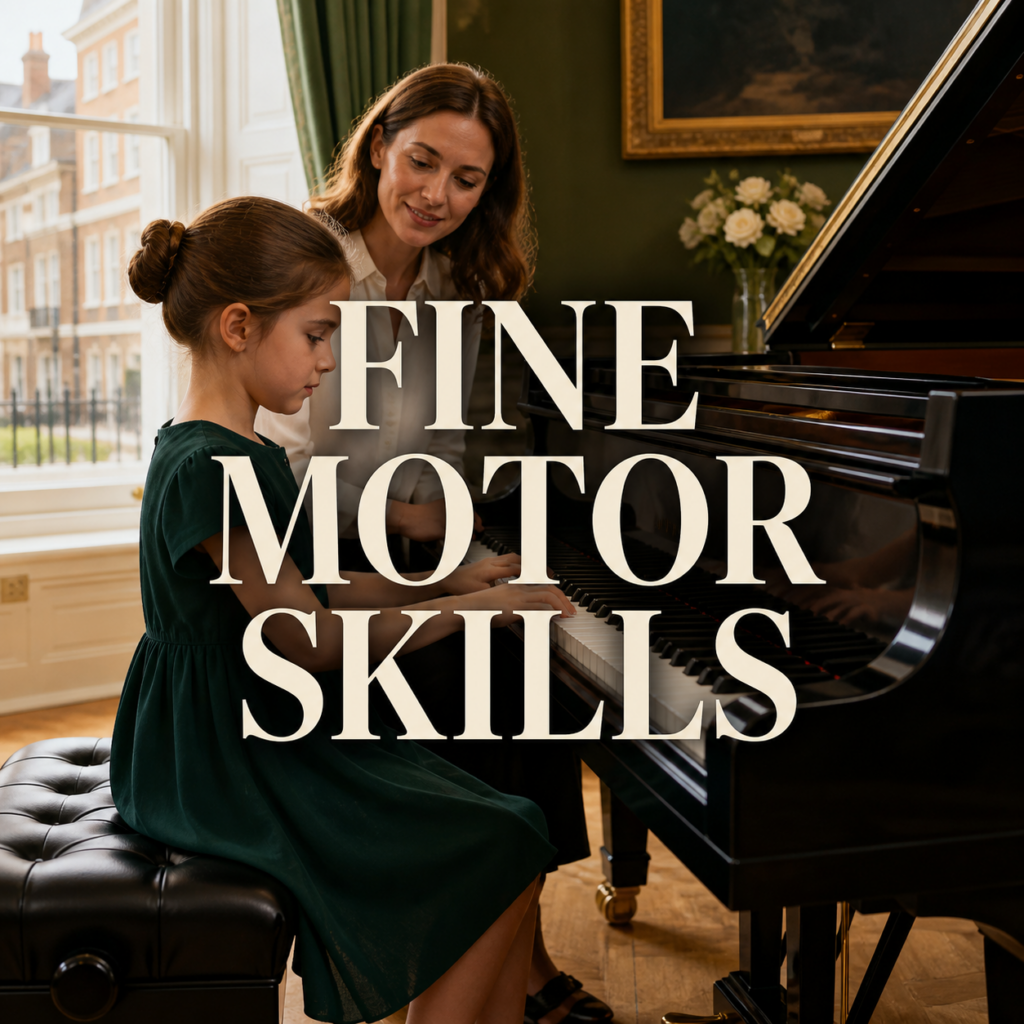
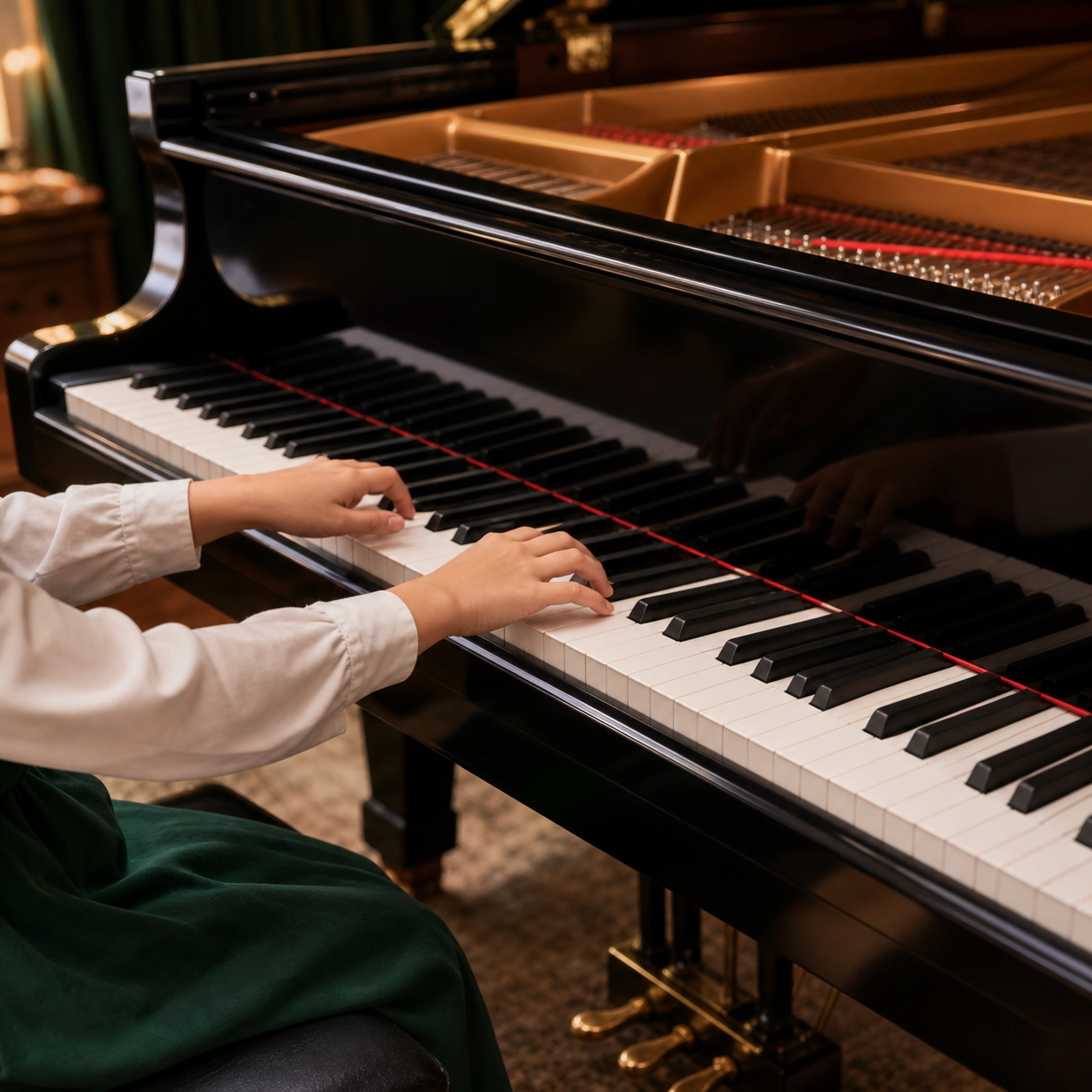
At the piano, fine motor skills are never just fast fingers. Children learn to coordinate two hands, grade force, release tension, track space and connect precise movement with attentive listening.
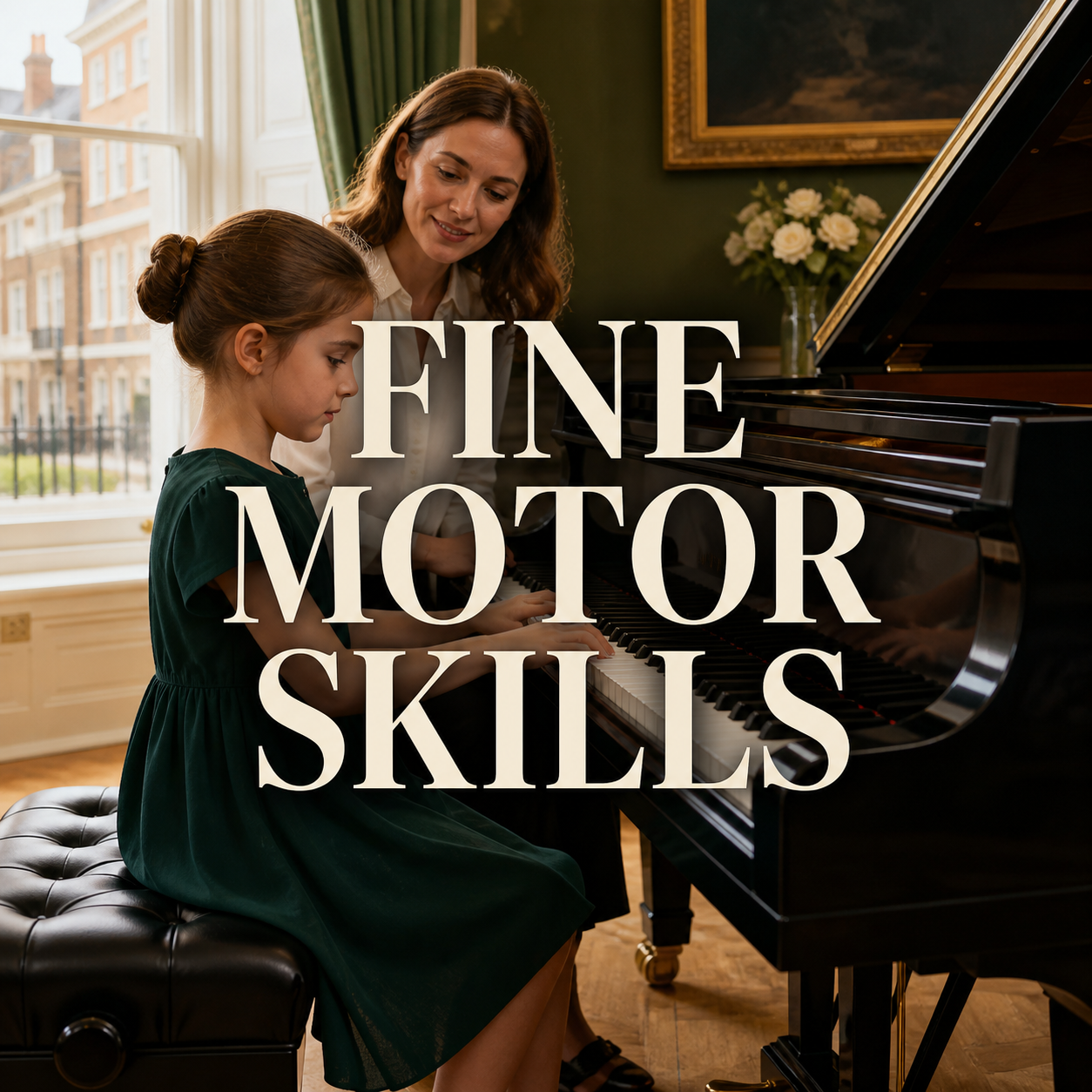
Parents often notice the visible result first: a child who once pressed with a whole hand begins to use individual fingers, shape a quiet phrase or coordinate melody and accompaniment. Beneath that improvement sits a more complex learning process. The child is mapping distance, anticipating movement, controlling force and comparing the intended sound with the sound actually produced.
At WKMT London, children’s piano lessons in London are organised around musical understanding as well as physical coordination. This distinction matters. Fine motor skills develop best when movement has meaning: a phrase to shape, a rhythm to feel or a sound to imagine. The keyboard is not a gym apparatus; it is an instrument that rewards sensitive control.
What fine motor skills mean at the piano
Fine motor skills are small, controlled movements involving the hands and fingers, usually coordinated with vision and touch. Piano playing adds hearing and timing. A child must locate a key, prepare a finger, depress it with an appropriate movement, release it, and organise the next event within a pulse. Even a five-note melody asks the nervous system to combine several streams of information.
Finger independence
One finger moves while neighbouring fingers remain available rather than rigid.
Bimanual coordination
The two hands perform related but sometimes different rhythms, shapes or dynamics.
Force control
The child learns that sound changes with speed and weight, not simply with pressing harder.
Spatial accuracy
The eye, ear and hand cooperate to find intervals and keyboard patterns.
A peer-reviewed study of Orff-based training found improvements in children’s manual dexterity and bimanual coordination after twenty-four weeks. The authors carefully distinguished the skills most closely related to musical activity, including response speed and coordination, from broad claims about every kind of dexterity. That caution is useful for parents: piano can train specific movement skills, but it is not a universal treatment or a substitute for clinical support.
How piano trains fine motor skills without drills
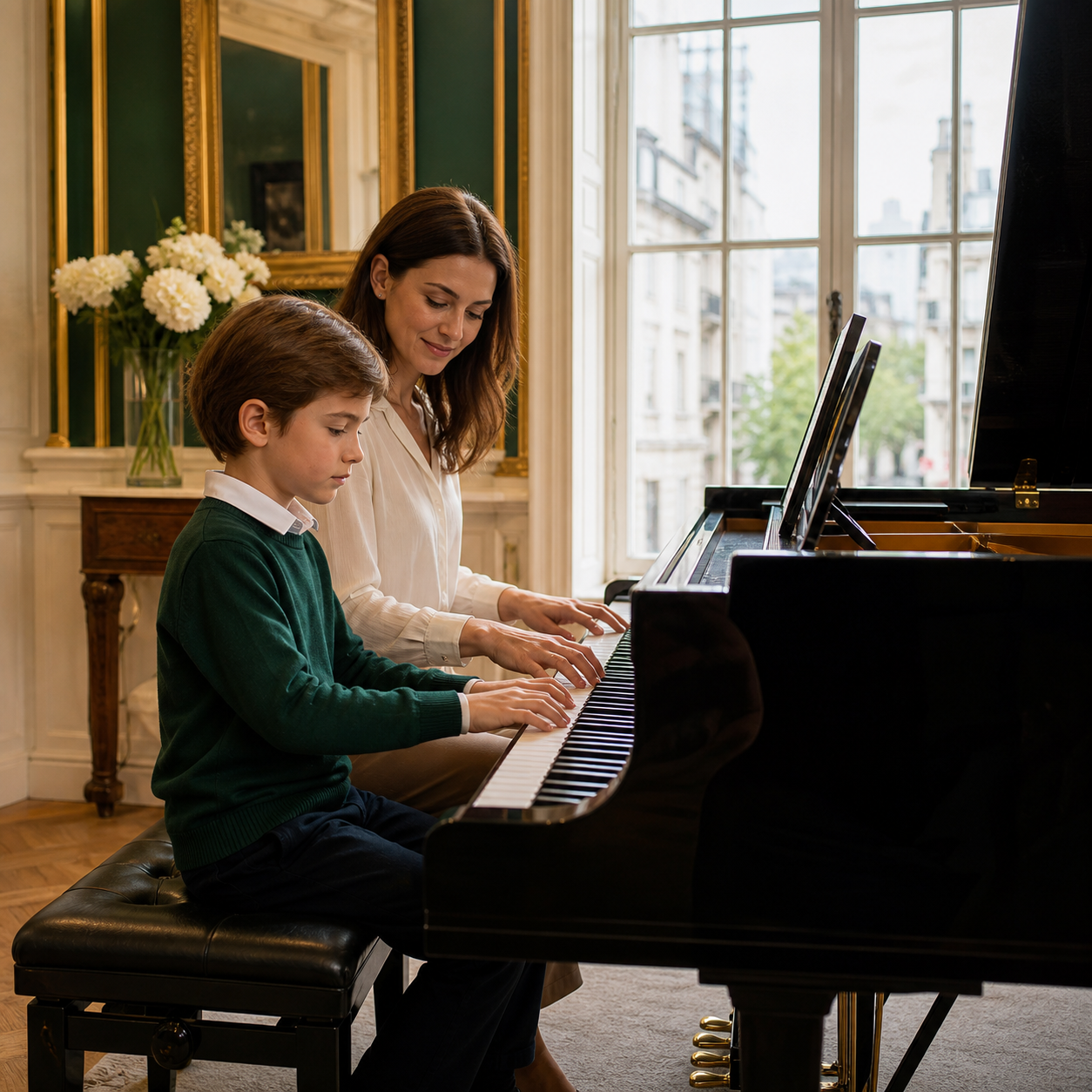
Good teaching begins with a sound or musical idea. A child might play a short echo, alternate two fingers in a lively rhythm or shape a simple question-and-answer phrase. The teacher observes whether the wrist is free, the fingertip stable enough and the shoulder relaxed. A small adjustment is then tested through the music. This makes the physical lesson memorable because the child can hear why it matters.
Slow practice is helpful when it preserves musical intention. It gives the brain time to compare movement with result. Yet slow playing becomes unhelpful if every note is isolated and the child loses the phrase. The aim is controlled continuity: short enough material to manage, repeated with attention, followed by rest or a contrasting task.
A parent’s guide to healthy progress
Fine motor skills do not develop in a straight line. Growth, fatigue, attention and unfamiliar repertoire can temporarily make a child’s playing look less coordinated. This is normal. Progress is better judged across several weeks: fewer accidental notes, easier changes of position, more controlled dynamics, and the ability to correct a movement after listening.
A healthy sign
The child can stop, reset and try again without pain or panic.
A teaching sign
The task is adjusted when the hand becomes tense or the child loses the musical aim.
A practice sign
Short, focused returns produce more learning than one long battle.
A warning sign
Persistent pain, numbness or distress should never be played through.
The Harvard Center on the Developing Child describes how children build self-regulation and working skills through supported practice and increasingly complex tasks. Piano is one possible setting for that process because feedback is immediate. The child hears whether timing and movement have worked, while the teacher keeps the challenge within reach.
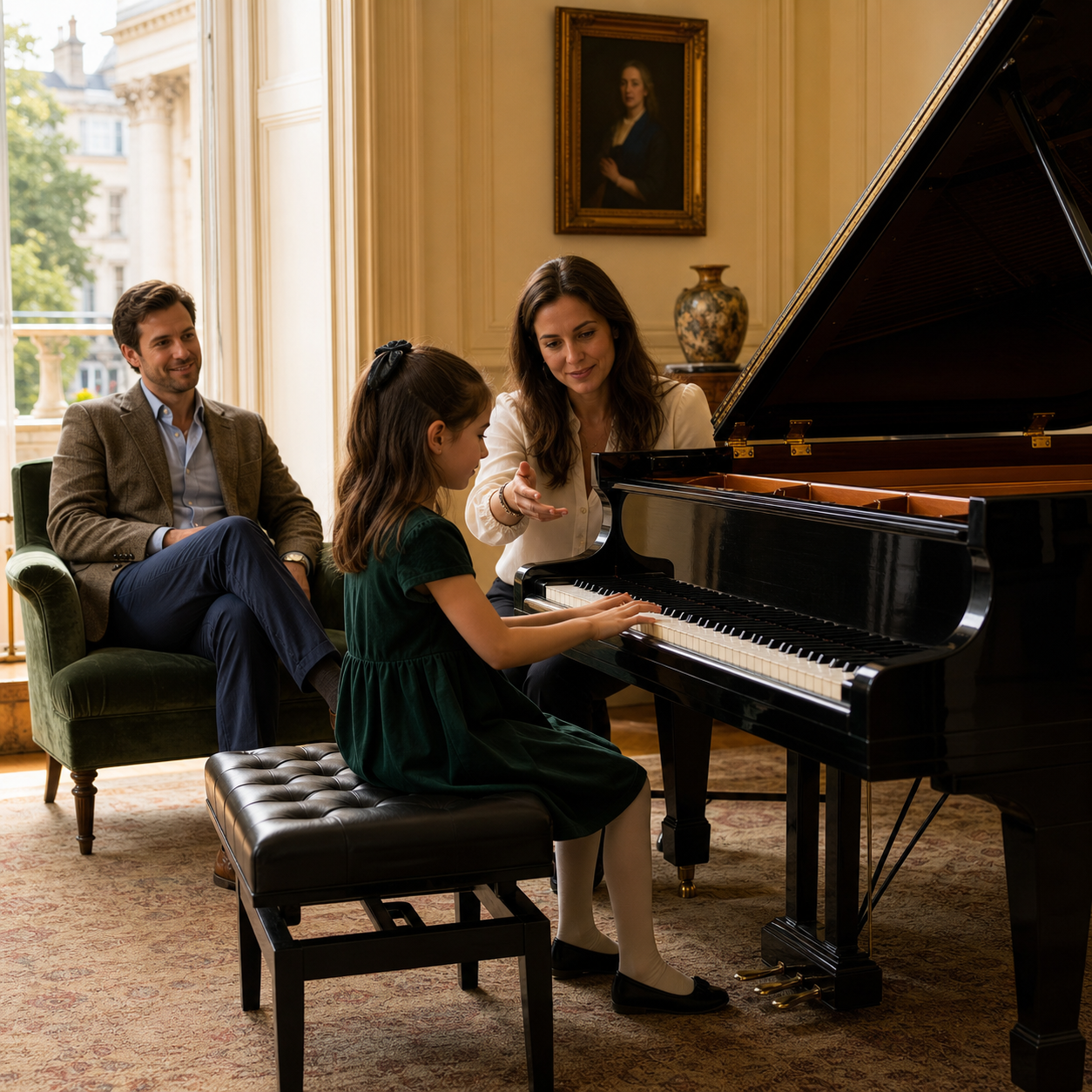
The most useful movement is the smallest one that serves the sound without making the child rigid.
Fine motor skills by stage, not by age alone
A young beginner may first coordinate a single finger with a steady pulse, then learn two-finger patterns, hand shifts and simple contrary motion. An older beginner might understand the pattern quickly but still need time for physical familiarity. Repertoire should therefore be matched to current coordination rather than birthday or school year alone.
The Early Years Foundation Stage framework places physical development within a wider picture of learning. Likewise, the Royal College of Music Centre for Performance Science examines musicians’ health and learning as connected questions. These perspectives support a sensible principle: coordination should grow alongside curiosity, confidence and musical enjoyment.
What to ask a children’s piano teacher
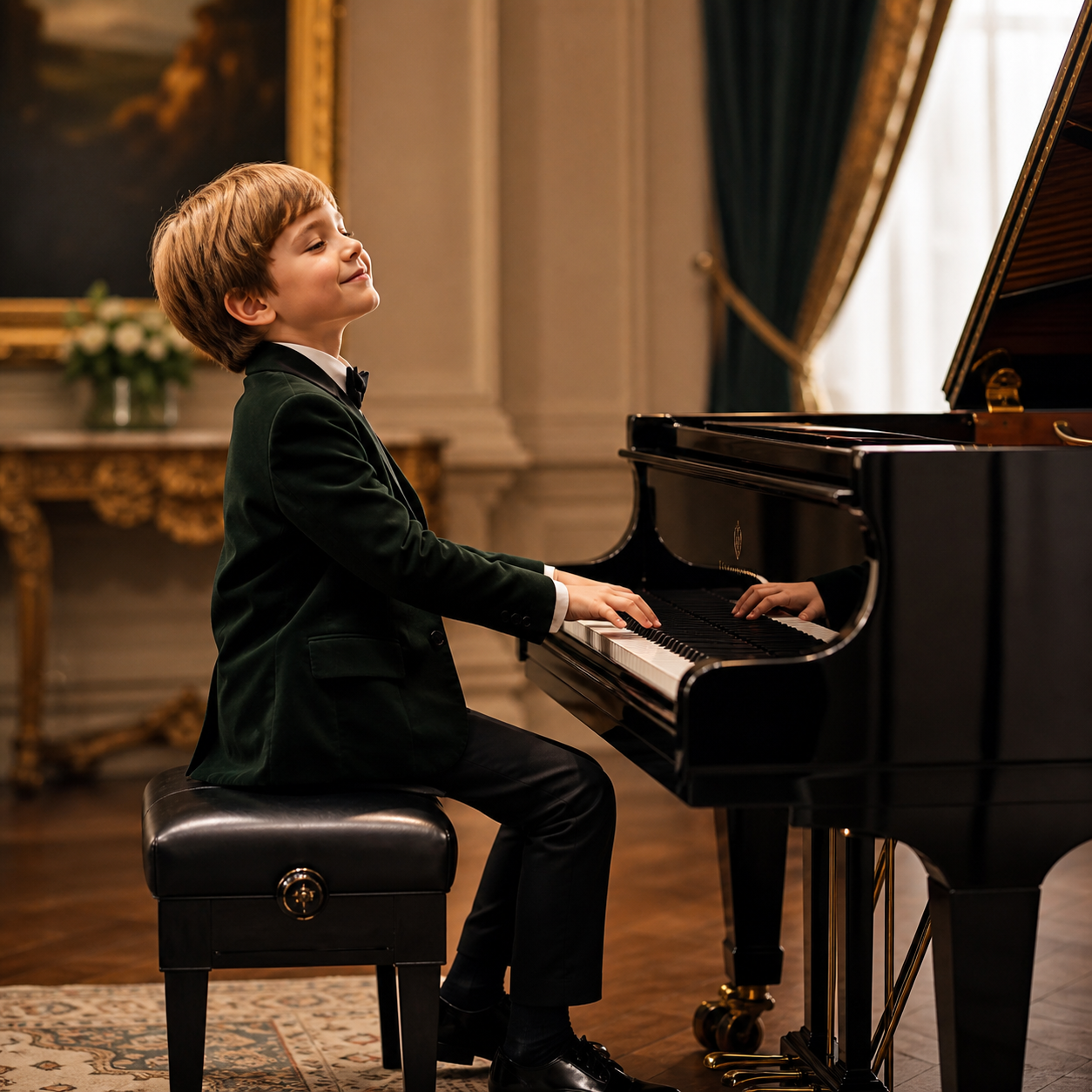
Ask how the teacher responds to tension, how pieces are chosen, and how practice is shortened when a child is tired. A thoughtful answer will connect technique to repertoire and listening. It will also leave room for individual differences. Children vary in hand size, attention, sensory preference and previous musical experience; healthy teaching adapts without lowering musical expectations.
Fine motor skills are one valuable result of piano study, but they are not the whole purpose. The deeper achievement is coordination in service of expression. A child learns that a physical choice can create character, shape a cadence or make another person listen. Precision becomes musical communication.
WKMT London
Discover how WKMT London supports young beginners through individual teaching, careful technical foundations and musically purposeful progress.
Related video
A useful companion video
Muffin Music Notes Preschool Piano Fine Motor Skill Builder Game is embedded below from YouTube for educational commentary and context. Rights remain with Music Time Kid / YouTube; WKMT is not affiliated with or endorsed by the creator.
Sources
- Orff-based music training and children’s manual dexterity
- Harvard Center on the Developing Child: executive function
- UK Government: Early Years Foundation Stage framework
- Royal College of Music: Centre for Performance Science
- Review of music training and cognitive transfer
Sources last checked 23 August 2026.