
 TRIAL LESSON
Pianists
Jan Lisiecki in London: Mozart, Poise and Serious Piano Listening

Aug
WKMT London listening guide
Jan Lisiecki in London: Mozart, Poise and Serious Piano Listening
Jan Lisiecki makes restraint sound active. His Mozart, Chopin and Beethoven invite London listeners to hear how poise, timing and clean texture can carry more expression than surface display.

Born in Calgary in 1995 to Polish parents, Jan Lisiecki entered international musical life remarkably early. Yet biography alone does not explain the fascination. What marks his mature work is the sense that every sound has been weighed for function. A phrase can be spontaneous without being casual, and a brilliant passage can remain transparent enough for the listener to follow its harmonic direction.
That quality makes Jan Lisiecki especially useful for anyone considering serious classical piano study in London. WKMT London teaches one-to-one classical piano through attentive work on sound, technique, reading and interpretation. Lisiecki’s performances demonstrate why those elements cannot be separated: touch affects balance, balance affects character, and character gives a score its human voice.
Jan Lisiecki: training, prizes and an early recording life
The official Deutsche Grammophon biography records an exclusive label contract at fifteen. It also notes major distinctions including Gramophone’s Young Artist Award, the Leonard Bernstein Award and recognition for recordings of Chopin and Beethoven. These details matter because they chart a rare transition: the public first met a prodigiously young musician, but the career endured because repertoire choices and artistic identity developed beyond novelty.
His Mozart concertos K.466 and K.467 formed an early calling card. Mozart exposes musical judgement with unusual severity. The pianist must project, accompany, converse and sometimes retreat within seconds. Heavy emphasis makes the music rhetorical; excessive delicacy drains it of theatre. Jan Lisiecki often finds a middle path in which articulation is clear but never clipped, and the musical sentence breathes across the bar line.
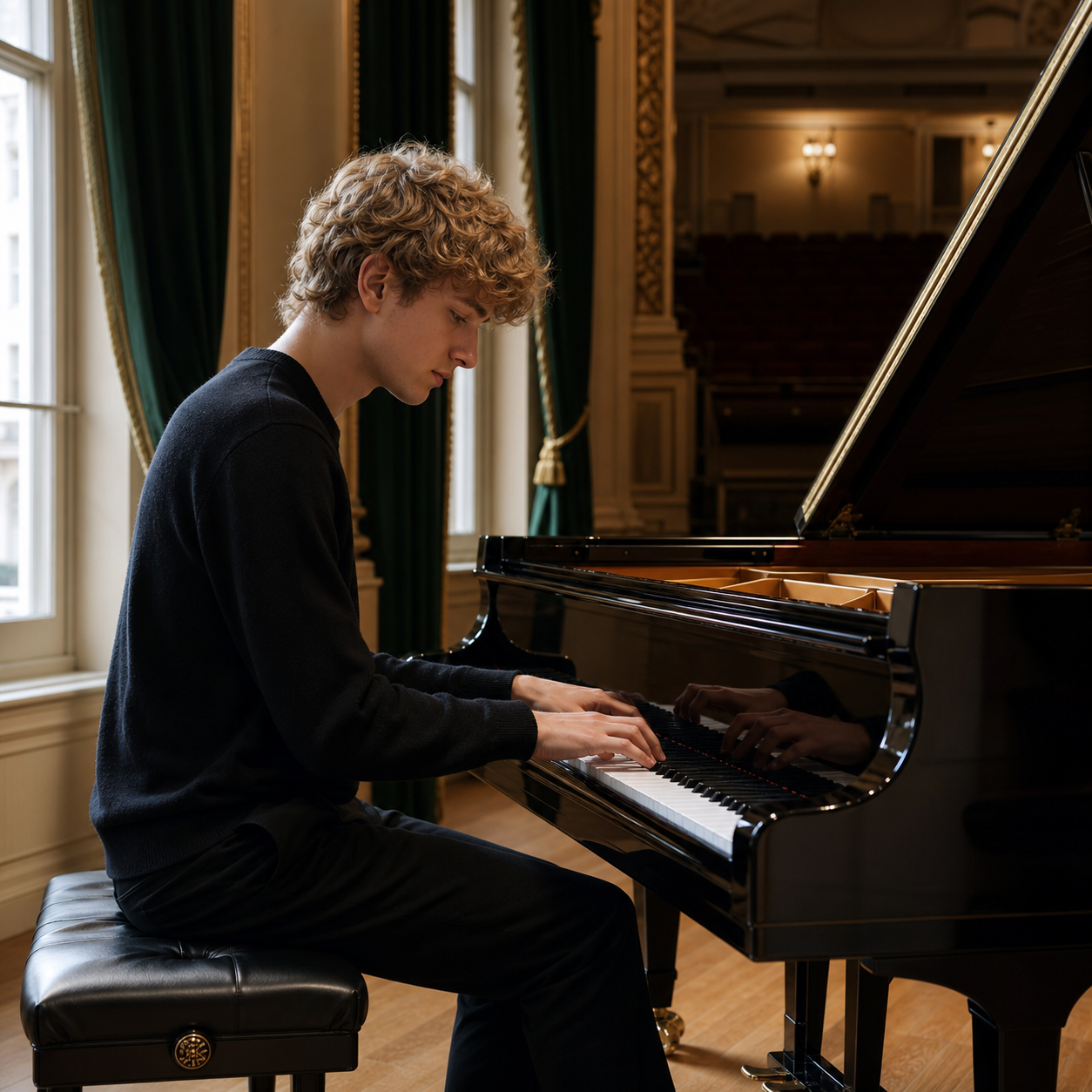
Mozart
Hear the relation between solo line and orchestra: a question, reply, interruption or continuation.
Chopin
Notice how the melody sings while the accompaniment remains alive but proportioned.
Beethoven
Follow the large direction of a movement rather than judging brilliance one passage at a time.
How to listen to Jan Lisiecki in Mozart
Begin with the left hand. In lesser Mozart playing it becomes neutral, a clean but anonymous support. Jan Lisiecki treats accompaniment figures as part of the drama. They can lean forward, soften a cadence or reveal an inner voice. The lesson for a student is immediate: accompaniment is not background. It is the atmosphere in which melody becomes intelligible.
Then listen to releases. Notes do not only begin; they also end. A poised release can create punctuation without a gap, while a late pedal change can turn clarity into haze. The most persuasive Mozart playing depends on these small decisions. In a lesson, a teacher may isolate the balance, remove pedal, sing the phrase, or ask the learner to conduct it before playing. The goal is not imitation of Jan Lisiecki but the cultivation of the same quality of attention.
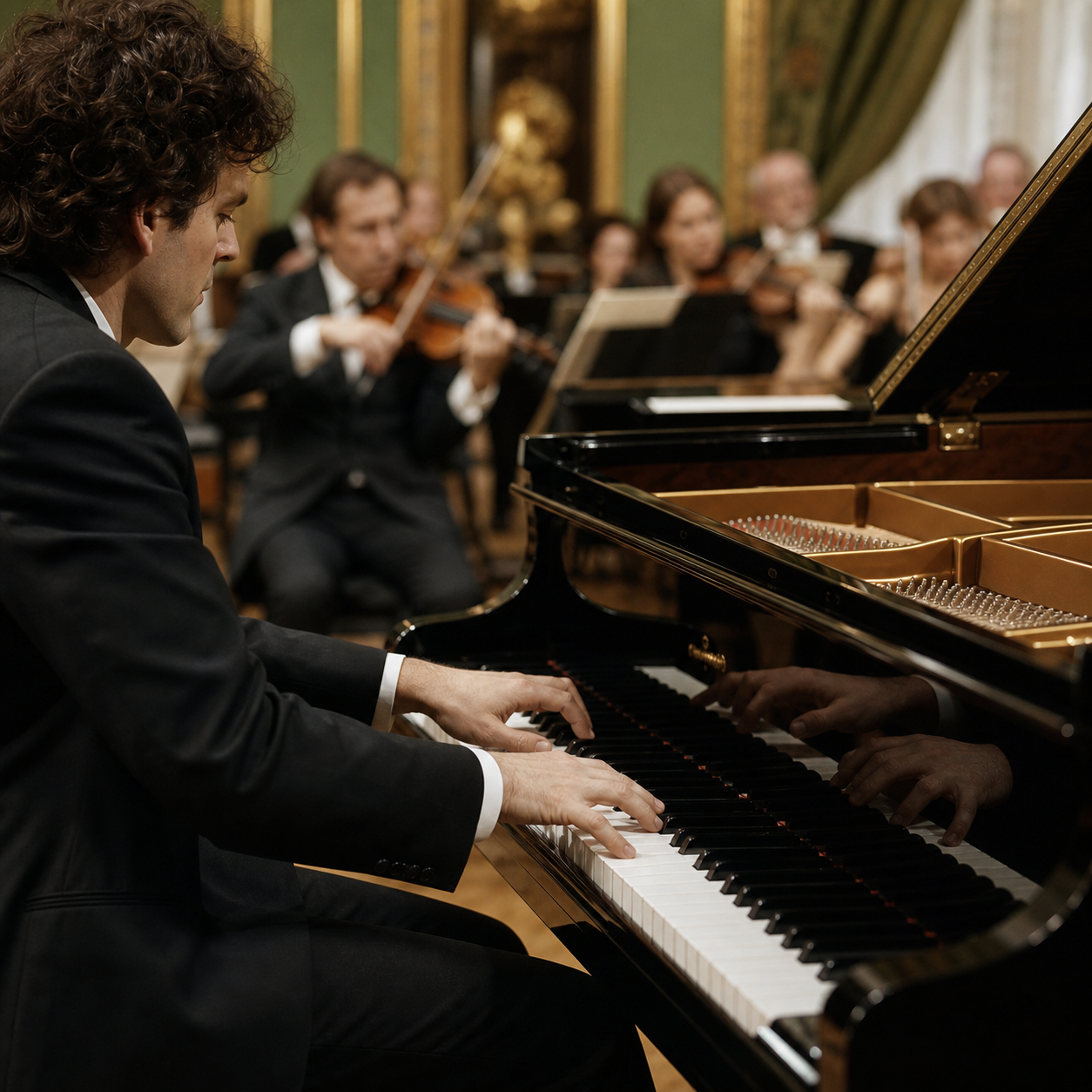
Poise is not the absence of risk. It is the ability to make a musical choice clearly enough that the listener can feel its direction.
Chopin, night music and lyrical restraint
Jan Lisiecki’s Chopin recordings reveal another side of the same discipline. The nocturnes invite atmosphere, yet their beauty depends on rhythmic integrity. Rubato works when one voice gains time while the underlying phrase retains its destination. If every expressive note is delayed, flexibility becomes mannerism. Lisiecki’s best Chopin reminds the listener that freedom is persuasive only when the musical grammar remains audible.
The label’s account of the complete nocturnes places this project within a substantial recording relationship. For learners, the useful exercise is comparative listening: hear two performances of one nocturne and name what changes in pulse, voicing, pedalling and climax. Describing the difference trains the ear before the hand attempts a solution.
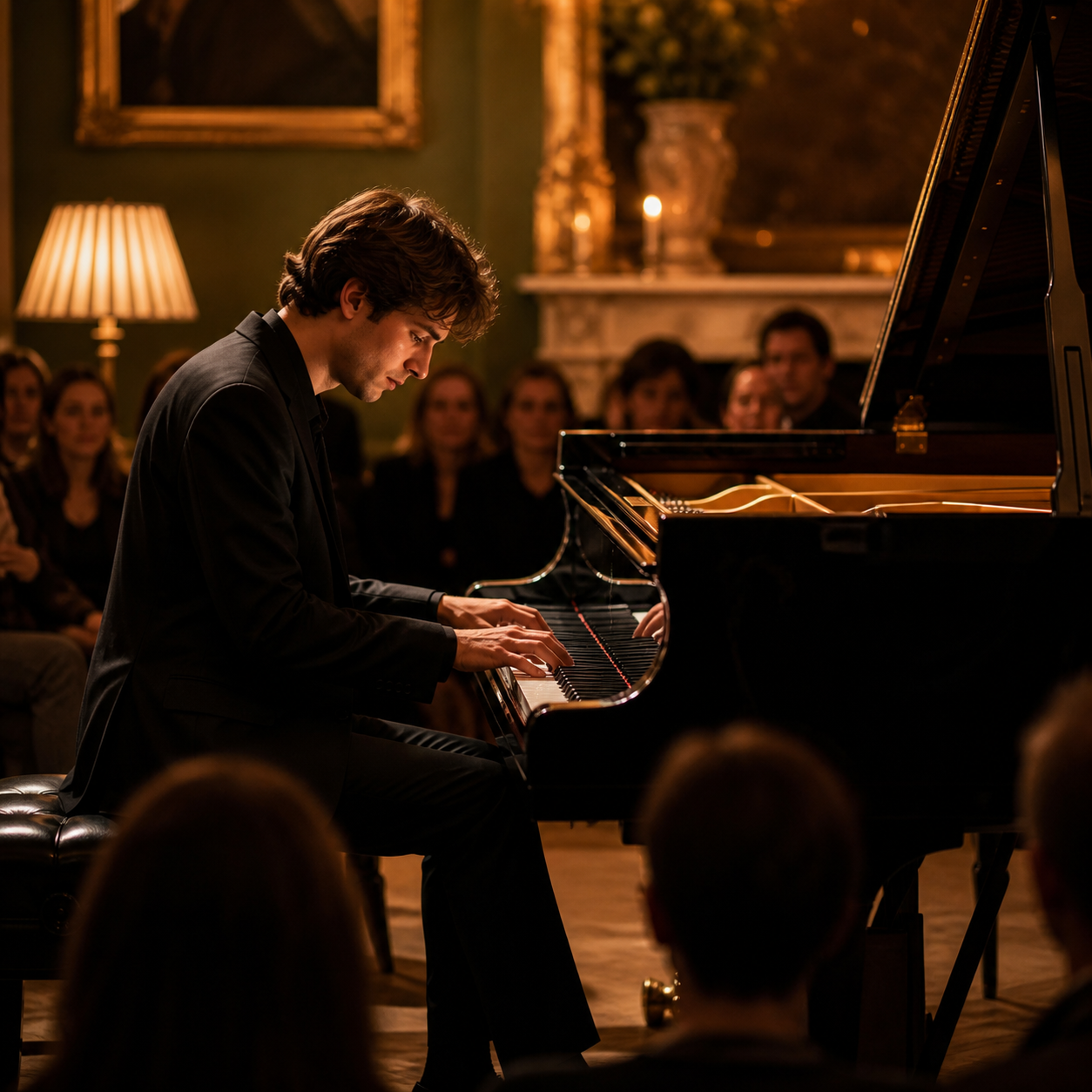
Jan Lisiecki in London
London has formed a recurring part of Jan Lisiecki’s international career. His official representation biography lists work with the London Symphony Orchestra and London Philharmonic Orchestra, while concert records document appearances at major London venues. The current KD SCHMID artist profile provides the most useful consolidated career context; the London Symphony Orchestra artist page anchors that connection locally.
For a London student, hearing an artist live changes the scale of listening. A recording allows repeated detail; a hall reveals projection, pacing and the physical distance between the piano and the last row. It also exposes how a quiet sound can carry through intention rather than mere softness. That is one reason London concert culture belongs naturally beside good teaching.
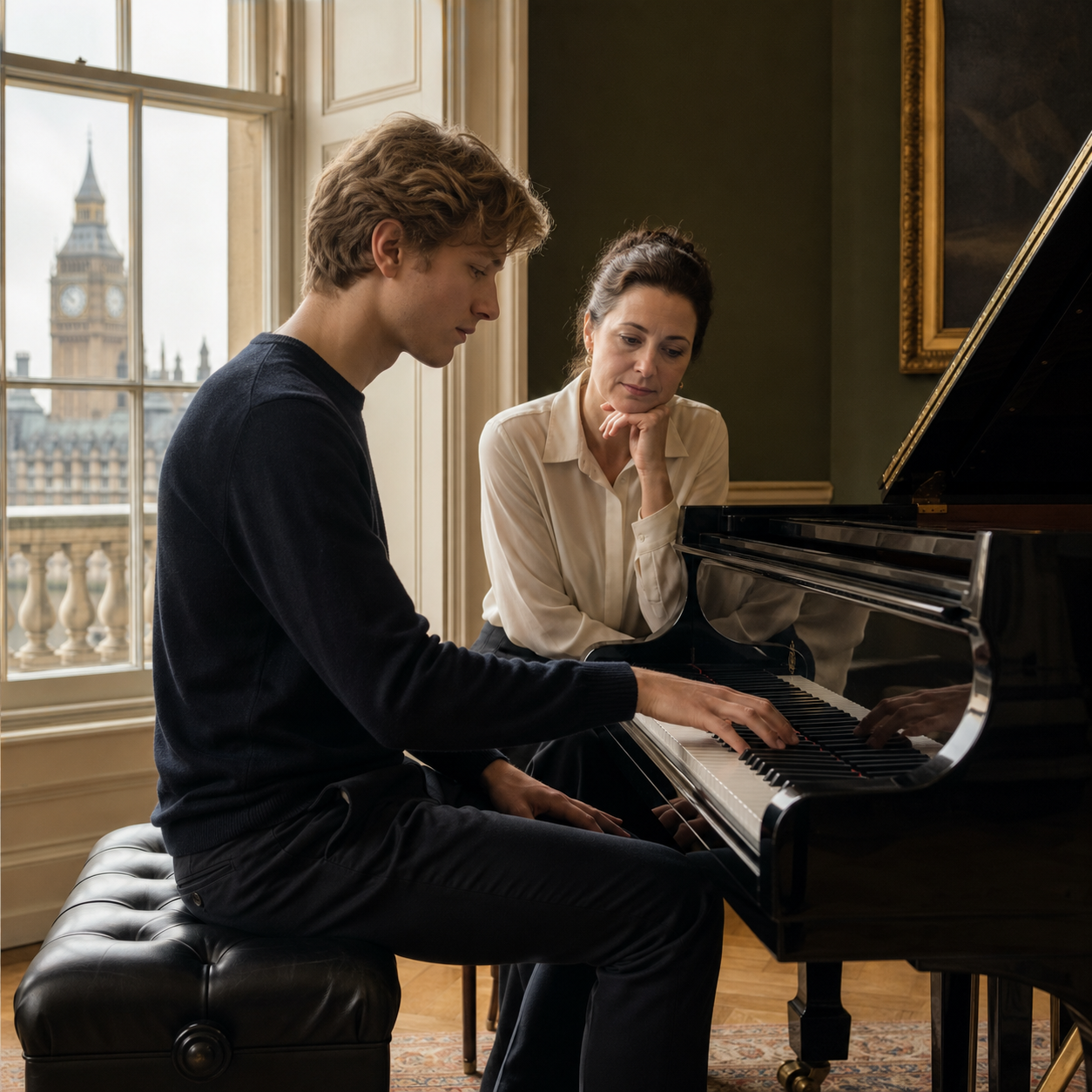
A practical Jan Lisiecki listening route
Start with a Mozart concerto movement and listen once without the score. On the second hearing, follow the main themes and mark where the piano leads or yields. Next choose a Chopin nocturne and focus only on the relationship between melody and bass. Finally hear a Beethoven concerto movement and notice how the solo part changes the energy of the orchestral argument. This sequence moves from conversation to song to architecture.
Jan Lisiecki should not become a template for somebody else’s personality. His value lies in the questions his playing raises: Is the phrase directed? Is the accompaniment participating? Does the pedal clarify the harmony? Can intensity grow without hardness? Those are productive questions at every level, from an early intermediate Mozart movement to advanced concerto work.
WKMT London
If this kind of close listening appeals to you, discover WKMT London’s approach to classical piano lessons, interpretation and individual musical development.
Related video
A useful companion video
Jan Lisiecki – Mozart: Piano Concerto No. 21, 2. Andante is embedded below from YouTube for educational commentary and context. Rights remain with Deutsche Grammophon / YouTube; WKMT is not affiliated with or endorsed by the creator.
Sources and further listening
- Deutsche Grammophon: Jan Lisiecki biography
- KD SCHMID: Jan Lisiecki profile
- London Symphony Orchestra: Jan Lisiecki
- Deutsche Grammophon: Chopin complete nocturnes
- UNICEF Canada: Jan Lisiecki
Sources last checked 23 August 2026.