
 TRIAL LESSON
Pianists, Piano Lessons
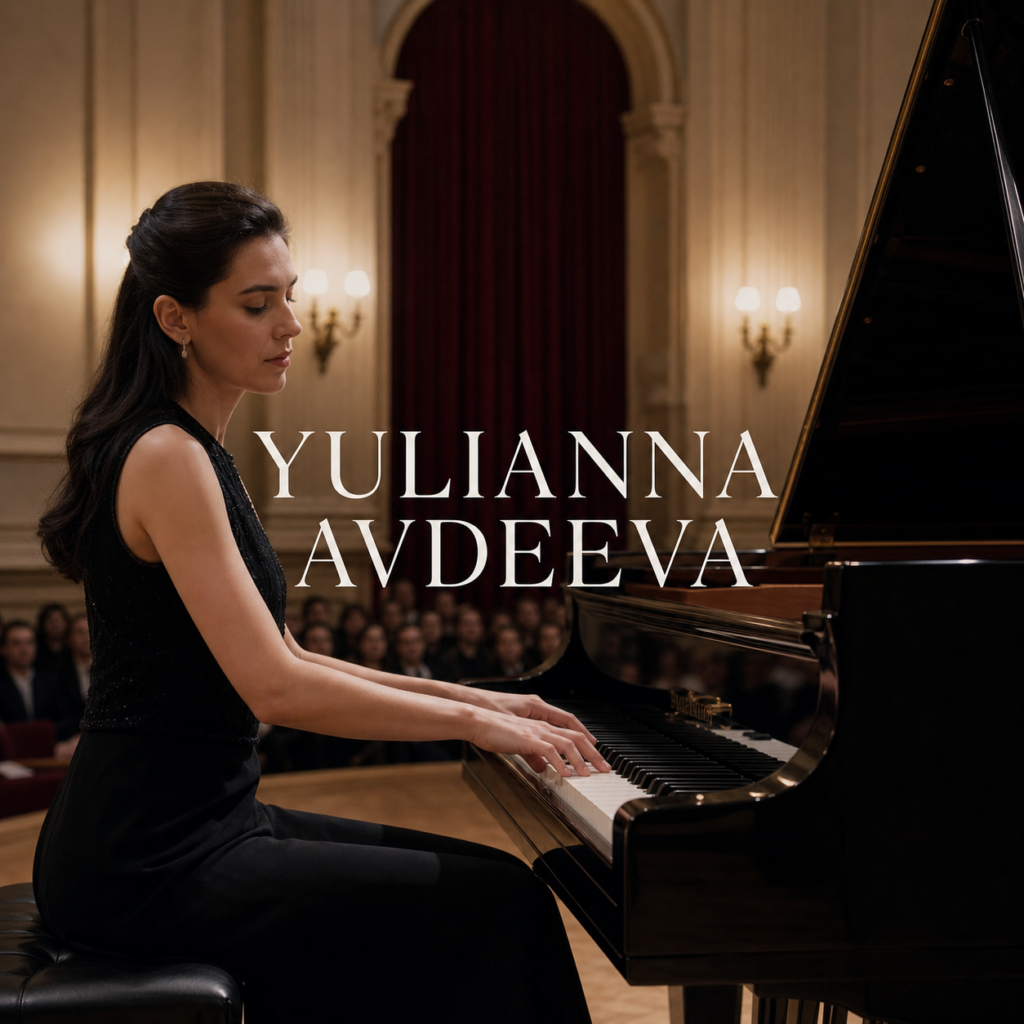
Yulianna Avdeeva in London: Chopin, Clarity and Serious Listening
Aug
Yulianna Avdeeva in London
WKMT London listening guide
Yulianna Avdeeva in London: Chopin, Clarity and Serious Listening
Yulianna Avdeeva rewards the listener who follows structure as closely as surface beauty. Her Chopin has force, colour and freedom, but its most striking quality is the sense that every phrase belongs to a larger design.
For London pianists, Avdeeva offers more than a celebrated name. She provides a compelling case study in how musical conviction can coexist with control. She won First Prize at the 2010 International Fryderyk Chopin Piano Competition, becoming the fourth woman to win the competition. Fourteen years later, her album Chopin: Voyage returned to the composer’s late works with the perspective of an artist who had spent the intervening years broadening her repertoire.
This guide answers a practical listening question: what should we hear when Yulianna Avdeeva plays? The answer lies in the relationship between line and architecture, between local freedom and long-range direction. Those qualities matter in a concert hall, on a recording and in classical piano study in London.
Why Yulianna Avdeeva matters
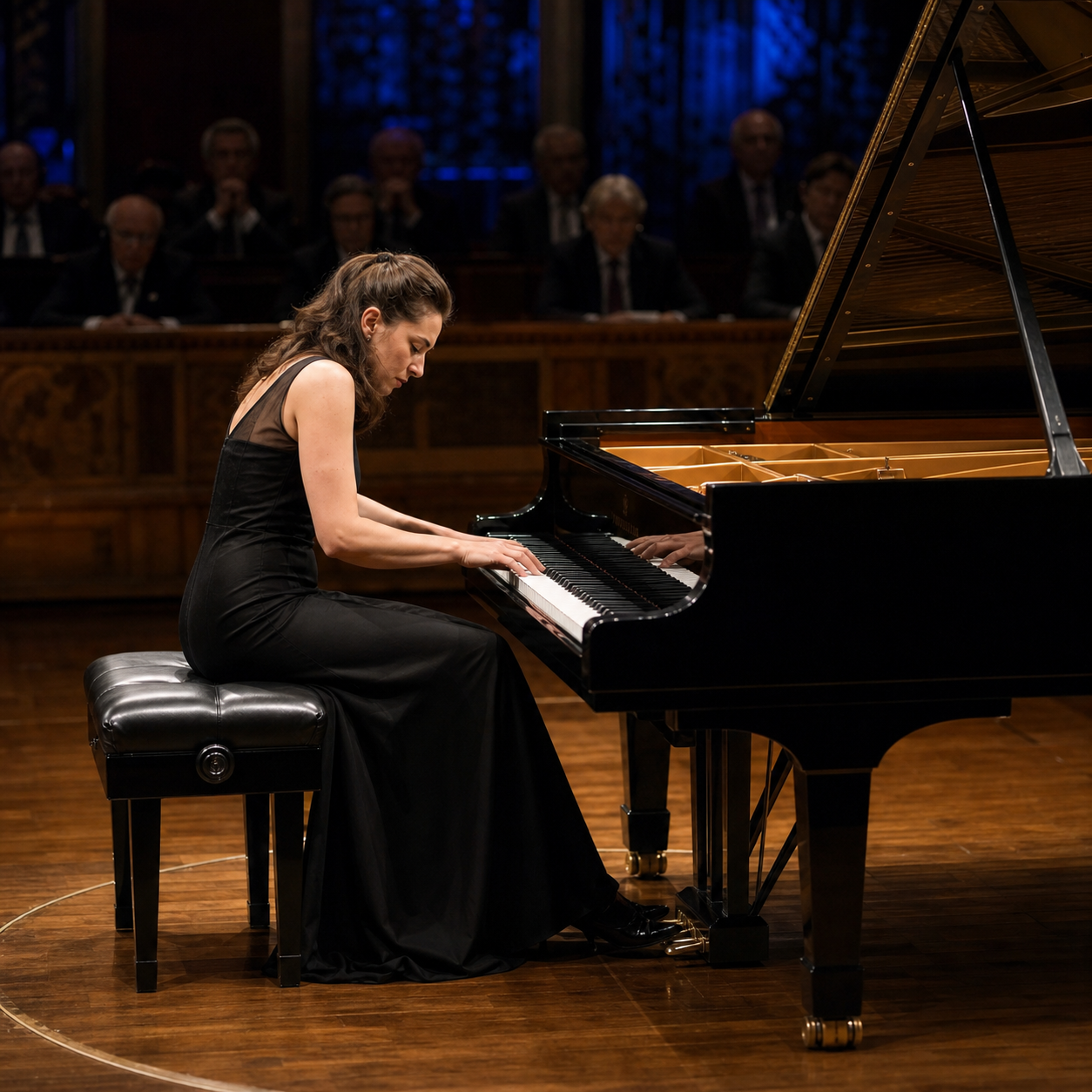
The Chopin Competition result made Avdeeva internationally visible, yet the enduring interest is not the medal itself. The official competition record describes a pianist recognised for virtuosity, expression, sensitivity and temperament. Those qualities are audible, but they do not operate as isolated effects. Her playing tends to make drama emerge from the score’s proportions.
Her career also resists narrow classification. Alongside Chopin, she has recorded and performed Weinberg, Prokofiev, Szpilman and Shostakovich. In 2025 PENTATONE released her account of Shostakovich’s complete 24 Preludes and Fugues, Op. 87, recorded in Leipzig. That immersion in counterpoint sharpens the way we can hear her Chopin: inner voices have consequence, bass movement has direction, and textures remain intelligible under pressure.
The most persuasive freedom is the freedom that makes the structure clearer.
Yulianna Avdeeva and the architecture of Chopin
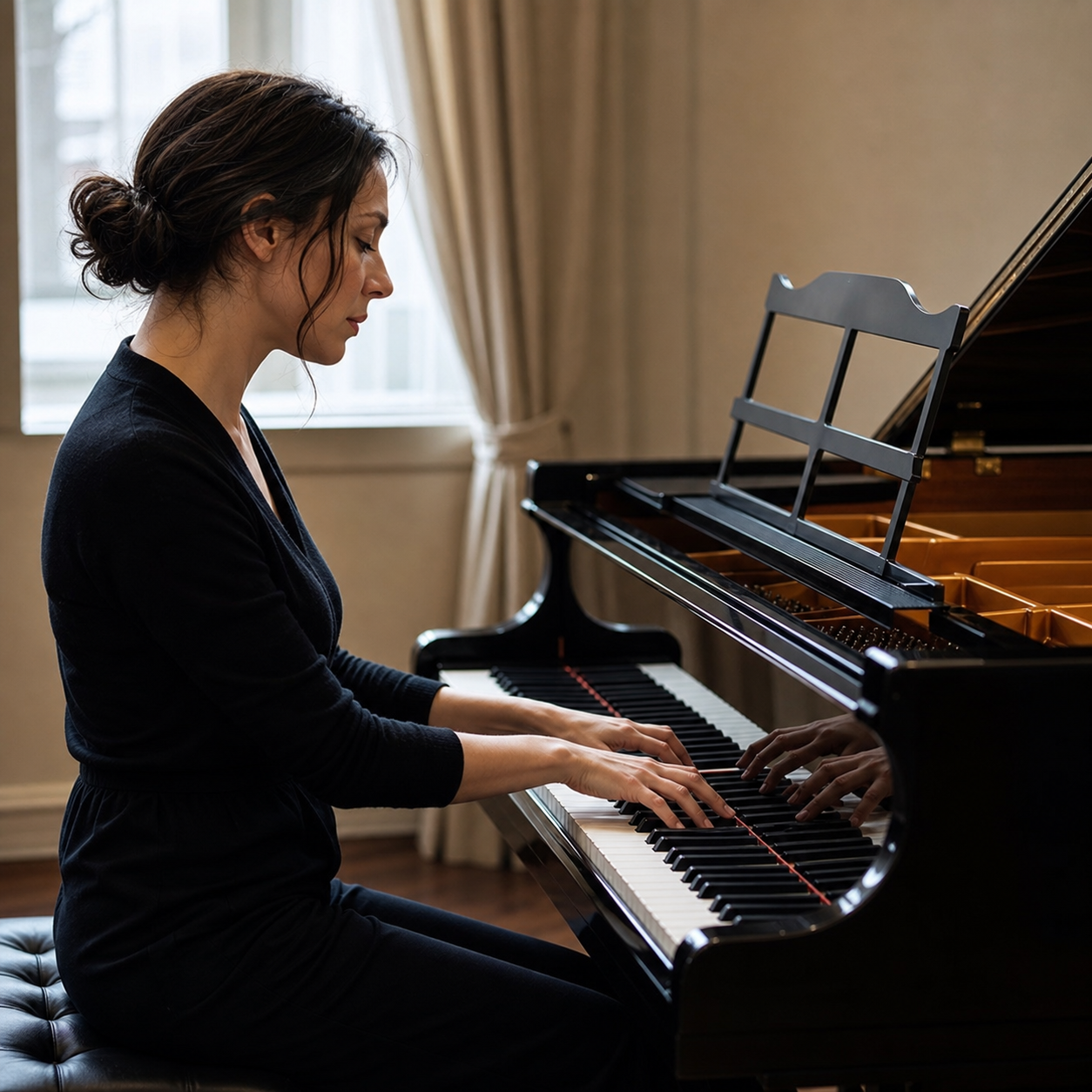
Chopin’s writing invites expressive flexibility, but flexibility without hierarchy becomes mannerism. In Avdeeva’s playing, the melodic line often seems to breathe freely while the underlying pulse remains legible. Listen for the bass: it reveals whether a pause suspends the argument or merely interrupts it. Then follow the inner voices, particularly where they answer the soprano or intensify a cadence.
Pedalling is equally revealing. A resonant sound need not be blurred. In late Chopin, harmony can change colour before it changes destination; a pianist must preserve that ambiguity without losing the outline. Avdeeva’s best performances allow resonance to deepen the phrase while articulation keeps the harmonic joints audible.
Where to begin with Chopin: Voyage
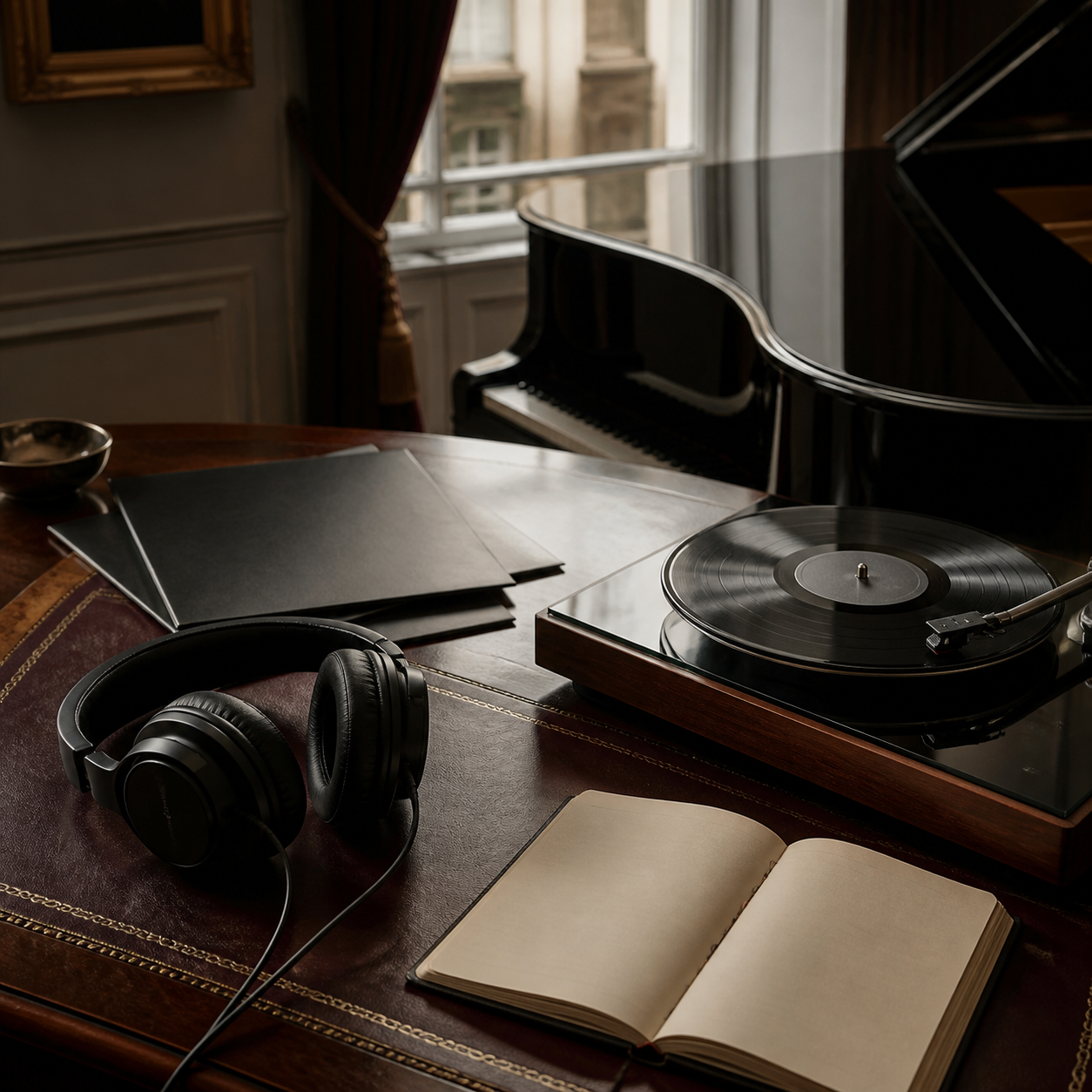
Released by PENTATONE in September 2024, Voyage centres on late Chopin and was recorded at Tippet Rise Art Center in Montana. Its programme includes the two Nocturnes, Op. 62, the Polonaise-Fantaisie, the Third Sonata and the Mazurkas, Op. 59. This is music in which form is continuously transformed: a nocturne becomes contrapuntal, a polonaise becomes a psychological journey, and a mazurka can turn rhythmic displacement into memory.
Begin with the Nocturnes, Op. 62. Hear how the melodic decoration grows from the line rather than sitting on top of it. Then move to the Polonaise-Fantaisie and resist the urge to classify every episode immediately. Follow returning intervals, bass shapes and changes of texture. Finally, listen to the Third Sonata in one sitting. Its finale gains meaning from the weight accumulated in the earlier movements.
| Work | Listen for | Question to carry |
|---|---|---|
| Nocturnes, Op. 62 | Ornament as melody | Which note remains the true vocal destination? |
| Polonaise-Fantaisie | Memory, transition and bass direction | How does an episode prepare a return? |
| Sonata No. 3 | Large-scale proportion | Where is the work’s deepest release? |
| Mazurkas, Op. 59 | Accent, lift and harmonic colour | What makes the dance feel remembered? |
A closer listening method
A recording invites repetition, but repetition becomes useful only when each hearing has a purpose. On the first pass, listen without notes and retain one overall impression. Was the performance spacious, driven, intimate or monumental? On the second, follow the bass and mark where the harmony creates genuine arrival. On the third, attend to the right hand: distinguish principal melody from decoration and notice when an inner voice temporarily becomes the expressive centre.
The fourth hearing can focus on time. Rubato is often described as freedom, yet the important question is what remains stable while one element stretches. Does the accompaniment preserve momentum? Does the return to pulse feel inevitable? In Avdeeva’s Chopin, flexibility frequently clarifies syntax. A hesitation can disclose a harmonic surprise; an acceleration can connect material that might otherwise sound episodic. The timing has meaning because it belongs to the phrase.
Finally, compare two short passages rather than two entire performances. Choose a transition of less than a minute and listen to Avdeeva beside another distinguished pianist. Avoid ranking them immediately. Describe differences in attack, bass weight, pedalling, phrase length and silence. This turns preference into perception. It also reveals that musical identity is not a single mannerism but a network of decisions.
Five passes through one performance
- Character: retain the performance’s emotional scale without analysing.
- Harmony: follow bass motion, tension and arrival.
- Voices: separate melody, accompaniment and inner counterpoint.
- Time: hear what stretches, what remains stable and why.
- Comparison: describe a short passage beside another reading without declaring a winner.
From Chopin to Shostakovich
Avdeeva’s 2025 Shostakovich cycle enlarges this portrait of her musicianship. The 24 Preludes and Fugues, Op. 87 demand stamina, contrapuntal independence and an ability to give each pair its own world while sustaining the arc of a vast collection. PENTATONE notes that the recording was made at the Gewandhaus in Leipzig, the city in which Shostakovich found the inspiration for the cycle after encountering Bach’s legacy there.
For the listener, the connection to Chopin is illuminating. Both composers use prelude forms to compress character. Both make voice-leading carry emotional meaning. Shostakovich’s fugues expose contrapuntal workmanship more openly, but Chopin’s late textures can be equally dependent on the balance of independent lines. Hearing Avdeeva in both repertoires makes her priorities easier to recognise: firmness of argument, economy of gesture and colour that grows from harmony.
That does not mean the composers sound alike, or that one interpretive solution transfers mechanically to the other. The value of the comparison is disciplinary. It encourages us to hear texture as a conversation among voices and virtuosity as the ability to preserve that conversation at every dynamic level.
Listening in London
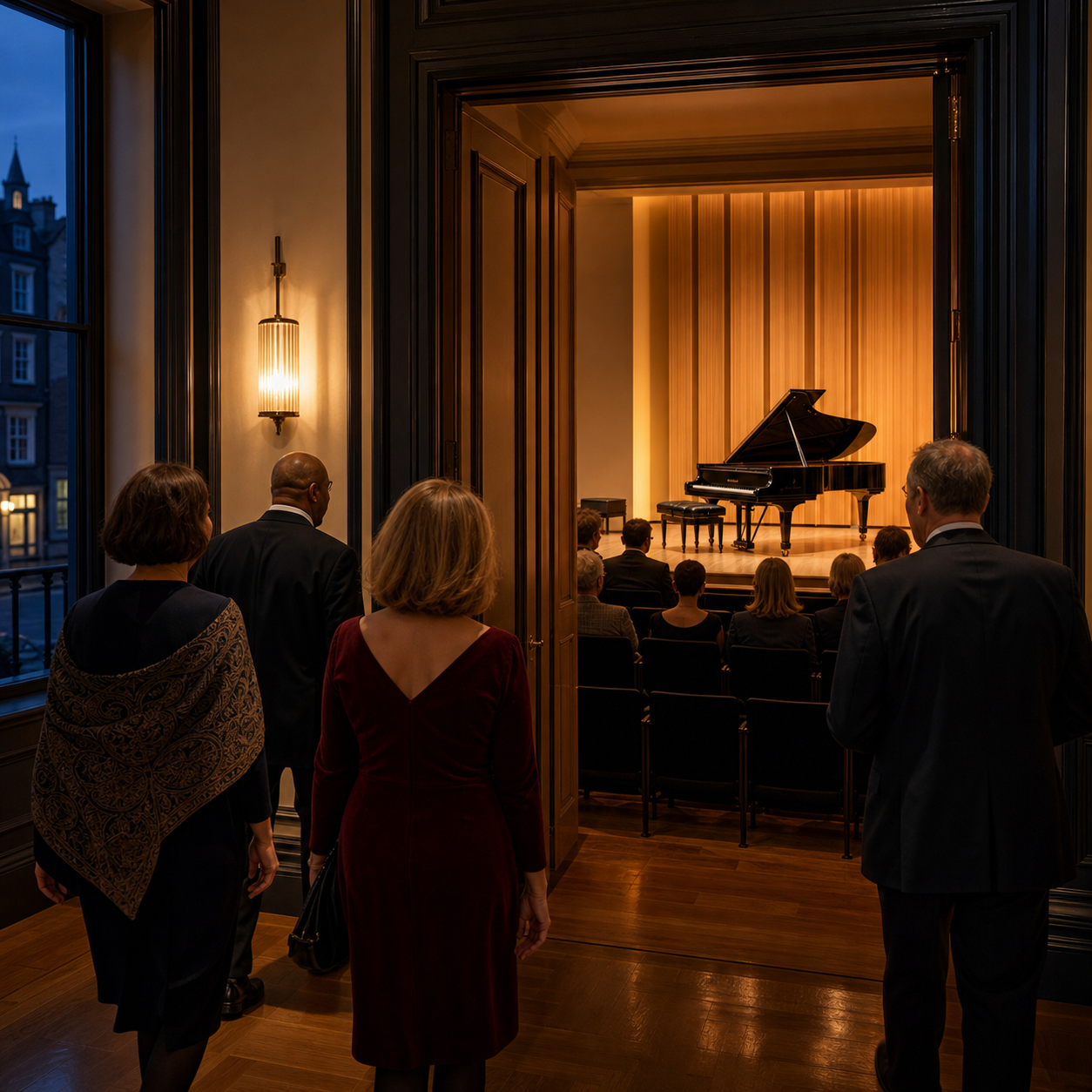
Avdeeva’s London connection is documented rather than decorative. Yamaha’s contemporary account of her 2010 victory noted that she had appeared at the Barbican Centre. Wigmore Hall’s records list her in chamber music there in July 2024. These appearances place her work within the city’s serious listening culture, where intimate halls can expose voicing and articulation with unusual honesty.
Before a recital, choose one element to follow: the bass line, the return of an opening idea, or the handling of silence. During the performance, resist constant evaluation. Let your chosen thread guide attention. Afterwards, write three sentences: one about sound, one about structure and one about surprise. This approach complements WKMT’s guide to the importance of listening and its overview of London concert halls.
What pianists can take into practice
Avdeeva’s example suggests a disciplined order. First understand the score’s architecture. Then decide how colour, timing and articulation will reveal it. Finally, test whether the interpretation remains convincing from a distance. Recording a passage can help, but so can moving away from the keyboard and singing its bass or principal line.
The wider lesson is that intensity does not require exaggeration. A phrase can be urgent because its harmony needs resolution; a climax can feel inevitable because earlier material has prepared it. This is one reason serious listening belongs inside serious practice.
Bring listening into your piano study
WKMT’s London teaching connects technique, repertoire and interpretation so that musical decisions become audible, deliberate and personal.
Discover classical piano study at WKMT
Adult learners may also explore adult piano lessons in London.
Sources on Yulianna Avdeeva
- International Fryderyk Chopin Piano Competition: Yulianna Avdeeva profile (checked 18 August 2026).
- XVI Chopin Competition edition and winners (checked 18 August 2026).
- PENTATONE: Chopin: Voyage (checked 18 August 2026).
- PENTATONE: Shostakovich Preludes and Fugues (checked 18 August 2026).
- Wigmore Hall programme, 1 July 2024 (checked 18 August 2026).
- Yamaha archive: 2010 competition result and biography (checked 18 August 2026).