
 TRIAL LESSON
Piano Lessons
Piano Lessons for 8 Year Olds: A Parent’s Guide to Progress, Practice and Confidence
Jun
Piano Lessons for 8 Year Olds: Parent Guide
WKMT parent guide
Piano Lessons for 8 Year Olds: A Parent’s Guide to Progress, Practice and Confidence
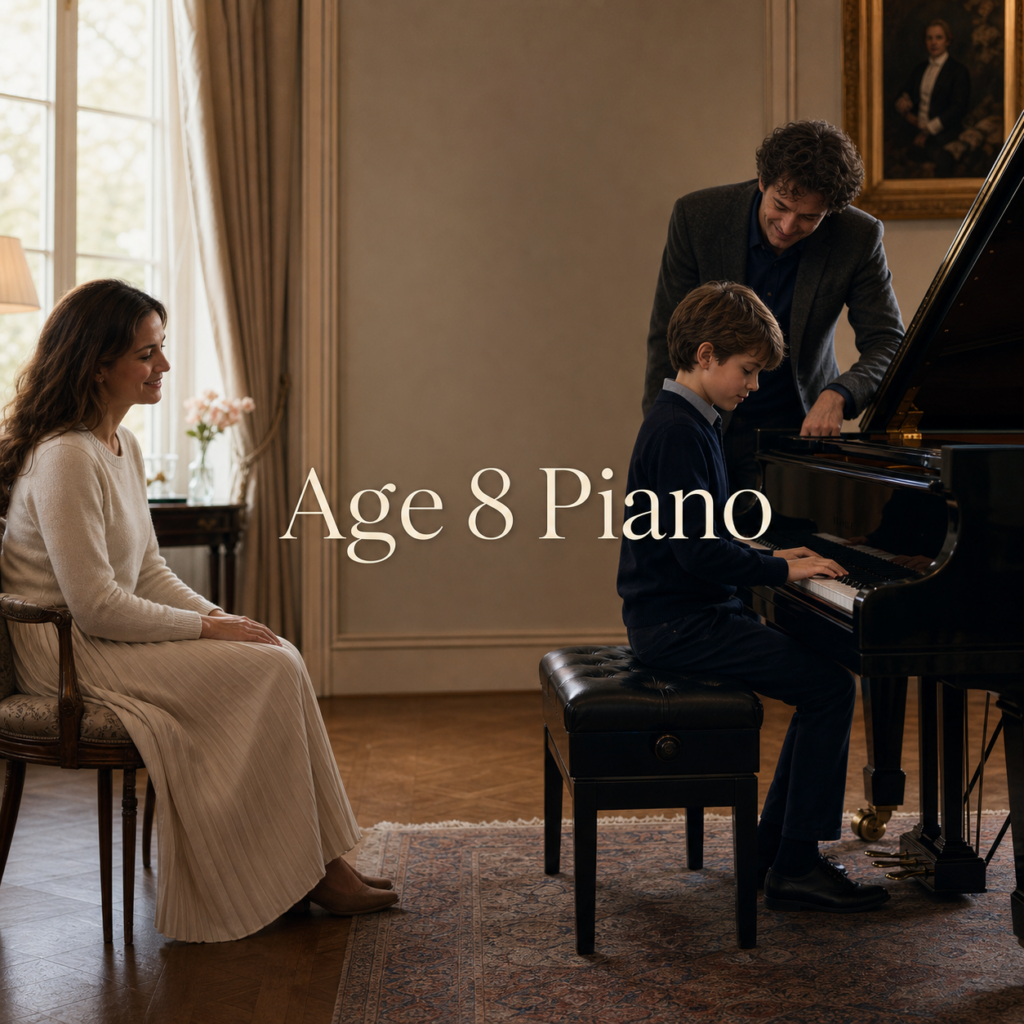
Eight is a strong age to begin piano: most children can follow a musical routine, understand teacher feedback, and enjoy the first signs of independent playing.
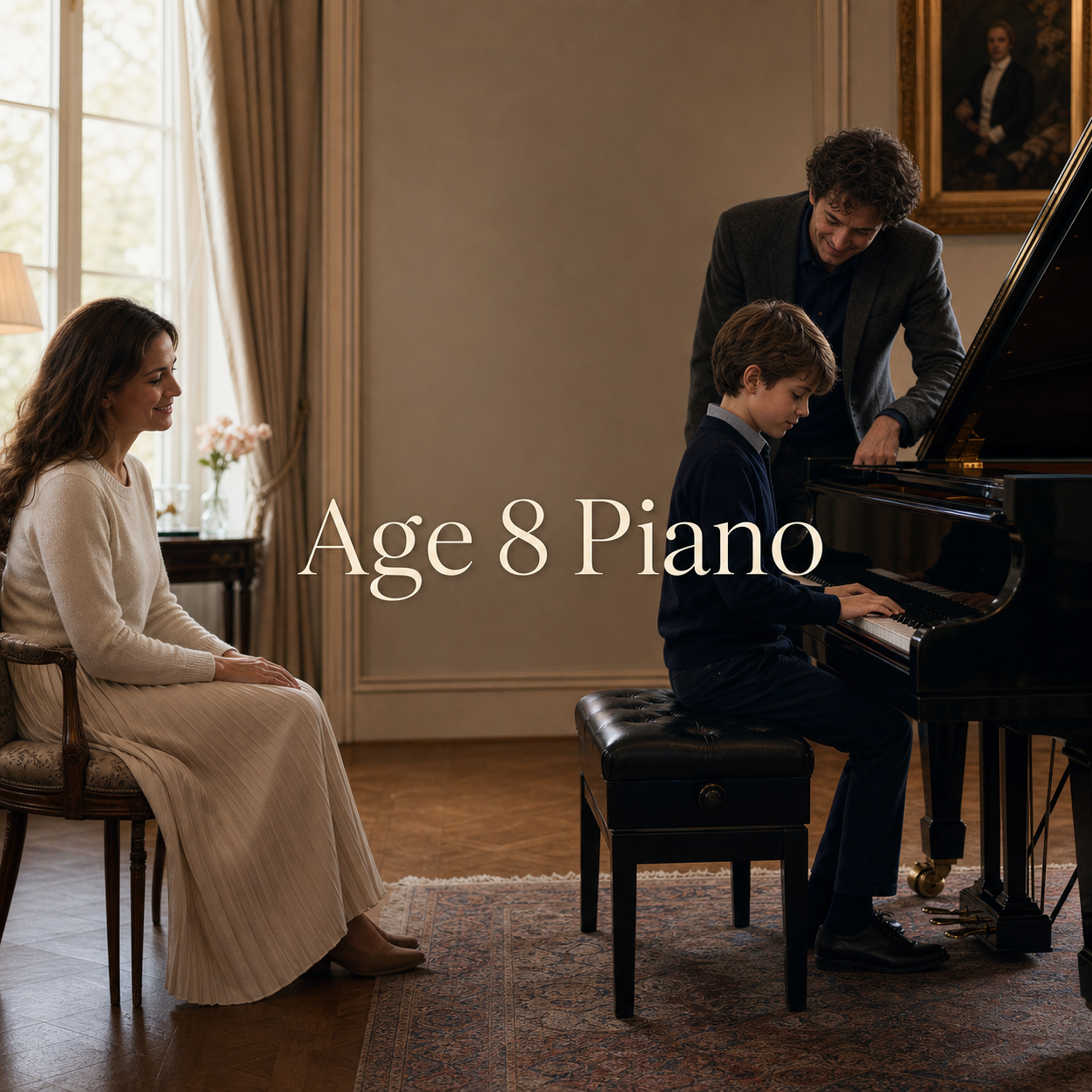
Parents searching for piano lessons for 8 year olds usually want a clear answer before they enquire: is this a sensible age, what should progress look like, and how involved should the family be at home? The short answer is encouraging. At eight, a child is often ready for a weekly lesson, a modest practice rhythm, and an introduction to notation, rhythm, singing tone and simple performance confidence.
This guide is written for London families comparing private tuition, music schools and online options. It supports the practical booking decision while keeping the child at the centre. A good first year should feel structured, civilised and musical, not rushed toward exams or burdened by adult expectations.
For parents: the best early progress is visible in posture, listening, pulse, reading confidence and the child’s willingness to return to the piano. A polished Grade 1 result is not the only sign of success.
Is 8 a good age to start piano?
Yes. Eight-year-olds are usually old enough to grasp cause and effect in practice: when they repeat a phrase slowly, it improves; when they count aloud, rhythm steadies; when they listen before playing, tone changes. That matters because piano learning is not simply finger movement. It is attention, memory, coordination and aural imagination working together.
ABRSM and Trinity both provide beginner-to-Grade 8 piano pathways, including Initial Grade and Grade 1 options, which confirms that early graded study can be introduced gradually when the teacher judges it appropriate. The important word is gradually. A young beginner does not need an exam target in the first term unless it genuinely helps motivation.
Readiness is also emotional. Some eight-year-olds arrive with a clear wish to play; others are testing whether music belongs to them. A refined teacher will not demand adult seriousness at the door. They will notice whether the child can recover after a mistake, whether they smile when a sound improves, and whether they can copy a musical idea without feeling judged. Those small responses often predict better long-term progress than a child who merely reads quickly in the first lesson.
Can sit for short focused bursts, copy rhythms, follow two-step instructions and enjoy repetition.
Frustration with slow progress, very uneven attention, or discomfort at the piano bench.
A trial lesson, a simple home instrument, and one calm adult helping with routine.
Lesson formats and teacher choice
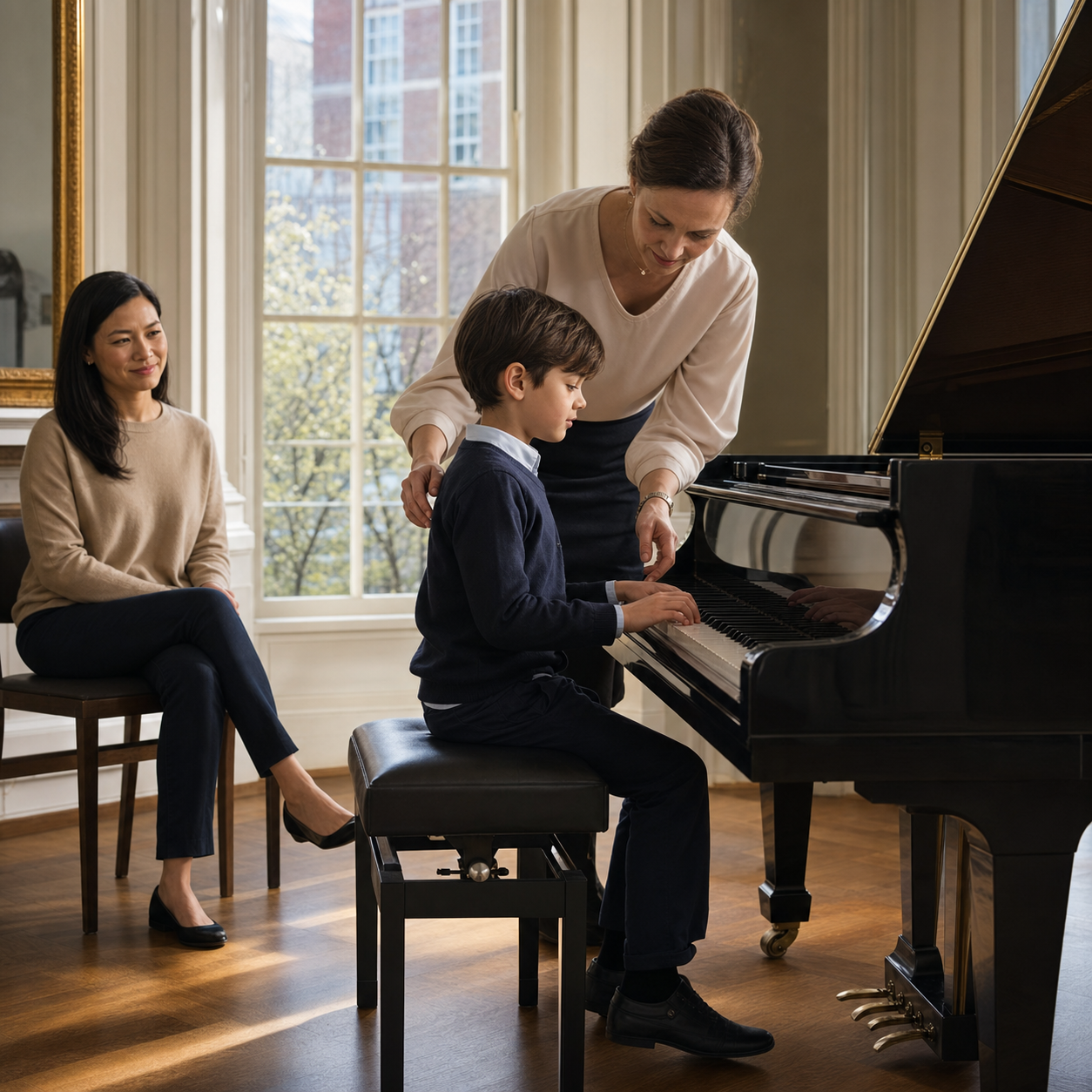
For most eight-year-old beginners, one-to-one tuition gives the clearest start. The teacher can adjust posture, reading pace, rhythm games and repertoire to the child’s temperament. Group classes can be socially motivating, especially for shy children, but they rarely move at the exact pace of one child. Online lessons can work well for reinforcement or hybrid weeks, provided the camera angle shows the keyboard, the sound is clear, and a parent is nearby for setup rather than instruction.
A trial lesson should show how the teacher speaks to the child, not only how well the teacher plays. Ask how feedback is given, whether parents receive brief practice notes, how safeguarding is handled, and what happens when school pressure rises. In England, parents should expect clear professional boundaries and appropriate safeguarding measures; the NSPCC guidance for tutors is a useful benchmark, and DBS checks are a sensible part of the wider picture.
When comparing piano lessons for 8 year olds, listen for the teacher’s ability to translate musical standards into child-sized actions. “Curve the fingers” may be too vague; “let the fingertip stand like a small pillar” may work immediately. “Practise more” is not a plan; “play the left hand twice, then add the right hand once slowly” is a plan. Families should leave a trial lesson knowing what the child enjoyed, what needs patience, and what the next four weeks will try to build.
Teacher’s note
“At eight, I listen for how a child responds after the second attempt. If the room becomes calmer and more curious, we have the basis for proper progress.”
Lesson length, practice and first-year milestones
A weekly 30-minute lesson is often enough at the beginning. Some confident children can manage 45 minutes, but length should follow concentration, not parental ambition. At home, ten to fifteen focused minutes on four or five days is usually more productive than one long weekend session. The parent’s role is to protect the routine, praise effort, and avoid becoming a second teacher.
The best practice plans are concrete enough for a child to understand without negotiation. A teacher might ask for three repetitions of a two-bar rhythm, one slow run of a new piece, and a short listening task. That is more effective than a vague instruction to “play for fifteen minutes”. If the family uses a practice chart, it should celebrate attention and musical care, not simply minutes spent at the instrument.
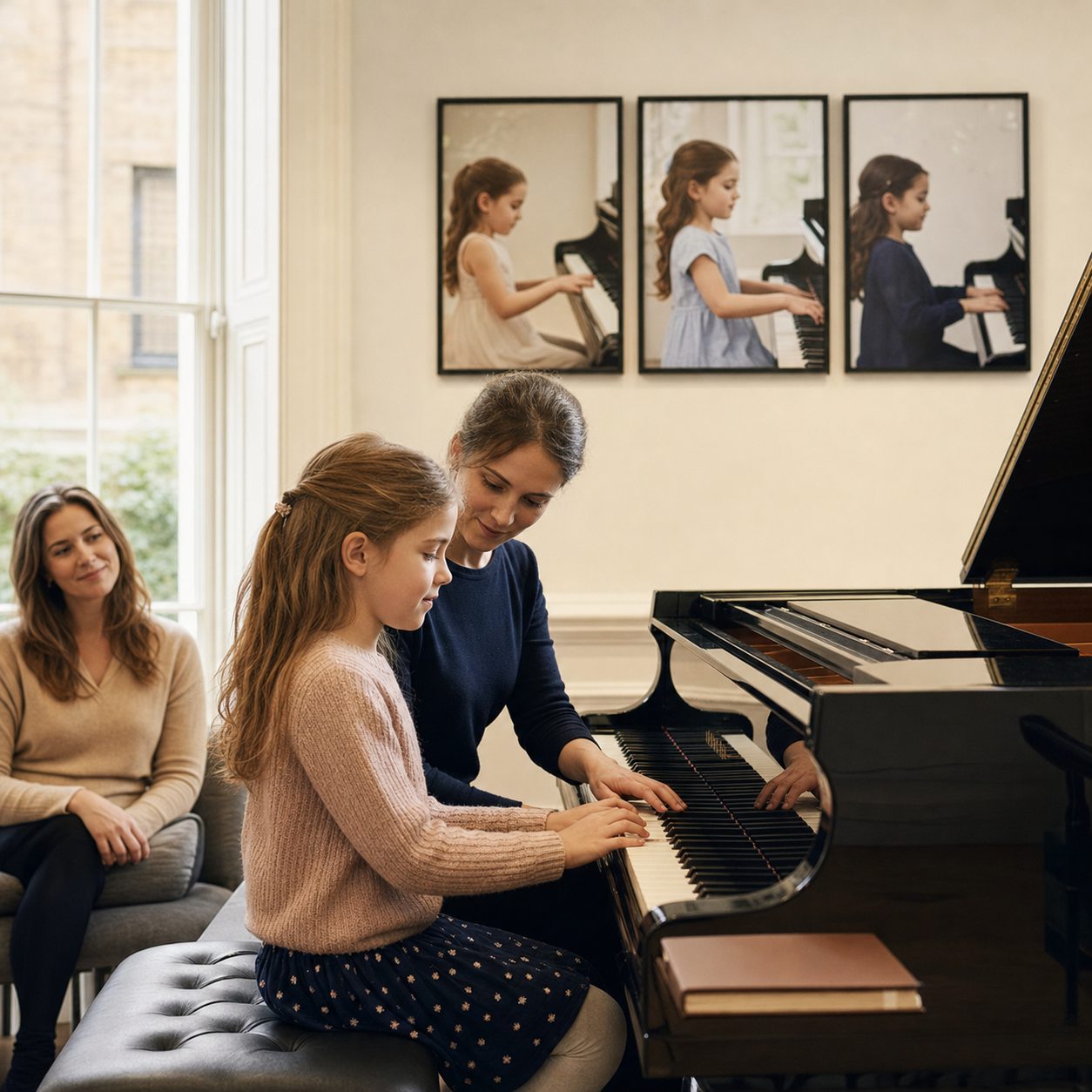
A good eight-year-old beginner is not being trained to hurry; they are being taught to listen, organise attention and enjoy earned confidence.
Exams, repertoire and measures of progress
ABRSM Performance Grades ask candidates to present four pieces at each grade, while Trinity’s piano pages list repertoire from Initial Grade onwards. These pathways can be helpful because they give families a shared vocabulary for level and achievement. They should not become the whole curriculum. An eight-year-old also needs singing games, rhythm, listening, improvisation, duets and pieces chosen for character.
Early repertoire might include tutor-book miniatures, folk-song arrangements, Kabalevsky-style children’s pieces, simple Bartok-inspired rhythms, and carefully chosen contemporary pieces with vivid titles. The teacher’s task is to match the music to the child, not to squeeze the child into a syllabus too early.
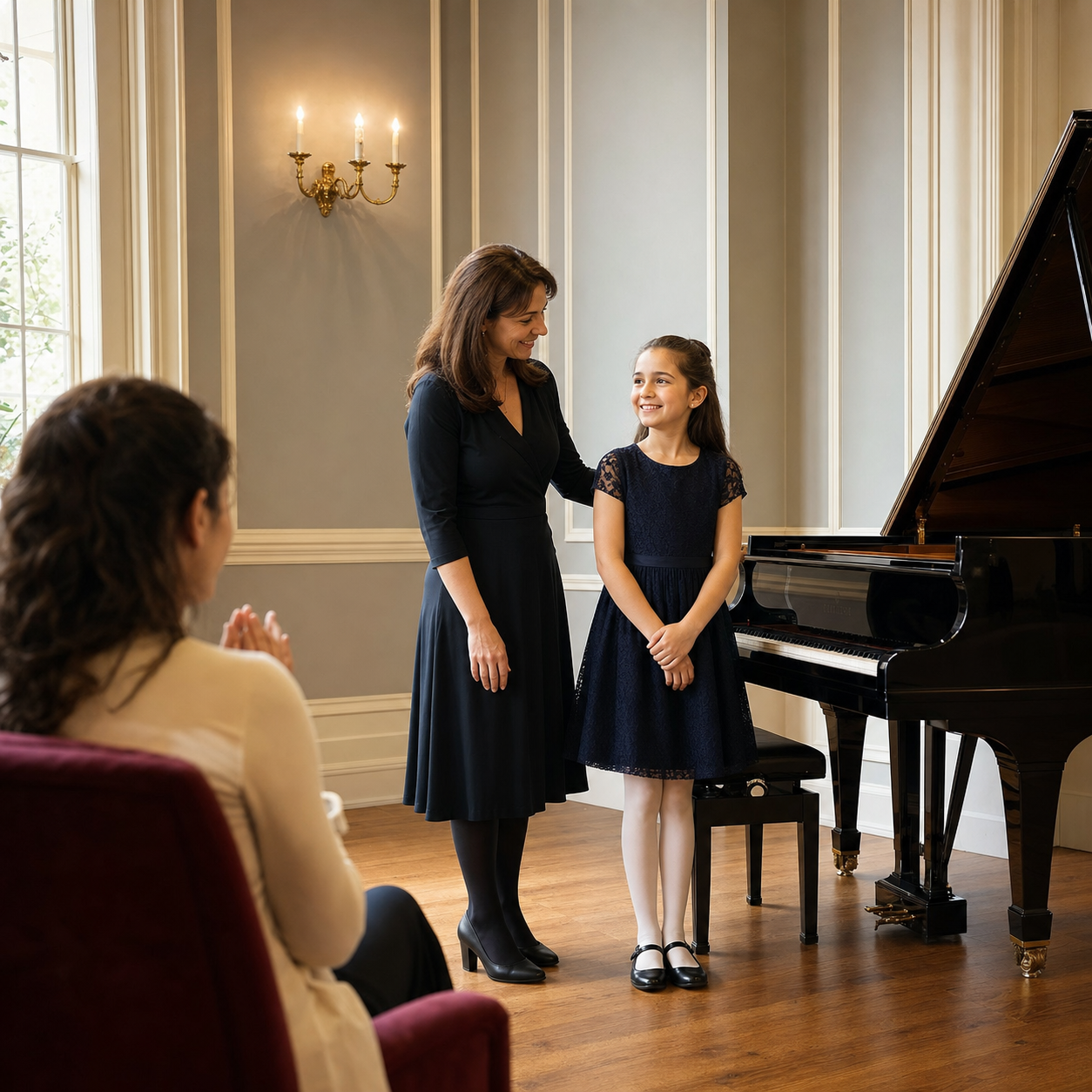
For some children, a first exam can be a useful celebration after nine to eighteen months. For others, a studio performance, family concert or recorded piece is a better first goal. Parents should ask what the proposed goal will teach: steadier pulse, secure memory, reading independence, expressive contrast, or simply the courage to finish a piece in front of someone else. That answer matters more than the badge attached to the goal.
Cost, scheduling and London logistics
London pricing varies by teacher experience, studio setting, location and lesson length. Families should compare what is included: lesson notes, make-up policies, recital opportunities, exam preparation, safeguarding documentation and the quality of communication. A cheaper lesson that leaves the parent guessing may cost more in lost momentum.
WKMT families can use the music lesson fees page for current internal pricing guidance and the beginner piano lessons page for broader starting advice. For an eight-year-old, scheduling matters as much as price: after-school fatigue, travel time and homework can decide whether practice remains civilised.
A practical London plan usually starts with one regular lesson slot, one realistic practice window, and one backup plan for busy school weeks. Parents should ask whether lessons pause during holidays, how cancellations are handled, and whether the teacher prepares children for informal performances. These details keep piano lessons for 8 year olds from becoming another fragile after-school activity that disappears when the calendar becomes full.
Parent perspective: “The biggest change was not how much he practised, but that the lesson notes made practice less argumentative at home.”
How parents can support practice without taking over
Parents should make practice easy to start. Keep the instrument accessible, the bench height comfortable, and the practice time predictable. Praise process rather than talent: “you counted that more steadily” is more useful than “you are brilliant”. If a child resists, shorten the session before it becomes a contest.
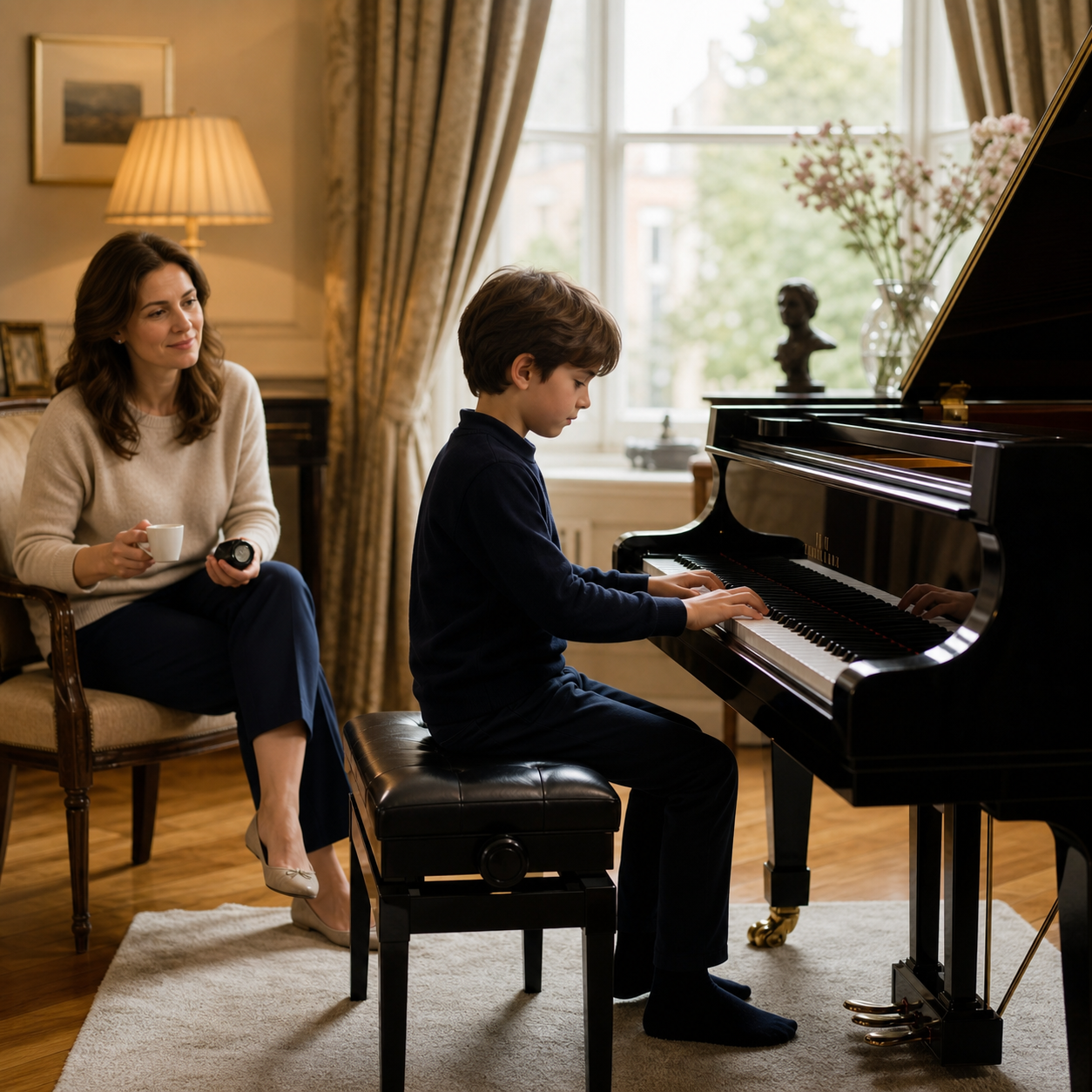
For hybrid or occasional online lessons, place the device to show both hands and the keyboard. Test the connection before the lesson. Parents should remain close enough to help with technology, but far enough away for the child to answer independently.
It is also wise to separate encouragement from correction. A parent can say, “show me the part your teacher liked”, or “shall we do the first line twice before tea?” without diagnosing technique. If something sounds wrong for several days, leave a note for the teacher. The lesson remains the place for technical repair; the home remains the place for calm repetition and musical ownership.
Local London resources and next steps
London gives children a rare advantage: they can hear serious music live, see older students perform, and connect piano study with cultural life rather than isolated homework. WKMT’s music festivals and classical concerts can help families make performance feel normal and welcoming. Children who are already thinking about school auditions can later read WKMT’s piano scholarship guidance.
This is where piano lessons for 8 year olds can become more than a weekly appointment. A child who hears a short recital, watches another young pianist bow, or plays a simple duet with a teacher begins to understand music as a shared language. That cultural frame is one of London’s great advantages, and it is worth using gently.
Begin with a calm trial lesson
If your child is eight and curious about the piano, the next sensible step is not a long commitment. It is a short, well-observed first lesson with a teacher who understands children, parents and the musical standards expected in London.
Brief FAQ
Is eight too late to start piano?
No. Eight is often ideal: the child is still young enough to absorb musical habits naturally and old enough to understand a regular learning routine.
How often should an eight-year-old practise?
Four or five short sessions each week, often ten to fifteen minutes, are a strong starting point. The teacher should adapt this to the child’s concentration and school workload.
Should my child take ABRSM or Trinity exams in the first year?
Only if the teacher believes it will help. Many children benefit from a musical first year before formal exam pressure is introduced.
Sources
- ABRSM, Piano and Performance Grades.
- ABRSM, Piano Performance Grades syllabus 2027-2028.
- Trinity College London, Piano grades and repertoire
- Trinity College London support, Initial Grade and Grade 1 guidance.
- NSPCC Learning, safeguarding and child protection for tutors
- GOV.UK, regulated activity with children in England and Wales.