
 TRIAL LESSON
Pianists, Piano Lessons
Alicia de Larrocha in London: Spanish Colour, Mozart Clarity and the Art of Listening

Jun
Alicia de Larrocha in London – Complete Guide
WKMT London listening guide
Alicia de Larrocha in London: Spanish Colour, Mozart Clarity and the Art of Listening
Alicia de Larrocha gives London pianists a model of colour without excess, brilliance without noise, and disciplined listening at the keyboard.
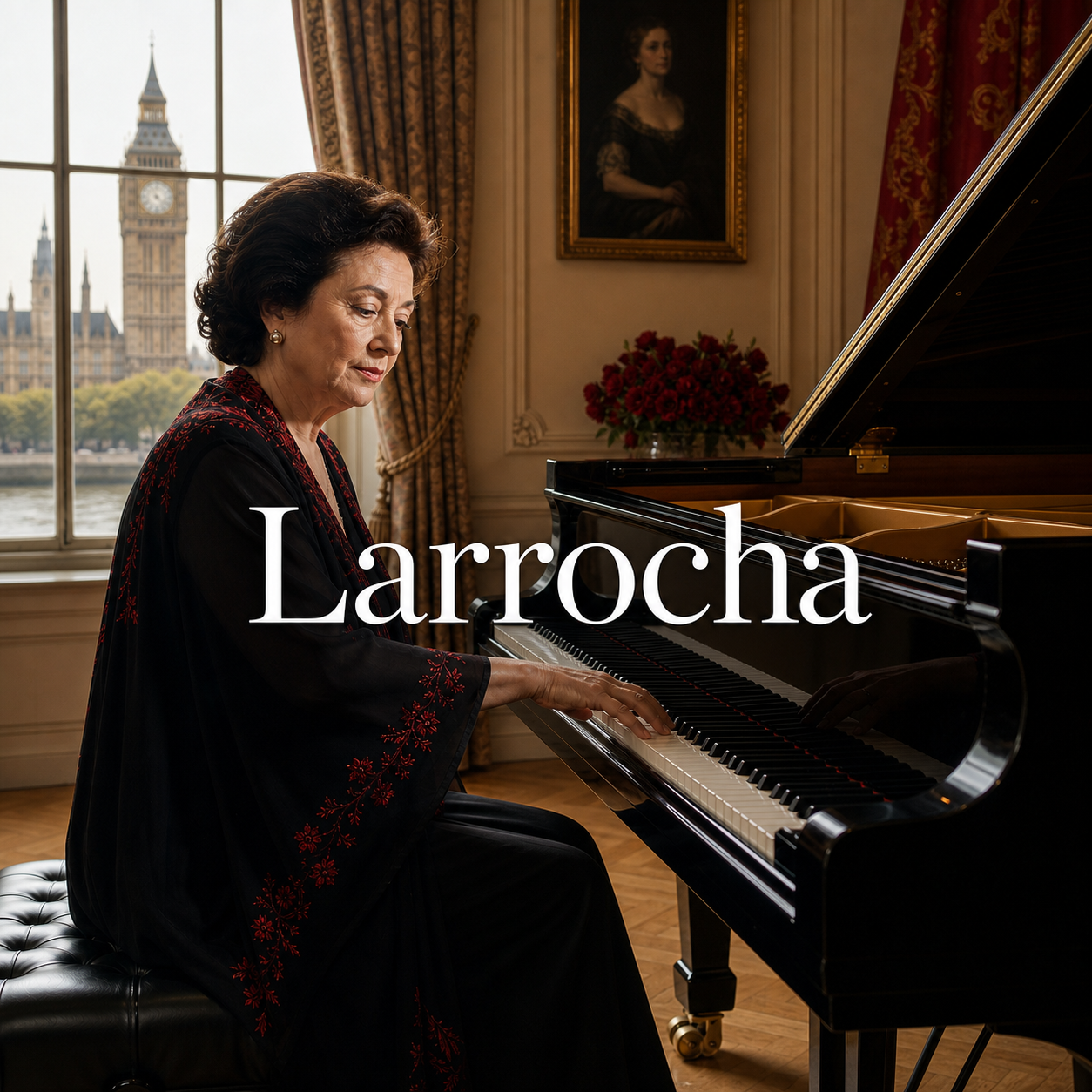
Intro: Why Alicia de Larrocha Still Matters to London Listeners
Searches for Alicia de Larrocha usually lead to biography: Barcelona, Granados, Albéniz, Mozart, Decca, Grammy awards and a reputation for making Spanish piano music sound both native and universal. That is a useful beginning, but it is not enough for the serious listener.
For a London pianist, her value lies in how she asks the instrument to speak. De Larrocha was celebrated for Spanish repertoire, yet her artistry was never only national colour. It was proportion, rhythmic poise, inner voicing and a refusal to turn virtuosity into display. Steinway describes her as peerless in the repertoire of her native Spain, while Grammy records show repeated recognition across a long recording career [1][2].
That combination matters in London because the city rewards informed listening. A student moving between lesson room, concert hall and recording library needs more than admiration. They need a way to hear why colour works, why Mozart must remain clean, and why small hands, if disciplined by imagination, can command large musical architecture.
At-a-Glance Quick Facts
Barcelona, 23 May 1923 [3]
Barcelona, 25 September 2009 [3]
Albéniz, Granados, de Falla, Mozart, Haydn, Schumann
Multiple Grammy wins and nominations [2]
De Larrocha began piano studies early at the Marshall Academy, an institution linked to Enrique Granados through Frank Marshall. That lineage matters: it placed her close to the sound-world of the Spanish repertoire she later carried internationally. Britannica notes her first public performance at the age of five and her later standing as one of the finest pianists of the twentieth century.
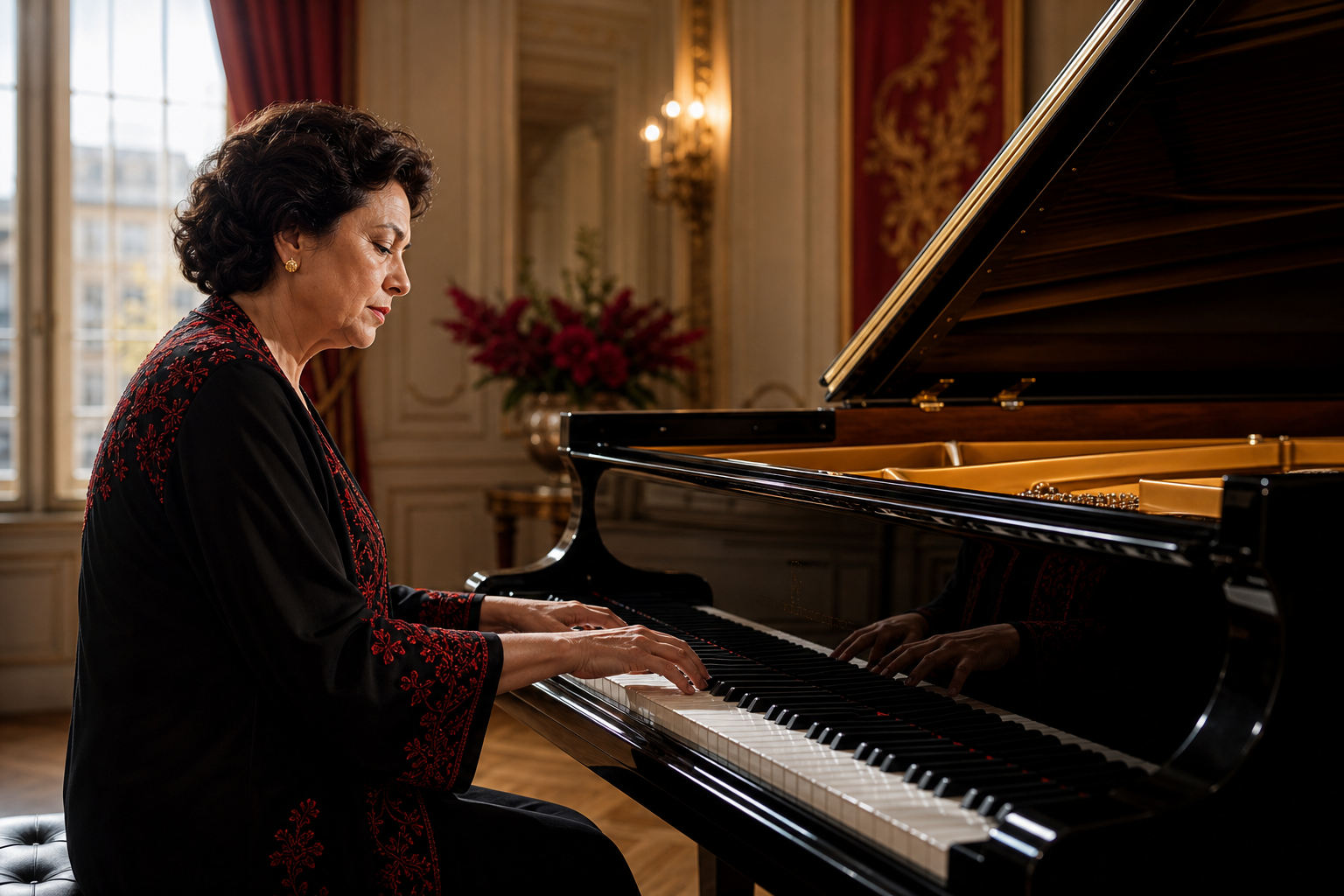
Alicia de Larrocha’s London Connection
De Larrocha’s relevance to London is not a matter of forcing a local biography onto a Spanish artist. It is a listening connection. London has the institutions, teachers, concertgoers and adult amateurs who can still use her recordings as a serious standard for taste. Her career was international, and UK readers encountered her through major record releases, reviews and obituaries as part of the mainstream classical conversation [4].
The London pianist should hear her as an antidote to two common habits: making Spanish repertoire sound merely picturesque, and making Mozart sound merely tidy. In a city where pianists can move from a lunchtime recital to an evening lesson, her recordings offer a practical education in scale. Nothing is inflated. Even in Albéniz, the colours are intense but placed; the rhythm has body, yet the phrase keeps its line.
For WKMT, this makes de Larrocha valuable as a reference point for piano lessons in London. She supports the broad musical authority of the school without competing with commercial lesson pages. The article’s purpose is cultural: to help students and listeners hear what refined pianism can mean before they try to imitate its surface.
Concise Biography for Listeners
Alicia de Larrocha y de la Calle was born into Barcelona’s musical life and trained with Frank Marshall, a pupil of Granados. That inheritance explains much of her authority in Spanish music, but it should not reduce her to one school. Her public career became international after the Second World War, and her recorded catalogue gradually made her one of the defining interpreters of Albéniz, Granados and de Falla for listeners outside Spain.
What distinguishes her biography is not only precocity or awards. It is the way her physical reality shaped, but did not limit, her pianism. She was often described as a small pianist with a large command of sound. That phrase can become sentimental, so it needs care. The important fact is technical: she used clarity, balance, voicing and timing to produce scale. Power was organised, not forced.
Her archive at the Biblioteca de Catalunya, which preserves materials relating to her life and career, confirms the cultural seriousness with which her legacy is held in Spain [5]. For students, the message is direct. A career is not built only from speed, volume or spectacle. It is built from a sound that remains recognisable because judgement governs every gesture.
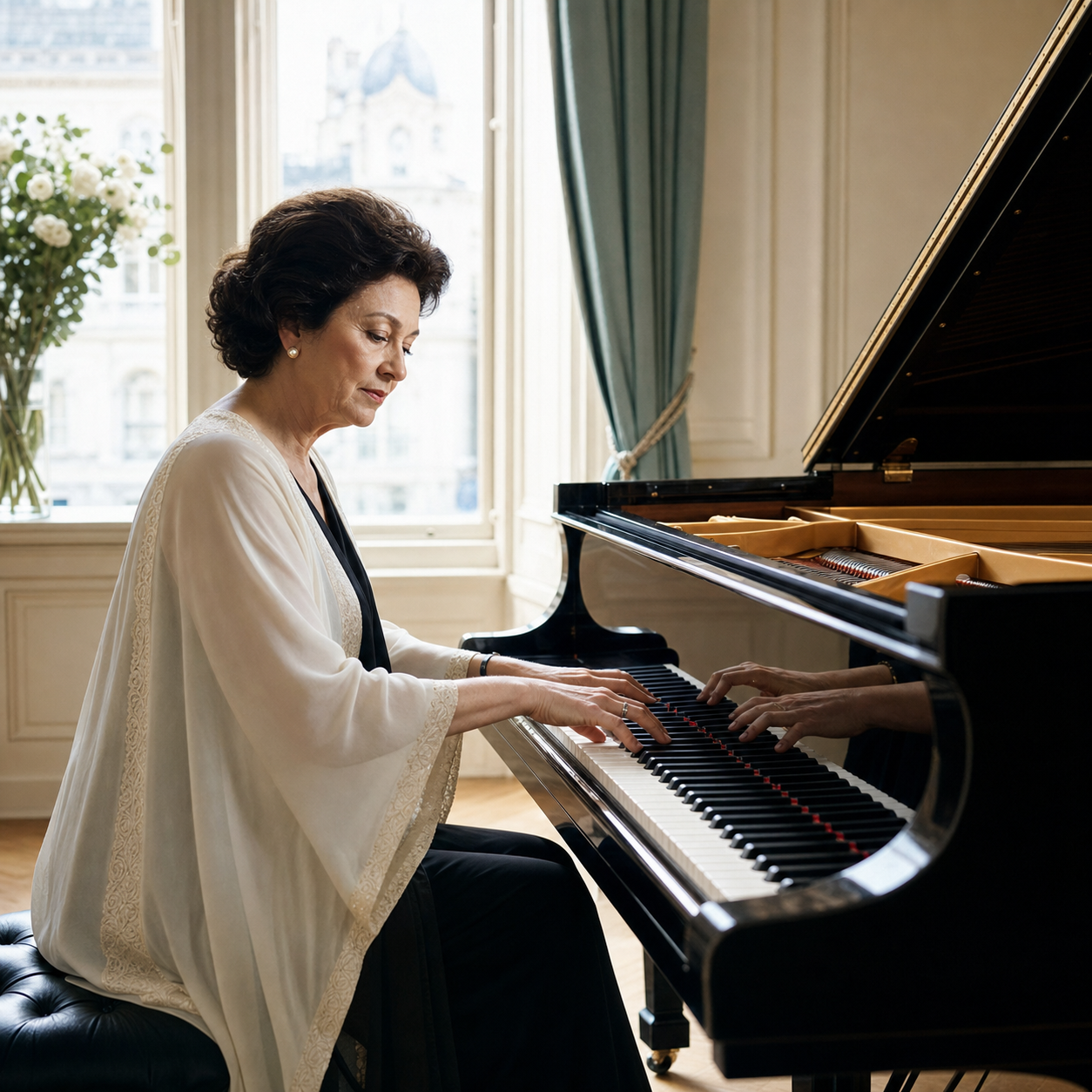
Repertoire and Recording Highlights
In Albéniz, especially Iberia, de Larrocha shows how to make density transparent. The score can tempt pianists into a wash of pedal and exotic colour. Her best performances resist that. Rhythmic profile remains alive under the perfume. The pianist should listen for how dance survives inside virtuosity.
In Granados, particularly Goyescas, she avoids turning lyricism into indulgence. The line may expand, but the underlying pulse remains tactful. This is crucial for adult students who love romantic sound but struggle to keep structure visible. De Larrocha lets the melody bloom without losing the harmonic floor beneath it.
Mozart reveals another side of her art. She does not play Mozart as if it were Spanish music in lighter dress. The texture is cleaner, the rhetoric more classical, the humour less perfumed. The same ear for colour remains, but colour is subordinated to speech. For London students moving from Spanish repertoire to Mozart sonatas, this contrast is a lesson in stylistic honesty.
What to Listen For
Tone colour and voicing. In Spanish repertoire, listen first to layers rather than melody. The treble may sparkle, but the middle voices often carry the emotional temperature. Good listening begins by asking which register is carrying meaning at each moment.
Rhythm and articulation. De Larrocha’s Spanish rhythm is not stiff, but it is never vague. Dance impulse remains present even when the surface becomes rhapsodic. Students should notice how articulation gives the music its body before the pedal gives it atmosphere.
Mozart clarity. In Mozart, listen for proportion. Cadences are not over-announced; ornaments do not become decoration pasted onto the line. The phrase speaks because the pianist has removed excess emphasis. This is why her Mozart is useful for adults who want musical maturity rather than a merely polished sound.
Scale without forcing. De Larrocha’s example is especially valuable for pianists with smaller hands. The answer is not to imitate her physical solutions, but to learn the musical principle: organise weight, release and balance so the hand never has to manufacture grandeur through tension.
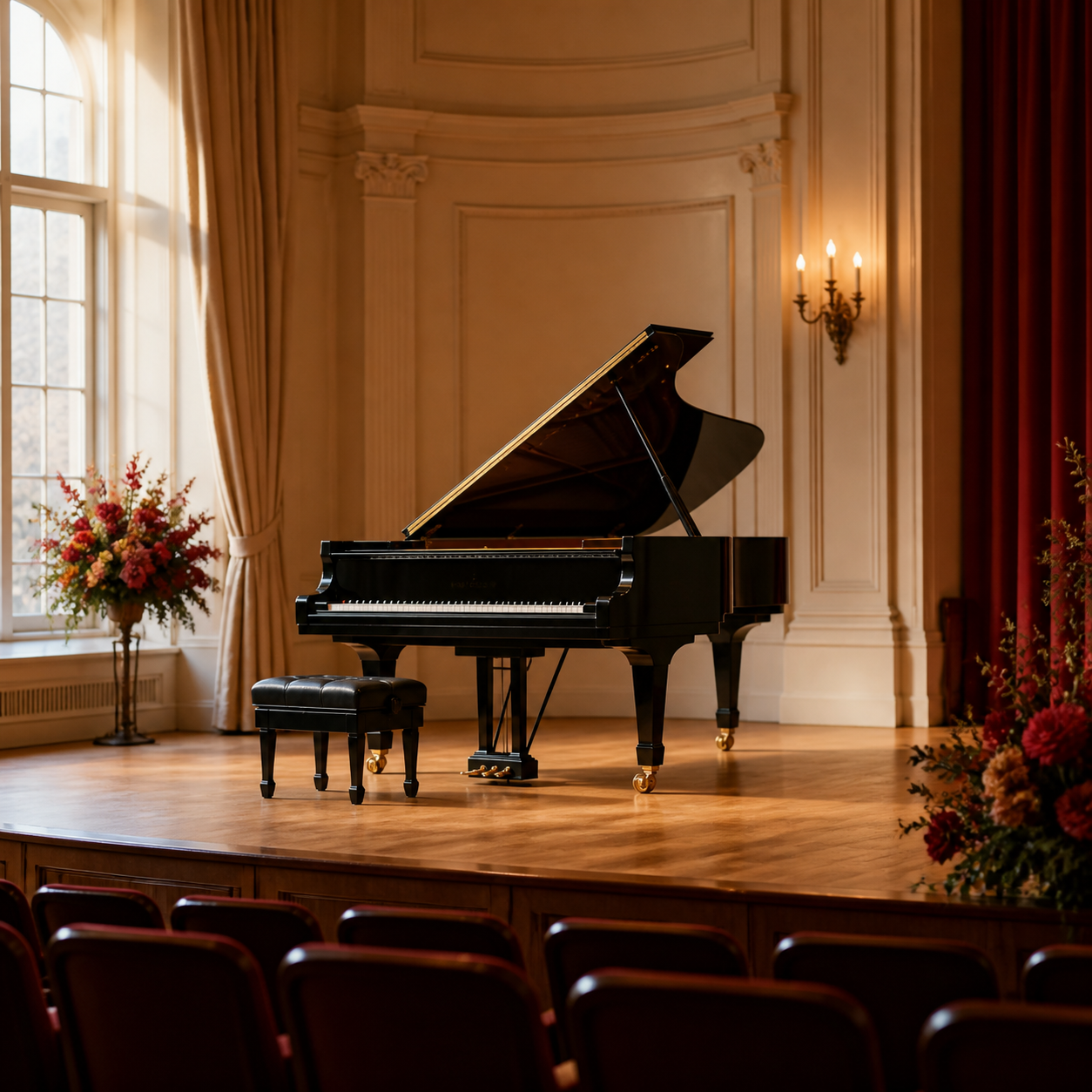
Influence, Teaching Legacy and WKMT Relevance
De Larrocha’s influence is not only discographic. It is pedagogical because it changes what students value. Many learners think musical growth means playing louder, faster or with more visible emotion. Her recordings suggest another path: deeper hearing, cleaner rhythm, more exact colour, fewer theatrical gestures.
That is why WKMT can refer to her when teaching adult pianists. She is not a shortcut to Spanish style. She is a reminder that style has ethics. The pianist must ask what the music requires before asking how the performance might impress. That question belongs naturally in adult piano lessons in London, where mature students often bring strong taste but need technical means to realise it.
In practical study, de Larrocha is useful because her playing separates three ideas that students often confuse. Colour is not pedal; it is voicing, weight and register. Freedom is not unstable tempo; it is a phrase that knows where it is travelling. Brilliance is not speed alone; it is precision that leaves the listener with a clear image of the music. A teacher can turn those ideas into weekly work without asking the student to become a specialist in Spanish music.
One useful lesson pattern is simple. First, listen to a short passage and describe the dominant colour in plain words: dry, luminous, veiled, percussive, singing. Then return to the piano and find which part of the texture creates that colour. Often the answer is not the melody. It may be a bass note released at the right moment, an inner voice held slightly longer, or a chord balanced away from the thumb. Finally, play the same phrase in Mozart or Haydn and remove whatever belongs only to Spanish idiom. The exercise teaches style by subtraction as much as imitation.
This is also why de Larrocha suits adult learners. Adults can hear nuance before they can always produce it. Rather than treating that gap as frustration, WKMT lessons can use it as direction: the ear names the goal, and technique gradually learns to follow. De Larrocha’s recordings remind students that refinement is not decorative. It is the audible result of disciplined attention.
Recommended Recordings, Practical Listening and FAQ
Albéniz: Iberia. Start here for colour, rhythm and architectural command. Listen for how the texture remains readable even when the writing is saturated.
Granados: Goyescas. Use this for long-line listening and rubato discipline. The emotional world is rich, but sentiment never replaces structure.
Mozart sonatas and concertos. Use these recordings after Spanish repertoire to hear stylistic contrast. The same pianist becomes clearer, lighter and more classically proportioned.
Where to listen in London. Check public library catalogues, label streaming pages and major classical platforms. For archival research, use institution-level catalogues rather than relying on unsourced uploads.
Was Alicia de Larrocha only a Spanish repertoire specialist?
No. Spanish music made her especially famous, but her Mozart and classical repertoire show equal concern for clarity, balance and line.
What should pianists learn from her playing?
Listen for colour controlled by rhythm, not colour used as decoration. Her playing teaches proportion before display.
Which recording should a beginner listener start with?
Start with Albéniz’s Iberia for Spanish colour, then compare a Mozart sonata to hear how her touch changes with style.
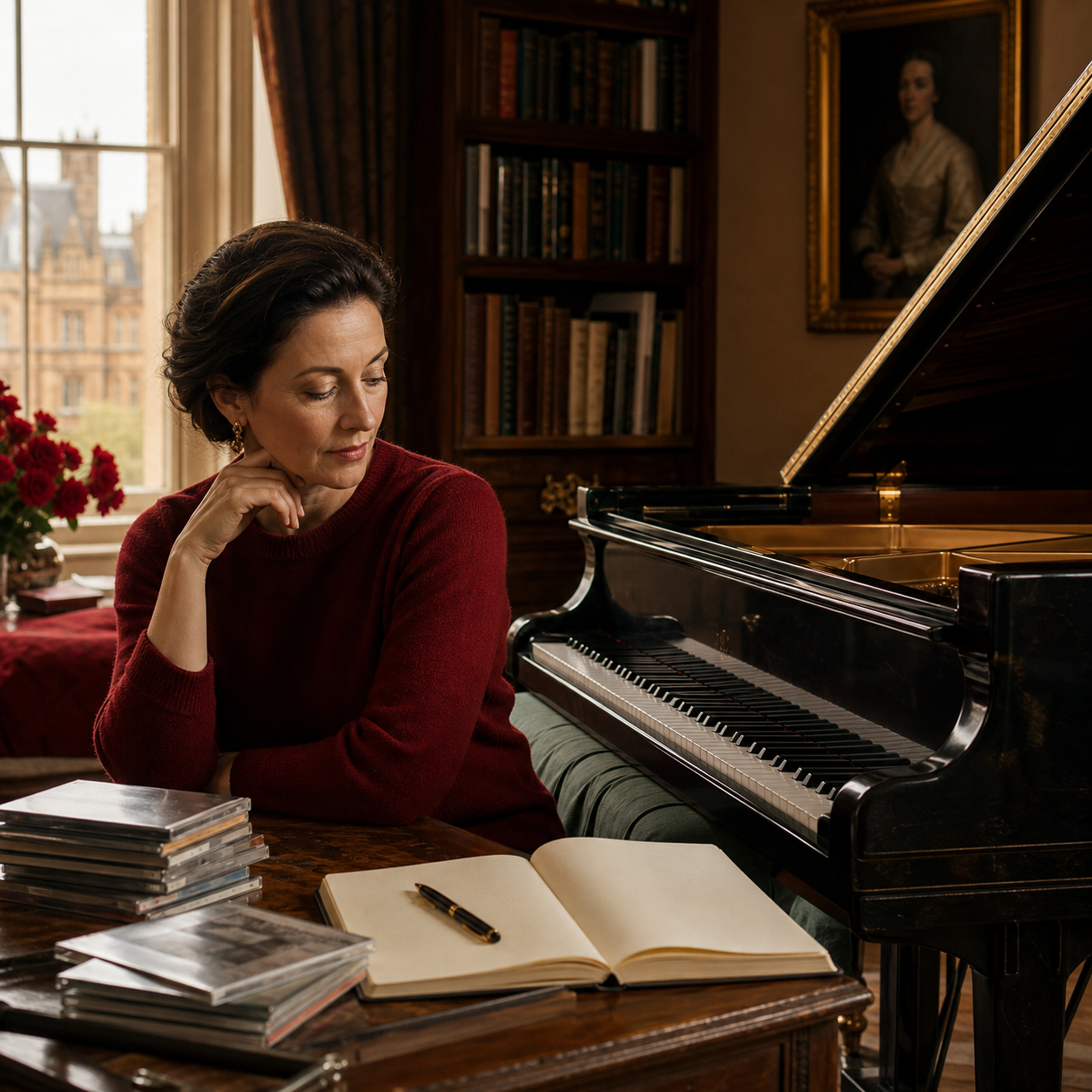
Conclusion
Alicia de Larrocha remains important because she makes refinement audible. She shows that Spanish colour need not become illustration, Mozart clarity need not become dryness, and technique need not announce itself to prove authority. For London pianists, her recordings are not museum pieces. They are active lessons in listening.
To deepen this kind of listening through structured study, explore WKMT’s adult piano lessons in London and the wider WKMT London piano school.
Sources
- Steinway & Sons, artist profile: Alicia de Larrocha, https://www.steinway.com/artists/alicia-de-larrocha
- Recording Academy Grammy artist page: Alicia de Larrocha, https://www.grammy.com/artists/alicia-de-larrocha/16251
- Encyclopaedia Britannica, Alicia de Larrocha biography, https://www.britannica.com/biography/Alicia-de-Larrocha
- The Guardian, Alicia de Larrocha obituary, https://www.theguardian.com/music/2009/sep/28/alicia-de-larrocha-obituary
- Biblioteca de Catalunya, Alicia de Larrocha archive entry, https://www.bnc.cat/