
 TRIAL LESSON
Uncategorized
Chopin in London: A London Teacher’s Guide to Interpreting His 1848 Visit
Nov
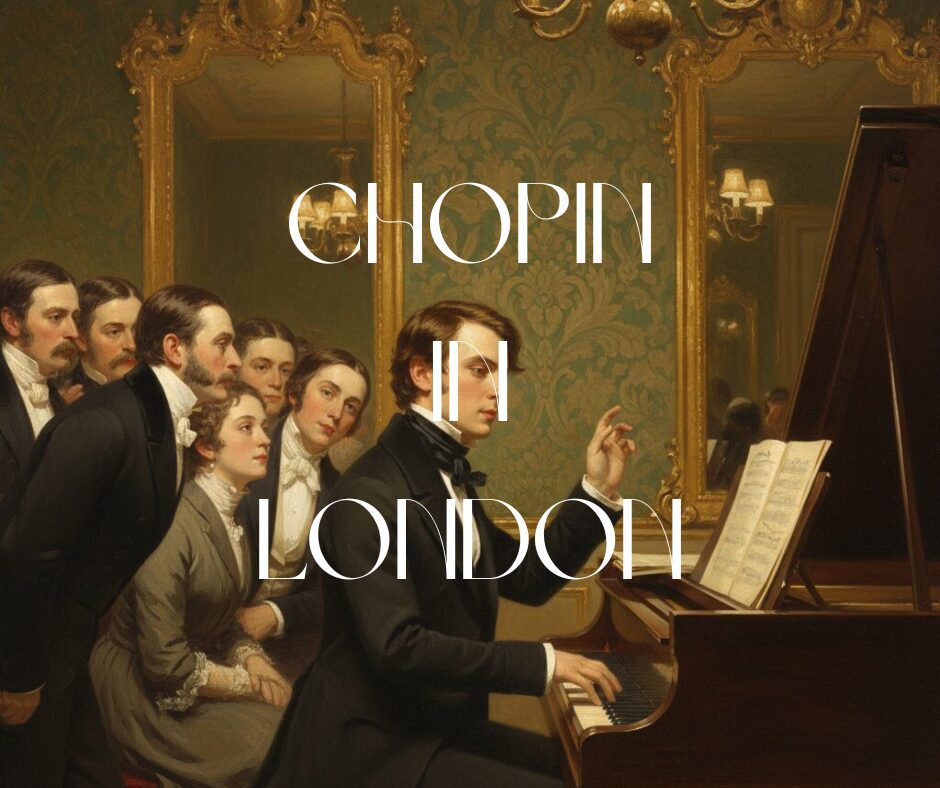
Chopin in London
Chopin in London: A London Teacher’s Guide to Interpreting His 1848 Visit
Why Chopin’s London connection matters today
Two London visits — 1837 and, crucially, 1848 — sit in the shadow of Chopin’s Paris years, yet London sharpened aspects of his late style and public persona. In 1848 he arrived ill and in need of income, played to aristocratic drawing rooms, undertook benefits and charity events, gathered pupils, and encountered the competing tastes of a city ready to admire, question, and gossip. For teachers, this lens is invaluable: the salons, the press, the instruments he used, and the audience he faced all inform how we shape tempo, colour and articulation today. This article brings those elements together for an interpretive approach grounded in historical detail — a practical way to teach Chopin through his London chapter.
Historical context
Chopin’s itinerary in Britain: what contemporary sources say
Chopin’s 1848 British sojourn began on 21 April with letters of introduction to London’s elite. He first lodged at 10 Bentinck Street, Marylebone, found it too expensive, and moved to 48 Dover Street, Piccadilly. There he kept three instruments — his Paris Pleyel, a loaned Érard, and a Broadwood — while teaching and receiving visitors. He performed mainly in private and semi-private settings, including benefits for Polish exiles, with one standout royal engagement at Stafford House (now Lancaster House) on 15 May for the Duchess of Sutherland and Queen Victoria. He appeared at Gore House on 10 May (bringing his Pleyel), a June benefit at 99 Eaton Place, and a July recital at Lord Falmouth’s house in St James’s Square. London thinned out for the summer; by late July he moved on to Scotland, leaving behind reviews, letters and friendships that now guide our reading of his music.
London’s mid-19th-century musical life and salons
London in 1848 was unsettled by European revolution. Polish refugees and politics coloured perceptions; Chopin’s monarchist sympathies complicated matters, and the Times was notably ungenerous. Yet the salon culture proved ideal for his art. These were social occasions as much as concerts: guests arrived from parties and, as one observer put it, were “in anything but a humour to pay attention”. In response, Chopin played programmes that balanced intimacy and flair — nocturnes and mazurkas alongside etudes, waltzes and ballades — and adjusted tone and clarity to rooms that were often busy rather than reverential. This is the environment in which late Chopin was most often heard in London.
Reception in the press: reviews and letters
Press coverage was mixed but frequently admiring. At his Guildhall charity event in November — his last public performance — several London papers called him “the great attraction of the concert”, even as the Times maintained its silence. Chopin noticed the city’s social pecking order with dry humour, writing after one recital: “Miss Lind came to my concert — which meant a lot for the fools.” He could be equally tart about orchestral conventions, likening certain British orchestral fare to “roast beef or turtle soup — excellent, strong, but nothing more”. For everyone, these remarks are not just epigrams; they point to values he prized: distinction over volume, intimacy over bombast, and taste over display.
The repertoire he played, and why it matters
Likely programmes and their interpretive implications
Chopin avoided concertos in London and did not appear with orchestra there. Instead he offered solo programmes tailored to salons: Preludes, Ballades, Mazurkas, Waltzes, Nocturnes, Etudes, and occasional rarities such as the Berceuse Op. 57. Contemporary notes from his British recitals mention precisely this mix. The implication is helpful in lessons: conceive these works as part of a balanced, varied evening, pairing dance energy with cantabile repose and measured bravura. Teach students to communicate the main line with immediate clarity — these pieces had to carry over conversation, rustle and movement — and to pace contrasts so that each item speaks in its own character without overstatement.
Instruments and pianos in London (Pleyel, Érard, Broadwood)
Instrument choice shaped colour. In Dover Street Chopin kept a Pleyel, an Érard and a Broadwood. He wrote warmly of Henry Broadwood, calling him “a real London Pleyel” and “my best and truest friend”, and used the English grand when projection was wanted (as committees insisted at times). At Gore House he first set a Pleyel, then yielded to a Broadwood for fuller carry. Teachers can turn this into a simple exercise in tone planning: imagine the Pleyel’s intimate, singing core when voicing inner lines; imagine the Broadwood’s brighter edge when articulating passagework and dance rhythms. Let the imagined room decide the attack — rounded for drawing rooms, lightly percussive for larger salons.
A teacher’s interpretive guide
Tempo, rubato and phrase shape in Chopin’s salon practice
Accounts of Chopin’s playing in Britain stress flow and line rather than display. Rubato is the crux: a breathing melody above a steadier accompaniment. Consider two teaching points. First, keep the left hand’s pulse legible even when the right hand ornaments float. Second, shape phrases as speech: begin clearly, allow a single inflection or two within the bar, and release the cadence with poise rather than drama. Contemporary listeners spoke of an “overflowing stream of delicious melody” — not a storm, not a blur. Use this as a check against excessive tempo bends that cloud metre or obscure harmony.
Chopin’s own jokes about orchestral heft — the “roast beef or turtle soup” quip — suggest he valued clarity over force. Encourage students to find the dynamic threshold at which the tone speaks without thickness. On a modern piano, that may mean holding back in the mid-range and letting the treble sing with a lighter arm. In classes, a useful rule of thumb is: if the accompaniment begins to sound equal in prominence to the melody, return to the text and rebalance.
Approaching nocturnes, ballades and polonaises in a London recital context
Nocturnes: treat them as conversation pieces. In an A–B–A design, set a poised, unhurried A to earn a more rhapsodic B. When repeats are written, play them as invitations to vary colour rather than tempo. Keep left-hand arpeggiation supple but un-fussy; the contour matters more than the ripple.
Ballades: articulate narrative without operatic grandstanding. London salons rewarded focus. Keep transitional bridges purposeful and forward-moving; reserve the largest sonorities for structural cadences. Remind students that storytelling can be achieved through harmonic light and shade as much as volume.
Polonaises and mazurkas: let dance rhythm carry expressive weight. The patriotic undercurrent is palpable, but rhetoric should sit inside rhythm — a sprung second beat in mazurkas, a dignified tread in polonaises. Aim for subtle power, not a martial stomp. Colourist variety is persuasive in rooms where listeners are close by.
Etudes and the Berceuse: when deploying etudes in mixed programmes, prefer crisp articulation over speed. In the Berceuse, allow cadential sighs a touch more time, but keep the lullaby’s ostinato as a reliable heart-beat. For technical orientation and fingering strategies, see our focused guide to Chopin’s Etudes and, for advanced exploration, the Godowsky studies on Chopin.
Score vs. contemporary reviews: balancing fidelity and historical insight
Chopin’s published markings are our anchor; salon practice supplies context. Reports of guests arriving “hot from dancing” and eager to return tell us why projection, line and rhythmic vitality mattered. In lessons, start from the score — tempo indications and phrasing — then read reviews and letters to decide where freedom best serves the melody. Resist the temptation to adjust notated rhythm casually; instead, bend time at cadences, appoggiaturas and ornamental turns where speech-like emphasis is natural. When in doubt, ask: would this inflection help a distracted listener in a busy room to hear the tune more clearly?
Finally, let Chopin’s own words guide taste. His wry note about Jenny Lind — “Miss Lind came to my concert — which meant a lot for the fools” — shows both self-awareness and impatience with social theatre. The lesson is simple: play with polish and grace, but never for effect alone. Beauty of line remains the best persuasion.
Places in London that matter to Chopin students and concert‑goers
Walking itinerary and surviving sites
Much has changed, but a short walk still traces the 1848 story:
- 48 Dover Street, Mayfair: Chopin’s main lodging near Piccadilly, where he kept three pianos and hosted visitors.
- Great Pulteney Street, Golden Square: Broadwood’s former showroom; here he selected the English grands he used in London settings.
- St James’s Square: Lord Falmouth’s house hosted a July recital with guests including singers such as Pauline Viardot.
- Lancaster House (then Stafford House): site of the May appearance for Queen Victoria and the Duchess of Sutherland.
- Guildhall (City): the November charity concert — Chopin’s last public performance — was given here.
Take students on this route and ask how each room’s imagined acoustic — intimate salon versus grand staircase and hall — would change their approach to tone, pedalling and articulation.
Museums, archives and where to consult primary sources
For research-led teaching, London’s repositories are rich. The British Library holds newspapers and ephemera, and has exhibited Chopin’s London materials. The Royal College of Music and the Royal Academy of Music preserve letters and manuscripts relevant to his British network. The British Newspaper Archive yields 1848 reviews with date filters; the Chopin Society UK provides articles on his visit and his last concert; and Chopin’s letters are accessible via Archive.org. When working with students, try simple targeted searches such as “Chopin 1848 London site:bl.uk” or “Chopin Guildhall review 1848” to surface digitised bills and notices. For a primer on London’s music networks today, see our overview of music societies and foundations in London.
Listening and reading recommendations
Recordings and editions
To frame a concert study unit, begin with classic interpreters of Chopin whose priorities echo salon poise and melodic flow — for instance, Rubinstein, Brendel or Arrau — then compare with recent recitalists. Complement listening with the Chopin Society London’s concert material where available to hear the repertoire in an intimate setting. For reading, the Chopin Society UK’s articles on the 1848 visit and final concert gather press quotations; broader context sits well alongside standard studies such as the Cambridge discussions of Chopin’s style. Pair recordings and articles with score study so students can link what they hear to what they see on the page.
Where to hear Chopin in London today
Venues, series and how to choose programmes
London remains fertile ground for Chopin. Wigmore Hall and Kings Place regularly feature his solo works; the Royal Festival Hall presents large-scale piano evenings; and the Chopin Society London curates dedicated recitals and talks. Our own WKMT Classical Concerts series in London frequently showcases piano programmes with Chopin at their core. When choosing events for students, favour mixed-recital formats that echo 1848 salon balance: nocturnes with mazurkas, an etude or two for profile, and a lyrical centrepiece such as a ballade or the Berceuse. Encourage students to attend with a simple brief — track how different pianists manage the right-hand line against a steady bass — then bring those observations back to lessons.
Practical planning and research resources
Primary-source queries, key archives and search terms
- British Newspaper Archive: search “Chopin 1848 London”, then filter by month and venue (Guildhall, Lancaster House, St James’s Square).
- British Library catalogues: 19th‑century newspapers, concert handbills, and maps for locating addresses.
- Chopin Society UK: articles on the 1848 visit and last concert, including transcriptions of reviews and letters.
- Archive.org: “Chopin’s letters” for first-hand testimony on salons, audiences, and colleagues such as Jenny Lind and Henry Broadwood.
- Teaching prompt: ask students to write a short diary entry as if they attended a Dover Street salon, using details from letters and reviews to anchor the scene.
Further WKMT services
For structured technical development aligned with historical context, explore our articles on Chopin’s Etudes and the Godowsky transformations. Our teachers integrate research findings into lesson planning and recital preparation, ensuring that stylistic insight supports technique at every stage.
Conclusion on Chopin in London Topic
Chopin’s 1848 London chapter is a study in contrasts: fragile health and hard work; social theatre and private poetry; Pleyel warmth and Broadwood projection. It ends with a City charity concert and a cluster of reviews that praised his “delicious melody” and restraint. For teachers, that combination points the way: keep the melody sovereign, the pulse legible, the colour chosen for the room in mind. To continue the journey, join a WKMT masterclass or sign up to our newsletter for upcoming Chopin evenings and teaching resources — let London’s history accompany your next lesson.
Sources
- Chopin: The Romantic Refugee @ British Library | Londonist
- Chopin’s visit to Britain, 1848 – The Chopin Society UK
- Microsoft Word – SOUTH BANK TALK 1.3.10.doc
- 6 + Music Societies, Foundations & Trusts in London – Piano Lessons London by WKMT
- Microsoft Word – SOUTH BANK TALK 1.3.10.doc
- Chopin’s visit to Britain, 1848 – The Chopin Society UK
- Chopin’s Last Concert – The Chopin Society UK
- Full text of “Chopin’s letters;”
- Chopin’s visit to Britain, 1848 – The Chopin Society UK
- Full text of “Chopin’s letters;”
- Microsoft Word – SOUTH BANK TALK 1.3.10.doc
- Chopin’s visit to Britain, 1848 – The Chopin Society UK
- Chopin’s Last Concert – The Chopin Society UK
- Full text of “Chopin’s letters;”
- Chopin’s visit to Britain, 1848 – The Chopin Society UK
- Chopin Etudes
- Godowsky Chopin Etudes – Piano Lessons London by WKMT
- Chopin’s visit to Britain, 1848 – The Chopin Society UK
- Full text of “Chopin’s letters;”
- 6 + Music Societies, Foundations & Trusts in London – Piano Lessons London by WKMT