
 TRIAL LESSON
Piano Lessons
Philip Glass: The Symmetry of Sound and Silence
Oct
Philip Glass Piano Music — A Complete Guide for Students
Philip Glass piano music is some of the most-played contemporary repertoire in the world — yet most piano students approach it without understanding its technical demands, its compositional sophistication, or where it fits in the arc of a serious musical education. This guide covers everything you need to know.
What You’ll Learn in This Guide
- Who is Philip Glass and why his classical training matters
- His most important piano works — Metamorphosis, Mad Rush, Opening, and the Études
- Approximate ABRSM grade equivalents for each major piano work
- The minimalist piano technique explained for students and teachers
- How to practise Glass effectively and what common mistakes to avoid
- WKMT’s perspective on Glass as part of a classical piano curriculum
Who Is Philip Glass? A Brief Portrait
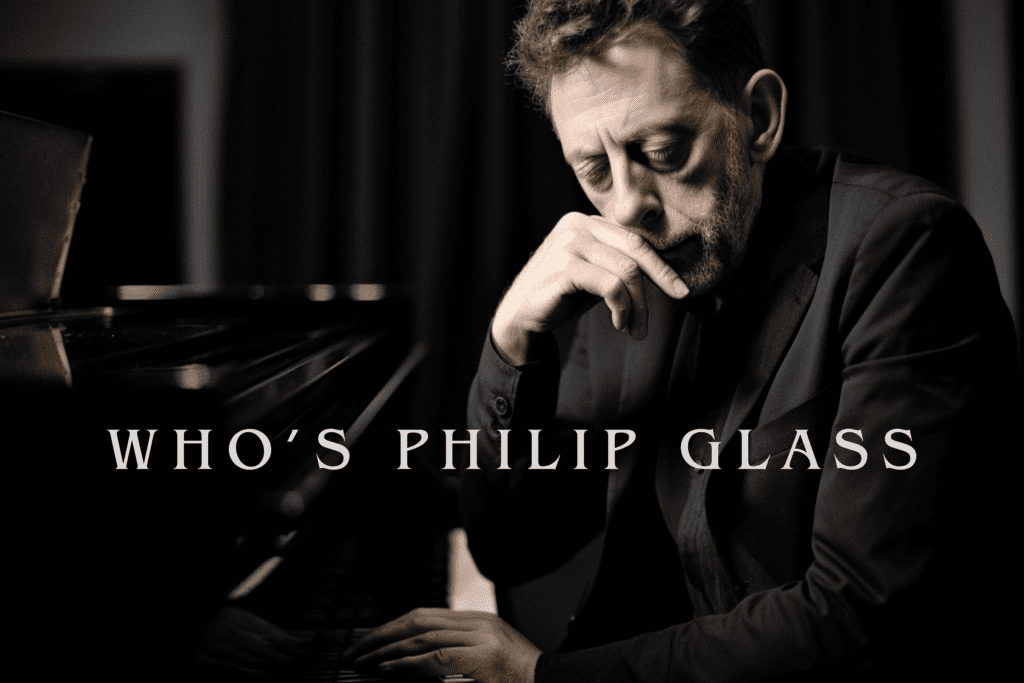
Philip Glass piano music has become so ubiquitous — in concert halls, film soundtracks, streaming playlists, and piano studios — that it is easy to forget what an unlikely figure he was in contemporary music. Born on 31 January 1937 in Baltimore, Maryland, Glass grew up in an environment saturated with music: his father ran a record shop, and the young Philip absorbed an unusually wide range of styles from an early age.
Glass studied at the Juilliard School in New York, where he received a rigorous training in harmony, counterpoint, and composition. He later travelled to Paris to study with Nadia Boulanger — the teacher who had shaped Aaron Copland, Astor Piazzolla, and Quincy Jones, among many others. Boulanger’s influence on Glass was profound: she drilled him in the classical foundations of Western music, insisting on voice-leading discipline and harmonic clarity.
A further decisive influence came from Glass’s encounter with Ravi Shankar during his Paris years. This synthesis of Western rigour and Eastern rhythmic thinking is the foundation of everything Glass subsequently composed.
Philip Glass Piano Music — The Essential Works
Metamorphosis (1988)
Metamorphosis consists of five pieces composed in 1988. Their title refers to Franz Kafka’s novella, though Glass has noted he was also moved by visits to hospitals treating patients with AIDS during the crisis of the late 1980s — an origin that gives the music its quality of quiet grief and restrained beauty.
Metamorphosis Two is the most widely heard as a standalone piece, frequently used in adult beginner and intermediate piano teaching because it is technically accessible without being musically thin. A student at approximately Grade 4–5 level can learn the notes, but producing the required tonal consistency and emotional restraint demands considerably more maturity.
Philip Glass — Metamorphosis Two. One of the most-played contemporary piano pieces in adult amateur teaching.
Mad Rush (1979)
Mad Rush was originally composed for organ, written for the Dalai Lama’s first public appearance in New York in 1979. It alternates between two sharply contrasting sections: an agitated, rhythmically insistent A section built around rapid arpeggiation, and a slower, more open B section. For piano students, Mad Rush sits at approximately Grade 7–8. The left-hand patterns require even, controlled articulation at speed.
Philip Glass — Mad Rush. Originally composed for organ; the piano version is a Grade 7–8 challenge.
Opening (from Glassworks, 1981)
Glassworks was released in 1981 as a studio album designed to introduce Glass’s music to a wider audience. The opening track is a piano solo of quiet, meditative quality. Built on a cycling right-hand melodic figure over a sustained, slowly shifting left-hand harmony, it is technically accessible (approximately Grade 5–6) and an excellent starting point.
Philip Glass — Opening from Glassworks (1981). An accessible entry point into the Glass piano repertoire.
The Piano Études (1991–2012)
The Piano Études are the most substantial contribution Glass has made to the piano repertoire, written across two decades. They range from technically demanding to extremely demanding. Étude No. 2 is the most approachable at around Grade 8 for a polished performance. Étude No. 6 is considerably more demanding, requiring intricate left-hand patterns and stamina at conservatoire level.
“Glass came to minimalism not through rejection of classical training but through mastery of it — then a deliberate decision to strip composition to its structural essentials. This is why his Études reward serious technical study rather than casual sight-reading.”
— WKMT London
Philip Glass Piano Works — Difficulty Ladder
Approximate ABRSM grade equivalents for Philip Glass piano works. A polished performance requires more technical command than reading through the score.
| Work | Year | Approx. Grade | Technical Focus | Musical Character |
|---|---|---|---|---|
| Metamorphosis Two | 1988 | Grade 4-5 (notes) / Gr. 6+ (musical) | Even tone; sustained left-hand chords | Quiet, meditative; emotional restraint |
| Opening (Glassworks) | 1981 | Grade 5-6 | Cycling right-hand figure; arm weight | Calm, accessible; excellent starter |
| Mad Rush | 1979 | Grade 7-8 | Rapid arpeggiation; dynamic contrast | Alternating agitated/meditative |
| Etude No. 2 | 1991 | Grade 8 | Hand independence; tonal smoothness | Lyrical, flowing; understated |
| Etude No. 6 | 1994 | Diploma | Complex left-hand patterns; stamina | Driving; conservatoire standard |
| Etude No. 9 | 1994 | Grade 8-Diploma | Slow-burning control; pedalling precision | Searching, introspective |
Minimalist Piano Technique — What It Actually Means for the Player
The word “minimalism” misleads many piano students into assuming that Glass’s music is easy to play well. The surface simplicity conceals demanding requirements quite different from conventional classical repertoire.
- Even articulation in rapid patterns. The arpeggiated left-hand figures require the same evenness of tone that Bach’s two-part inventions demand. A student who has practised scales with attention to finger equality will have the foundation.
- Arm weight and relaxation. Because Glass’s patterns repeat extensively, any muscular tension accumulates. The Scaramuzza technique, which WKMT uses, is particularly well suited: its emphasis on natural arm weight produces the effortless, gliding tone this music demands.
- Dynamic shading within static material. Glass’s harmony changes slowly. The player must create phrase shapes and dynamic gradients not explicitly notated — a skill from studying the classical canon.
- Pedalling discipline. Metamorphosis and Opening require careful pedalling to sustain harmonies without blurring the melodic line. Precise half-pedalling is an essential tool.
“Students who have developed a secure classical technique find Glass immediately accessible. Students who have not find that his apparent simplicity exposes every weakness — uneven tone, tense shoulders, unclear pedalling — with no harmonic complexity to hide behind.”
— WKMT London
Philip Glass, Nadia Boulanger, and the Classical Foundation
Glass did not arrive at minimalism by rejecting what he had been taught — he arrived there by mastering it and making a deliberate compositional choice. Nadia Boulanger, who taught Glass in Paris during the 1960s, insisted on counterpoint, voice-leading, and harmonic rigour. The same teacher guided Aaron Copland and shaped Astor Piazzolla’s mature tango style.
This matters for WKMT students because it validates what our teaching has always emphasised: serious study of classical piano technique is preparation for all music. Glass’s approach to music is grounded in the same foundations we build from Grade 1 onwards.
WKMT Teaching Note on Philip Glass
At WKMT London, we introduce Philip Glass repertoire at intermediate level — typically after a student has a secure technique in the Classical and Romantic canon. Metamorphosis Two works well as a bridge piece for students moving from late-Intermediate to Advanced. For composition students, the Etudes are invaluable models of how to build musical tension through rhythmic and harmonic means without relying on melody. We sometimes assign them alongside Bach’s Two-Part Inventions to show students the structural parallel between Baroque counterpoint and Glass’s additive process.
The Trap: Playing Glass Without Classical Preparation
Glass’s music is frequently taught to students who lack the classical foundation it requires, on the assumption that its harmonic simplicity makes it easy. This results in technically sloppy, tonally inconsistent performances. Metamorphosis Two played without phrase shaping and with heavy pedalling sounds worse than a beginner’s Minuet in G — there is nothing in the harmony to compensate for poor execution.
For context on how Glass compares to other contemporary composer-pianists, see our guide to Max Richter — another composer whose accessible surface conceals demanding technical requirements.
Frequently Asked Questions
Who is Philip Glass and why is his piano music so widely played?
Philip Glass (born 1937) is an American composer widely regarded as one of the most influential figures of late 20th-century music. His piano music is widely played because it is tonally accessible, emotionally communicative, and achievable at intermediate to advanced levels — while rewarding serious study.
What is the easiest Philip Glass piano piece for beginners?
Metamorphosis Two and Opening from Glassworks sit at approximately Grade 4-6 for the notes, though a musically satisfying performance requires more maturity. Neither is appropriate until a basic classical foundation has been established.
How difficult are the Philip Glass Piano Etudes?
The Piano Etudes range from Grade 8 to Diploma level. Etude No. 2 is the most approachable at around Grade 8. Etudes 6 and 9 require the rhythmic precision and stamina expected at conservatoire level.
Did Philip Glass study classical piano formally?
Yes. Glass studied at the Peabody Institute and Juilliard School, then in Paris under Nadia Boulanger — who also trained Aaron Copland and Astor Piazzolla. His classical training in counterpoint and harmony is the foundation of his compositional technique.
What makes Glass’s piano technique different from classical technique?
The physical demands are not fundamentally different — even articulation, arm weight, and pedalling are as important in Glass as in Chopin. The difference is contextual: Glass’s static harmonic language exposes every technical weakness without harmonic complexity to compensate.
Is Philip Glass suitable for adult beginners returning to the piano?
Metamorphosis Two and Opening are often used with adult returnees because they are recognisable and achievable within months of resumed study. They work best alongside classical repertoire — the classical stream develops harmonic and structural understanding more thoroughly.
Study Piano in London — Classical Foundation, Contemporary Repertoire
WKMT London offers piano lessons for beginners to advanced students, children and adults. We teach classical technique as the foundation for all repertoire — including Philip Glass alongside Bach, Beethoven, and Chopin.